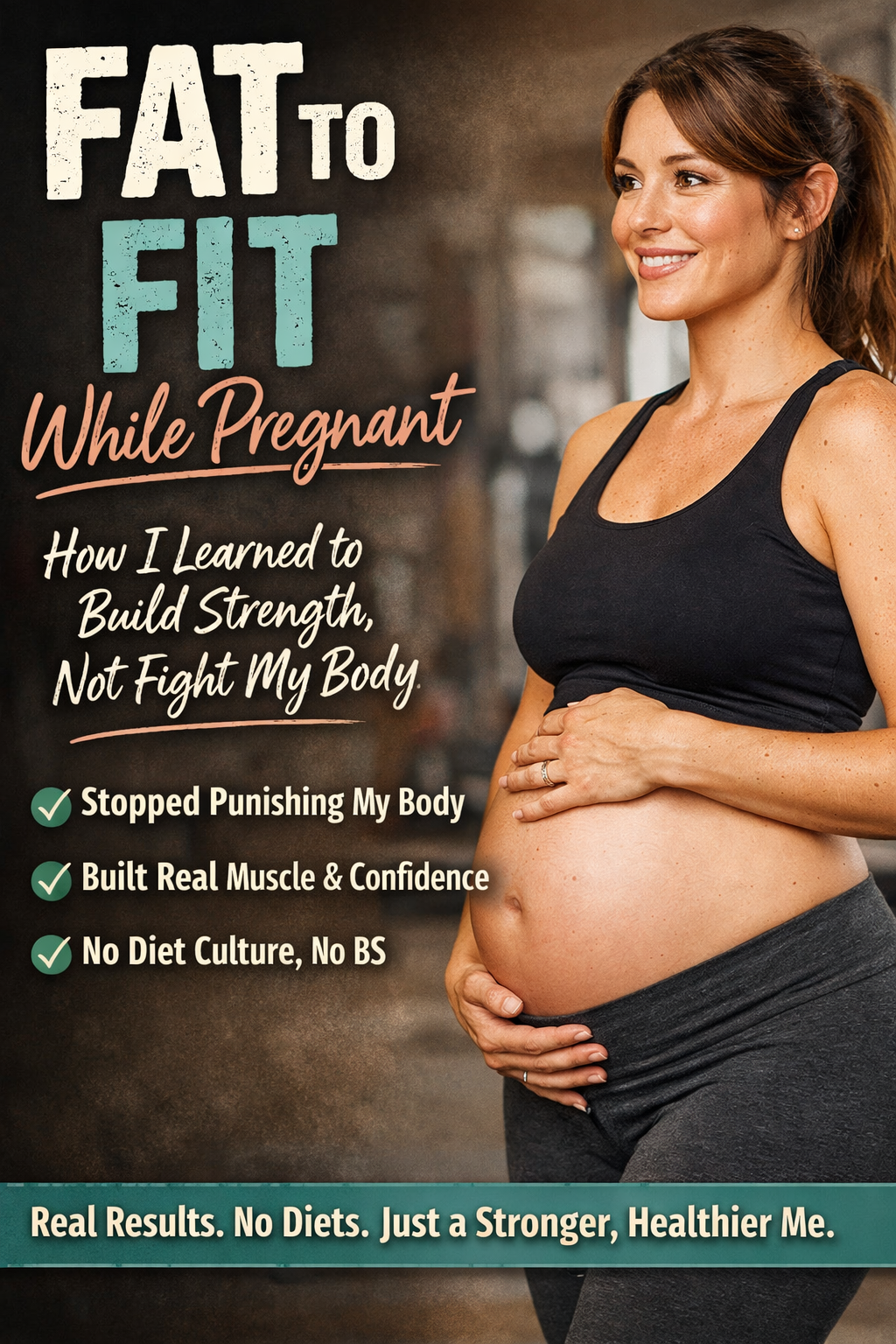
I didn’t plan to fall in love with movement while being pregnant.
If I’m honest, before pregnancy I believed fitness was something you either figured out early in life or ruined forever. I thought there was a small, unforgiving window in your twenties where you could build the “right” body, and if you missed it, your fate was sealed. That belief shaped everything I did. I trained hard, sometimes obsessively. I followed programs that promised results if I just stayed disciplined enough. I ate clean, skipped desserts at birthdays, and learned how to ignore hunger when it felt inconvenient.
I told myself that discomfort was normal. That hating your workouts was part of being committed. That pushing through exhaustion meant I was doing something right.
And still, my body didn’t change the way I thought it should. Not the way social media suggested it would. No dramatic transformation, no sudden confidence, no feeling of arrival. Just the quiet frustration of doing “everything right” and still feeling like I was failing.
Then life interrupted my plans.
I got pregnant.
Suddenly, all the rules I had been living by stopped making sense. The structure I relied on disappeared. My body changed in ways I couldn’t control, predict, or reverse with effort. And for the first time, forcing myself harder wasn’t an option.
When you’re pregnant, your body becomes public property in a way that’s difficult to describe unless you’ve lived it. Everyone has an opinion. One person tells you to rest constantly. Another warns you not to be lazy. Someone insists exercise is dangerous. Someone else swears that if you don’t “stay active,” you’ll regret it forever. All of this happens while your body is performing the most physically demanding task it will ever do: growing another human being.
At first, I felt unmoored. My identity as the “strong one” didn’t fit anymore. My jeans didn’t fit either. My energy came in waves that had no respect for schedules or plans. Some days I felt capable, even powerful. Other days I felt fragile and disconnected from the body I thought I knew so well.
What surprised me most wasn’t the physical change. It was how deeply my mindset had to shift.
Before pregnancy, I trained to look a certain way. I measured success visually. Leaner arms, flatter stomach, visible progress. During pregnancy, that framework collapsed completely. I couldn’t chase aesthetics. There was no finish line. And in that void, something unexpected happened.
I started moving to feel a certain way instead.
Strong. Capable. Calm. Grounded. Connected.
That shift changed everything.
For the first time, movement wasn’t about earning food or shrinking myself. It wasn’t about control. It was about support. I moved because it reduced pain. Because it helped my breathing. Because it made my body feel like a place I could live in instead of fight against.
That’s when I realized something I wish I had understood years earlier: fitness isn’t about the exercises you choose. It’s about the relationship you build with your body.
Pregnancy is the ultimate stress test for that relationship. Your routines break. Your energy fluctuates unpredictably. Your priorities shift. If your habits are built on punishment, rigidity, or self-criticism, they won’t survive this season. They’ll collapse under the weight of reality.
But if they’re built on respect, flexibility, and intelligent structure, they don’t just survive. They deepen.
I used to believe consistency meant doing the same thing every day, no matter what. Pregnancy taught me that real consistency looks very different. It’s not repetition; it’s adaptation. It’s showing up in ways that match the reality of your life, not the fantasy version of it.
Some days, showing up meant a slow walk and intentional breathing. Some days it meant a short strength session at home, modified and unglamorous. Some days it meant choosing food that supported me instead of skipping meals because nausea made eating complicated. And some days, showing up meant rest without guilt.
None of those choices looked impressive. None of them would have made good before-and-after photos. But they were sustainable. And sustainability changes everything.
One of the biggest myths pregnancy shattered for me was the idea that muscle is something women should fear. I grew up absorbing the message that muscle makes you bulky, heavy, less feminine. Pregnancy taught me the opposite.
Strong glutes supported my hips as my center of gravity shifted. A strong back reduced pain as my belly grew. Stable shoulders made everyday tasks easier. Strength didn’t make me rigid; it made me resilient. It allowed my body to adapt instead of break.
For the first time, I stopped seeing strength training as a way to burn calories and started seeing it as a way to build a body that could carry me through pregnancy, birth, and motherhood.
The same reframing happened with nutrition.
Before pregnancy, I was obsessed with eating “perfectly.” Clean meals, strict rules, constant mental math. During pregnancy, perfection disappeared overnight. Some days I craved fresh, balanced meals. Other days, crackers were the only thing my body tolerated. That forced me to confront something uncomfortable but liberating: nutrition isn’t about control. It’s about support over time.
Protein supports muscle, tissue repair, and recovery. Carbohydrates support energy, hormonal balance, and daily function. Fats support brain health and nutrient absorption. None of these are enemies. The problem was never the food. It was the belief that my body needed to be managed like a problem instead of nourished like a system.
As my body changed, my goal changed too. I stopped chasing a smaller version of myself and started building a more capable one. That mindset shift is what allows fat loss to happen naturally, without obsession, over long periods of time.
What most people don’t realize is that sustainable fat loss rarely comes from extremes. It comes from boring, repeatable habits done imperfectly, consistently, over years. I’ve seen women go all in for six weeks and burn out completely. I’ve also seen women make changes so small they barely noticed them at first, only to look back years later and realize they lived in a body that felt strong, light, and confident.
Pregnancy taught me patience. Patience with my body. Patience with progress. Patience with seasons where maintenance is success and transformation is not the goal.
That lesson changed how I understand long-term results.
Your body is not a project with a finish line. It’s a relationship that evolves over time.
That’s why quick fixes fail. They treat your body like a problem to solve instead of a system to support. Real results come when you build strength, nourish yourself adequately, move in ways you can sustain, and let go of all-or-nothing thinking.
If you’ve ever felt like you’re doing everything right but still not seeing progress, you’re not broken. Most likely, you’ve been following rules that don’t match your real life. Your nervous system, your stress levels, your sleep, your hormonal history, and your past relationship with dieting matter far more than another perfectly designed plan that ignores context.
Pregnancy makes this truth impossible to avoid. You can’t brute-force your way through it. You have to listen. You have to adapt. You have to let go of the idea that your worth is tied to how your body looks on any given day.
And paradoxically, that’s what creates the best long-term physical outcomes.
When you stop fighting your body, you start working with it.
Movement becomes something you return to instead of something you quit. Nutrition becomes something that fuels you instead of something that controls you. Progress becomes something you build patiently instead of something you chase desperately.
I used to believe results came from motivation. Now I know they come from systems.
Simple routines you can do even on tired days. Meals you don’t overthink. Strength work that makes you feel capable instead of punished. Mobility that keeps your body pain-free. Tracking progress lightly, without obsession.
That kind of structure survives pregnancy. It survives stress. It survives busy seasons and real life.
And here’s the part no one talks about enough: when you treat your body with respect, it gives back. Not just in how it looks, but in how it supports you through the hardest and most meaningful moments of your life.
So if you’re tired of guessing, tired of starting over, tired of feeling like fitness is something you constantly fail at, hear this from someone growing a human while still choosing to move, fuel, and care for her body:
You don’t need more discipline. You need a better approach.
One that builds strength instead of shame. One that fuels instead of restricts. One that fits real life instead of fantasy routines.
Your dream body isn’t built in a 30-day challenge. It’s built in thousands of small decisions made with patience, self-respect, and a plan that actually works long-term.
And if pregnancy taught me anything, it’s this:
Your body is capable of far more than you’ve been told.