
The Kinetic Chain: Why the Body Never Works in Pieces
The human body doesn’t move in separate parts. Muscles don’t work alone, joints don’t act independently, and no movement happens in isolation. Every time you walk, squat, reach overhead, or lift something off the floor, your entire body is involved in some way.
This is where the idea of the kinetic chain comes in.
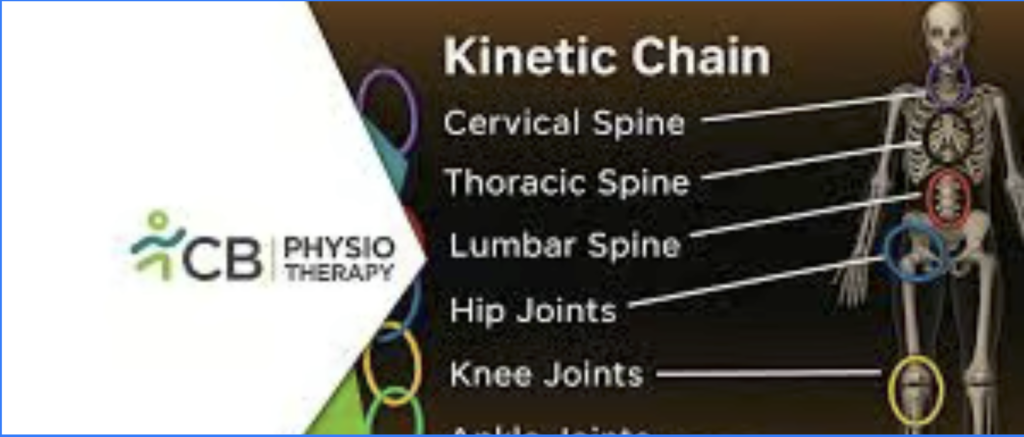
The kinetic chain simply means that the body is a connected system. What happens at one joint affects the joints above and below it. When everything works together, movement feels smooth, strong, and controlled. When something isn’t working well, the body finds a way to compensate—and that’s often where pain and injuries begin.
Understanding the kinetic chain can completely change the way you train, coach, or move in everyday life.
What the Kinetic Chain Really Means
Think of the body like a chain made of links. Each link represents a joint or muscle group. If one link is stiff, weak, or not doing its job, the rest of the chain has to adapt.
For example, if your hips don’t move well, your lower back usually picks up the slack. If your ankles are stiff, your knees often take more stress. If your upper back doesn’t rotate properly, your shoulders or neck will usually complain.
These problems don’t always show up right away. At first, the body is very good at compensating. But over time, those compensations add up.
Why Training in Isolation Often Falls Short
Traditional gym training often focuses on isolating muscles:
-
Leg day
-
Arm day
-
Chest day
There’s nothing wrong with isolation exercises. They can be helpful, especially for building muscle or during rehab. The problem comes when isolation is the only thing being trained.
In real life, the body doesn’t work that way. You don’t use just your biceps to pick something up. You don’t use only your quads to stand up. Your whole body works together.
When training ignores this, people often get stronger in the gym but still feel stiff, uncoordinated, or sore in daily movement.
Open vs. Closed Kinetic Chain (Without the Complicated Talk)
You’ll often hear trainers talk about open and closed kinetic chain exercises. Here’s the simple version.
Open kinetic chain exercises are movements where your hands or feet move freely.
Examples:
-
Bicep curls
-
Leg extensions
-
Seated leg curls
These are great for focusing on one muscle and can be useful in certain situations.
Closed kinetic chain exercises are movements where your hands or feet are fixed.
Examples:
-
Squats
-
Lunges
-
Push-ups
-
Deadlifts
These movements involve multiple joints and muscles working together, which is much closer to how the body actually moves.
A good program usually includes both—but leans more toward closed-chain movements.
How the Kinetic Chain Affects Injuries
Most injuries don’t come from one weak muscle. They come from poor movement patterns.
A few common examples:
-
Knee pain caused by weak hips or poor ankle mobility
-
Shoulder pain caused by a stiff upper back
-
Lower back pain caused by limited hip movement or poor core control
The painful area is often just the victim, not the real problem.
When you train the kinetic chain properly, stress is shared across the body instead of being dumped on one joint over and over again.
Assessing Movement the Simple Way
You don’t need fancy tools to understand how someone moves. You just need to watch.
The Squat
A squat tells you a lot.
-
Do the heels lift?
-
Do the knees collapse inward?
-
Does the chest fall forward?
Each of these points to a different part of the kinetic chain that needs attention.
Single-Leg Movements
Single-leg exercises show balance, control, and stability.
-
Does the hip drop?
-
Does the knee wobble?
-
Can they stay controlled?
Overhead Reach
Ask someone to reach overhead.
-
Do they arch their lower back?
-
Do the shoulders move smoothly?
Simple movements often reveal the biggest issues.
Programming with the Kinetic Chain in Mind
1. Fix Mobility First (Where Needed)
If a joint doesn’t move well, loading it harder usually makes things worse.
Focus on:
-
Ankles
-
Hips
-
Upper back
A few minutes of mobility work can make a huge difference.
2. Build Stability Before Heavy Loads
Stability allows strength to actually transfer through the body.
Important areas:
-
Feet and ankles
-
Core
-
Shoulder blades
If these areas aren’t stable, strength leaks out.
3. Train the Body as One Unit
Compound movements should be the foundation.
-
Squats
-
Hinges
-
Pushes
-
Pulls
These movements teach the body to work together instead of in pieces.
4. Use Single-Side Training
Unilateral exercises expose weaknesses fast.
-
Split squats
-
Single-leg deadlifts
-
One-arm rows
They improve balance and help correct side-to-side differences.
5. Don’t Forget Rotation
Life isn’t just forward and backward.
Rotational and anti-rotational exercises connect the upper and lower body through the core and help protect the spine.
A Simple Kinetic Chain–Focused Workout
-
Goblet squats
-
Reverse lunges
-
Push-ups
-
One-arm dumbbell rows
-
Farmer’s carries
-
Side planks
Nothing fancy. Just movements that make the body work together.
Final Thoughts
The kinetic chain isn’t a buzzword. It’s how the body is designed to move.
When training respects that, people move better, feel stronger, and get injured less often. Strength becomes more usable, posture improves, and everyday movement feels easier.
If your goal is long-term health, performance, and confidence in movement, training the body as a connected system isn’t optional—it’s essential.