

Not in a dramatic way. Not in a heroine-walking-into-the-fog way. Just… softened. Blurred at the edges. Hidden under thick coats, sensible boots, neutral knits. The kind of winter where the sky is permanently grey, my skin forgets what sunlight feels like, and even my reflection seems slightly muted.
This year was one of those winters. The kind where I caught myself reaching for the same oversized sweater day after day, telling myself I was “being practical,” when really I just didn’t feel particularly luminous. And then, somewhere between doomscrolling and my third coffee, I started noticing something on the runways that made me sit up straighter.
Victorian collars.
Not the shy, delicate kind. The dramatic, high, ruffled, unapologetically romantic kind. The kind that rises up around your neck like a soft fortress. The kind that says: I may be covered, but I am not invisible.
At the Fall 2026 shows during New York Fashion Week, designers leaned into high-neck drama in a way that felt less costume and more emotional armor. And as a woman who has spent years thinking about how clothes affect mood, posture, even self-worth, I couldn’t ignore what was happening just below the chin.
The first collection that truly grabbed me was Collina Strada. Their show, titled “The World Is A Vampire,” felt like stepping into a modern gothic fairytale. There were translucent layers, frothy ruffles, organza collars rising high at the neck. It wasn’t sweet Victorian nostalgia; it was dark romanticism with intention. Designer Hillary Taymour described the idea of withdrawing into self-made sanctuaries as the world outside grows harsher. And I felt that in my bones.
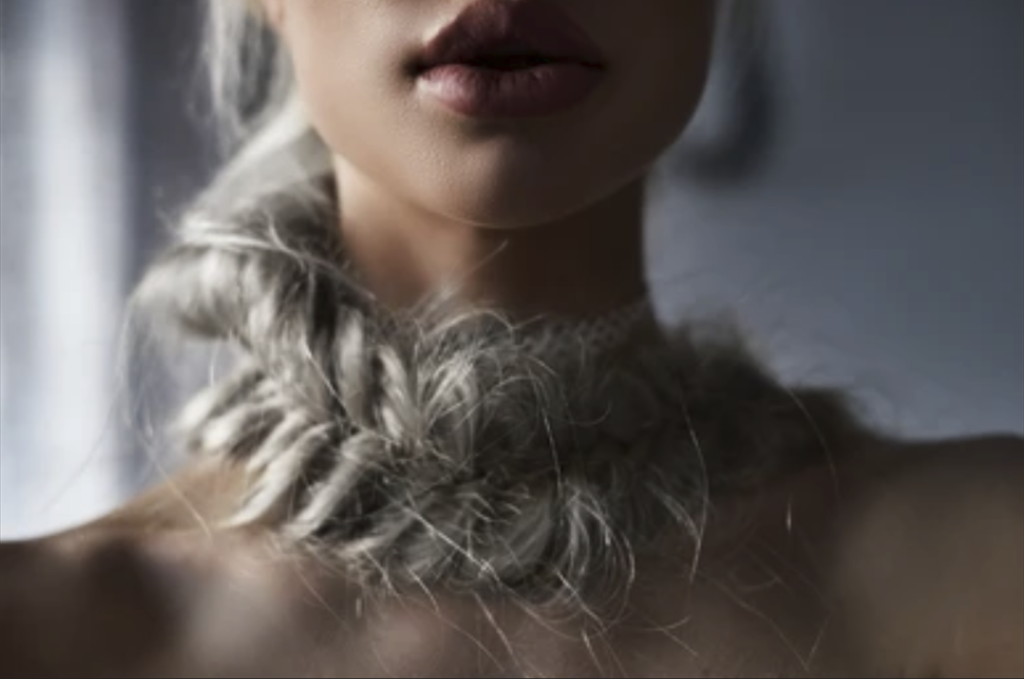
There is something deeply feminine about creating your own sanctuary. We do it with skincare rituals. With candles. With Sunday hair masks. With silk pillowcases and slow mornings. And now, apparently, with collars that wrap around our throats like protective poetry.
From a beauty perspective, high Victorian collars change everything. They force attention upward. When fabric frames the neck and jawline, the face becomes the focal point. Skin, lashes, lips—suddenly they matter more. I found myself imagining dewy foundation against crisp white ruffles, a soft berry stain on the lips peeking out from above structured lace. The contrast is delicious.
Then came Coach under the direction of Stuart Vevers. His Fall 2026 collection drew inspiration from The Wizard of Oz—specifically that magical shift from sepia monotony into vibrant technicolor. The show began in greyscale and slowly bloomed into reds and blues. And throughout, there were collars—folded, wrinkled, intentionally imperfect.
What I loved most was the juxtaposition. Tattered lace. Patchwork blazers. Worn textures. And then, built-in ruffs rising at the neck like quiet defiance. It felt very downtown New York: a little messy, a little rebellious, but still deeply styled. Like the cool girl who pretends she didn’t try, but definitely moisturized.
And that’s when it hit me. The Victorian collar isn’t about modesty. It’s about control. It’s about choosing what to reveal and what to protect.
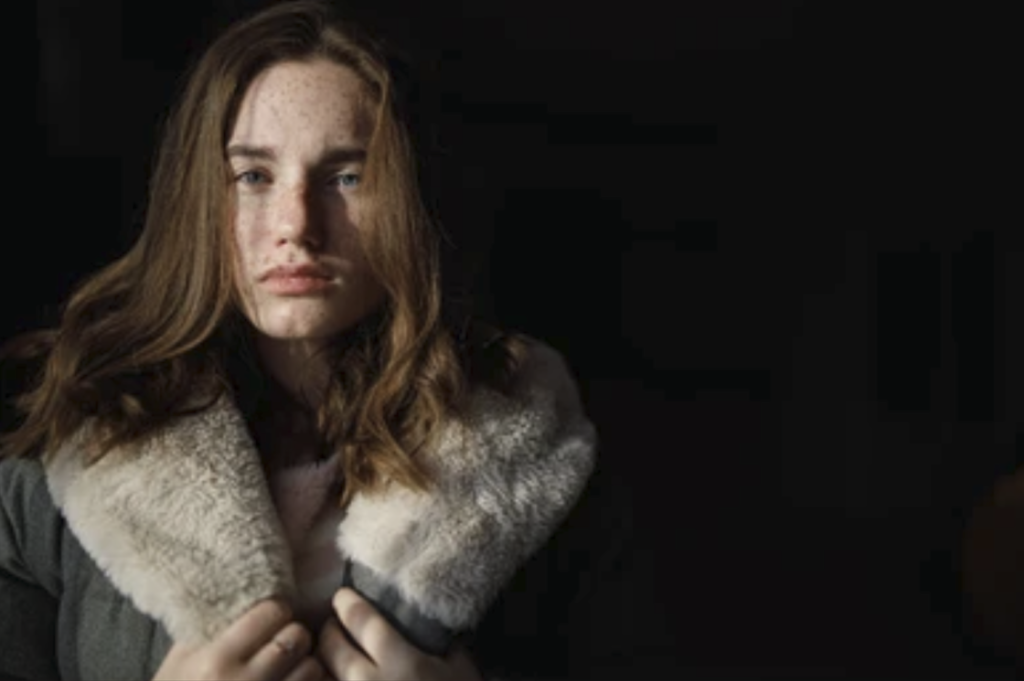
In the beauty industry, we’ve spent the last decade obsessed with exposure. Glowing shoulders. Highlighted collarbones. Glossy décolletage. And don’t get me wrong—I adore a luminous clavicle moment. But there is a different kind of sensuality in concealment. In letting the neck disappear into structure, so that the face becomes even more powerful.
When Rachel Scott presented her first collection as Creative Director at Proenza Schouler, she leaned into this idea beautifully. Known for designing with women’s bodies in mind, Scott created chin-grazing button-ups and slinky dresses that revealed shoulders and collarbones—but not the neck. It was a subtle shift, yet it changed the entire energy of the silhouette.
As someone who has worked in and around the beauty space for years—testing products, writing about skincare, interviewing estheticians—I know how much of our confidence is tied to how “exposed” we feel. A high neckline can feel safe. Secure. Intentional. It frames the face the way a good haircut does.
And framing is everything.
From a makeup standpoint, Victorian collars beg for a certain softness. Skin that looks lived-in, not masked. A cream blush blended high on the cheekbones. Perhaps a wash of taupe or mauve shadow that echoes the romantic undertones of the fabric. I imagine pairing a dramatic white ruff with barely-there foundation and brushed-up brows. Or going full contrast: porcelain matte skin, deep oxblood lips, hair slicked back to expose the architecture of the collar.
Hair changes too. When the neck is covered, you start thinking vertically. Updos suddenly feel modern again. Sleek low buns. Braids wrapped into crowns. Even a simple ponytail feels elevated when it rises from behind lace.
I tried it myself one grey Tuesday. I didn’t have an actual runway-worthy Victorian blouse, but I found a high-necked ruffled top tucked away in my wardrobe—a piece I had bought years ago and deemed “too much.” I paired it with simple black trousers, slicked my hair back into a low bun, and applied a satin-finish lipstick instead of my usual gloss.
The effect was immediate. I stood differently. Straighter. There was something about the fabric brushing my jawline that made me more aware of my posture, my expressions, even my voice. I felt contained in the best possible way. Not restricted. Refined.
And that’s the paradox. In a world that constantly tells women to reveal more—to be more accessible, more exposed, more consumable—there is power in covering the throat. In raising the collar.
At Zankov, designer Henry Zankov pushed knitwear high beyond the collarbone. Tall feathers tucked into folded sweaters. Thick scarves with tassels acting like wind-resistant accessories. Striped turtlenecks that clung like second skins. It felt aristocratic but playful. Peculiar but wearable.
And it made me think about texture in beauty. How winter skin craves layers the same way our bodies do. Hydrating serums under richer creams. Facial oils pressed into cheeks before foundation. The Victorian collar mirrors that instinct. It layers. It protects. It cocoons.
There’s also something undeniably cinematic about it. Victorian references evoke drama, history, romance. When you wear a high ruffle, you tap into a lineage of women who dressed with intention—even when their freedom was limited. Today, we have the privilege of choice. We can adopt the aesthetic without inheriting the constraints.
That feels important.
In the beauty industry, trends often move at a frantic pace. One month it’s clean girl minimalism. The next it’s hyper-glam contouring. Then suddenly we’re nostalgic for 90s grunge. But the rise of the Victorian collar feels less like a fleeting micro-trend and more like a mood shift.
A desire for protection.
A craving for drama that isn’t loud but deliberate.
I’ve noticed, too, how this silhouette interacts with skincare marketing. Brands are leaning into barrier repair, resilience, strengthening the skin against environmental stressors. We talk about pollution shields and microbiome balance. The language is protective. Defensive. Nourishing.
Fashion and beauty are always in conversation, even when we pretend they’re separate industries. A high collar around the neck echoes the way we layer SPF under makeup, the way we carry lip balm in every bag, the way we shield ourselves emotionally and physically from harshness.
And yet, despite all this talk of protection, there is something undeniably sexy about a Victorian collar.
Not in the obvious way. Not in the bodycon dress, mini skirt, glossy-lips-under-neon-lights way. But in the slow-burn way. The intelligent way. The kind of allure that makes someone lean in closer.
When the neck is hidden, the eyes become more magnetic. The mouth more intentional. Even a subtle smile feels charged.
I’ve started pairing high-neck tops with bold earrings—letting sparkle peek out from above ruffles. I’ve experimented with deeper lip shades than I would normally dare in daylight. There’s something about being framed that encourages boldness elsewhere.
And perhaps that’s the real lesson of this trend.
We don’t always need to reveal more to feel glamorous. Sometimes we need structure. Sometimes we need fabric rising up around us, reminding us of our own presence.
On days when the weather whips my hair into knots and the sky refuses to brighten, I no longer reach for invisibility. I reach for something that frames me. Something that says: I am here. I am layered. I am intentional.
The Victorian collar, in all its drama and romance, has become a small act of rebellion in my wardrobe. A reminder that glamour doesn’t have to scream. It can whisper from behind lace. It can stand tall in knit. It can rise quietly at the neck and change the way you carry yourself.
And maybe that’s what we’re really chasing when we talk about wanting to feel sexy again.