
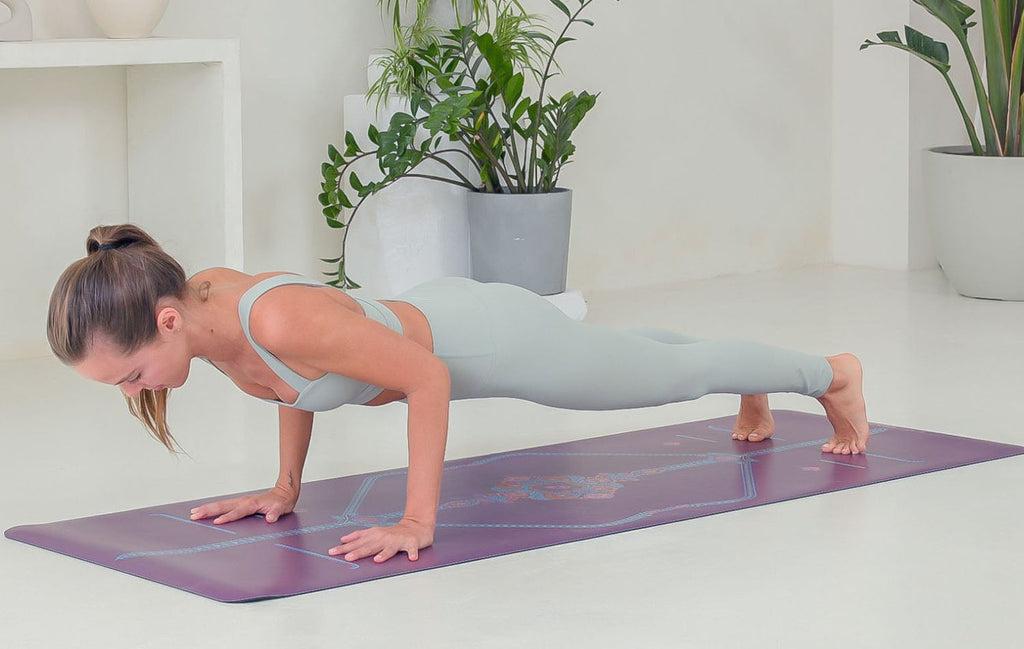
There was a time when I didn’t think about my wrists at all. They were just… there. Quiet, obedient, invisible little hinges between my hands and my arms. I used them to type programs, answer emails, demonstrate planks, guide students into downward dog, hold dumbbells, carry groceries, scroll my phone before bed. They never complained. Until one day, they did.
It started subtly. A dull ache during push-ups. A strange tightness in plank. That sharp, electric whisper in downward dog that makes you shift your weight back into your heels because something doesn’t feel right. I remember thinking, “That’s odd. I stretch all the time. I’m doing everything right.” I was a personal trainer and yoga teacher — the person people came to when something hurt. And yet here I was, quietly massaging my own wrist after class, hoping no one noticed.Wrist pain has a way of humbling you.In today’s world, our wrists live a double life. On one side, they’re tech workers — hovering over keyboards, gripping a mouse, tapping phones, holding steering wheels. Static. Slightly extended. Rarely moving through full, active ranges. On the other side, they’re suddenly asked to bear weight in yoga flows, push-ups, burpees, handstands, kettlebell cleans. Dynamic. Loaded. Demanding strength and resilience they were never specifically trained for.It’s not dramatic to say that many women I work with don’t think about their wrists until they hurt. I didn’t either. We stretch them occasionally — that classic palm-down, fingers-back pull. Maybe circle them a few times before class. But when pain shows up, stretching is usually the first and only tool we reach for.
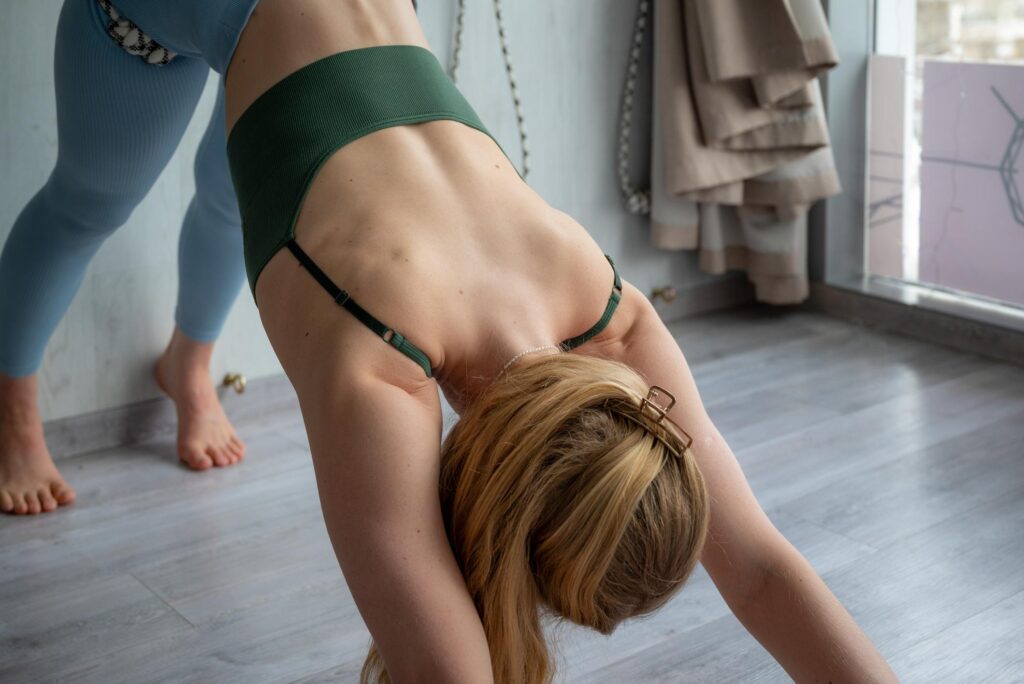
And here’s the uncomfortable truth I had to accept myself: most of the positions where we feel wrist pain already place the wrist in near end-range extension. Think about downward dog. Your palm is flat, fingers spread, elbow extended, and your wrist is deeply extended under load. The distance between the back of your hand and the top of your forearm is already minimized. Adding more passive stretching to a joint that’s irritated and being asked to bear load can feel soothing for a few minutes — because stretching does have a short-term analgesic effect — but it doesn’t build the capacity the joint actually needs.When I finally stepped back and looked at my own routine honestly, I realized something. I was incredibly strong in my glutes, my back, my legs. I programmed progressive overload carefully. I tracked volume. I trained pull-ups and kettlebell flows. But my wrists? I assumed they’d just keep up.They weren’t weak in an obvious way. I could hold a plank. I could demo chaturanga. But strength isn’t just about surviving a position. It’s about having reserve capacity. It’s about being stronger than the demand placed on you. And my wrists were living right at the edge of their capacity — every day.So I shifted my mindset. Instead of asking, “How do I stretch this away?” I started asking, “How do I make my wrists stronger than my lifestyle?”

That question changed everything.Before I share what worked for me and the women I coach, I want to say something important. Wrist pain is not always “just weakness.” If you have numbness, tingling into the fingers, persistent swelling, significant loss of grip strength, or night pain that wakes you up, that deserves medical evaluation. Conditions like tendinopathy, ligament sprains, or nerve compression need appropriate care. But for the vast majority of mild-to-moderate discomfort linked to repetitive use and load intolerance, building strength is transformative.The wrist is a complex joint — actually a series of small joints working together. It moves in flexion (bending the palm toward the forearm), extension (bending the back of the hand toward the forearm), radial deviation (tilting toward the thumb), and ulnar deviation (tilting toward the pinky). It also relies heavily on the muscles of the forearm, which originate near the elbow and control finger and wrist movement through long tendons. That means wrist resilience is not just about the tiny joint itself — it’s about the entire forearm system.
When we type for hours, we often hold a low-grade static contraction. When we grip phones, we shorten the flexors. When we train push-ups without progressive adaptation, we load extension suddenly and repeatedly. Over time, tissues can become sensitive — not necessarily damaged, but overwhelmed.For me, the turning point came during a busy teaching week. I had multiple vinyasa classes stacked back-to-back. By the third day, I was modifying my own demos, dropping to fists instead of palms, avoiding longer holds. I felt frustrated. I felt, if I’m honest, embarrassed. Shouldn’t I, of all people, have this figured out?That’s when I decided to treat my wrists like I would any other muscle group. With intention. With progression. With respect.I started small. And I mean small.
The first exercise looked almost laughably simple: seated wrist extension with a light dumbbell. I rested my forearm on my thigh, palm facing down, wrist hanging just off the knee. Slowly, I lifted the back of my hand toward the ceiling. Controlled. Two seconds up. Two seconds down. Eight repetitions felt… surprisingly challenging. Not painful, but effortful in a way I hadn’t felt before.Then I flipped my palm up and trained wrist flexion the same way. Again, slow. Deliberate. No swinging. No ego. Just muscle.What surprised me most wasn’t the burn. It was the awareness. I realized I had never truly felt those muscles working in isolation. They were always background players.Over the next weeks, I added radial and ulnar deviation — holding a light weight vertically like a hammer and gently tilting it side to side. I practiced gentle loaded wrist rocks on all fours, shifting my shoulders slightly forward over my hands and back again, staying well within comfort. I trained grip strength with controlled farmer carries and dead hangs scaled to my tolerance.I approached it exactly the way I coach postpartum clients rebuilding their core: gradual exposure, consistency, patience
One set of 8–10 repetitions, once or twice a week at first. That was it. It felt almost too easy. But adaptation is not a race. Tendons in particular respond to load slowly. They need time to remodel. Jumping to high volume because you’re motivated is one of the fastest ways to flare symptoms.By week three, I noticed something subtle. Downward dog felt less sharp. Plank felt more stable. It wasn’t dramatic — there was no cinematic moment where I held a ten-minute handstand and cried tears of joy — but there was a quiet confidence building.Strength is often quiet like that.What I also changed, and this is something I now talk about constantly with my female clients, was my relationship with modification. So many of us push through discomfort because we don’t want to look weak. Especially in fitness spaces. Especially as women trying to prove we belong in strength training.I started giving myself permission to elevate my hands on yoga blocks in longer holds. To perform push-ups on parallettes or dumbbells, which keep the wrist in a more neutral position. To reduce volume on high-rep burpee days. Not as avoidance, but as intelligent load management.There’s a difference.Avoidance is fear-based. Load management is strategic.
I also became more mindful of my non-training hours. I adjusted my keyboard height. I took micro-breaks every 30–45 minutes to move my wrists through gentle circles and open-close fist patterns. I stopped scrolling in bed with my wrists bent at awkward angles. These weren’t dramatic lifestyle overhauls. They were small shifts that reduced cumulative stress.One of the biggest myths I used to believe — and I see it everywhere — is that pain during weight-bearing wrist positions automatically means your body “isn’t built” for them. I hear women say, “My wrists just can’t do push-ups.” But when we unpack it, what they really mean is, “My wrists haven’t been progressively prepared for push-ups.”We don’t expect to deadlift our bodyweight without training. We don’t expect to run a half marathon without conditioning. But somehow we expect our wrists to tolerate full bodyweight in extension without ever specifically strengthening them.When I began introducing wrist strengthening into group classes, the reaction was almost funny. Women would giggle at the tiny dumbbells. “Is this really going to help?” And then by rep ten, their forearms would be shaking.Within a month or two, many reported less discomfort in planks and yoga flows. Not zero sensation — wrists are still loaded in those positions — but less sharpness, more stability, faster recovery.
The routine that evolved for me — and that I still use as a 10-minute “insurance policy” — includes five core movements: wrist extension, wrist flexion, radial/ulnar deviation, controlled quadruped wrist rocks, and grip work. Sometimes I add finger extension using a light resistance band around the fingers to balance all the gripping we do daily.What matters most is not the exact exercise selection. It’s the principles.Train through pain-free or mildly uncomfortable ranges, not sharp pain. Move slowly enough that you control both lifting and lowering phases. Start with low volume. Increase gradually — up to two or three sets of 12–15 repetitions, twice per week — only if your symptoms remain stable or improve. And be consistent. Tendon and connective tissue adaptation rewards patience.As a woman, I also think there’s something deeper here. We’re often taught to take care of everyone else before ourselves. We’ll foam roll our partner’s back. We’ll adjust our kids’ backpacks. But we ignore our own subtle aches until they scream.
My wrist pain was, in a way, a small wake-up call. It reminded me that strength isn’t just about aesthetics or performance milestones. It’s about durability. It’s about being able to move through your life — lifting your suitcase into an overhead bin, carrying your toddler, flowing through a yoga class, typing your ideas into the world — without flinching.There was a moment about three months into my wrist strengthening experiment that I remember clearly. I was teaching a power flow class. We moved through plank variations, shoulder taps, slow chaturangas. At the end, in downward dog, I realized I wasn’t thinking about my wrists at all.They were just… there. Quiet again. Supportive. Capable.But this time, I appreciated them.I won’t pretend I never feel any wrist sensation anymore. On high-volume weeks or after long hours at my laptop, I still notice fatigue. The difference is that it no longer feels mysterious or scary. I understand the relationship between load and capacity now. If discomfort creeps up, I reduce load slightly, maintain strength work, and give tissues time.And that knowledge feels empowering.If you’re reading this because your wrists ache during workouts or yoga, I want you to know this: you’re not broken. Your body is communicating. It’s asking for preparation, not punishment. For progression, not panic.Stretching has its place. Gentle mobility work can feel wonderful and support movement quality. But if stretching is the only tool in your toolbox, you’re missing the opportunity to build resilience.Your wrists deserve the same thoughtful programming you give your glutes or your core. They deserve gradual overload. They deserve rest. They deserve attention before pain forces it.
When I look back at the version of me who quietly rubbed her wrist between classes, I feel compassion. She was doing her best with the information she had. But I’m grateful she chose curiosity over frustration.Now, when a client approaches me after class and says, “My wrists always hurt in plank. Can you show me a stretch?” I smile — and then I gently say, “Yes. And let’s also make them stronger.”Because strong wrists don’t just make workouts more comfortable. They change the way you inhabit your body. They allow you to press into the ground with confidence. To carry weight without hesitation. To support yourself — literally — with trust.And as women, that metaphor isn’t lost on me.We are allowed to build strength in the small, overlooked places. We are allowed to take up space on the mat, in the gym, at the keyboard. We are allowed to prepare our bodies not just to endure life, but to move through it powerfully.Your wrists are not an afterthought. They are part of your foundation.And foundations deserve strength.