
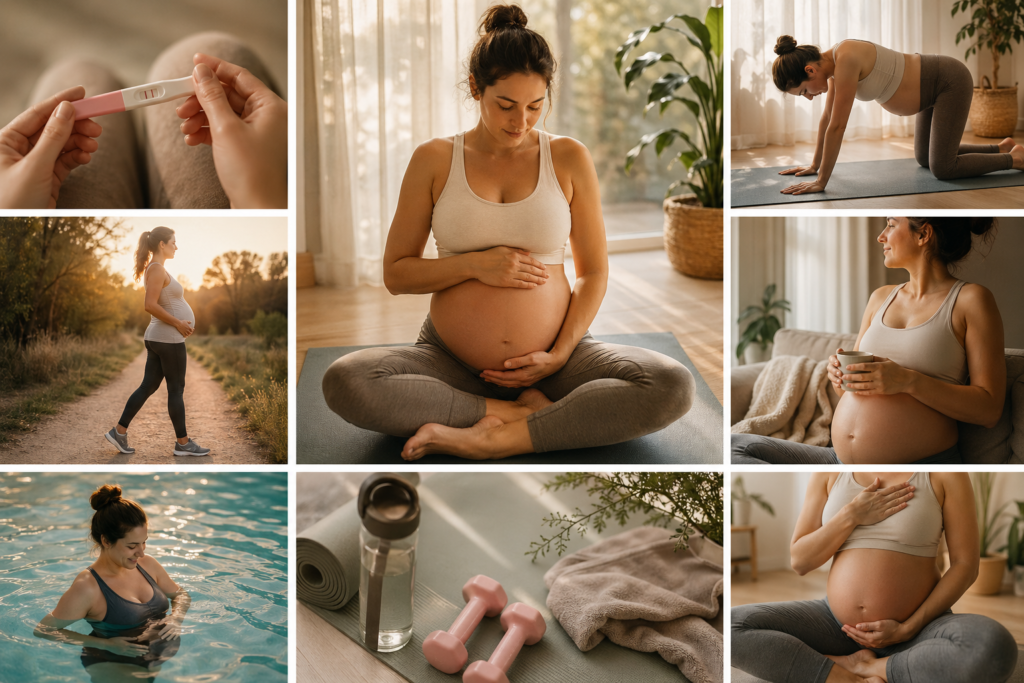
I remember the moment I first saw those two lines on the pregnancy test. My hands were shaking, my heart was doing something between excitement and fear, and suddenly everything felt different. It wasn’t just about me anymore. There was another life beginning inside me, and almost immediately my mind started asking questions I had never thought about before. Can I still work out? Will I hurt the baby if I move too much? Or worse—what if I don’t move enough?
Before pregnancy, fitness had always been part of my identity. Not in an extreme way, but in a comforting, grounding way. A morning walk, a yoga class, sometimes strength training when I felt strong and motivated. Exercise was my way of clearing my head. So when I became pregnant, the idea of suddenly stopping everything felt strange, almost like losing a part of myself. At the same time, I was terrified of doing the wrong thing. Every article online seemed to contradict the next one. One voice said “stay active,” another said “be careful,” and another made it sound like I should be resting on the couch for nine months straight.
The truth, I learned slowly and gently through my own experience, is somewhere in the middle. Pregnancy is not about pushing limits or chasing fitness goals. It’s not about proving anything. But it is also not about becoming inactive or disconnected from your body. It’s something softer than that—something more intuitive. It’s about staying in motion in a way that respects the changes happening inside you.
In those early weeks, I was tired in a way I had never experienced before. Not just sleepy, but deeply drained, like my body was doing invisible work all the time. Some days, even thinking about exercise felt overwhelming. I remember lying on the couch and feeling guilty for not moving, then feeling guilty for even thinking I should move. That guilt was unnecessary, I realize now. Because one of the first lessons pregnancy teaches you is that your energy is no longer fully yours to control.
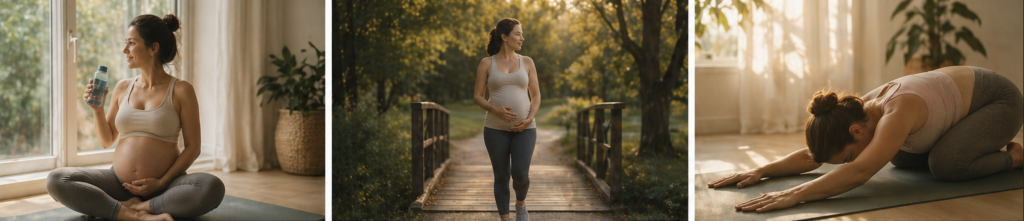
Eventually, I stopped trying to follow strict routines and started listening instead. Some days my body wanted a gentle walk outside, even if it was just 15 minutes. Other days it wanted stretching on the living room floor, slow breathing, and nothing more. And some days, it wanted complete rest. I began to understand that all of those responses were valid.
One of the biggest fears I had was whether exercise could harm my baby. I think most first-time mothers feel this at some point. We become hyper-aware of everything we do. But my doctor reassured me something that stayed with me throughout my pregnancy: in a normal, healthy pregnancy, movement is not only safe but beneficial. That doesn’t mean doing anything extreme. It means staying gently active, supporting circulation, mood, strength, and mobility.
What surprised me most was how quickly I noticed the mental benefits. On days when I moved my body—even just a short walk outside—I felt more emotionally balanced. Less anxious. Less trapped in my own thoughts. Pregnancy can sometimes feel mentally intense, especially in the beginning when everything is uncertain and new. Exercise became a kind of emotional release for me, not a physical challenge.
But I also had to redefine what “exercise” meant.
It was no longer about sweating hard or pushing through fatigue. It became about connection. Connection to my breath. Connection to my changing body. Connection to the tiny life growing inside me. Some days that meant prenatal yoga on a mat in my bedroom, moving slowly and focusing on stability. Other days it meant walking through the park while talking quietly to my baby in my mind, imagining who they might become.
There were also days when I felt frustrated with my changing body. My balance was different. My stamina was different. Movements I used to do easily suddenly felt awkward. I had to learn not to judge myself for that. My body wasn’t failing—it was adapting. And adaptation, I realized, is a form of strength.
One thing that helped me tremendously was focusing on pelvic floor awareness early on. I had heard about pelvic floor exercises before, but I never truly understood their importance until pregnancy made everything more real. These small internal muscles suddenly became something I cared deeply about. Not in an obsessive way, but in a “this matters for my future recovery” kind of way. Gentle pelvic floor exercises became part of my daily awareness, like brushing my teeth—small, simple, but meaningful.
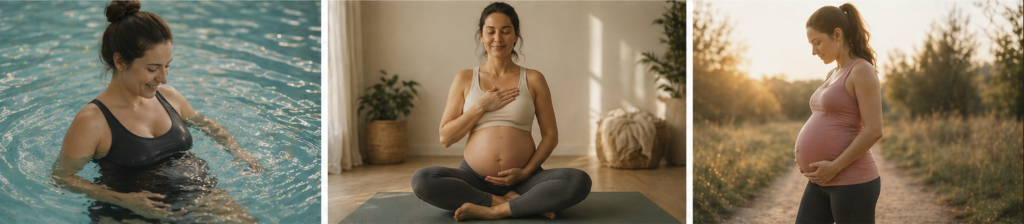
Swimming also became a kind of sanctuary for me later on. There’s something magical about being in water while pregnant. The weight of your body disappears for a moment, and you feel almost like yourself again. Movement becomes effortless. Your joints feel free. Your mind slows down. It’s one of the few places where I felt both supported and weightless at the same time.
Walking, though, remained my most consistent form of movement throughout pregnancy. It didn’t require planning or equipment. Just shoes, fresh air, and a willingness to step outside. Some days I walked slowly, almost like I was exploring the world for the first time. Other days I felt more energetic and took longer routes. I never forced it. I simply followed how I felt.
What I didn’t expect was how much exercise would affect my mental health. I had always known exercise releases endorphins, but experiencing it during pregnancy was different. It wasn’t about body image or fitness progress. It was about stability. Emotional stability. On days when hormones made me feel overwhelmed or anxious for no clear reason, movement helped me come back to myself. Even a small amount of activity created space in my mind.
Still, there were moments when I questioned everything. Am I doing too much? Not enough? Is this movement safe? Is this pace okay? I learned that pregnancy fitness is full of uncertainty at first, but over time, you begin to develop trust. Trust in your body. Trust in your doctor. And most importantly, trust in your ability to listen.
That listening became my most important skill.
If I felt dizzy, I stopped. If something felt uncomfortable, I adjusted. If I felt tired, I rested without guilt. There was no “pushing through” anymore. That mindset simply didn’t belong in this phase of life. Pregnancy taught me that slowing down is not the same as stopping. It is a different rhythm, not a lesser one.
As I moved into the second trimester, something shifted. My energy returned in waves. Not consistently, but enough that I could reintroduce more structured movement. Light strength exercises, gentle prenatal fitness routines, and more intentional stretching. I learned to modify everything. No lying flat on my back for long periods. No heavy lifting. No chasing personal records. Instead, I focused on stability, posture, and comfort.
What I found beautiful was how exercise became less about appearance and more about preparation. Preparation for birth. Preparation for recovery. Preparation for motherhood. Every squat, every stretch, every breath felt like I was building something deeper than muscle. I was building resilience.
Of course, there were still days when I did nothing. And those days were just as important. Rest is not the opposite of fitness in pregnancy—it is part of it. That was a hard lesson for me to accept at first, especially coming from a mindset where productivity often felt tied to movement. But pregnancy breaks that illusion very quickly. Your body will always tell you what it needs, if you’re willing to listen.
By the third trimester, movement became slower again. More intentional. More mindful. I wasn’t exercising to feel fit anymore—I was moving to feel comfortable. To support circulation. To ease stiffness. To prepare my body gently for the final stage of pregnancy and birth.
Looking back now, what I remember most isn’t the specific exercises I did. It’s how I felt during them. The quiet moments on a yoga mat. The peaceful walks at sunset. The gentle stretching while feeling my baby move inside me. It wasn’t about performance. It was about presence.
If I could share anything with another woman standing at the beginning of her pregnancy journey, it would be this: you don’t need to be perfect with exercise. You don’t need to follow a strict plan or compare yourself to anyone else. Your pregnancy fitness journey is deeply personal. Some days it will be strong and active. Other days it will be slow and restful. Both are healthy. Both are normal.
And most importantly, you are allowed to change.
Your body will change. Your energy will change. Your routine will change. And instead of resisting that, pregnancy invites you to flow with it.
There is no single “right” way to move through pregnancy fitness. There is only your way, shaped day by day, moment by moment, breath by breath.
And somehow, in that softness, I found something I didn’t expect. Not just a way to stay active during pregnancy—but a completely new relationship with my body. One built on trust instead of control. Awareness instead of pressure. And kindness instead of expectation.
That, more than anything, is what stayed with me long after the baby was born.