
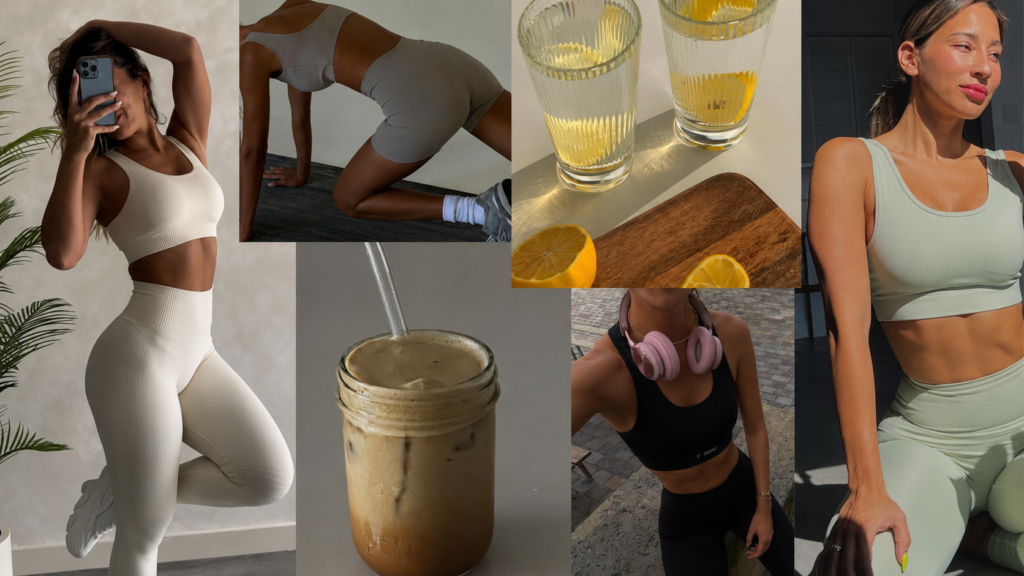
By a woman who used to hate the gym — and now can’t imagine life without it
There’s a version of me from about four years ago who would have laughed at the title of this article. Hard. She would have been curled up on her sofa in a beautifully oversized cashmere cardigan, a glass of something cold and fizzy nearby, scrolling through Pinterest boards labeled “soft life” and “quiet luxury morning routine” — with absolutely zero intention of breaking a sweat. Exercise was something other women did. The disciplined ones. The ones with naturally athletic builds and those weirdly cheerful 5 a.m. Instagram stories. It wasn’t for her. It wasn’t for me.
And yet — here I am, writing love letter to movement.
What changed? Everything and nothing. I didn’t suddenly turn into someone else. I didn’t stumble upon some magic fitness program that cracked the code. I didn’t hire a personal trainer who yelled at me in a warehouse gym until I cried (though if that’s your thing, no judgment, truly). What happened was slower and more interesting than that. It was a shift in how I thought about my body, my clothes, my aesthetic, and my life. It was the moment I stopped treating movement as punishment and started treating it as the most sophisticated form of self-care I’d ever discovered.
This article is for every woman who has ever stared at her workout gear at the bottom of the drawer — still folded, still pristine — and thought, why can’t I just do this? It’s for the women who love beautiful things: good coffee, considered outfits, the feeling of silk against skin, the kind of Saturday morning that feels like a scene from a film. It’s for the women who want to feel as good on the inside as they look on the outside. Because here’s the thing nobody tells you: exercise and elegance aren’t opposites. Done right, they are the same thing entirely.
The Real Reason Most Women Quit (It Has Nothing to Do With Laziness)
I want to get one thing out of the way immediately, and I want to say it clearly: the reason most women give up on exercise isn’t laziness. It isn’t a lack of discipline. It isn’t some character flaw you need to fix with a harsher morning alarm or a more aggressive meal plan. The reason most women — especially the kind of women drawn to beauty, elegance, and considered living — quit exercise is because they’ve been sold an experience that doesn’t fit them.
Think about the imagery we’ve been handed. Neon-lit gyms blasting music that rattles the walls. Women lifting impossible weights with expressions of grim determination. Before-and-after photos that reduce the human body to a project. The entire vocabulary of mainstream fitness culture — grinding, crushing it, no pain no gain, beast mode — is designed around a very specific kind of energy, and it’s an energy that has nothing to do with femininity, softness, elegance, or joy.
When I tried to exercise in my mid-twenties, I tried to be that person. I downloaded the HIIT apps. I bought the trainers that looked right on other women but felt wrong on me. I dragged myself to spin classes where the instructor screamed at us like a drill sergeant and everyone around me seemed to be in a private ecstasy I couldn’t access. I pushed through for a few weeks, hated every minute, and quit — feeling worse about myself than when I started.
The problem wasn’t that I didn’t want to move my body. Deep down, I think all of us want to feel strong and alive and capable. The problem was that I was trying to force myself into a fitness aesthetic that wasn’t mine. And aesthetic, for women like us — women who care deeply about the way things look and feel and sound — matters enormously. It matters more than any fitness influencer will ever admit.
Here’s what I’ve come to believe: you will never sustainably fall in love with exercise until you find your version of it. Not the version Instagram is selling. Not the version your fittest friend swears by. Yours. And finding that starts with giving yourself permission to look for beauty in movement rather than brutality.
The Streetwear Shift That Changed Everything
I want to talk about clothes for a moment, because I think it’s more important than we give it credit for.
There was a specific afternoon — I remember it with strange clarity — when I was standing in a boutique somewhere in East London, in that particular golden-hour light that makes everything look like a photograph. I’d been trying on oversized vintage-washed joggers, the kind that sat low on the hip and had just enough structure to look intentional rather than accidental. With a cropped ribbed tank and a clean pair of leather sneakers, the whole look felt effortlessly cool. Quiet. Considered. And something clicked.
I realized I was standing in a version of exercise clothing that I actually wanted to wear — not because I was planning to work out, but because it looked good. Because it fit the aesthetic I was building for my life: that modern, feminine-but-cool intersection of streetwear and softness that has been taking over the fashion landscape in the most exciting way.
We are living in the golden age of elevated athletic wear. The kind that blurs every line between going to the gym and going to brunch, between activewear and actual wear, between sporty and chic. The clean girl aesthetic, which swept through social media a couple of years ago and has only deepened into something more nuanced and sustainable since, essentially gave fashion permission to make fitness look beautiful. And I was late to the party, but once I arrived, I never wanted to leave.
Brands we already loved for their considered design philosophy started releasing pieces that could go from a yoga class to a coffee meeting without missing a beat. The quiet luxury movement, which at its core is about investment over excess and quality over noise, found its way into sportswear — and suddenly the idea of spending real money on a pair of perfectly tailored wide-leg sweatpants didn’t seem ridiculous. It seemed exactly right.
I started building a workout wardrobe the way I built the rest of my wardrobe: with intention, with love for fabric and fit and the way things made me feel. And something remarkable happened. When I had beautiful things to wear, I actually wanted to wear them. I wanted to go somewhere that justified the outfit. And where better to justify an outfit built around movement than somewhere I actually moved?
It sounds superficial. I know. But I think it’s actually deeply human and worth owning: for women who have cultivated a relationship with aesthetics, dressing well is a form of motivation that should never be underestimated.
What Elegant Streetwear Actually Looks Like in 2026
Before I go any further with the emotional and practical journey, let me stay in the fashion space for a moment because I think it’s genuinely worth exploring — especially for readers who, like me, use clothing as a language for how they want to feel.
The aesthetic vocabulary that dominates right now in 2026 is one I find genuinely exciting. We’ve moved past the era of skin-tight everything and neon-for-the-sake-of-it. The current mood is more architectural. More considered. There’s a softness to it that doesn’t apologize for itself.
Tonal dressing has completely transformed how I think about activewear. Wearing head-to-toe warm taupe, or soft ivory, or that particular shade of dusty slate that’s been everywhere this year, creates an effect that’s almost meditative. It’s minimal without being cold. It’s athletic without being aggressive. A matching set in a muted, sophisticated colour feels like a uniform in the best possible way — it removes the decision fatigue of getting dressed before a workout, while still making you feel put-together and intentional.
The oversized-meets-fitted contrast is everywhere right now, and it works brilliantly for movement. A cropped, fitted sports bra or tank with wide-leg track pants in a heavy-enough fabric to hold their shape. A close-fit bodysuit tucked into a flowing pair of drawstring trousers. The proportions feel modern and feminine without being restrictive — which matters, because restriction is exactly what we don’t need when we’re trying to build a practice we’ll actually sustain.
Fabric quality has become the true signifier of elevated streetwear, and I can’t overstate how much it matters. There’s a specific tactile experience of putting on a well-made piece — the weight of it, the way it doesn’t cling or crinkle, the way it moves with you rather than against you — that changes your relationship with your body in a quiet but profound way. I’m talking about modal blends that feel like second skin, thick-weave French terry that holds its structure wash after wash, technical fabrics with the drape of jersey but the function of something much more engineered.
Clean footwear remains the cornerstone of the look. The beautiful paradox of the modern athletic aesthetic is that the most stylish shoes are also the most comfortable ones. The low-profile leather runner, the minimalist sneaker in off-white or warm grey, the retro trainer silhouette that somehow feels both nostalgic and completely of this moment — these are shoes you actually want to move in, and they happen to look incredible doing so.
Accessories for the active woman have also had a quiet revolution. The oversized tote that doubles as a gym bag, in a washed canvas or refined nylon. The stacked gold rings that stay on during a yoga class because they’re the right kind of delicate. The good sunglasses that come along for the outdoor run. These details matter because they signal something important: that you are a whole woman who happens to also exercise, not a gym-goer who occasionally wears real clothes. That distinction is everything.
Finding Your Movement Language
Now let me get to the part that I think is the real heart of this conversation: what does it actually mean to fall in love with exercise?
I think love — whether for a person, a city, a craft, or a physical practice — always begins with recognition. With the feeling of oh, this is mine. This speaks to me. This fits. And the reason so many of us spend years in a frustrating cycle of starting and stopping is because we never find the form of movement that we actually recognize ourselves in.
I want to share the different modes of movement that eventually became meaningful to me, and I want to describe them honestly — not as a fitness plan, not as a prescription, but as an invitation to explore.
Walking: The Most Underrated Luxury of All
I started walking seriously before I started doing anything else, and I will defend walking as a complete, valid, sophisticated exercise for the rest of my life against anyone who tells me it doesn’t count.
There is something about a long, purposeful walk that no other form of movement can replicate. The way it gives you access to your own thoughts. The way the rhythm of it organizes your mind. The way it lets you exist in a city or landscape as a moving observer rather than a destination-seeking machine.
I started walking because it was the only exercise I could face on the days when everything felt heavy. I started with twenty minutes and built to an hour. I invested in the right shoes — I mean truly invested, not just bought what was on sale — and I started thinking about where I walked with the same care I gave to what I wore. I found a route that took me past a stretch of water in the early morning, and another that wound through a neighbourhood I loved for its architecture. I started taking my walks the way some people take their coffee: as a ceremony.
And then something shifted. My posture changed. My sleep improved. My energy levels in the afternoon — previously the dead zone of every day — became less catastrophic. I started noticing that I wanted to walk. Not that I should walk, but that I wanted to. That’s the first sign of love, I think: the want.
Pilates: Where Elegance and Strength Actually Live
If you had told me three years ago that I would become genuinely, sincerely, slightly embarrassingly devoted to Pilates, I would have filed that information under “things that happen to other kinds of women.” Women with more patience than me. Women who liked slow things.
Here’s what I didn’t understand then: Pilates is not slow. Pilates is precise. There’s a difference that is, I think, very important for the kind of mind that gets bored easily and needs to feel engaged rather than simply tired.
I came to Pilates through the reformer, which — if you haven’t encountered one — is a piece of equipment that looks like a medieval apparatus but functions as the most intelligent resistance machine ever invented. The resistance is spring-based, which means it challenges your body through the full range of motion in a way that feels entirely different from weights. It is deeply demanding in the most sophisticated possible way. It is also, genuinely, the thing that changed my body more visibly and more sustainably than anything else I’ve tried.
But what kept me coming back wasn’t the physical results, as lovely as those are. It was the quality of attention that Pilates requires. You cannot be somewhere else mentally when you’re working on the reformer. The work is too specific, too technical, too beautifully demanding. Every session is a problem-solving exercise. Every session teaches you something new about how your body works, where it holds tension, what it’s capable of.
And — I feel I must say this — the aesthetic of a good Pilates studio is not insignificant. There is a reason Pilates has become so deeply embedded in the clean girl, soft life, quiet luxury world of modern feminine aesthetics. The light. The neutral palette. The kind of focused, peaceful energy in the room. It feels like the physical embodiment of the kind of life we’re all trying to build: intentional, considered, quietly strong.
Yoga: Not What I Expected, Better Than I Imagined
My relationship with yoga has been complicated by the fact that I came to it through a cultural moment that had flattened it into an aesthetic trend rather than a practice — all handstands on beach cliffs and colour-coordinated mats and impossibly bendy people in impossibly expensive leggings.
What I found when I actually committed to it — as in, genuinely showed up consistently for a period of months rather than dipping in and out — was something far more interesting than the Instagram version. Yoga has a capacity for transformation that is almost sneaky in how quiet it is. It works at a level that other forms of exercise don’t quite reach. It changes the conversation you have with your body from one of external appearance to one of internal sensation and capacity.
I’m not going to get into the spiritual dimensions of yoga because I think that’s a personal journey and I’m not the right guide for it. But I will say that the discipline of a consistent yoga practice — the commitment to showing up, to doing the same poses that challenged you last week, to sitting with the discomfort of the poses you haven’t cracked yet — builds a psychological muscle that translates into everything else. It teaches you to stay. And the ability to stay, to not quit when things get uncomfortable, is perhaps the most useful thing I’ve taken from any form of exercise.
The Joy of Dancing Alone in Your Kitchen (And Why It Counts)
I want to include this because I think it matters and I think it gets left out of serious fitness conversations too often: the joy of moving freely, without structure, without performance, without any particular goal.
Dancing alone has been, at various points in my life, the only exercise I could access emotionally. In the periods when the gym felt impossible and the yoga mat felt like a reproach, I danced in my kitchen while making coffee, in my living room while music played on a Sunday afternoon, in front of the mirror in a way that was more celebration than choreography. And it kept something alive in me — the basic sense that my body was a thing that could feel joy, not just a project that needed managing.
There is no exercise that will work if you hate it. But there is very likely some form of movement that your body already loves, even if it doesn’t look like exercise yet. Pay attention to what makes you want to move. That impulse is data.
The Identity Shift: From Someone Who Doesn’t Exercise to Someone Who Does
This is the part I want to linger in, because I think it’s the most psychologically important and the least discussed.
The gap between “someone who wants to exercise” and “someone who actually does” is not really about motivation. Motivation is a flame — it flares up and dies, flares up and dies, completely unreliable as a foundation for anything sustained. The real gap is about identity. About which version of yourself you believe in.
For years, my identity — the story I told myself about who I was — did not include exercise. It included other things: being well-read, having good taste, being present in conversations, building beautiful spaces, caring about food and coffee and the quality of small experiences. Exercise was adjacent to my identity but not part of it. It was something I visited sometimes, guiltily, before retreating back to the version of myself I actually recognized.
The shift happened when I started — very deliberately, almost artificially at first — telling a different story. Not “I’m trying to get into exercise” but “I’m someone who moves her body consistently.” Not “I should go to Pilates” but “I go to Pilates.” The language sounds small. The difference it made was not small.
Identity-based habit formation is not a new idea — James Clear and others have written about it extensively — but the application of it to exercise, specifically for women who have a complicated relationship with fitness culture, is worth dwelling on. Because the complication often isn’t physical. It isn’t that your body can’t do it. It’s that you don’t yet believe you’re the kind of person who does.
Building that belief is slow, imperfect work. It requires showing up even when you don’t feel like it, but it also — and this is crucial — requires being kind to yourself when you don’t. The perfectionism that leads women to abandon an entire practice because they missed two sessions is one of the most destructive forces in our relationship with movement. You didn’t miss two sessions. You had two rest days. Both things can be true.
I think about identity in relation to style, because I think it’s instructive. We don’t give up on our personal style because we had a day where we threw on a shapeless t-shirt and didn’t care. We understand that style is the accumulation of thousands of choices over time, and some days are just not the days. Exercise is exactly the same. It is an aesthetic, an identity, a practice — not a performance you either nail or fail.
How Exercise Changed My Relationship With My Body (Not in the Way You’d Think)
I have to address the body image piece honestly, because it would be dishonest not to.
When most people talk about falling in love with exercise, there’s often an implicit narrative underneath it that is actually about falling in love with a changed body. The transformation arc. The before-and-after. The notion that you will do all this work and your body will reward you by looking the way society tells you it should look, and then you will feel good about it.
I want to offer a different version.
My body changed when I started exercising consistently. It did. But the change that mattered most was not visible in photographs. It was the change in how my body felt to me — from the inside. The sensory shift of waking up and feeling present in your own skin. The quiet satisfaction of being able to do something physical — climb a long set of stairs, carry something heavy, hold a difficult pose — that you couldn’t do before. The accumulation of these small physical competencies into a sense of groundedness that has nothing to do with how you look.
I used to look at my body critically, the way I imagine a lot of women do — cataloguing the parts that didn’t meet some standard I’d absorbed from sources I probably couldn’t even name. Exercise changed this, not by giving me a “better” body in the aesthetic sense, but by making my body feel like mine in a way it never quite had before. Like a home I’d finally decorated to suit myself.
There is a particular kind of confidence that comes from physical strength — and I want to name it carefully, because I don’t mean the confidence of looking strong, I mean the confidence of being strong. Of knowing what your body can do. Of having tested it and found it capable. This confidence has a quality that no skincare routine or perfectly assembled outfit can replicate, though God knows both of those bring joy too. It’s something underneath the surface. Something structural.
And here’s what I didn’t expect: this kind of embodied confidence completely changed how I wore clothes. I stopped dressing to hide and started dressing to express. I became more experimental, more willing to try things that felt risky, less invested in the question of whether something was “flattering” (a word I have grown deeply suspicious of) and more invested in the question of whether it was interesting, beautiful, mine. The streetwear pieces I’d been hesitant to buy — the wide-leg cargo trousers, the oversized leather jacket, the cropped cutout top — stopped feeling like things I needed to earn and started feeling like things I simply wanted.
Building the Habit: The Honest, Unglamorous, Essential Part
Okay. We’ve talked about aesthetics and identity and the philosophical dimensions of movement. Now let me get practical, because falling in love with exercise doesn’t happen purely through shifted mindsets and beautiful gym bags. It also happens through structure. Through the unsexy, undramatic business of actually building a habit.
Here is what actually worked for me, shared without the pretense that it will work identically for everyone, but with genuine belief that there are principles here worth considering.
Start embarrassingly small. I mean this. The version of starting that is three sessions a week for an hour each is almost guaranteed to fail for anyone who doesn’t already have movement woven into their identity. The version of starting that works is stupidly, almost offensively small: a twenty-minute walk, three times a week. One Pilates class. One yoga session at home from YouTube, in your pyjamas, not even changing into proper workout clothes. The point is not to be impressive. The point is to create a thread of consistency you can build on.
Create a ritual around it, not just a schedule. The difference between a workout and a ritual is everything. A workout is a task. A ritual is something you step into with intention. My morning walk is a ritual: there’s the coffee I make before I leave, the particular playlist or podcast I choose, the route that I know so well it feels like a conversation with my neighbourhood. My Pilates sessions have a pre-ritual too: I pack my bag the night before, I put on specific clothes that I only wear for that, I treat the commute to the studio as part of the experience. Rituals create anticipation. Anticipation creates want.
Find an accountability structure that fits your personality. I am a person who is kept honest by money and by social commitment. I book Pilates sessions in advance and I pay the cancellation fee if I don’t go, which means I always go. Some people are kept honest by a friend who expects them. Some by a challenge or a tracker. There is no morally superior accountability structure — there is only the one that works for you.
Let it be imperfect and keep going. I cannot say this strongly enough. The weeks where I went once instead of three times, or where I skipped entirely because life was genuinely too much — those weeks were part of the practice, not failures of it. Exercise that happens 70% of the time over three years will transform your life more completely than exercise that happens 100% of the time for six weeks. Consistency at an imperfect rate beats perfectionism every single time.
Make the environment beautiful. I invested in a yoga mat that I actually loved — not the cheapest one, not the one everyone on TikTok had, but one that felt right to touch and that I didn’t mind seeing in the corner of my room as a daily reminder. I bought the one good sports bra that made me feel well-dressed even when I was sweating. I created a playlist that I genuinely looked forward to listening to. These things matter not as vanity but as architecture — as the construction of an environment that makes the behaviour more likely.
The Wardrobe That Makes You Want to Move: A Deep Dive
Since we’re here and we love fashion — let me go deeper on the clothing piece, because I think it deserves more than a passing mention.
The rise of what I’d call intelligent activewear in recent years has genuinely been one of the more exciting fashion developments I’ve witnessed. The best pieces in this space are designed with a kind of dual-use elegance that would have been unthinkable even a decade ago: they work at the reformer, they work at the café, they work running errands, and they work in a context that isn’t quite any of these but exists somewhere between all of them.
For the top half: I’ve largely moved away from the traditional fitted sports bra for everything and toward a more varied wardrobe of tops. A longline ribbed bralette that provides support without the engineered-sporty look. A lightweight cotton tank in a slightly oversized cut that skims rather than clings. A zip-up jersey hoodie in a tonal shade that functions as a jacket for the walk there and a layer for cooler studio sessions. The key is softness — in fabric, in silhouette, in colour. Anything that screams “gym” at the top of its lungs has left my rotation. Anything that whispers it has stayed.
For the bottom half: This is where my most significant fashion evolution has happened. I came into activewear defaulting to leggings, as most women do, and I’ve mostly moved out of them — not because leggings aren’t great, but because the wide-leg, relaxed, draped bottom has become so much more interesting to me. Wide-leg yoga trousers in a heavyweight jersey that doesn’t cling. Straight-leg joggers in brushed cotton with a clean silhouette. Track pants in a technical fabric that holds their shape on a moving body. The silhouette is always relaxed on the bottom and either fitted or equally relaxed on top, depending on the activity and the mood. The proportions are always deliberate.
Footwear for movement: There is a specific moment when you invest in genuinely good trainers — the kind designed with real biomechanical intention rather than primarily for aesthetics — and your body registers the difference immediately. I’m talking about the feeling of proper arch support and cushioning, of a shoe that complements your gait rather than fighting it. The best news is that the gap between “looks good” and “works well” has essentially closed at the premium end of the market. My current favourites are a pair of low-profile running shoes in a warm off-white that I wear for walking and for light reformer work, and a structured court-style trainer in vintage white that goes with everything and manages to look as at home on a Pilates studio floor as on a cobbled street.
The bag question: I have a gym bag situation I’m mildly proud of. A structured nylon tote in a deep forest green, large enough to fit everything I need but with enough internal organisation that nothing gets chaotic. It folds flat when empty and holds its shape beautifully when full. It is, frankly, one of my favourite accessories, which is a sentence I wouldn’t have been able to imagine myself saying at any point until very recently.
Accessories and small decisions: I keep my exercise accessories minimal and considered. A simple elastic hair tie in a neutral that matches my hair colour rather than a synthetic scrunchie that looks like an afterthought. A watch that I wear only when working out — a clean, minimalist design that I’ve come to associate with the mental space of movement. A small zip pouch for essentials. Nothing extraneous. The aesthetic is curated simplicity, which is the same aesthetic I apply everywhere else.
What Social Media Got Right (and Wrong) About Active Style
Since we’re talking about modern life honestly, we need to talk about social media’s role in all of this — because it has been both enormously helpful and quietly damaging in its influence on how women relate to exercise and their bodies.
The helpful part: social media, for all its complications, democratised access to fitness knowledge and inspiration in a way that genuinely changed things. I found Pilates through Instagram. I found my current favourite studio through a recommendation that spread from account to account. I discovered specific forms of movement — barre, dance fitness, long-distance running communities, cold water swimming clubs — through the kind of consistent, ambient exposure that only social media creates. The breadth of what’s out there, the diversity of bodies and approaches and philosophies, is actually vast if you curate your feed intentionally.
The damaging part is more insidious and worth naming clearly: the pressure to perform fitness aesthetically — to document it, to look correct while doing it, to present a version of your active life that is palatable and aspirational to an audience — can quietly undermine the private, messy, genuine relationship you’re trying to build with movement. The woman in the beautifully lit gym selfie with perfect eyeliner and an unblemished outfit is a character. She is not incompatible with having a real relationship with exercise, but she is also not the measure of one.
The most interesting shift I’ve noticed in the fitness corner of social media in 2026 is a movement — pun intended — toward honesty. Toward showing the sweaty, unglamorous, fumbling reality of learning a new practice. The Pilates instructor who films herself struggling with a sequence she finds genuinely hard. The runner who documents an injury and recovery without performing positivity. The woman who does her entire workout in a vintage oversized t-shirt and doesn’t frame it as “effortless chic” but just as what happened that day.
This feels important. Not because aesthetics don’t matter — they absolutely do, as we’ve established — but because the aestheticisation of everything is exhausting, and the place where you go to move your body and exist purely in the physical present should be at least partially protected from the performance. The beautiful gym bag can be a part of your practice. The Instagram story of the gym bag does not have to be.
The Long-Term View: What Falling in Love Actually Means
I’ve been using the phrase “fall in love with exercise” throughout this piece, and I want to be precise about what I mean by it — because I think the romantic metaphor is apt in ways we don’t always acknowledge.
Falling in love is not the same as being obsessed. It’s not the same as the early, electric, almost feverish excitement of beginning. Falling in love — real, durable love — is what happens after the excitement settles into something quieter and more structural. It’s what happens when you miss something when it’s gone. When it becomes woven into the fabric of how you live. When you don’t need to motivate yourself to do it the way you need to motivate yourself to do a chore — when it becomes, instead, a part of who you are.
I am in that phase with exercise now, and it is nothing like what I imagined it would be when I was on the outside looking in. It is not evangelical. I am not evangelical about it. I don’t want to convert anyone. I don’t feel compelled to post my Pilates attendance record or announce my workout routines to social media. It has become, simply, a quiet, consistent, deeply personal part of my life — like reading, like cooking well, like maintaining good relationships. It is a practice that feeds me rather than depleting me, and it is essentially unrecognizable from the grim, joyless, shouty version of fitness I was sold in my twenties.
The relationship I have with my body now — after years of building this practice imperfectly, inconsistently, with many gaps and restarts and readjustments — is the best relationship I have had with my body in my entire life. Not because it looks a certain way, though I feel good in it and I dress it with more love and creativity than I ever have. But because it is capable. Because I trust it. Because when I push it, it responds. Because I have learned, through thousands of small sessions and thousands of small moments of noticing, what it needs and when and how.
Bringing It All Together: How to Start
I want to end with something practical, because I know how it feels to finish a piece like this and think, yes, but what do I actually do?
Here is the honest version:
Decide to start somewhere beautiful. Not the most intense place. Not the most impressive. Choose a form of movement that you are genuinely curious about, even if just slightly. Sign up for one class — one reformer Pilates session, one yoga class for beginners, one long walk somewhere you’ve never been. Just one.
Dress for the version of yourself you’re becoming. Wear something to your first session that makes you feel like the woman who does this. It doesn’t have to be expensive. It has to feel right. Tonal, clean, considered. The clothes are not frivolous — they are a signal to yourself about who you are.
Don’t track progress the way you’ve been told to track it. Weight and measurements are fine if they’re useful to you, but they are not the only measure — or the most interesting one. Track how your energy feels by mid-afternoon. Track how well you sleep. Track whether you want to go back. Track what you notice about yourself in the three days after a session versus the three days without one. These are the metrics that will keep you.
Find your community, even a small one. One friend who comes to class with you. One studio whose instructors know your name. One corner of social media that shows you real women moving real bodies with real joy. Community is not essential, but it is enormously helpful, and there is a specific kind of ease that comes from walking into a room where people expect you.
Be patient with the timeline. The love takes time. The first month might feel awkward and effortful and nothing like I’ve described here. That’s fine. That’s normal. The thread of curiosity that keeps you coming back is doing more work than it looks like it’s doing.
Let it be yours. This is, perhaps, the most important thing I can say. Your relationship with movement does not have to look like anyone else’s. It does not have to be quantified, optimised, documented, or performed. It only has to be real, and it only has to work for you. The woman who walks for an hour every morning and calls that her complete practice is as fully committed as the woman who trains six days a week. The woman whose exercise includes dancing in her living room, swimming in the sea when she visits the coast, and a gentle yoga class on Sundays — she is exactly as serious about her body and her health as anyone else.
The goal, ultimately, is not a fitness goal in the traditional sense. The goal is a life in which your body is your ally. In which you feel at home in your own physicality. In which you move through the world — in beautiful clothes, with a kind of quiet confidence that you have earned through showing up for yourself, imperfectly, over and over — as the fullest possible version of yourself.
That woman? She’s already inside you. She’s just waiting for you to take her on a walk.