
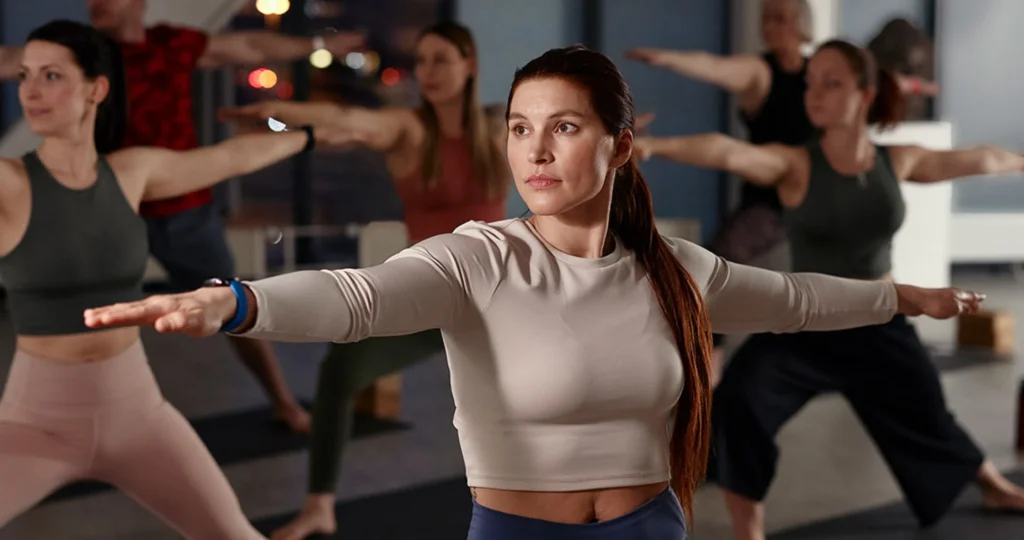
A candid, experience-backed guide for women who’ve decided their fitness life belongs to them — not to a building.
There’s a particular freedom that arrives the moment you cancel a gym membership you were never really using.
I remember mine vividly. It was a rainy Saturday in early spring, and I was standing in my kitchen in a matching set I’d bought specifically to feel good while working out, holding a coffee, and doing a quiet little calculation in my head. Twenty-two months of membership fees. Nineteen visits. I did the math so many times I eventually stopped, because the number per visit was getting embarrassing.
The gym itself was fine. It had everything a gym should have — the rows of machines, the free weights, the group fitness schedule, the faint institutional smell of rubber flooring and ambition. But it also had something that worked quietly against me every single time I walked through the door: other people’s expectations. Or maybe more accurately, the story I told myself about other people’s expectations. The way I’d catch myself adjusting a weight to look less weak. The way I’d avoid certain machines because I wasn’t sure I was using them correctly and didn’t want to be visibly wrong. The way the whole experience had a faint overlay of performance anxiety that made the workout something I endured rather than something I wanted.
The day I cancelled, I came home, rolled out a mat I’d had in the closet for two years, and did forty minutes of movement in my living room in the most unselfconscious way I’d moved my body since I was a child. And I thought — this is it. This is what it’s supposed to feel like.
That was the beginning of a transformation that has nothing to do with any particular workout program and everything to do with a different relationship with my own body and the way I care for it. A transformation that happened entirely without a gym membership. And if you’re reading this, something in you is ready for the same thing.
Let’s Redefine “Transformation” Before We Go Any Further
The word transformation gets used in fitness marketing in a very specific, very narrow way: before-and-after photos, dramatic weight loss numbers, visible before-and-after comparisons that imply your before is a problem to be solved. I want to use the word differently here, because I think the conventional definition sells women short in a way that’s actually counterproductive to the goals most of us actually have.
A genuine body transformation — the kind that lasts, the kind that changes not just how you look but how you live — is not primarily a visual event. It’s an experiential one. It’s the morning you realize you woke up without the back pain that used to greet you every day. It’s the hike you completed without stopping that six months ago would have been impossible. It’s the way you sit differently, stand differently, move differently — with more ease, more confidence, more presence. It’s the relationship you develop with your own physical self that shifts from vague dissatisfaction to genuine appreciation.
Visual changes come. They come as a result of consistent, intelligent movement and nourishment, and they are real and worth wanting. But they are symptoms of the deeper transformation, not the transformation itself. And orienting your entire practice around the visual goal — using it as both the motivation and the measure — is one of the most reliable ways to derail yourself. Because visual results are slow, they’re non-linear, and they’re profoundly affected by factors beyond your control. If the visual result is the only thing keeping you showing up, you will stop showing up.
What keeps you showing up is what we’re really building here. And that, as it turns out, is perfectly achievable — genuinely, completely, sustainably achievable — without a gym membership, without specialized equipment, and without ever setting foot on a rubber floor scented with other people’s ambition.
The Science of Why Gym-Free Works (And Why It Works Better for Some Women)
Let me give you a brief, non-boring tour of the actual science, because I think it helps to understand why gym-free fitness is not a compromise — it is, for a significant number of women, the superior option.
First: your body does not know whether it’s in a gym. This sounds obvious but it’s worth saying plainly. Your muscles respond to mechanical tension, metabolic stress, and muscular damage — the three primary drivers of strength and hypertrophy — regardless of the equipment or environment producing them. A squat performed in your living room challenges your quadriceps, glutes, and core in precisely the same way as a squat performed in a gym. Your body is not more or less impressed by its surroundings.
Bodyweight training, done with progressive overload — the principle of gradually increasing the challenge to your muscles over time — produces measurable, significant results. The research on this is robust. Studies comparing bodyweight training to free-weight training in untrained individuals consistently show comparable outcomes in strength and body composition changes. The limitations of bodyweight training become relevant primarily at the advanced level, when the goal is maximum strength or significant muscle mass — goals that require increasingly heavy loads that are difficult to achieve without equipment. For most women, most of the time, this ceiling is much further away than they realize.
Resistance bands, which are inexpensive, portable, and require no installation, extend the capacity of bodyweight training considerably. They add progressive resistance to movements — particularly hip hinge and pulling movements that are harder to load with bodyweight alone — and enable a genuinely comprehensive training program. A set of fabric loop bands in three resistance levels costs the approximate equivalent of one month of a mid-range gym membership and will outlast that membership by years.
Now, the more interesting part: why gym-free may actually be better for some women specifically. The psychological research on exercise adherence — who keeps exercising and why — points consistently to autonomy and enjoyment as the strongest long-term predictors of consistency. Not intensity, not program design, not accountability apps. Autonomy and enjoyment. Women who exercise in environments they control, in ways they genuinely like, at times that fit their natural rhythms, are significantly more consistent over the long term than women who are compliant with external programs and schedules.
The gym, as an institution, reduces autonomy almost by definition. You work around class schedules, around equipment availability, around travel time, around dress codes both explicit and implicit. At home, every variable is yours. You choose the time, the space, the movement, the music, the pace, the duration. That autonomy is not a luxury — it is a functional advantage in building sustainable fitness.
The Foundation: What You Actually Need (It’s Less Than You Think)
Before we talk about specific movement practices, I want to address the equipment conversation, because it tends to create a false barrier. People often delay starting a home fitness practice because they feel they need to have the right gear before they can begin. They don’t. Here’s the honest inventory.
What you truly need: your body, a mat-sized space, and approximately four square meters of floor. That’s it. That’s sufficient for a genuinely comprehensive workout. Everything else is addition, not prerequisite.
What makes a meaningful and worthwhile addition: a yoga mat in a quality that you love to be on — not the thin, slidey kind but something thick enough to cushion your joints and grippy enough to hold through movement. A set of fabric resistance bands in three resistance levels (light, medium, heavy). That’s the toolkit that opens up at least ninety percent of what I’m going to describe in this article.
What makes an excellent medium-term investment: a pair of medium-weight dumbbells — somewhere between five and fifteen kilograms depending on your current strength baseline. A foam roller. A set of ankle weights between one and three kilograms. These three additions expand your options significantly and are each in the range of what you’d spend on a few gym visits.
What you absolutely do not need: a power rack, a cable machine, a treadmill, a rowing machine, a Peloton, a pull-up bar (though these are cheap and excellent if you eventually want one), a dedicated room, or any monthly subscription that charges you whether you show up or not.
The clean, minimal approach to home fitness equipment is also, incidentally, the most aesthetically coherent one. A small basket or shelf holding your bands, your roller, and perhaps a set of light dumbbells in a neutral color can be a genuinely beautiful element of your home space. When your equipment is attractive and accessible — visible rather than hidden in a closet — it functions as a daily cue, a gentle reminder that this practice is part of your life.
Strength Training Without a Gym: A Complete and Honest Map
Strength training is the single most impactful thing most women can do for their bodies, and it is also the form of exercise most thoroughly associated, in the popular imagination, with gyms. I want to disentangle these things completely.
Strength training means applying resistance to your muscles in a way that challenges them to adapt and grow stronger. The resistance can come from external weights, from machines, from resistance bands, or from your own bodyweight. The gym has a monopoly on none of these things except the machines — and the machines, frankly, are the least necessary.
Bodyweight strength training is one of the most ancient and effective forms of exercise in human history, and it covers more ground than most people realize. The foundational movements of human strength — squat, hinge, push, pull, carry, brace — can all be trained substantially through bodyweight progressions. The key word is progressions: each fundamental movement has a spectrum of difficulty, from beginner-accessible to genuinely elite-level challenging. You don’t simply do squats forever; you progress to split squats, to single-leg variations, to pistol squat progressions. You don’t plateau — you advance.
Let me walk through the foundational movement patterns and what they look like in practice.
The squat pattern — which trains your quadriceps, glutes, and the entire lower body — begins with the basic bodyweight squat and progresses through split squats, Bulgarian split squats (which are, I will tell you from personal experience, significantly harder than they look), rear-foot elevated variations, and eventually single-leg work. Adding resistance bands around your thighs introduces lateral hip work that is incredibly effective for glute development. This is one area where the gym’s leg press and hack squat machines genuinely offer no meaningful advantage over what you can do at home.
The hip hinge pattern — which targets the posterior chain, meaning your glutes and hamstrings primarily — is where a light set of dumbbells or a resistance band makes the biggest difference. Romanian deadlifts with light-to-moderate dumbbells, hip thrusts using your couch or bed as the bench, single-leg variations, and resistance band pull-throughs cover this pattern beautifully. The glute bridge, done on the floor with a resistance band above your knees and progressive loading over time, is one of the most effective exercises available to women regardless of equipment level.
The push pattern — which trains your chest, shoulders, and triceps — is the one most people think requires a bench press, but doesn’t. Push-up progressions, from incline variations for beginners to regular push-ups to decline push-ups to archer push-ups to single-arm progressions, provide substantial challenge to advanced trainees. Pike push-ups shift the emphasis toward the shoulders. Tricep dips off a sturdy chair are effective and require nothing but furniture.
The pull pattern — which trains your back and biceps and is the most genuinely difficult to load with bodyweight alone — benefits most from resistance bands and, eventually, a pull-up bar. Resistance band rows, face pulls, and lat pulldown simulations cover a significant range of the pulling motion. If you can install a doorframe pull-up bar (they cost almost nothing and leave no damage), you open up the entire vertical pulling spectrum — the most effective back training available to anyone, gym or no gym.
The core and bracing pattern — which most people think means crunches but actually means the ability to resist spinal movement under load — is almost entirely bodyweight. Planks, hollow body holds, dead bugs, bird dogs, pallof press simulations with resistance bands — these train functional core strength that transfers to everything else you do.
The missing piece that makes all of this work as effectively as gym training is progressive overload. You need a way to make things harder over time. Without progression, the training stimulus remains the same and your body stops adapting. Progression in bodyweight training comes through: adding reps, slowing the tempo (a three-second lowering phase makes almost any exercise dramatically harder), reducing stability (two legs become one, two arms become one), changing range of motion, adding bands, adding load with dumbbells. If you are tracking your sessions — even informally, even just a note in your phone — you can see where you are and plan where you need to go next.
Cardiovascular Fitness: Rethinking What It Means and How to Build It
Cardiovascular fitness is the aspect of home training that people tend to either over-emphasize or under-emphasize, depending on their relationship with it. Some women do only cardio, because it’s what they associate with burning fat and they fear that anything else will make them bulky. Some women skip cardio entirely because they find it boring or uncomfortable. Neither extreme serves you well.
Let me offer a more nuanced picture.
Cardiovascular fitness — your heart and lung capacity, your body’s ability to sustain effort over time, your aerobic system — matters enormously for health, energy levels, longevity, and quality of daily life. A woman with good cardiovascular fitness is less tired at the end of a long day. She recovers from illness faster. She sleeps better. She has more reserve capacity for the unexpected demands life places on her physical self. The research linking cardiovascular fitness to reduced risk of everything from heart disease to dementia to depression is among the most robust in the entire field of health science.
Building cardiovascular fitness at home doesn’t require a treadmill or a Peloton or even a particularly large space. Walking, which I have already extolled and will extol again, is genuine cardiovascular training — particularly at a brisk pace, particularly over varied terrain, particularly for extended duration. The evidence on walking for cardiovascular health is some of the strongest in the fitness literature, and its accessibility makes it perhaps the most consistently practiced form of exercise in history.
Beyond walking, there are several forms of home cardiovascular training worth considering. Dance cardio — and I say this without a trace of condescension, because it is both effective and genuinely fun — raises your heart rate, improves coordination, and releases an amount of joy that no treadmill ever produced. Put on a playlist that makes your kitchen feel like a venue and move for thirty minutes. Your body will not care that it’s undignified. It will be grateful.
Jump rope, if you have outdoor space or a high-ceilinged indoor space, is one of the most efficient cardiovascular tools in existence. Ten minutes of continuous jump rope is the cardiovascular equivalent of a much longer jog. It improves coordination and foot speed and can be done in a very small space.
HIIT — high-intensity interval training — is the most time-efficient cardiovascular method, and it requires nothing but your body and a timer. The principle is simple: alternating periods of very high effort with periods of lower effort or rest. This can look like: thirty seconds of burpees followed by thirty seconds of walking in place, repeated eight times. Or twenty seconds of squat jumps, followed by ten seconds of rest, repeated for four minutes in the Tabata format. The sessions are short. The effect on cardiovascular capacity is significant. The limitation is that genuine high intensity is demanding on your nervous system and shouldn’t be done more than two to three times per week.
Yoga flows and dance-inspired movement sequences also count as cardio when performed continuously and with sufficient energy expenditure — the distinction between cardiovascular and strength exercise is less binary than fitness culture often suggests, and many forms of movement that feel restorative still elevate your heart rate meaningfully.
Flexibility, Mobility, and the Long Game
This is the category that gets the least airtime in fitness conversations despite being, in many ways, the one that most directly affects your quality of life and your longevity as an active person.
Flexibility — the passive length of your muscles — and mobility — the active, functional range of motion available to your joints — are different but related, and both matter enormously. A woman with good mobility moves through the world with an ease and fluidity that has visible, observable consequences: she holds herself better, she recovers from physical demands more quickly, she is less likely to be injured by the ordinary demands of daily life, and she ages in a way that preserves her physical independence.
The neglect of flexibility and mobility work in most fitness programs is one of the reasons so many women feel stiff, tight, and physically uncomfortable in their bodies despite exercising regularly. If all you do is strengthen and never release, you build a body that is capable but restricted. The combination of strength training with consistent stretching and mobility work creates a different kind of body — one that is both strong and free in its movement.
Yoga is the most complete system for developing flexibility and mobility alongside strength and balance. A consistent yoga practice, done at home with nothing more than a mat and a good instructor on your laptop or phone, will over months and years fundamentally change how your body feels and moves. The progress is slow enough to be nearly imperceptible day to day, which is one of the reasons people abandon it before experiencing the results. But over a year of two to three sessions per week, the transformation is profound.
Specific mobility work outside of yoga is also worth integrating, particularly for the areas that modern life most consistently restricts: the hips, which become chronically tight from prolonged sitting; the thoracic spine, which rounds forward from screen time and compromises posture and shoulder health; the ankles, which lose mobility from extended periods in shoes and sitting. Ten minutes of targeted mobility work daily — hip flexor stretches, thoracic rotations, ankle circles and dorsiflexion work — does more for how your body feels over time than many longer, more dramatic workouts.
Foam rolling, which I’ve mentioned before and genuinely cannot recommend highly enough, is the third piece of this mobility picture. Self-myofascial release — the technical term for what you’re doing when you roll — breaks up the adhesions in your fascia, the connective tissue that wraps around and through your muscles. Fascia that has become tight or adhered restricts movement in ways that feel like muscle tightness and are sometimes mistaken for it. A foam roller, used consistently, improves range of motion, reduces soreness, and makes subsequent movement feel substantially better.
The Mind Behind the Transformation: Why Your Relationship With Your Body Is the Whole Project
I want to spend real time here because I think it’s the thing most fitness content rushes past in its eagerness to get to the exercises.
Every woman who has ever tried and failed to sustain a fitness habit — and most of us have, multiple times, and that’s not a character flaw — has usually failed not because she lacked the right program or the right equipment or the right amount of discipline. She failed because the mental and emotional relationship she had with her body was not one that fitness thrived in. It was one that fitness was constantly fighting against.
Here is the specific pattern I’ve seen, in myself and in the women I know well enough to have this conversation with honestly: the motivation to start exercising comes almost always from a place of dissatisfaction with the body. You want to change something. Maybe it’s specific, maybe it’s vague, but the underlying feeling is this body is not enough as it currently is. And so you start. And for a while, the gap between where you are and where you want to be provides motivation. But it also provides a consistent source of unhappiness. Because every workout that doesn’t immediately produce visible results is a reminder that you’re still in the before. And eventually the discomfort of being in the before outweighs the motivation, and you stop.
The alternative — and this is genuinely difficult to internalize, which is why I want to dwell on it — is starting from appreciation rather than dissatisfaction. Not fake positivity, not toxic self-congratulation, but genuine curiosity and gratitude about what your body is already capable of. This body carried you to this moment. It recovers from illness. It breathes without your supervision. It learns and adapts and rebuilds. Starting from I want to take care of something remarkable rather than I want to fix something broken produces a fundamentally different relationship with the practice of moving and nourishing yourself.
This reframe is not instantaneous and it is not achieved simply by deciding to have it. It is built the same way fitness itself is built — through consistent small actions over time. Every time you choose a workout because it sounds enjoyable rather than because it will produce the fastest results. Every time you respond to a missed session with gentleness rather than shame. Every time you appreciate your body for what it did rather than criticizing it for how it looks. These small cognitive choices accumulate into a genuinely different orientation.
The other mental element worth examining is the relationship between fitness and identity. One of the most potent shifts in any sustainable habit is the move from I am trying to do this thing to I am someone who does this thing. The behavioral science is clear: we act consistently with who we believe we are more reliably than we act in accordance with what we intellectually want. Building the identity of a woman who moves and cares for her body is more powerful than building the most perfectly designed workout program.
Identity is built through evidence. Every workout is a small piece of evidence that you are someone who works out. Every nutritious meal is a small piece of evidence that you are someone who nourishes herself. Every good night’s sleep is a small piece of evidence that you take your recovery seriously. The evidence accumulates. The identity solidifies. The behavior becomes natural.
Nutrition Without Obsession: Eating to Support the Body You’re Building
No article about body transformation is complete without an honest conversation about food — and no honest conversation about food for women in 2026 can avoid acknowledging how thoroughly the diet culture of the past several decades has distorted our relationship with it.
I am not here to give you a meal plan. I’m not here to tell you what to eliminate or which foods are good and which are bad. I want to offer something more useful: a framework for thinking about food that supports the physical transformation you’re working toward without turning eating into a source of anxiety and self-scrutiny.
The single most important principle is adequacy. Not restriction — adequacy. A body that is consistently underfed cannot build the muscle and strength you’re training for. It also cannot maintain the hormonal balance that underpins energy, mood, sleep, skin quality, and reproductive health. The wellness space has a complicated relationship with how much food women are supposed to need — there’s a persistent cultural suggestion that eating less is always better, which is simply and demonstrably wrong for active women.
You need enough. Enough protein to support muscle repair and growth — the research converges around 1.6 to 2.2 grams per kilogram of bodyweight for active women, which for most people means consciously adding protein to meals that currently don’t have much. Enough carbohydrates to fuel your workouts and your brain, which requires glucose whether the diet industry acknowledges this or not. Enough fat for hormonal health, cellular function, and the absorption of fat-soluble vitamins. Enough calories overall to support the training load you’re building.
What does this look like in practice? It looks like eating meals that have protein, fat, and carbohydrate in reasonable proportions, built from real, recognizable ingredients most of the time, prepared and eaten with enough attention to be genuinely satisfying. It looks like eating breakfast when you’re hungry, lunch when midday comes, dinner in the evening, and snacks when you need them. It looks like choosing nutrient-dense foods not because you’re following a protocol but because you’ve noticed they make you feel better — more energetic, more focused, more comfortable in your body.
The clean girl approach to eating — which in its best expression is not a diet but a sensibility — is about quality and pleasure rather than restriction. Beautiful whole foods, prepared simply and thoughtfully. A matcha in the morning rather than a sugar-laden coffee drink. A bowl of Greek yogurt with honey and berries rather than a packaged cereal. An actual lunch rather than something grabbed from a vending machine. These choices are not deprivation. They are a form of self-care that happens to support your physical goals.
Hydration deserves its own paragraph because it is so consistently underestimated. Your muscles are approximately seventy-five percent water. Your brain function, your mood, your energy levels, and your physical performance are all materially degraded by mild dehydration — the kind you don’t feel as thirst because thirst is a late-stage signal that dehydration has already occurred. Consistent, throughout-the-day hydration is one of the cheapest, easiest, most impactful things you can do for your body transformation. A beautiful water bottle you love using, refilled several times throughout the day, is more valuable than most supplements.
Sleep and Recovery: The Parts of the Transformation Nobody Photographs
Here is something the before-and-after photograph cannot show you: the eight hours of sleep, night after night, that made the after possible.
Sleep is where the actual transformation happens. Not in the gym, not on the mat, not in the kitchen — in your bed, in the dark, in the quiet. While you sleep, your body releases growth hormone — the primary signal for muscle repair and synthesis. It clears the metabolic byproducts of exercise from your tissues. It consolidates the motor learning that makes new movement patterns automatic. It resets the hormonal balance — particularly cortisol and insulin — that determines how your body stores and uses energy. Every single hour of adequate sleep is an active contributor to your physical transformation in a way that no workout can replace.
And yet sleep is treated, in so much of hustle culture and even wellness culture, as optional — as what you sacrifice when you have more important things to do. This is upside down. Sleep is the substrate on which everything else builds. Poor sleep undermines the results of excellent training and nutrition almost completely. It raises cortisol, which promotes fat storage particularly around the midsection. It suppresses growth hormone, so the muscle repair signal is weakened. It impairs insulin sensitivity, so carbohydrates are more likely to be stored as fat than used as fuel. It increases appetite and specifically increases cravings for high-calorie foods — the research on the relationship between poor sleep and overeating is some of the most consistent in the nutritional literature.
Seven to nine hours of sleep, protected with the same intentionality you bring to your workouts, is non-negotiable for the body transformation you’re working toward. This means a regular sleep and wake time, even on weekends. A bedroom environment that is dark, cool, and quiet. A wind-down routine in the hour before bed that signals to your nervous system that the active day is ending — dimming lights, putting screens away, perhaps some gentle stretching or reading. No caffeine after two in the afternoon. No high-intensity workouts in the two hours before bed if you’re sensitive to the cortisol they produce.
Rest days are part of the transformation in the same direct way. Your muscles do not grow during training — they grow in the recovery period between training sessions, when the adaptive response to the training stimulus actually occurs. If you train every day without adequate recovery, you are perpetually interfering with your own progress. Two to three rest days per week is not laziness. It is the intelligent structure of a training program that produces results.
The Aesthetics of Your Transformation: How Style and Wellness Intersect
I want to spend some time here because it’s something I genuinely care about and think about — the way aesthetic attention and physical wellbeing are connected, not superficially but in a meaningful way that affects both.
The clean girl aesthetic — which emerged as a distinct visual and lifestyle movement on social media and has evolved and deepened through 2025 and into 2026 — is one of the most honest representations of this connection I’ve seen in popular culture. At its core, it’s not really about any specific look. It’s about a philosophy of caring for yourself — your skin, your body, your home, your routine — with genuine intention and pleasure. The dewy skin, the natural makeup, the matching sets, the beautiful water bottle — these are all expressions of the same underlying value: I take care of myself, and I enjoy doing it.
This aesthetic is deeply compatible with gym-free fitness, and in some ways produces it. When your fitness practice is home-based and personal, it fits naturally into a life that is otherwise considered, unhurried, and aesthetically attentive. Your workout set is chosen with the same care as your outfit for the rest of the day. Your mat and your equipment are beautiful objects in your home rather than utilitarian tools hidden away. The post-workout ritual — the shower, the skincare, the change into the next version of today’s look — is part of a seamless continuum of self-care.
The quiet luxury aesthetic, which has been the dominant trend in fashion for several cycles running and shows no signs of abating, also maps onto gym-free fitness in interesting ways. Quiet luxury is about quality over show, substance over performance, the private knowledge that your choices are excellent rather than the public demonstration of their cost. A home practice is, by nature, quiet luxury fitness. There is no audience. There is no performance. There is just you, your body, your space, and your commitment to caring for yourself — which is the most genuinely luxurious thing of all.
Your workout wardrobe, within this framework, is worth real thought and real investment. Not because you need to dress up for an empty room, but because the clothes you wear to move in change how you move, how you feel, and therefore how consistently you show up. The elevated activewear movement — matching sets in quality fabrics, muted and sophisticated palettes, pieces that transition between workout and errand without looking like either — has made this easier than ever. A well-chosen ribbed set in a warm terracotta or a clean slate grey, a perfectly fitted sports bra in organic cotton, a pair of wide-leg joggers in heavyweight fabric that holds its shape — these are the building blocks of a workout wardrobe that makes you want to put it on.
The intersection of soft glam and fitness — the idea that you can look polished and beautiful even in the context of working out — is also genuinely worth embracing rather than dismissing. A tinted SPF on your skin, a light mascara if that makes you feel put-together, brows groomed and hair done in a way you love — these are not vanity. They’re extensions of the respect you’re showing your practice. If looking good while you work out makes you more likely to work out, then looking good while you work out is a health intervention.
Real Results, Real Timelines, and the Beauty of Playing the Long Game
I want to give you an honest picture of what to expect, because I think the gap between expectation and reality is where most home fitness journeys end prematurely.
In the first four weeks, the changes are primarily internal. Your nervous system is learning new movement patterns. Your cardiorespiratory system is beginning to adapt. Your sleep is likely improving. Your energy levels are beginning to shift. You may feel stronger in ways you can’t yet see. You will not see significant visual changes in four weeks and that is completely normal.
In weeks four through eight, some visual changes may begin to emerge — often in the form of improved muscle tone and posture before any change in weight or size. Clothes may begin to fit differently. People who see you regularly may notice something has shifted, though they may not be able to name it. The most reliable change at this stage is energetic — you simply feel different in your body.
Weeks eight through twelve is typically where more visible change begins to appear in earnest, provided training has been consistent and nutrition is supporting the work. This is the range in which most women who have been consistent start to really feel the momentum of their practice — the workouts are more familiar, the movements more automatic, the results more visible. This is also the range at which commitment to the practice typically deepens, because the evidence of its effectiveness becomes harder to ignore.
Beyond twelve weeks, you are building something that belongs in a different category entirely — not a fitness program but a fitness life. The changes that happen in months four, six, nine, twelve are cumulative in a way that dramatic short-term programs can’t replicate. Your body becomes structurally different in ways that reflect months of progressive challenge — stronger connective tissue, greater bone density, increased muscle mass, more efficient fat metabolism. Your relationship with your body shifts from working toward something to simply being someone who lives this way.
The long game is the only game worth playing. Six weeks can give you a taste of what’s possible. A year gives you the reality of it. Two years and you are a different person in a genuinely different body, with a different relationship to yourself that will never entirely leave you even if life interrupts the practice for a while.
This is what transformation actually looks like. Not a dramatic before-and-after in twelve weeks. A gradual, accumulating, deeply satisfying becoming over months and years. A body that is stronger, more mobile, better rested, better nourished, better known and better loved by the woman who lives in it.
The Outdoor Dimension: Why Nature Is the Best Free Gym You Have
I’ve been talking primarily about indoor, at-home training — and that’s the core of what gym-free fitness looks like for most women in most conditions. But I want to give proper attention to the outdoor dimension of gym-free training, because it offers something that no indoor practice fully replicates: the combination of physical challenge, natural light, fresh air, and the particular psychological benefit of moving through an outdoor environment.
The research on outdoor exercise compared to indoor exercise is surprisingly consistent in one finding: people report higher enjoyment, higher perceived energy, and lower perceived effort during outdoor sessions than during matched indoor ones. The explanation is partly neurological — natural light exposure triggers serotonin release, green landscapes engage the restorative mode of the nervous system, the varied terrain of outdoor environments creates proprioceptive challenge that flat surfaces don’t — and partly simply about the quality of experience. Being outside, moving through a real landscape, feels intrinsically different from moving in a room.
Walking outdoors, as I keep returning to, is the foundational outdoor practice and one that almost every woman can access almost every day. But outdoor fitness extends well beyond walking. Running, if it interests you — and it doesn’t need to, it’s genuinely not for everyone — is the most accessible and equipment-light cardiovascular training available. Stair climbing, if your neighborhood has accessible stairs or a stadium or any substantial incline, is an extremely efficient lower-body and cardiovascular challenge that costs nothing. Outdoor bodyweight circuits — push-ups on a park bench, step-ups on a low wall, lunges down a path — are perfectly legitimate training sessions.
In warmer months particularly, outdoor movement takes on an aesthetic quality that enriches the whole practice. The early morning run or walk in the golden hour light. The lunchtime stretch in a quiet park. The evening walk after dinner as a deliberate form of both movement and decompression. These outdoor rituals are part of a beautiful life, not separate from it — and they don’t require a gym card, a machine, or anyone’s permission.
The wardrobe consideration for outdoor fitness overlaps significantly with the elegant streetwear sensibility. The perfect pair of running or walking trainers — clean, minimal, properly fitted — is one of the most important style investments an active woman can make. Not because of brand visibility but because the right shoe changes how you move and how you feel moving, and because a clean, quality trainer integrates into outfits in a way that cheap or poorly chosen athletic footwear simply doesn’t. A breathable, well-cut jacket for cooler outdoor sessions. A simple sun hat or cap for bright days. A lightweight crossbody or belt bag for longer walks. These are the accessories of a woman who takes her outdoor movement seriously without making it a performance.
There is something about moving your body in the outdoors — particularly in the quiet morning hours before the day has fully asserted its demands — that does something to your relationship with yourself that is hard to describe and impossible to replicate indoors. It reminds you that your body is a physical thing moving through a physical world. It provides a scale and a perspective that the four walls of a room cannot. It is, in some ineffable way, medicine. Use it.
Tracking Your Transformation: What to Measure and What to Let Go Of
Progress tracking in fitness is a subject I approach with some care, because it can go in genuinely useful directions or genuinely damaging ones, and the difference is almost entirely about what you choose to measure and why.
The case for tracking: feedback is motivating. Seeing that you can now do fifteen push-ups where you could previously do eight, or that your resting heart rate has dropped, or that you completed your fourth workout week in a row — these observations reinforce your identity as someone who is building something, and they inform your training in useful ways. Without any tracking at all, you’re navigating without a map, which works for some people and is frustrating for others.
The case for careful tracking: the wrong metrics create the wrong story. If your primary tracking mechanism is the scale, you are measuring a number that fluctuates daily by two to four pounds in response to factors entirely unrelated to fat loss or muscle gain. A woman can lose a kilogram of fat and gain a kilogram of muscle — a genuinely significant and healthy body composition change — and see precisely zero movement on the scale. Worse, if she is in the early stages of a training program that emphasizes strength, she may gain a small amount of weight as her muscles retain more water in response to training, and interpret that as failure, and quit. The scale, used as a daily metric, is extremely good at making fit, healthy women feel bad about themselves. I’d encourage putting it away.
What I’ve found genuinely useful to track: strength benchmarks, which tend to move consistently upward and feel wonderful to notice. I keep a simple note in my phone where I record a handful of exercises each month — how many reps of a particular movement, how long a hold, what resistance level. Seeing those numbers increase over months is enormously motivating in a way that doesn’t involve any reflection on my appearance whatsoever. Energy levels and sleep quality, which I note briefly most mornings as a rough rating. These tend to improve gradually and meaningfully with a consistent fitness practice, and noticing the improvement reinforces the habit. How I feel in my clothes — not the size on the label but the lived experience of wearing them — which reflects changes in body composition more honestly than the scale.
Progress photography is a personal choice that works well for some women and poorly for others. If you decide to take progress photos, make them for your own eyes only, taken consistently in the same conditions, and viewed monthly rather than weekly — the changes that matter are visible on a month-to-month scale, not week to week. The purpose is not comparison to anyone else. It is your own record of a body that is changing through your consistent care.
What you don’t need to track: calories, unless you have a specific clinical reason to do so. Macro ratios, unless you find genuine value and not anxiety in the numbers. Every single workout, in detail, unless you’re a competitive athlete. The obsessive tracking that diet culture often demands produces anxiety without proportional benefit and can shift your relationship with food and exercise from intuitive to algorithmic in ways that are hard to walk back.
The most honest measure of a successful body transformation is one that no app can capture: the quality of your daily physical life. Do you feel well in your body? Do you move through the world with ease? Do you have the energy to do what your life asks of you and still have something left over? Are you sleeping, recovering, nourishing yourself? These are not glamorous metrics. They don’t make compelling before-and-afters. But they are what the transformation is actually for.
The Wardrobing of a Transformed Woman: Style Notes for the Journey
I want to end the practical content here, because the aesthetic thread of this article is important to me — not because style is more important than substance, but because for women who care about how they move through the world, the two are genuinely inseparable.
As your body changes — as it grows stronger and more capable and more at ease in its own movement — your relationship with clothes changes too. Not because you’ve earned the right to wear certain things by achieving a certain size, but because the confidence that comes from physical capability expresses itself in how you dress, how you carry yourself, and what you reach for in your wardrobe.
The elegant streetwear aesthetic that this community is built around is, I think, perfectly suited to a woman in active physical transformation. It’s a wardrobe language that communicates strength and refinement simultaneously — the structured bomber and the tailored jogger, the oversized blazer over a seamless fitted set, the clean white trainers beneath wide-leg trousers. It doesn’t require a specific body. It requires a specific energy — one of considered, unhurried confidence.
As you build your fitness practice, your activewear becomes a genuine part of your personal style rather than a separate functional category. The matching set you work out in on Monday morning is the same set that looks perfectly considered when you wear it out for a coffee afterward. The long-line sports bra you wore for yoga pairs with high-waisted wide-leg linen trousers for an afternoon look that’s as effortless as it is elegant.
Invest in quality. A few pieces in excellent fabrics and considered cuts will serve you better and make you feel better than a full drawer of cheap, mediocre gear. Buy neutral tones and interesting textures — ribbed fabrics, refined mesh, heavyweight cotton — over bold prints or aggressive branding. Look for pieces that feel as good on your body as they look to your eye.
And perhaps most importantly: dress for the woman you’re becoming, not the one you’re waiting to be. She exists now, in the body you have today. She moves intentionally. She cares for herself with pleasure. She chooses clothes that honor the body she’s building. She already has everything she needs.
You Have Everything You Need
The final thing I want to say is the simplest thing in this entire article, and also the one that most needs to be said.
You do not need a gym. You do not need expensive equipment, a perfect workout plan, a certified trainer, a spare room, or a fresh start on a Monday. You do not need to wait until life is less busy or your schedule is more predictable or your motivation is more reliable.
You need a mat and a small space and a body that is capable of more than you currently ask of it. You need the willingness to begin with something embarrassingly small and to return to it, consistently and without drama, over a longer time than fitness marketing would have you believe is necessary.
The transformation on the other side of that commitment is real. The strength, the ease, the confidence, the energy, the deep and private satisfaction of having built something in your body and your life that belongs entirely to you — all of it is real, and all of it is available to you without a gym membership, without a before photo, without a twelve-week challenge.
Just begin. Begin today, begin small, begin in the clothes you love in the space you have. Begin for no audience and no deadline. Begin because you are worth beginning for.
That is, genuinely, all it takes.