
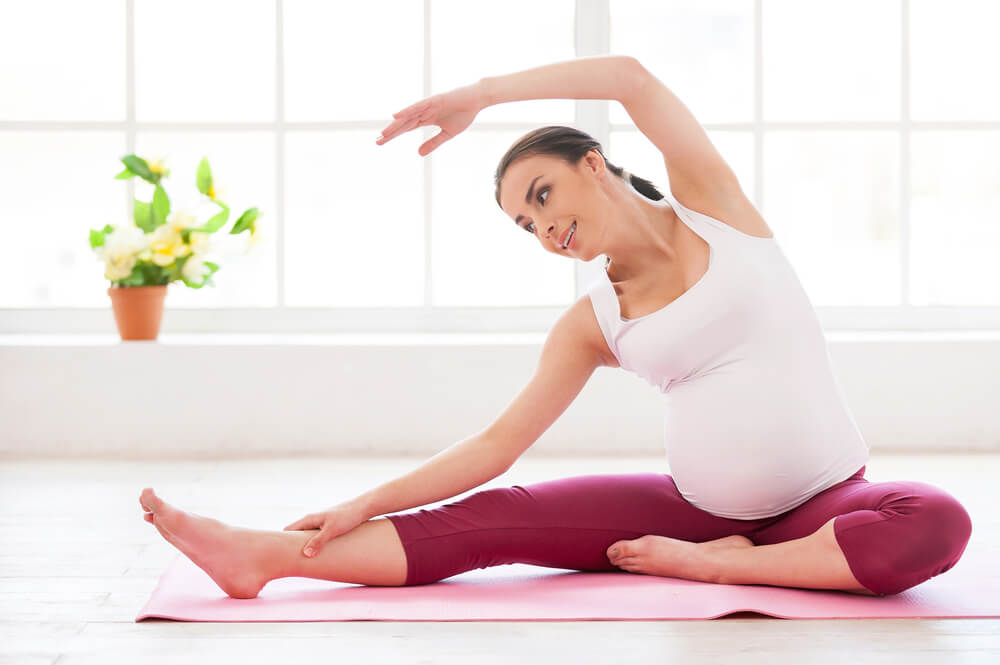
Moving Through Every Trimester With Confidence, Grace, and Joy
By the editors of Elegant Women Streetwear | Pregnancy Wellness & Lifestyle | May 2026
— — —
There is a particular kind of beauty that pregnancy gives a woman if she lets it — and I don’t mean the kind that gets photographed in golden light for Instagram, though that too has its place. I mean the deeper beauty of a woman who is learning to inhabit her body in an entirely new way. Who is discovering, often for the first time, exactly how extraordinary the physical self is. What it’s capable of. How much intelligence it contains without being asked.
I came to pregnancy fitness with a complicated history, the way I suspect most women do. I’d spent a significant portion of my pre-pregnancy adult life in a vaguely adversarial relationship with my body — treating it as a project, monitoring it, measuring its compliance with various programmes. And then pregnancy arrived and rewrote all the rules. The body was no longer a project. It was a process. And the only sensible response to a process is to work with it, not against it.
What I want to share in this piece is everything I learned — through experience, through research, through a lot of conversations with midwives and physiotherapists and women I trust — about moving well during pregnancy. Not performing fitness, not maintaining the body you had before, not ‘bouncing back’ before the baby is even here. Moving in ways that genuinely support you: your changing body, your energy, your emotional state, your preparation for labour and birth and the extraordinary physical event of new motherhood.
This is a home fitness guide because home is where most of us actually are during pregnancy, at least some of the time. No gym required. No expensive equipment. No perfectly curated studio with good lighting. Just a mat, some space, your body, and the willingness to show up for yourself during one of the most significant seasons of your life.
— — —
Before Anything Else: The Permission You Need to Give Yourself
The conversation around fitness during pregnancy has, for a long time, been shaped by two contradictory forces that have left a lot of women genuinely confused. On one side: the culture of the fit pregnancy, the Instagrammable bump in the perfect activewear, the implication that the stylish pregnant woman maintains her regime with minimal modification and maximal aesthetic documentation. On the other side: the older, more cautious discourse that treats pregnancy as a state of fragility requiring significant restriction of physical activity.
Neither of these is accurate. Neither of these is particularly helpful. And both of them miss the point, which is this: movement during pregnancy is not about looking a certain way or maintaining a certain standard or proving anything to anyone. It’s about supporting your body through a process of extraordinary physical demand and change, and preparing it, as well as you can, for the demands that labour and early motherhood will place on it.
The permission I want to give you before anything else: listen to your body above all. The guidance in this piece is general — carefully considered and evidence-informed, but general. Your pregnancy is specific. Your body is specific. Your medical history is specific. Always, always discuss your fitness plans with your midwife or obstetrician, particularly in the first trimester when the risk landscape is different from the second and third, and particularly if you have any complications or conditions that need to be considered.
That said: for the majority of women with uncomplicated pregnancies, regular moderate movement is not only safe but genuinely beneficial — for mood, for energy, for sleep quality, for the management of common pregnancy discomforts, and for preparation for labour. The evidence on this is solid and has been for years. Your pregnant body is not a fragile thing. It is a strong and capable thing doing something remarkable, and it benefits from being treated accordingly.
— — —
Understanding Your Body Through Each Trimester
One of the things that makes pregnancy fitness genuinely interesting — and genuinely different from regular fitness — is that your body is not static. The landscape changes significantly across the trimesters, and the most useful approach to movement changes with it. Understanding what’s happening physiologically in each phase is the foundation for making good movement choices.
The First Trimester: When Everything Is Invisible and Nothing Is Easy
The first trimester is, for many women, the hardest one to navigate in terms of fitness — not because the body is restricted in what it can do, but because the combination of fatigue, nausea, and the profound hormonal adjustment of early pregnancy can make even thinking about movement feel impossible.
The fatigue of the first trimester is not ordinary tiredness. It’s a cellular-level exhaustion, the body redirecting enormous resources toward the work of building a placenta and establishing a pregnancy. Respecting that fatigue is not weakness or laziness. It is accurate reading of what your body is telling you.
The approach that serves most women best in the first trimester: gentle consistency over ambitious intensity. Short walks taken when the energy allows. Gentle stretching that addresses the specific discomforts — the lower back tightness, the breast tenderness, the nausea that sometimes responds well to gentle movement rather than complete rest. Breathing exercises that begin the work of connecting to the breath and the core that will matter so much later.
The first trimester is not the time for new, intense fitness programmes. It is the time to establish a relationship with movement that’s kind and patient — the kind of relationship you’ll want as the foundation for everything that comes after.
The Second Trimester: The Golden Window
The second trimester is, for many women, when pregnancy fitness comes into its full expression. The worst of the first-trimester symptoms has usually passed. The bump is visible but still manageable in terms of how it affects movement. Energy returns. And the body has settled into its new hormonal baseline enough that movement feels genuinely good again.
This is the trimester to invest in. The trimester when a consistent home fitness practice pays the most dividends. The work you do in the second trimester — building strength, maintaining mobility, deepening the breath and pelvic floor connection — creates the physical foundation that will carry you through the third trimester and into labour.
A note on the hormonal change that matters most for second-trimester fitness: relaxin. This hormone, which increases significantly in pregnancy, relaxes the ligaments and joints in preparation for birth. It makes the body more mobile than usual, which sounds good, but it also makes it more vulnerable to injury from overstretching or instability. The movement philosophy for the second trimester needs to incorporate this — building strength alongside mobility, being careful with the joints, avoiding positions that challenge already-lax ligaments beyond what feels stable.
The Third Trimester: Slowing Down With Intention
The third trimester brings the significant challenge of a substantially changed centre of gravity, increased joint laxity, reduced lung capacity as the baby takes up more space, and the general physical heaviness of carrying a human being who is now, finally, getting quite large. Movement in the third trimester shifts in character: it becomes less about building and more about maintaining, less about challenge and more about support.
Walking remains excellent throughout the third trimester, adjusted for pace and duration as needed. Prenatal yoga and gentle stretching address the specific discomforts of late pregnancy — the lower back pain, the pelvic pressure, the rib discomfort. Pelvic floor work, swimming if accessible, and the specific breathing and relaxation practices that prepare the body and mind for labour become increasingly central.
The third trimester is also the trimester when rest is a form of fitness. The body is working continuously, even when you’re lying still. Honouring the need for rest — genuinely, without guilt — is as important as honouring the need for movement.
— — —
The Home Fitness Foundation: What You Actually Need
One of the genuine gifts of home fitness during pregnancy is its simplicity. You don’t need a gym membership, a rack of specialist equipment, or a dedicated room. What you need is minimal and mostly either free or very inexpensive.
A good yoga mat is the most important single investment. Not the thinnest possible mat, which will be hard on joints that pregnancy has already made tender — but a mat with genuine cushioning. The difference between a 4mm mat and a 6mm or 8mm mat is significant when you’re on all fours for cat-cow or lying on your side for hip work. Some women add a second mat for extra padding in the later trimesters. This is entirely sensible.
A set of resistance bands in light, medium, and heavy resistance offers more exercise variety than almost any other small piece of equipment. They’re inexpensive, take up no space, and are safe for pregnancy use when exercises are chosen appropriately. A light resistance band is useful for upper body work and gentle leg exercises. A heavier band is useful for glute and hip strengthening that becomes increasingly important as pregnancy changes the pelvis.
A firm pillow or bolster for support in floor work. A chair for balance support in standing exercises. And, if you want one luxury item: a peanut ball or a birth ball (large inflatable exercise ball), which serves multiple purposes — as a seat that encourages good posture during the day, as a prop for exercises, and as a labour tool in the final trimester.
That’s genuinely the list. The rest is you, your body, your breath, and a commitment to showing up for yourself regularly.
— — —
The Core of Everything: Breath, Pelvic Floor, and Deep Stability
Before we talk about specific exercises and workout formats, I want to spend real time on the foundation that makes all pregnancy fitness meaningful: the breath, the pelvic floor, and the deep core stability that these two things anchor.
Pregnancy is a profound demand on the pelvic floor — the group of muscles that form the base of the pelvis, supporting the uterus, bladder, and bowel, and playing an essential role in both continence and sexual function. The weight of a growing baby on these muscles across nine months, combined with the hormonal changes of pregnancy, makes pelvic floor health one of the most important and most underaddressed aspects of prenatal fitness.
Most women have heard of Kegel exercises, the repetitive contractions of the pelvic floor that are the standard recommendation. And Kegels have value. But the most current thinking in pelvic floor physiotherapy suggests that a more complete approach is needed — one that includes not just the ability to contract the pelvic floor but the equally important ability to fully release it.
Labour requires a pelvic floor that can let go. A pelvic floor that is only ever trained to tighten, in a pregnancy that is already causing tension and tightening, can actually create difficulty rather than ease in labour. The ideal pelvic floor is strong, coordinated, and responsive — able to contract when asked and release completely when needed.
The practice that builds this most effectively combines breath with pelvic floor awareness. Specifically: as you inhale, the pelvic floor naturally and gently descends and widens. As you exhale, it naturally lifts slightly. Practicing breath that honours this natural rhythm — breathing deeply into the belly and pelvic floor on the inhale, allowing a gentle natural lift on the exhale — builds pelvic floor coordination in a way that isolated contractions alone cannot.
This breath-pelvic floor connection is the foundation of everything else. Learn it first. Return to it throughout every movement session. It is, genuinely, more important than any specific exercise in the programme.
— — —
The First Trimester Home Practice: Gentle, Consistent, Kind
The first trimester home practice is not designed to be impressive. It is designed to be sustainable, to maintain the habit of movement through a period when movement can feel unappealing, and to begin building the foundations that will matter more later.
Morning Breath Work: Five Minutes That Change the Day
Before getting out of bed, or shortly after, five minutes of intentional breath work. Nothing complicated. Lying on your back (this is still comfortable in the first trimester), hands on the belly, breathing slowly and deeply into the lower belly and allowing it to rise on the inhale and fall on the exhale. This simple practice does several things simultaneously: it activates the parasympathetic nervous system, reducing the cortisol that morning nausea and anxiety spike. It begins the practice of breath awareness that will be essential later. And it gives you a moment of connection with your body and your pregnancy before the day makes its demands.
Gentle Stretching: The First-Trimester Sequence
A ten-to-fifteen-minute gentle stretching sequence, performed on the mat with careful attention to how the body is feeling. The sequence I return to most in the first trimester:
Cat-cow on hands and knees: the most reliable first-trimester movement. Moving slowly between the arched back (cow) and rounded back (cat), syncing breath with movement, noticing where the spine feels tight and allowing the movement to address it. This is as much a breathing practice as a stretching one, and the four-point kneeling position is one of the best positions for reducing the pressure of the uterus on surrounding structures.
Child’s pose, modified: a wide-knee child’s pose (knees wider than hips to accommodate the bump even in its early stages) with arms extended forward and forehead resting on the mat or a folded blanket. Deeply restful. Gentle traction for the lower back. The position of surrender that the body often needs in the first trimester.
Seated hip circles: sitting cross-legged on the mat or on a bolster, tracing slow, gentle circles with the hips. This addresses the hip tightness that begins early in pregnancy and worsens across the trimesters, and it initiates the hip mobility work that will matter significantly for labour.
Neck and shoulder release: the shoulders carry enormous tension in pregnancy, beginning almost immediately with the breast tenderness and postural changes of the first trimester and continuing throughout. Simple neck circles, shoulder rolls, and cross-body arm stretches address this accumulating tension and leave the upper body feeling significantly more comfortable.
Walking: The First Trimester’s Best Friend
In the first trimester, when nausea may make more intense exercise feel impossible, walking is the most accessible and most beneficial form of movement available. Twenty to thirty minutes outdoors on the days when it’s possible does what almost nothing else does as reliably: it reduces nausea (the movement and fresh air genuinely help for many women), it manages mood, it maintains cardiovascular fitness without excessive demand, and it gets you outside in actual light, which supports sleep and circadian rhythm in ways that matter for a body going through enormous hormonal shifts.
The key to first-trimester walking is removing all performance expectations from it. Not tracking pace. Not pushing distance. Going for twenty minutes when twenty is what’s available and turning back when the body says to turn back. The practice of movement without metrics is one of the most useful things you can develop in the first trimester, because it’s the practice that will sustain you when the third trimester makes everything harder.
— — —
The Second Trimester Home Practice: Building Strength and Stability
The second trimester is when the home fitness practice gets its full expression, and when the investment in showing up consistently pays the most visible returns. Energy is higher. The bump is real but manageable. The body is hormonal but stable. This is the time for the work that will carry you through what comes next.
The Lower Body Foundation: Glutes, Hips, and Everything the Pelvis Needs
The most important strength work of pregnancy lives in the lower body — specifically in the glutes, the deep hip rotators, and the muscles that support the pelvis through the changes that pregnancy makes to it. The growing uterus shifts the centre of gravity forward, placing new demands on the posterior chain (the muscles of the back and backside) and on the pelvic stabilisers. Building strength here reduces lower back pain, manages pelvic girdle discomfort, and creates the physical foundation that labour will draw on.
The sumo squat is the queen of pregnancy lower body work. Standing with feet wider than hip width, toes turned out slightly, lowering slowly into a squat while maintaining an upright torso and sending the knees in the direction of the toes — this movement pattern works the glutes, inner thighs, and pelvic floor simultaneously in a way that directly translates to labour positions. Add a light resistance band just above the knees for additional glute activation. Perform slowly and with full breath engagement: inhale to prepare, exhale on the way down, inhale at the bottom, exhale on the return to standing.
Glute bridges: lying on your back (still comfortable in the second trimester for most women, with a pillow under one hip to shift weight off the vena cava), feet flat on the mat hip-width apart, pressing through the heels to lift the hips toward the ceiling. The engagement should be felt through the glutes and hamstrings, not the lower back — if you feel it in your back, reduce the height of the lift and focus on the breath connection. A resistance band above the knees adds challenge and ensures the outer glutes (the glute medius and minimus) are working rather than the inner thighs compensating.
Side-lying clamshells: lying on your side with knees stacked and slightly bent, rotating the top knee toward the ceiling while keeping the feet together. This is the specific exercise for the glute medius — the muscle that prevents the pelvis from dropping on one side when walking. Pregnancy makes this muscle increasingly important as the pelvis widens and the gait changes. A resistance band just above the knees makes the exercise more effective and is well worth using here.
Standing hip hinges and single-leg balance work: as the second trimester progresses and balance becomes the constant negotiation that pregnancy makes it, controlled single-leg balance work (standing on one leg while maintaining pelvic stability, using a chair for support as needed) becomes increasingly valuable. This isn’t about impressive balance. It’s about training the neuromuscular system that keeps the pelvis level during movement.
Upper Body Work: The Arms and Back That New Motherhood Will Require
Nobody talks enough about the upper body demands of new motherhood — the lifting, the carrying, the hours of feeding in positions that tax the neck and shoulders and upper back in ways that can be genuinely painful without preparation. The second trimester is the right time to begin building the upper body strength that your postpartum self will be grateful for.
With light resistance bands or very light weights (the focus is endurance rather than strength at this stage, and the relaxin effect makes heavy loading of joints inadvisable), a sequence of rows, bicep curls, shoulder presses, and lateral raises addresses the full upper body. The key cue for all upper body work in pregnancy: keep the core engaged and the breath connected. The temptation to hold the breath during effort is strong; resisting it keeps the pelvic floor safe and develops the breath-under-effort skill that labour requires.
Specific attention to the upper back — the rhomboids and lower trapezius — is worth making because these muscles are typically underworked in most women’s pre-pregnancy lives and are significantly challenged by the postural changes of pregnancy (the forward shift of weight that creates a tendency to round the shoulders and extend the upper back). Seated or standing rows with a resistance band directly address these muscles and produce a quality of posture that, frankly, also affects how you look and feel in your pregnancy clothes.
The Prenatal Yoga Practice: Mind and Body in Conversation
Prenatal yoga deserves its own section because it isn’t just exercise. It’s a practice of body intelligence — of learning to listen to what your body is telling you, to move with intention and attention, to use breath as a tool rather than just a physiological necessity. These skills are among the most valuable you can develop for labour and birth.
The specific yoga poses that do the most work in the second trimester: warrior two and extended side angle for hip opening and lower body strengthening. A modified pigeon pose (supported by blankets and bolsters) for deep hip and glute release. Supported bound angle (baddha konasana) with the back supported against a wall or bolster for inner thigh and hip opening. Cat-cow continuing as the spinal mobility practice it’s been since the first trimester. And lying on the left side in savasana — the supported final rest that replaces the traditional savasana as the pregnancy progresses and lying flat on the back becomes uncomfortable.
There are extraordinary prenatal yoga resources available at home: YouTube teachers who have built entire prenatal sequences that are carefully constructed for safety and effectiveness. The accessibility of high-quality prenatal yoga instruction from home has genuinely transformed what’s available to pregnant women who aren’t near a specialist studio or who prefer the privacy and flexibility of home practice.
— — —
The Third Trimester Home Practice: Support, Preparation, and the Art of Letting Go
The third trimester asks something different of the fitness practice. The ambitious work of the second trimester gives way to something more measured, more deeply internally focused, more oriented toward what the body specifically needs right now rather than what it’s building toward. The third trimester practice is, in some ways, a form of respect for what the body is already doing — which is quite a lot.
Walking Into Labour: Why Gentle Movement Matters More Than Ever
Walking in the third trimester, adjusted for the significant changes in what comfortable walking feels like, remains one of the most beneficial things you can do for both physical and mental health. The gentle cardiovascular demand keeps the heart and circulation healthy. The upright position encourages the baby into an optimal position for labour (head down, facing the mother’s back). And the rhythmic, bilateral movement of walking has a regulating effect on the nervous system that is profoundly useful in a trimester that can be emotionally as well as physically challenging.
Shorter walks, more often. Flat routes rather than hills. Permission to turn back whenever the pelvic pressure or the fatigue says to. Walking with a companion if possible, because the social and emotional dimension of third-trimester movement matters as much as the physical one. And walking mindfully — without headphones blocking all sensory input, noticing the world around you — as a practice of presence that prepares the nervous system for the radical presence that labour requires.
Birth Preparation: The Specific Practices That Make a Difference
The third trimester is when the fitness practice most directly serves its most important purpose: preparing the body and mind for labour and birth. The specific practices worth investing in deeply in the final trimester:
Pelvic floor release work. By the third trimester, the pelvic floor has been under sustained pressure for months and often carries significant tension. The ability to consciously and fully release the pelvic floor — to ‘let go’ completely — is one of the skills most closely associated with easier labours and less tearing. This isn’t a tightening practice; it’s a releasing one. Deep supported squats, forward-leaning positions over a birth ball, and the specific breathing practice of sending the breath ‘down and out’ through the pelvic floor all cultivate this release capacity.
The supported squat is the single most labour-relevant exercise in the third trimester. Holding onto a sturdy support (the back of a chair, a partner, a door frame) and squatting as deeply as is comfortable, allowing the weight to be fully in the heels and the pelvic floor to release completely — this is both a stretch for the inner thighs and hips and a practice of the exact physical position that many women find most effective in early labour. The body is learning, through repetition, a position it will want to return to.
Birth ball work: sitting on the birth ball encourages an anterior tilt of the pelvis that helps the baby find an optimal position. Gentle hip circles on the ball mobilise the pelvis and lower back. Side-to-side rocking addresses the specific pelvic discomfort of late pregnancy. And the ball provides the unstable surface that makes sitting in its own a gentle core and stability workout, in a way that sitting on a chair does not.
Lateral breathing and breathing through intensity: the practice of keeping the breath long and slow and expansive through a physical challenge — a long hold, an uncomfortable stretch, a moment of significant pelvic pressure — is the most direct preparation for labouring through contractions. This isn’t about pain management through distraction. It’s about building the neural pathways and the genuine skill of maintaining breath when the body wants to hold it. Practice it regularly, in the moments of discomfort that exercise creates, and it will be available to you when you need it most.
Rest as Practice: The Third Trimester’s Most Important Lesson
In the third trimester, rest becomes a practice in its own right — one that requires as much intention as movement, and that deserves as much respect. The body is doing continuous, significant work. The sleep is often disrupted. The emotional landscape of approaching birth is complex and demanding in its own way. Rest is not an absence of practice. It is the practice.
The specific resting practice I’d recommend for the third trimester: supported left-side lying with pillows between the knees and under the belly, combined with the breath work and body scan practices that relax the nervous system intentionally rather than just waiting for fatigue to force unconsciousness. This is the position that best supports circulation (the inferior vena cava, the large vein that returns blood from the lower body, is slightly less compressed on the left side than the right). And the intentional quality of the rest — the choosing to rest, the preparing the body and mind for rest rather than collapsing into it — produces a quality of recovery that passive rest doesn’t always achieve.
— — —
What to Wear When You Move: Pregnancy Activewear and Why It Matters
I am, among other things, a woman who cares about clothes — who believes that what you wear has a genuine effect on how you feel and move and show up in the world. And I want to spend some time on pregnancy activewear because I think it’s a category that’s underserved in terms of genuine quality and aesthetic consideration, and because feeling good in what you’re wearing during pregnancy fitness makes a real difference to whether you actually do it.
The clean girl aesthetic that has been so influential across fashion and lifestyle in recent years has begun to express itself in pregnancy activewear in ways that are genuinely beautiful: neutral palettes, quality fabrics, minimal branding, pieces that look as good in the mirrors of a prenatal yoga studio as they do on a morning walk. The oat-coloured seamless legging with a matching bralette. The dusty sage wide-leg yoga pant that drapes beautifully even over a significant bump. The ribbed tank in warm ivory that works with every other piece you own.
The specific functional requirements of pregnancy activewear: waistbands that sit below or at the bump rather than across it, eliminating the discomfort of elastic pressing on a growing uterus. Fabrics with enough stretch and recovery that they accommodate the changing body across weeks and months rather than fitting for a brief window and then being too small. Bralettes with adjustable support that can accommodate the significant breast changes of pregnancy — both in terms of size and in terms of the tenderness that makes underwiring uncomfortable for many pregnant women.
The bralette conversation in pregnancy fitness is worth having specifically, because support matters enormously for comfort during movement, and the standard sports bra with its rigid band and heavy underwire can be genuinely uncomfortable on the tender, changing breasts of pregnancy. A soft, adjustable bralette in a quality supportive fabric — with wide adjustable straps that can be let out as the rib cage expands and a band that stretches rather than constricts — is the pregnancy fitness staple I’d prioritise above almost any other clothing item.
The quiet luxury movement’s influence on activewear has produced a category of pieces that look beautiful enough to transition from movement to the rest of life without changing — the pregnancy walk that ends at the café, the postnatal yoga class that leads straight into a morning of errands. This functional-elegance intersection is, I think, one of the genuinely nice evolutions in how stylish women are approaching wellness dressing in 2026.
— — —
The Mental and Emotional Dimension: Moving Through More Than the Physical
Pregnancy fitness is not only physical. In fact, I’d argue that the mental and emotional dimensions of moving during pregnancy are at least as significant as the physiological ones, and they’re the dimensions most consistently underserved by the standard fitness content that treats pregnancy movement as a purely physical management problem.
Pregnancy is a profound psychological experience — one of the most significant identity transitions a woman goes through. The relationship with the self, the body, the future, and the past all shift. The anxiety that accompanies it — about health, about labour, about parenting, about the life that is ending and the life that is beginning — is real and normal and needs somewhere to go. Movement, done in the right spirit, is one of the most reliable places for it.
The specific quality of movement that helps with pregnancy anxiety is not intensity. Intensity — the hard workout, the elevated heart rate pushed as high as safely possible, the endorphin hit of genuine exertion — has its uses, and it’s not that it doesn’t help. But the movement that most consistently addresses the specific texture of pregnancy anxiety is the slower, more internally oriented kind: the walk without headphones, the yoga practice that requires presence, the breathing exercises that activate the parasympathetic system. These practices work directly on the nervous system rather than just exhausting it.
The body connection that pregnancy fitness builds — the growing ability to listen to and trust your body’s signals, to distinguish between the discomfort worth working through and the discomfort worth heeding, to use breath as a genuine tool rather than just a biological function — is, I believe, one of the most important preparations for labour that exists. Labour is, among other things, a profound test of your relationship with your own body. The woman who has spent months learning to listen, to stay present through physical challenge, to use breath deliberately — this woman arrives at labour with a resource that cannot be bought or prescribed.
There is also, quite simply, the mood. The research on exercise and mood during pregnancy is consistent: regular moderate movement reduces prenatal depression and anxiety, improves sleep quality, and supports the overall emotional resilience that pregnancy and early motherhood require. This is not a small thing. Prenatal mood affects foetal development, birth experience, and the transition to parenthood in ways that are well-documented and deeply significant. Taking care of your mood during pregnancy, through movement and the self-care practices that accompany it, is taking care of your baby.
— — —
The Postpartum Transition: What Comes After
I want to spend a moment, even in a pregnancy fitness guide, on the postpartum transition, because the approach you take to pregnancy fitness has direct implications for how you recover and rebuild after birth.
The standard cultural message about postpartum fitness — the ‘bounce back,’ the six-week clearance that is treated as a starting gun for returning to full fitness — is not only unhelpful but actively harmful for many women. The six-week check with your doctor or midwife is important. It is not, however, clearance to begin intense exercise for most women. Healing from birth — whether vaginal or caesarean — is a significant physical process that requires time measured in months rather than weeks.
The pelvic floor work, the breath connection, the core re-establishment practices that are the foundation of good pregnancy fitness — these are also the foundation of a good postpartum recovery. They’re the practices you return to after birth, before anything else, as the non-negotiable first steps of rebuilding. The woman who has developed a genuine relationship with her pelvic floor and her breath during pregnancy arrives at the postpartum period with a significant advantage: she knows what the recovery practices are, she understands why they matter, and she has the skill set to begin them gently and consistently.
The more general movement rebuilding — the return to walking, to light strength work, to the activities that will eventually constitute your postpartum fitness life — comes after, on a timeline that is genuinely individual. Some women feel ready at eight weeks. Others are still in significant recovery at four months. Both are normal. The approach matters more than the timeline: listen to your body, work with a pelvic floor physiotherapist if at all possible (this is the single most valuable postpartum investment available), and resist the external pressure to recover at someone else’s pace.
— — —
A Weekly Framework: What the Home Fitness Practice Actually Looks Like
I want to offer a concrete weekly framework, not because it should be followed rigidly, but because I know that having a structure to orient around — a sense of what a good week of pregnancy fitness looks like in practice — is more useful than principles alone.
The framework I’d suggest for the second trimester, when the practice is at its fullest expression: four to five movement sessions per week, averaging thirty to forty-five minutes each, varying in character across the week. Not all of them need to be formal sessions — a daily walk counts, a thirty-minute prenatal yoga class counts, an evening on the birth ball doing hip mobility work counts.
Two of those sessions primarily strength-focused: the lower body and glute work, the upper body resistance band session. Two primarily mobility and breath-focused: the prenatal yoga practice, the stretching and pelvic floor sequence. And daily walking as the background constant that everything else is layered on top of.
In the first trimester, reduce to what’s manageable — three sessions a week with shorter duration if that’s what the energy allows. In the third trimester, maintain the frequency but reduce the intensity and duration as the body requires, shifting the balance toward mobility, breath work, and rest.
The most important element of any weekly framework for pregnancy fitness is the permission to be flexible with it. A missed session is not a failure. A week when a cold or significant fatigue or an especially demanding emotional period makes movement impossible is not a setback. The practice is the long game — thirty-seven weeks of showing up as consistently as your body and life allow, not thirty-seven weeks of perfect adherence.
— — —
The Elegant, Intentional Pregnancy: Moving Through This Season With Grace
I want to end where I began: with the idea that pregnancy, approached with intention and care, offers a woman a relationship with her body that she may never have had before and may not have again in quite the same form. The body is doing something extraordinary. It deserves to be met with something extraordinary in return.
The home fitness practice I’ve described in this piece is not a performance. It’s not about looking a certain way or maintaining a certain standard or proving anything to anyone. It’s about the daily, deliberate act of showing up for your body during a season that makes significant demands on it — of saying, through movement and breath and careful attention, that you are present for this. That you take this seriously. That you’re doing the work.
The aesthetic of the intentional pregnant woman — the woman in beautiful activewear taking a morning walk, the woman on her mat doing her prenatal yoga with genuine presence, the woman on her birth ball in the evening doing the slow hip circles that her pelvis has been asking for all day — is not a performance of wellness. It’s the real thing. It’s a woman who has decided that this pregnancy, this body, this extraordinary season of life deserves care of the highest quality she can give it.
That care will show. In how you carry yourself. In the quality of your energy and your mood. In the relationship you’re building with your body that will outlast the pregnancy itself. In the preparation that makes labour less frightening and more navigable. In the postpartum recovery that begins well because the foundation was laid well.
And in the very specific, very private knowledge that you showed up for yourself. Consistently, imperfectly, genuinely. In one of the most significant seasons of your life.
That’s the whole thing. That’s everything this practice is for.
— — —
Thank you for reading. If any part of this shifted something in how you’re thinking about movement during your pregnancy — if you’re going to put down the phone and get on the mat, or lace up your shoes for a walk, or simply breathe more deliberately into your pelvic floor tonight — that’s everything I was hoping for. Move well. Rest well. Take extraordinary care of yourself.
Filed under: Pregnancy Fitness, Home Workout During Pregnancy, Prenatal Exercise, Pelvic Floor Health, Prenatal Yoga, Third Trimester Fitness, Second Trimester Workout, Pregnancy Wellness, Elegant Maternity, Mindful Movement, Birth Preparation
© 2026 Elegant Women Streetwear. All rights reserved.