
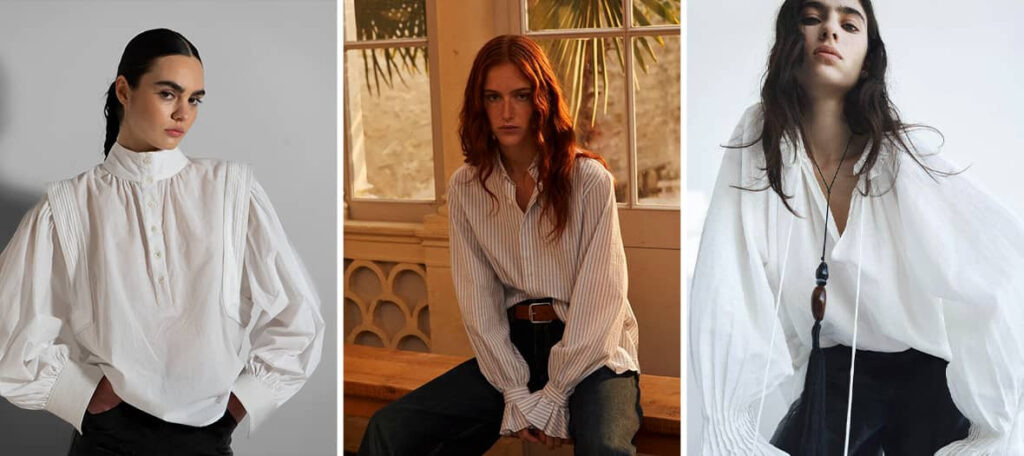
ELEGANT WOMEN’S STREETWEAR
Because looking like you tried too hard is so last season.
By The Elegant Streetwear Edit · June 2026
There is a very specific kind of woman I keep noticing this summer. She is walking through a farmers’ market at ten in the morning, or stepping out of a rideshare on a Tuesday evening, or standing in line for a coffee with a tote bag and sunglasses and absolutely no visible effort. And yet something about her is magnetic. Something about her reads money — not the loud, logo-saturated kind, but the quiet, considered kind that makes you want to stop and ask where she got her shirt.
That shirt. It is always the shirt.
It is usually linen, or something that moves like linen but feels softer. Or it is a crisp poplin in ivory that just barely skims the collarbone. Or it is a fluid satin-finish blouse in the palest shade of caramel, tucked slightly into wide-leg trousers. She is not dressed for anything particularly special. But she looks like a million dollars and she clearly, visibly, effortlessly does not care.
This is the energy we are chasing this summer. And after years of obsessing over fashion — as a writer, as a woman who has made approximately ten thousand regrettable impulse purchases, and as someone who genuinely believes that what you wear changes how you feel about your day — I can tell you with full confidence that the secret is almost always the shirt.
Not the bag. Not the shoes (though they help). Not the jewelry or the sunglasses or the perfectly curated accessory stack. The shirt. Specifically: a women’s summer shirt that looks like it costs far more than it does, and that you can get dressed in under three minutes on a warm morning when you have approximately zero patience for anything complicated.
So this is that article. The one I wish someone had written for me years ago. A proper, deep, honest, full-length exploration of the summer shirts that are quietly transforming the way stylish women dress right now — the styles, the fabrics, the fits, the aesthetics behind them, how to wear them, where they come from, and why they matter more than you might think.
Grab something cold to drink. This is a long one — and I mean that as a promise, not a warning.
The Cultural Moment We Are Living In — and Why the Shirt Is Having Its Era
Let’s talk about what’s actually happening in fashion right now, because it is genuinely exciting and genuinely different from what was happening even two or three years ago.
The early 2020s were loud. Neon. Logo-heavy. Statement everything. There was a strong cultural current running through fashion that said more is more, and visible branding was aspirational, and if you weren’t making a statement with your clothes you weren’t really saying anything at all.
And then — quietly, the way the most interesting shifts always happen — it started to change.
The aesthetic that began circulating on Pinterest boards and Instagram saves in 2023 and has now fully crystallized into the dominant visual language of 2026 is something that fashion editors keep calling different things: quiet luxury, clean girl, soft glam, old money, European minimalism, feminine elegance. These are all slightly different flavors of the same underlying idea, which is this: the most sophisticated way to dress is with restraint.
Less visible effort. Fewer logos. Better fabrics. More negative space. More confidence in the simple and the understated. A palette that gravitates toward cream, sand, ivory, camel, sage, dusty blush, and deep navy — colors that do not shout but somehow command every room they walk into.
This aesthetic is deeply, inherently flattering to the summer shirt. Because a summer shirt is, at its core, a study in restraint. One piece. One silhouette. A neckline, a sleeve, a hem. The whole elegance of it is in how much it does not do — how it does not over-accessorize itself, does not need to be paired with something equally elaborate, does not demand your attention so much as it earns it.
The women leading this aesthetic movement on social media are not the ones in the most complicated outfits. They are the ones in the most considered ones. And right now, in summer 2026, that almost always means a beautifully cut shirt in the right fabric with the right fit, worn with an ease that suggests she has been dressing this way her entire life.
Even the way we talk about getting dressed has changed. The most-saved Pinterest boards right now are things like ‘effortless summer style’ and ‘elegant casual outfits’ and ‘what to wear when you want to look expensive without trying’ — and virtually every single one of them features a shirt as the hero piece. Not a dress. Not a matching set. A shirt.
There is something almost counter-cultural about it, honestly. In a fashion climate that has been so noisy for so long, choosing a beautiful shirt feels almost radical in its quietness. And that, I think, is exactly why it feels so chic.
The Fabrics That Change Everything — Why What Your Shirt Is Made Of Matters More Than You Think
I want to spend a real amount of time here because this is the information that separates a woman who looks expensive from a woman who just spent a lot of money. The single biggest factor in whether a summer shirt reads as luxurious or as a twenty-dollar throwaway is not the brand, not even the cut — it is the fabric.
I learned this lesson the hard way. I spent several summers buying shirts at fast-fashion retailers and wondering why they never photographed the way I imagined, never draped the way the editorial imagery suggested, never gave me that ‘oh’ feeling I was chasing. And then I bought one silk-blend blouse from a mid-range brand — not even particularly expensive, maybe sixty dollars — and I wore it constantly for three summers because every single time I put it on I felt like I was wearing something that someone had really thought about.
It was the fabric. Obviously, it was the fabric.
Linen and Linen Blends
Let’s start with the material that is, in my humble and strongly-held opinion, the definitive fabric of summer 2026 elegance. Linen has been having a moment for a few years now, and the moment shows no signs of ending — if anything, it is deepening, becoming more refined, moving from ‘beach coverup’ territory into genuine sophisticated dressing.
What makes linen special is that it does something no other fabric quite does: it wrinkles beautifully. This sounds counterintuitive but it is absolutely true. A linen shirt with a few natural creases in the body looks somehow more expensive than a wrinkle-free synthetic. It has texture, presence, life. It looks like it has been lived in by someone who knows what they are doing.
The key is the weight and weave. Very lightweight linen can be a bit transparent and cheap-looking; very heavy linen can read more like a workwear fabric than a fashion one. The sweet spot is a medium-weight linen with a tight, clean weave — or a linen-cotton blend that gives you the breathability and texture of linen with a slightly softer hand feel and a touch more structure.
In terms of colors, linen looks most expensive in its most natural tones: off-white, pale sand, warm ivory, mushroom, slate grey, and the palest of blushes. Saturated colors can work beautifully too — a deep forest green linen shirt or a terracotta linen blouse can be absolutely stunning — but the natural palette is where linen looks most inherently luxurious.
Silk and Silk-Effect Fabrics
Real silk is obviously extraordinary — the way it catches light, the weight of it against the skin, the way it moves. But real silk comes with real-world complications: the dry-cleaning, the fragility, the eye-watering price per meter. And this is where 2026 fashion has actually handed us an enormous gift, because the generation of silk-effect fabrics available right now — the cupro blends, the modal-silk weaves, the polyester satins that are so refined they have essentially nothing in common with the shiny, stiff poly satin of ten years ago — are genuinely extraordinary.
A well-made silk-effect blouse in 2026 reads as effortlessly expensive. It has a subtle liquid sheen without being reflective or costume-y. It drapes softly without clinging. It is lightweight enough to be genuinely comfortable in heat while giving you that elevated, something-special feeling that synthetic fabrics at their worst completely lack.
If you find a silk or silk-blend shirt in a fluid cut and a neutral color — champagne, dusty rose, ivory, ice blue — wear it everywhere. Wear it to dinner with wide-leg trousers. Wear it to the office tucked into a tailored skirt. Wear it on a weekend with white linen shorts and sandals. There is almost no context in which a well-chosen silk-effect blouse does not look exactly right.
Cotton Poplin and Crisp Weaves
For the woman who gravitates toward structure rather than drape, cotton poplin is the answer. A poplin shirt in pure white or pale blue is perhaps the most versatile piece in the summer wardrobe — it is the thing that every stylish woman I have ever admired seems to own in at least two or three iterations.
The luxury version of a poplin shirt is about tight weave, clean finish, and perfect cut. You want it to feel almost paper-crisp fresh out of the laundry, to have buttons that feel weighted and smooth, to have collar construction that holds its shape without any structure underneath. When a poplin shirt is right, it is so right. It goes with everything. It photographs beautifully. It looks equally at home in a casual daytime context and a formal evening one.
The trick with poplin for summer is in the fit. It should not be boxy (unless you are wearing it intentionally oversized as a style choice, in which case it should be very oversized, styled with intention). It should not be tight. The ideal poplin shirt skims the body with enough ease that it moves rather than pulls — think the kind of ease you see on the glossy pages of a French fashion magazine, where everything looks easy and nothing looks labored.
Gauze and Double-Layer Cheesecloth
If linen is the classic, gauze is the dreamy poetic version of summer dressing. Gauze shirts — the kind with a slightly crinkled texture, an airy open weave, and a generally ethereal quality — have moved firmly into the luxury aesthetic in 2026 in a way that they absolutely were not a few years ago.
The key is layering and cut. A single layer of very open gauze can read as cheap; a well-constructed double-gauze shirt with a thoughtful cut reads as quietly expensive and almost architectural in its softness. The best gauze shirts have a kind of dimensional quality — they are not flat, they have texture and movement and a slight haze to them that looks incredible in the summer light.
These are the shirts that look best in photographs, for what it is worth. They have a dreamy quality that catches beautifully in natural light, especially the golden hour. If you care at all about your Instagram feed or your digital presence — and most of us do, there is no shame in that — a white or ecru gauze shirt is almost guaranteed to give you content you will actually want to post.
The Silhouettes That Are Defining Summer 2026 — and What Each One Says About You
Cut and silhouette are where personal style really comes in. All of the fabrics I just described exist across multiple silhouettes, and the silhouette you choose shapes how the whole outfit reads — the attitude of it, the era it references, the kind of woman it suggests.
Here are the silhouettes that are currently having their moment, along with the style stories they tell.
The Oversized Boyfriend Shirt
This one has been around long enough that it could risk feeling tired, and yet it persists with total confidence — because the formula is simply too good to abandon. An oversized men’s-style shirt in a quality fabric, worn half-tucked or fully untucked with fitted trousers or sleek shorts, is one of the most reliably stylish combinations in the summer wardrobe.
What elevates this silhouette into expensive territory is the detail work. The collar construction. The cuff finishing. The weight of the buttons. And crucially — the fabric. An oversized shirt in cheap poly is just a big shirt. An oversized shirt in a beautiful Egyptian cotton or a fluid linen is something else entirely. It has that sprezzatura quality — the Italian concept of studied artlessness — that makes the whole look feel incredibly sophisticated while looking like you made zero effort.
The current styling of this silhouette leans heavily into the quiet luxury aesthetic: one or two subtle gold pieces, clean sneakers or leather loafers, a minimalist tote. Nothing too much. The shirt is the statement; everything else just supports it.
The Cropped and Structured Shirt
On the opposite end of the proportion spectrum, the cropped structured shirt has become one of the most fashion-forward pieces of the season. This is a shirt that ends at the natural waist or just above it — with tailored, intentional structure — and it is worn as a top in its own right rather than as something to be tucked in.
What makes this silhouette feel expensive is its formality. There is something almost suiting-adjacent about a beautifully tailored cropped shirt — it nods toward menswear, toward tailoring, toward a kind of precision in dressing that reads as deeply considered. Pair it with high-waisted wide-leg trousers and you have essentially the chicest outfit available to a woman in 2026 who wants to look powerful without looking like she is trying to look powerful.
The fabric that does the most work here is a crisp cotton-linen blend or a firm poplin. You need a fabric that can hold the structure of the cut — something fluid would soften all the architectural qualities that make this silhouette so compelling.
The Flowy Peasant Blouse
There is a version of the peasant blouse that has been reclaimed and refined in recent seasons — not the folkloric maximalist version, but a cleaner, more modern interpretation that borrows the volume and ease of the peasant silhouette while stripping away any fussiness.
Think: a shirt with a slightly dropped or off-shoulder neckline, gathered gently at the yoke or the sleeves, in a fabric that floats rather than clings. The beautiful thing about this silhouette is that it is genuinely flattering across a wide range of body types — the volume is gentle and feminine rather than shapeless, and the slightly romantic quality of it reads as effortlessly beautiful rather than costumey.
In gauze, double-layer cotton, or a light linen, this silhouette looks most at home — and most expensive. It is the silhouette that photographs most beautifully with a sun-drenched background, and it is the shirt you reach for when you want to feel like a woman in a European film doing everything right and looking incredible while doing it.
The Classic Slim-Fit Blouse
Sometimes elegance is simply that — elegance. Not oversized, not cropped, not gathered, not a statement. Just a beautifully cut slim-fit blouse in the right fabric with the right neckline and the right length.
The slim-fit blouse is a masterclass in restraint. It does not try to be a piece of architecture or a fashion editorial in its own right. It simply fits well, moves well, and in a quality fabric with a careful finish, looks quietly, undeniably expensive. This is the shirt that the women in the streets of Paris or Copenhagen or Milan wear as if they put it on without thinking — and it is, of course, the product of very considerable thought.
In a silk-effect fabric with a V-neckline or a classic button-front placket, the slim-fit blouse is one of the most versatile pieces in the summer wardrobe. It can be entirely casual — untucked, with white jeans and gold sandals — or entirely formal — tucked into a pencil skirt with a blazer — and it reads as precisely right in both contexts.
The Color Stories That Feel Most Expensive This Summer
Color is where many women undersell themselves. Not because they make bad choices, but because they default to the safe and the comfortable rather than the sophisticated. And I completely understand this impulse — color choice is genuinely risky in a way that cut and fabric are not, because it is so visible, so immediate, so personal.
But there are color stories that are currently so strongly associated with the expensive, elevated aesthetic that choosing them is almost a shortcut to looking put-together.
The Neutral Family — Cream, Ivory, Sand, Stone
These are the colors that every quiet luxury and clean girl mood board has in abundance, and for completely valid reasons. Neutrals — true neutrals, not the flat grey-beige of tired workwear — photograph beautifully, work in virtually every context, and pair effortlessly with each other and with everything else.
The key is to understand that this is not a single color but a family of colors, and that the specific undertones matter enormously. A warm ivory reads differently from a cool white reads differently from a sandy beige. The women who look best in this palette are the ones who have figured out which end of the warm-cool spectrum flatters their complexion and have leaned into it fully.
A cream linen shirt. An ivory poplin blouse. A sand-colored satin-finish top. Any one of these, worn right, has an effortless richness that no amount of pattern or color saturation can replicate. It is the color family of confidence — of a woman who does not need her clothes to announce her because her presence does that for her.
The Soft Brights — Butter Yellow, Dusty Coral, Sage Green
Alongside the neutrals, there is a family of what I think of as soft brights — colors with a clear, definite hue but a muted, slightly dusty quality that keeps them firmly in the elevated territory rather than the garish one.
Butter yellow linen is perhaps the most stunning shirt color of this summer. There is something about it that photographs like a dream, flatters almost every skin tone, and reads as deeply, surprisingly sophisticated when it is in the right fabric with the right cut. It has the warmth of yellow without the harshness; it glows rather than shouts.
Dusty coral and terracotta — the warm, earthy side of the red family — have been strong in fashion for a few seasons now, and they show no signs of fading. In a linen or cotton-linen blend, a dusty coral blouse has a kind of sunbaked Mediterranean warmth that is incredibly compelling during the summer months.
Sage green is the quietest of the soft brights — so quiet that it almost belongs in the neutral family — and it is extraordinarily wearable. A sage linen shirt goes with everything from white linen trousers to denim to tailored shorts. It is the shirt equivalent of a nude lip: it works in every context and makes everything around it look more considered.
The Classic Darks — Navy, Deep Olive, Rich Chocolate
Summer is not only for pale colors, and the women who have figured this out tend to look the most stylish. There is something incredibly elegant about dark colors worn in light, breathable summer fabrics — the contrast between the weight of the hue and the airiness of the material creates a kind of visual tension that is deeply appealing.
A navy linen shirt is one of the most classically stylish pieces available this summer. It references maritime heritage, French Riviera style, and the long tradition of navy as the color of quiet confidence and understated authority. Worn with white wide-leg trousers and gold jewelry, it is completely, perfectly right.
Deep olive is having an enormous moment — the earthy, almost military quality of it sits beautifully in the current aesthetic climate that prizes naturalness, sustainability, and connection to the earth. And rich chocolate brown, once a difficult color for many people to wear, has become one of the most refined choices in the current fashion vocabulary.
How to Style These Shirts — The Formulas That Always Work
All the knowledge in the world about fabrics and silhouettes is not worth much unless you can translate it into actual outfits — real, wearable combinations that you can get dressed in quickly on a warm morning without standing in front of your wardrobe for twenty minutes wondering what goes with what.
So here are the formulas I return to most often. Not prescriptions but starting points — arrangements that tend to work reliably, that you can adapt to your own body and taste and lifestyle.
The Tonal Stack
Wearing multiple pieces in the same color family — not an exact match, but a tone-on-tone arrangement — is one of the most effortlessly chic things you can do with a beautiful summer shirt. An ivory linen shirt with cream wide-leg linen trousers and bone-colored sandals. A sage blouse with forest green tailored shorts and olive-toned accessories.
The tonal stack works because it creates a long, unbroken visual line that is enormously elongating and enormously elegant. It requires almost no styling effort and yet it reads as deeply considered. It is the outfit that makes people ask if you have a stylist.
The key to making it feel sophisticated rather than accidentally mismatched is to vary the textures while keeping the tones similar. A matte linen shirt with a slightly shiny satin-finish trouser. A smooth poplin blouse with a more textured woven skirt. The contrast in surface catches the eye and makes the tonal arrangement feel intentional.
The Contrast Classic — White on Dark or Dark on Light
When in doubt, contrast. A white or ivory shirt with deep navy trousers. A dark chocolate blouse with ivory linen shorts. A cream poplin with black tailored trousers. These combinations work because they are visually clean and confident — they do not require any additional color balancing because the high contrast does the heavy lifting.
The French and Italian women who consistently look the most effortlessly stylish tend to return to this formula again and again. It is the outfit equivalent of a classic French manicure or a red lip — timeless, unfussy, effective. And because it is such a reliable foundation, you can add the most minimal jewelry and accessory touches and still look completely put-together.
The Denim Pairing — Reinvented
Denim and a beautiful shirt is perhaps the most classic casual pairing in Western dressing, and it remains almost endlessly wearable. But the way it is being done in 2026 is distinctly different from how it has been done before.
The current version favors wide-leg or barrel-leg denim in a light wash — medium to light indigo, or even pale blue — with a flowing, airy shirt tucked in slightly at the front. The fit relationship between the two pieces is crucial: a more voluminous shirt with more fitted denim, or a more structured shirt with wider, roomier denim. One fitted piece, one with ease. The combination of the structured indigo with a soft linen or silk-effect blouse creates exactly the kind of casual-elegant tension that makes the whole thing feel fashion-forward without feeling like you tried too hard.
The Tailored Summer Combination
The shirting and tailoring combination — a beautiful shirt worn with a pair of high-quality tailored trousers — is the summer formula for the woman who wants to look completely dressed without looking formal. It is the business-casual reimagined through the lens of the current aesthetic: less office, more Milanese gallery opening on a Tuesday afternoon.
The fabrics do the heavy lifting here. Linen trousers with a silk-effect blouse. Cotton poplin with a slim-cut satin trouser. The combination of tailored silhouette and summer-appropriate materials gives you a look that reads as polished and deliberate — the kind of outfit that makes people ask what the occasion is, even when the answer is just ‘nothing in particular.’
Accessories That Elevate Without Competing
One of the things I most want to communicate in this article — possibly the most important practical piece of advice I can offer — is this: the goal of accessorizing a beautiful summer shirt is not to add to it but to finish it. The shirt is the point. Everything else is punctuation.
This is a harder instinct to follow than it sounds, especially for those of us who love accessories and tend to view them as the main attraction. But with a shirt this good, this considered, this quietly magnificent in the right fabric and cut, piling on too much jewelry or too aggressive an accessory combination is like adding a garnish to a perfect dish. It just gets in the way.
The Gold Jewelry Question
Gold jewelry is the almost universal companion to the summer shirts I have been describing — and for good reason. The warmth of gold against the warm neutrals and natural fabrics that define this aesthetic is genuinely beautiful. It harmonizes rather than contrasts, which creates a cohesion that is one of the hallmarks of expensive dressing.
What kind of gold? The current moment favors simple, almost architectural pieces over ornate or statement ones. A single medium-weight chain necklace. Small hoops. A delicate cuff bracelet. A signet ring or a simple band. The gold should be present but not competing — it should feel like it belongs to the outfit rather than being added to it.
The one exception I would make to the minimalist gold rule is earrings — a pair of beautiful sculptural gold earrings with an otherwise simple outfit is one of the most elegantly effective moves available to a woman getting dressed for something that matters. One statement piece in an otherwise quiet look. The contrast makes both elements sing.
The Bag — Often the Most Important Decision
I have a theory, which is that the bag you carry with a beautiful summer shirt tells more of the story of your personal style than almost any other single element. The shirt sets the quality floor; the bag determines the style register.
A large, slightly unstructured woven tote or a natural-fiber basket bag with a linen shirt pulls the whole look toward a relaxed Mediterranean elegance — sunscreen and novels and a bottle of cold water. A sleek, minimal leather tote or a small structured shoulder bag with the same shirt lifts the look into a more urban, deliberate territory. A beautifully worn leather crossbody takes it somewhere between the two.
What tends to not work — and I say this gently — is a logo-heavy or very flashy bag with a quiet, refined shirt. The contrast in register is jarring. The shirt is trying to say something nuanced; the bag shouts over it.
Shoes — The Final Word
Summer shoes with a beautiful shirt are almost always best when they are minimal. Leather sandals. Simple mules. Clean white sneakers. The foot doesn’t need to be doing very much when the shirt is doing the heavy lifting.
The exception is the shoe that creates a deliberate style contrast — a very sleek pointed-toe flat with a very relaxed linen shirt; the combination of the refined shoe with the laid-back fabric creates a kind of sophisticated contradiction that is one of the most characteristically modern styling moves. It suggests a woman who understands rules well enough to play with them.
The Quiet Luxury Aesthetic and What It Means for Your Summer Shirt Wardrobe
I want to spend some time thinking about the larger cultural context here, because I think it genuinely matters to understanding why we are all so drawn to this particular way of dressing right now.
‘Quiet luxury’ as a term has been floating around fashion discourse for a few years, but what it describes is both simpler and more interesting than the phrase might suggest. It is not, at its core, about being wealthy or even about expensive clothes specifically. It is about a particular relationship with clothes — one characterized by thoughtfulness, by restraint, by the preference for quality over quantity and for lasting over trending.
There is something almost philosophical about it. A quiet luxury wardrobe is one built on pieces that will be worn for years, not months. On fabrics that will age beautifully rather than pilling and fading after a few washes. On silhouettes that transcend seasonal trend cycles. On colors that work together and that do not go out of style.
And the summer shirt is perhaps the purest expression of this philosophy. A beautiful linen shirt bought with care and worn for ten summers is the absolute definition of quiet luxury — not because of its price tag but because of its quality and longevity and the considered way it was chosen.
This is also, I think, where the aesthetic intersects with something deeper about how many women are feeling about consumption and fashion right now. The conversation about sustainability, about the environmental cost of fast fashion, about the appeal of buying less and choosing better — all of this gives additional weight and resonance to the quiet luxury approach. Choosing one beautiful linen shirt instead of five cheap ones is not just a style decision. It is a values decision. And it is one that looks better and feels better and reflects something more true about who you actually are.
The clean girl aesthetic — which has been one of the most significant visual trends of recent years and which shows no signs of fading in 2026 — is the streetwear expression of this philosophy. It is about glowing skin, minimal makeup, simple hair, and beautifully cut, quality basics. And at the center of practically every clean girl outfit is exactly the kind of shirt we have been talking about this entire article.
A Word About Fit — Because Everything Else Is Irrelevant If It Doesn’t Fit
I would feel genuinely dishonest if I wrote seven thousand words about summer shirts without spending substantial time on fit, because fit is the single most critical factor in whether any piece of clothing looks expensive or not. More important than fabric. More important than brand. More important than color or silhouette or styling.
A badly fitting shirt in the most beautiful Italian linen will look like something you grabbed off a sale rack. A perfectly fitting shirt in a completely ordinary fabric will look like it was made specifically for you — and that is exactly how expensive clothes are supposed to look.
The challenge is that ‘perfect fit’ is not a universal standard — it is deeply personal and depends enormously on your body, your proportions, your personal style preferences, and what you want the shirt to do for you. But there are a few principles that tend to hold across contexts.
Shoulder Seams and Why They Matter More Than People Think
If you remember nothing else from this section, remember this: the shoulder seam is the foundation of the entire garment. If the shoulder seam does not sit correctly — at the natural shoulder, or very close to it — nothing else about the shirt will look right. The sleeves will pull. The back will gather. The front will not lie flat. The whole proportional story of the shirt will be off.
For women buying shirts with a deliberately oversized silhouette, the shoulder seam conversation becomes more complex — an intentionally dropped shoulder is a valid style choice. But the drop should be intentional and the sleeve should have enough length to make it look like a design decision rather than a sizing mistake. If you are not sure, try both a fitted shoulder and an oversized shoulder and honestly compare how they read. The one that looks deliberate is the right one.
The Chest and Back — Neither Too Tight Nor Too Loose
In the chest and upper back, the shirt should have ease — room to breathe and move without pulling or straining across the bust or the shoulder blades. Pulling across the buttons is the enemy of elegance. But equally, excess fabric pooling around the torso reads as sloppy rather than relaxed.
The balance point is what tailors describe as ‘controlled ease’ — enough room that the fabric falls smoothly and moves fluidly, not so much that it loses its shape entirely. In a linen or cotton shirt this is especially important because these fabrics will relax further when they warm to your body temperature, so what feels right in a cool fitting room might feel slightly different after you have been wearing the shirt for a few hours.
Length — The Detail That Changes Everything
Shirt length is one of the most underrated elements of fit, and it is one of the areas where small adjustments can make the most dramatic difference. A shirt that is slightly too long can make you look shorter and swamped. A shirt that is slightly too short can look unintentionally cropped, or pull up awkwardly when you move.
The ideal length depends entirely on how you intend to wear the shirt — tucked, untucked, or partially tucked — and what you intend to wear it with. But a general principle: if you are wearing a shirt untucked, it should end at a point that feels intentional. The most flattering untucked length for most women is somewhere between the top of the hip and the mid-hip — long enough to look like a deliberate hem, not so long that it takes over the proportion of the outfit.
And if you find a shirt that is almost perfect in every other way but is slightly the wrong length — take it to a tailor. A hem adjustment is one of the fastest and least expensive alterations a tailor can do, and the difference it makes to how a shirt looks and feels is genuinely transformative. Do not discard a beautiful shirt because of a hem. Fix the hem.
Building a Summer Shirt Wardrobe — Starting From Zero or Building on What You Have
Here is the practical question that underlies everything I have been writing: if you want to build a wardrobe of summer shirts that reliably look expensive, feel effortless, and serve you well across a range of contexts, where do you start?
My honest answer is always the same: start with one. Not five. Not a capsule of twelve. One shirt that is genuinely excellent — that you love, that fits you beautifully, that makes you feel like the best version of yourself when you put it on. Buy that shirt, wear it constantly, and let it teach you what you actually want from all the others.
This is countercultural advice in an era of capsule wardrobe lists and ten-pieces-to-a-complete-summer-wardrobe articles. But it is the approach that actually works, in my experience, because the woman who buys one truly excellent shirt learns more about her own taste from wearing it than she would learn from buying ten mediocre ones.
The Essential First Piece
If I were starting from scratch and could only recommend one summer shirt as the foundation piece, it would be this: a medium-weight linen shirt in either ivory, white, or pale sand, in a slightly relaxed but not oversized silhouette, with a classic collar and a length that works both tucked and untucked. This piece is the most adaptable, the most universally flattering, and the one that will give you the most outfit options for the least wardrobe investment.
From there, the second piece might be something that introduces color — a sage or dusty blue linen shirt, or a butter yellow cotton-linen blend. The third might introduce a different fabric — a silk-effect blouse in a neutral tone. The fourth might be a structural piece — a cropped or more tailored shirt that contrasts with the ease of the first three.
But only if you want all four. The goal is not a full wardrobe. The goal is a wardrobe that you actually wear, that genuinely serves you, that makes getting dressed in the morning feel pleasurable rather than effortful.
Quality Over Quantity — Always, But Especially Here
The quiet luxury philosophy I mentioned earlier is not just an aesthetic — it is genuinely the smarter financial approach to building a summer shirt wardrobe. Four shirts at twenty dollars each will, in my experience, cost you more over five years than one shirt at sixty or eighty dollars that you love and wear constantly. Because the twenty-dollar shirts pill after a season, fade after a summer, develop pulls and little holes and misshapen collars, and you replace them. The eighty-dollar shirt washes beautifully, holds its shape, softens gradually into an even better version of itself, and is still in your wardrobe five summers later looking like a great decision.
This is the mathematics of building a wardrobe the right way. And it is also, conveniently, the mathematics that aligns perfectly with the aesthetic we have been discussing — because the shirt that looks most expensive is almost always the one that was bought with the most care and has been worn with the most love.
The Digital Fashion World — How Social Media Has Shaped the Summer Shirt Moment
We cannot talk about fashion in 2026 without talking about the role that social media — and particularly Pinterest, Instagram, and TikTok — have played in shaping the aesthetic landscape that has made the summer shirt so central to how stylish women dress.
Pinterest, in particular, has had an enormous influence on the quiet luxury and clean girl aesthetics. The kind of idealized, aspirational imagery that Pinterest curates — sunlit apartments, well-dressed women in beautiful fabrics, color palettes that are curated down to a hair’s-breadth of precision — has created a collective visual vocabulary that millions of women are now consciously or unconsciously dressing toward.
When you scroll a ‘summer style 2026’ Pinterest board, you see the same pieces again and again: linen shirts in neutrals and soft colors. Fluid blouses in silk-effect fabrics. Oversized poplin shirts with minimal styling. Gauze tops with wide-leg trousers and sandals. The repetition is not accidental — it is the result of millions of saves and pins that have algorithmically surfaced the looks that resonate most broadly, and those looks are almost uniformly built around a beautiful shirt as the central element.
Instagram has done something similar but with a different mechanism. The influencers and creators who have been most influential on the current aesthetic moment are not the ones with the most elaborate, maximalist content — they are the ones whose content has a kind of quiet, considered beauty that resonates with the current cultural mood. The women in the most-saved summer outfit posts are wearing simple, beautiful clothes with visible quality, not complicated ensembles or trend-driven pieces.
TikTok has perhaps contributed the vocabulary more than the imagery — terms like ‘quiet luxury,’ ‘old money aesthetic,’ ‘that girl energy,’ and ‘clean girl vibes’ have entered mainstream fashion discourse through TikTok, and these concepts are all deeply aligned with the kind of dressing that centers on a beautiful shirt as the hero piece.
What all of this means practically is that the aesthetic we have been discussing throughout this article is not a niche or an insider preference — it is genuinely mainstream, genuinely influential, and genuinely likely to remain the dominant style conversation for the foreseeable future. The summer shirt is not a trend. It is a movement.
Personal Style, Individual Expression, and Why Rules Are Just Starting Points
I want to end, before my final thoughts, with a note about something that runs through everything I have written but that I have not said explicitly: all of this is in service of you and your particular self, not in service of some idealized external standard of what looks expensive or elegant.
Style rules and fashion advice — this article included — are most useful when they are treated as starting points for exploration rather than prescriptions to follow exactly. The woman who looks best in a summer shirt is not necessarily the one who followed every guideline I have laid out here. It is the one who understood those guidelines well enough to adapt them to her own body, her own coloring, her own life, her own taste.
Maybe you love color more than neutrals and the quiet luxury palette makes you feel invisible rather than refined. Then wear the butter yellow — wear the papaya and the deep cobalt and the lime green if that is what makes you feel alive. Because the most important element of style is that it actually feels like you. A woman who looks genuinely herself in a vivid shirt looks more elegant than a woman who looks slightly uncomfortable in a ‘correct’ neutral.
Maybe the oversized silhouette makes you feel shapeless rather than relaxed. Then choose the slim-fit. Maybe gauze feels too fragile for your lifestyle and you want something washable and robust. Then choose the poplin. Maybe you run warm and even linen feels too heavy. Then find the lightest cotton voile you can and wear that in every color you love.
The point is not the specific shirt. The point is the approach — the care, the attention to fabric and fit and color, the preference for quality over quantity, the willingness to invest in the pieces that will genuinely serve you rather than filling your wardrobe with things you bought in a rush and barely wear.
The point is to dress like a woman who knows herself. Which is, when you think about it, the most expensive-looking thing there is.
The Last Word — On Effortlessness and Why It Is Worth Pursuing
I started this article talking about a woman I keep noticing this summer. The one in the shirt. The one who looks like she has not tried at all and yet somehow looks better than everyone else in the room.
I have been thinking about her — this composite, this collection of different women I have seen and admired — while writing all seven thousand-something words of this piece. And what I keep coming back to is this: the effortlessness is real. It is not performed. It is the result of a woman who has made good decisions — about what she buys and how much of it and what quality and what fits her body and what suits her life — and has then been able to let all of those decisions fade into the background and just be.
That is the promise of a really good summer shirt. Not just that it looks expensive. Not just that it photographs well or sits beautifully in the context of a curated aesthetic. But that it gives you one less decision to make, one less thing to worry about, one more morning where you get dressed in five minutes and feel completely like yourself and can move through your day with your full attention on what actually matters.
A shirt that does that — a shirt that earns that — is worth every ounce of care and consideration you put into finding it.
So go find it. The linen and the silk and the gauze and the poplin. The cream and the sage and the butter yellow and the navy. The oversized and the cropped and the fitted and the flowy. Find the one that makes you feel like the version of yourself you most want to be this summer — and then just put it on, and go.
The rest takes care of itself.
✦
Elegant Women’s Streetwear · elegantstreetwear.com
Women’s Summer Shirts That Look Expensive but Feel Effortless · June 2026