
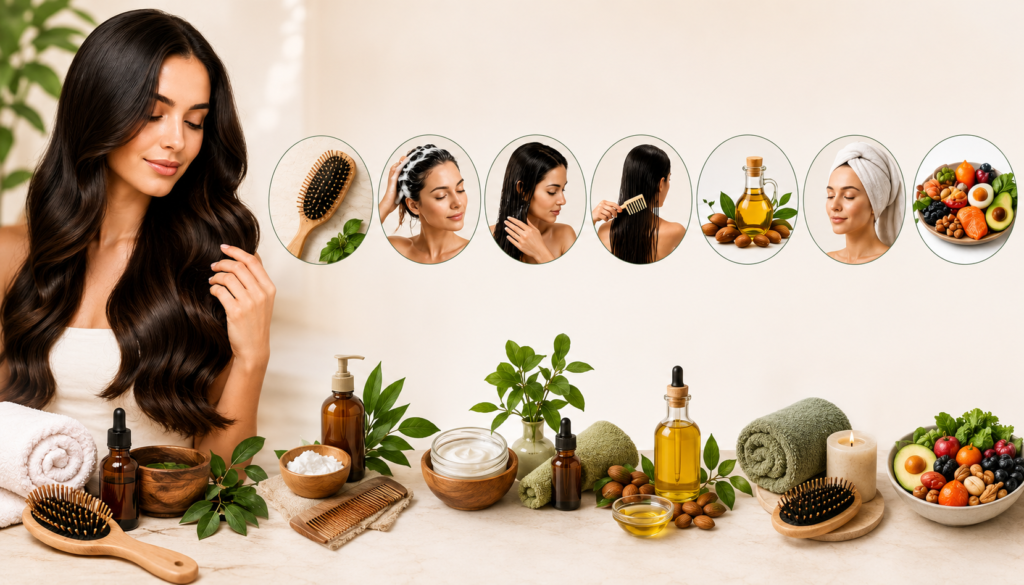
Everything I wish I had known before I spent three years and a small fortune trying to fix my hair
A real guide for women who want their hair to look as good as their lives feel
My hair journey began, as so many of them do, with a very bad decision in a very nice salon. It was a Tuesday in autumn — the kind of afternoon that makes you feel like a new chapter of your life should be starting — and I sat down in that velvet chair and said the words that have launched a thousand hair regrets: ‘I want something completely different.’
What followed was eighteen months of trying to recover moisture, length, and my sense of self from a bleaching process that had technically gone well but had left my hair in a state I can only describe as aesthetic grief. My strands, once thick and relatively manageable, had become dry in a way that seemed almost defiant — refusing conditioner, breaking off at the ends, and performing a kind of frizzy independence whenever the weather changed.
I spent those eighteen months becoming obsessed. I read everything. I watched hours of YouTube videos from trichologists, from women with hair I coveted, from Ayurvedic practitioners and Korean beauty bloggers and dermatologists who specialized in scalp health. I tried treatments that cost a lot and did nothing, and cheap drugstore products that turned out to work beautifully. I learned that most of what we think we know about hair care is either wrong, incomplete, or a very clever marketing strategy.
This guide is the distillation of all of that. It’s what I genuinely wish someone had handed me at the beginning — not a list of products to buy, but a real framework for understanding how hair works, what it actually needs, and how to build a routine that creates the kind of hair that looks effortless precisely because it’s been consistently cared for. The kind of hair that reads as quiet luxury without trying. The kind that moves beautifully in photographs and in real life. The kind that, honestly, is mostly about health rather than any specific styling technique.
Wherever your hair is right now — whether you’re recovering from damage like I was, or simply trying to get more out of hair that feels stuck and uninspired — this is for you.
Before Anything Else: Understanding What Hair Actually Is
We talk about hair as though it’s a living thing we need to nourish and repair, and in some ways that framing is useful — but it’s important to understand the biological reality, because it changes how you approach care significantly. Hair, from the mid-shaft to the ends, is not alive. It’s composed of a protein called keratin, arranged in overlapping scales called the cuticle, surrounding a cortex that gives your hair its strength, color, and elasticity. This structure is extraordinarily sophisticated, but it cannot heal itself. Damage to the cuticle — from heat, chemicals, mechanical manipulation — cannot be reversed. It can be masked, temporarily, with the right products. But the only way to truly have healthy ends is to grow healthy hair from a healthy scalp and not damage it as it grows.
This is the foundational truth that changes everything. It means that the most important thing you can do for your hair is care for it preventatively, not reactively. It means that the scalp — where the living part of your hair actually exists, where new cells divide and differentiate into the hair shaft that will eventually become the length you can see and touch — deserves far more attention than most women give it. It means that treatments promising to ‘repair’ damaged hair are doing something more like filling and smoothing than actually restructuring the protein — which can still look and feel wonderful, but needs to be understood correctly.
It also means that patience is not optional. Hair grows, on average, about half an inch per month. The hair at your shoulders today was at your scalp roughly eighteen months to two years ago. Everything you do for your hair today is an investment in the hair you’ll have in a year. This long timeline is one of the reasons hair care is difficult — the feedback loop is slow, and it’s easy to abandon good habits before you see their results.
The Three Parts of the Hair You Need to Know
The root zone — roughly the first two inches closest to your scalp — is where your newest, most undamaged hair lives. It’s also the most affected by your current health, your hormones, your nutrition, and your scalp condition. This is where care makes the most immediate difference.
The mid-lengths are where your hair’s history is written. Every heat styling session, every colour treatment, every elastic ponytail pulled too tight — it’s all recorded here. This is the zone that needs the most moisture support and the most protection.
The ends are the oldest part of your hair. On someone with hair at the bra strap, the ends might be three to four years old. They’ve been through seasons of humidity and dry winter air, sun exposure, hundreds of wash days. They need sealing, protecting, and trimming regularly to prevent the split ends that travel upward and cause breakage.
Understanding these three zones changes how you apply products, how you handle your hair when washing and styling, and how you think about trimming. Your hair is not one uniform thing. It’s a gradient of age and history, and it benefits from being treated accordingly.
Scalp Health: The Part of Hair Care Nobody Talks About Enough
If beautiful hair has a secret, it lives at the scalp. I know this sounds slightly unglamorous — the scalp is not the part of hair care that gets pinned on mood boards or featured in the dewy, effortless hair aesthetic that dominates every social platform right now. But it is the foundation upon which all of that beautiful hair is actually built, and neglecting it is like trying to grow a garden in compacted, undernourished soil.
The scalp is skin. It has sebaceous glands that produce sebum — your hair’s natural conditioner, which travels down the hair shaft and provides protection and moisture. It has a microbiome, just like your gut, composed of bacteria and fungi that exist in a delicate balance and that significantly affect scalp health. It sheds dead skin cells, just like the rest of your body. And it responds to everything that affects your body generally: stress, nutrition, hormones, sleep, hydration.
Scalp problems — dandruff, excessive oiliness, dryness, flakiness, itching, tenderness — are almost always signals of something that needs attention. Not just cosmetically, but actually. And addressing them properly, rather than masking them with the wrong products, is one of the most transformative things you can do for your hair over the long term.
Scalp Exfoliation: The Game-Changing Step Most People Skip
The most meaningful addition I made to my hair routine in the past two years — more impactful than any conditioning treatment or protein mask — was regular scalp exfoliation. I resisted it for a long time because it felt counterintuitive. My hair was already dry. Why would I want to exfoliate?
Here’s what I didn’t understand: when dead skin cells, product buildup, and excess sebum accumulate on the scalp, they can block the hair follicle, impede circulation, and create an environment where fungi and bacteria can proliferate. This buildup also affects how well your other scalp products penetrate and work. Exfoliating clears all of that, allowing your scalp to breathe, your follicles to function properly, and your other treatments to actually reach where they need to go.
There are two types of scalp exfoliation: physical, using a scalp scrub or exfoliating brush, and chemical, using acids like salicylic acid or glycolic acid in scalp serums or treatments. Both work. Physical exfoliation gives more immediate satisfaction — you can feel the scrubbing, and the clean feeling afterwards is extraordinary. Chemical exfoliation is gentler and more consistent, particularly good if your scalp is sensitive or prone to irritation.
I use a scalp scrub about once every two weeks, on the night before a wash day. I section my dry hair and work a small amount of scalp scrub into the roots, massaging in circular motions for several minutes. The next morning I shampoo as normal, and the difference in how clean and light my scalp feels is remarkable. Over time — and this is the part that convinced me to keep going — my hair started growing more quickly, my roots stayed clean longer between washes, and the overall density of my hair appeared to improve.

Scalp Massage: The Ritual That’s Actually Backed by Science
If I could give you one single hair habit to adopt today — just one — it would be daily scalp massage. I know it sounds like something your grandmother might have recommended, or like wellness advice that’s too simple to actually work. But the research is genuinely compelling, and my personal experience with it has been significant enough that I will never stop.
A study published in a dermatology journal followed men who performed four minutes of standardized scalp massage daily for twenty-four weeks and found measurable increases in hair thickness at the end of the study period. The mechanism is circulation: massaging the scalp increases blood flow to the hair follicles, which delivers more nutrients and oxygen to the cells responsible for hair growth. It also helps loosen and distribute sebum, and reduces the tension that builds in the scalp over time — particularly relevant for women who wear their hair in tight styles or who carry a lot of stress in their head and neck.
The practice is simple. Every morning, or every evening — whatever fits your routine — spend four to five minutes massaging your scalp with your fingertips. Not your nails. The pads of your fingers, using firm circular or kneading motions. Work systematically across the entire scalp: the nape of the neck, the crown, the temples, the hairline. If you want to add a scalp oil or serum, this is the time to apply it — the massage aids absorption and the combination is deeply pleasurable.
I do mine in the morning, while I’m still half-asleep, sitting on the edge of the bed. It takes five minutes. It has become, genuinely, one of my favourite parts of my day. And my hair, over the two years I’ve been doing it consistently, is measurably thicker at the roots than it was before.
Understanding Your Scalp Type and What It Actually Needs
One of the most common mistakes in hair care is applying a routine designed for a different scalp type than the one you have. Oily scalp routines applied to dry scalps lead to brittleness and breakage. Moisturizing routines applied to oily scalps lead to buildup, limp roots, and the kind of hair that looks unwashed by day two regardless of how thoroughly you cleaned it.
Oily scalps produce excess sebum — often because they’ve been over-stripped by harsh shampoos, which triggers the sebaceous glands to overcompensate. The solution is usually not to shampoo more aggressively, but to shampoo with a gentler formula more strategically: clarifying once a week to remove genuine buildup, and using a gentler shampoo in between. Salicylic acid scalp treatments can help regulate sebum production. Avoiding heavy conditioners and oils on the scalp, and focusing moisture only on the mid-lengths and ends, is essential.
Dry scalps often produce fine, white flakes — different from dandruff, which is caused by a fungal imbalance and produces oilier, yellowish flakes. Dry scalps need moisture and oil. Scalp oils — particularly lighter ones like jojoba, which closely mimics human sebum, or rosemary oil diluted in a carrier — can help. Reducing shampoo frequency and switching to a sulfate-free formula that doesn’t strip natural oils is important. A weekly scalp treatment with a hydrating mask can also help restore the moisture balance.
Dandruff — the fungal kind, caused by an overgrowth of Malassezia — responds to antifungal ingredients: zinc pyrithione, ketoconazole, selenium sulfide, or salicylic acid. It needs to be treated as a scalp condition rather than a cosmetic issue, and the treatment shampoos need contact time (leave them on for a few minutes before rinsing) to be effective.
The scalp is the garden. Every effort you make there is an investment in the hair you will have a year from now.
The Wash Day Ritual: Everything You’ve Been Doing Slightly Wrong
Wash day should be a ritual, not a chore. I realize this sounds like the kind of thing that gets printed on a motivational print above a bathroom mirror, but I mean it practically: the way you wash your hair — the sequence, the temperature, the products, the handling — matters enormously for its health and appearance over time. Most women develop their wash-day habits in their teens and never really revisit them, which means a lot of us are doing things that are quietly working against us, every single time.
How Often Should You Actually Wash Your Hair?
This is the question I get asked more than almost any other, and the answer is genuinely individual — but it’s also different from what most women have been told. We have been collectively over-washing our hair for decades, partly because of the rise of daily-wash shampoos in the late twentieth century (a trend driven primarily by shampoo companies whose revenue depended on frequent use) and partly because the immediate feeling of squeaky-clean hair has become associated with actual cleanliness.
But squeaky-clean hair is usually a sign of over-stripping. The squeak is the sound of your hair cuticle being roughed up and your natural oils being completely removed. What follows is the oil overproduction cycle: your scalp, sensing that it’s been stripped of everything, responds by producing more sebum faster. And so you wash again, and the cycle continues.
Breaking this cycle takes patience — usually about three to four weeks of gradually extending the time between washes — but the results are worth it. Most women with medium-density hair that isn’t extremely fine do well with two washes per week. Fine hair that oils quickly might genuinely need three. Thick, coarser hair that tends toward dryness might thrive on once-weekly washing. Pay attention to what your scalp is actually doing rather than a clock.
Between washes, dry shampoo can extend the life of a blowout, but it should be used strategically rather than as a substitute for washing indefinitely. Dry shampoo absorbs oil but doesn’t remove the buildup of sweat, product, and dead skin cells that accumulates on the scalp over time. It’s a bridge, not a foundation.
The Pre-Shampoo Treatment: The Step That Changes Everything
Pre-shampooing — or ‘pre-pooing’ in the hair care community’s delightfully informal vocabulary — involves applying an oil or conditioning treatment to dry hair before shampooing. It sounds counterintuitive, but the logic is sound: shampooing, even with a gentle formula, strips some moisture from the hair shaft. Applying a protective layer of oil before shampooing acts as a barrier, reducing the moisture loss that occurs during the wash and leaving hair softer and more manageable afterward.
The oils I use most often for pre-treatment are coconut oil, which is genuinely unique in its ability to penetrate the hair cortex (most oils sit on the surface; coconut oil is small enough to actually enter the shaft and reduce protein loss), and argan oil for nights when I want something that rinses out more completely. I apply a generous amount from mid-lengths to ends on dry hair, put it in a loose braid or clip, and leave it for at least thirty minutes — often overnight, if I’m washing my hair in the morning.
The difference this step makes is immediately perceptible. Hair washed with a pre-treatment feels measurably softer and more hydrated than hair washed without one, even when using the same shampoo and conditioner. It also significantly reduces the detangling effort required after washing, which means less breakage from combing through wet hair — one of the most common and underappreciated sources of hair damage.
Shampooing Correctly: Temperature, Technique, and Product
Start with warm water, not hot. This feels basic, but hot water is genuinely damaging to the hair cuticle and the scalp — it opens the cuticle aggressively, strips sebum, and over time can lead to dryness, frizz, and scalp irritation. Warm water is sufficient to cleanse effectively.
Apply shampoo to the scalp only. This is the rule that most women either don’t know or don’t follow, and it makes a significant difference. The scalp is where product buildup, sebum, and dead skin accumulate. That’s what needs cleansing. The lengths and ends of your hair — which are older, drier, and more fragile — do not need to be directly shampooed. As you rinse the shampoo from your scalp, it travels over the lengths and provides sufficient cleansing there without stripping them aggressively.
Massage the shampoo into the scalp using your fingertips — not your nails, not raking motions that tangle the hair — for at least sixty seconds. This is not just about cleansing; it’s another form of scalp massage and stimulates circulation every time you wash. Rinse thoroughly, because shampoo residue left on the scalp is a significant cause of buildup and scalp irritation.
Should you double-shampoo? If you go more than three days between washes, use a lot of styling products, exercise frequently, or have an oily scalp, a second shampoo is genuinely useful. The first application lifts and loosens buildup; the second cleanses more effectively. This is especially relevant if you use a scalp scrub or have applied a pre-treatment oil, both of which require thorough cleansing to fully remove.
Conditioning: The Art of Giving Your Hair What It Needs
Conditioner is the step most women rush, and also the step that, done well, makes the most immediate visible difference in how hair looks and behaves. The function of conditioner is to smooth the cuticle, add moisture and slip, reduce static, and make the hair easier to detangle. It doesn’t penetrate the cortex the way some treatment masks do — it works primarily at the surface level — but the surface is what you see and feel, so that surface work matters.
The cardinal rule of conditioner is: keep it off your scalp. Conditioner on the scalp blocks follicles, weighs down the root, and contributes to the greasy-roots problem that plagues so many women. Apply it from the mid-lengths to the ends, focusing particular attention on the ends, which are the oldest and most porous part of your hair. Distribute it with your fingers or a wide-tooth comb, working gently through any tangles.
Leave it on for at least two minutes. The instructions on conditioner bottles that say ‘leave for one to two minutes’ are, frankly, conservative. Most formulas work more effectively with a longer contact time — three to five minutes is ideal for most conditioners. If you’re using a deeper conditioning mask, even longer.
Rinse with cool water. This is where the temperature matters again, but in the opposite direction. Cool water closes the cuticle, which has been opened by the warm water of the wash. A closed cuticle reflects light better, which is why hair that’s been rinsed in cool water looks shinier than hair rinsed in warm or hot water. A cool rinse also helps seal in the moisture that the conditioner has delivered. It’s not particularly comfortable in winter — I won’t pretend otherwise — but the difference in shine is real enough that I’ve made my peace with it.
Treatments: The Deep Work That Transforms Your Hair Over Time
Regular conditioning is maintenance. Treatments are transformation. They’re the practices that address specific concerns — protein-deficient hair that breaks easily, highly porous hair that loses moisture as fast as it absorbs it, hair that’s become coarse and resistant after chemical processing, hair that’s lacking the bounce and movement it once had. They’re also, honestly, one of the most pleasurable parts of a proper hair care practice — the kind of slow self-care that forces you to stop and simply tend to yourself for an hour.
Protein Treatments: Understanding Your Hair’s Structural Needs
Hair is made of protein — specifically keratin — and protein loss is the primary mechanism behind hair damage. Every time you apply heat, bleach, colour, or even wash your hair aggressively, you risk breaking the disulfide bonds in the protein structure and leaching protein from the cortex. This is what makes hair feel weak, limp, and prone to breakage. Hair that’s been significantly bleached or heat-damaged often has protein levels so depleted that no amount of moisture will improve how it looks or behaves until the protein is addressed.
Protein treatments deposit hydrolyzed proteins — broken down small enough to penetrate or adhere to the hair shaft — which temporarily fill in the gaps in the cuticle and cortex, improving strength, reducing porosity, and restoring some of the structure that’s been lost. They make hair feel stronger, more elastic, and less prone to breakage.
But here’s the nuance that took me a long time to understand: not all hair needs the same amount of protein, and too much protein is actually problematic. Over-proteinated hair becomes rigid, brittle, and breaks in a different way than protein-deficient hair. The signs of protein overload — hair that snaps rather than stretches when wet, that feels stiff and straw-like, that has lost its elasticity — are often mistaken for damage, leading people to apply more protein treatments and make the situation worse.
A simple test: take a single wet strand and gently stretch it. Healthy hair stretches about 30% before returning to its original length. If it stretches a lot without returning (too little protein, too much moisture), you need protein. If it breaks with almost no stretch (too little moisture relative to protein), you need hydration. This test gives you more accurate information than any product claim or blog recommendation, because your hair’s needs are individual and change over time.
Deep Conditioning Masks: The Weekly Non-Negotiable
If you do nothing else after reading this guide, let it be this: use a proper deep conditioning mask on your hair at least once a week. Not a regular conditioner left on longer (though that’s better than nothing), but an actual treatment mask formulated to deliver more intensive moisture and nourishment than a rinse-out conditioner can.
The difference between a conditioner and a mask is in the concentration and type of conditioning agents, and often in the presence of additional ingredients like panthenol, ceramides, fatty acids, or plant butters that provide more substantive moisturization. Masks are designed to sit on the hair for longer — typically fifteen minutes to an hour — and the contact time matters for how deeply they can work.
My mask routine: I apply it to freshly washed, towel-blotted hair, working from mid-lengths to ends and paying extra attention to the areas I know are most porous or damaged. Then I put on a shower cap and apply some warmth — either the heat from a shower, sitting in a steamy bathroom, or a heated hair cap if I have one. Heat opens the cuticle slightly, which allows the conditioning agents to penetrate more deeply. After twenty to thirty minutes, I rinse thoroughly with cool water to seal everything in.
The masks I’ve found most transformative are those that contain a combination of moisture-providing ingredients (aloe vera, glycerin, hyaluronic acid) and lipid-based ingredients (shea butter, avocado oil, ceramides) that help reinforce the cuticle and prevent moisture from escaping after you rinse. Some of the most effective ones I’ve used have been surprisingly affordable — the price point of a hair mask has almost no relationship to its effectiveness.
Oil Treatments: The Ancient Practice That Actually Works
Hair oiling is one of the oldest beauty practices in the world, with roots (quite literally) in South Asian, Middle Eastern, and African traditions that predate modern hair care by thousands of years. The fact that it has become trendy on social media in the past few years doesn’t diminish its effectiveness — it just means more women are now accessing knowledge that has been passed down in other cultures for generations.
Different oils do different things. Coconut oil, as mentioned earlier, is one of the few oils that can penetrate the hair shaft, making it particularly effective for reducing protein loss and improving internal moisture. It’s best suited for normal to dry hair types — people with fine or protein-sensitive hair sometimes find that it causes their hair to feel dry and brittle over time, which is a sign of protein overload. If coconut oil makes your hair feel worse rather than better, it’s not for you, and that’s okay.
Argan oil is rich in vitamin E and fatty acids and works primarily at the surface level, smoothing the cuticle and adding shine. It’s lighter than coconut oil and suits a wider range of hair types, including fine hair when used in small amounts. It’s excellent as a finishing oil applied to damp hair before styling.
Rosemary oil deserves particular mention because of the research around it and hair growth. A frequently cited study compared rosemary oil applied to the scalp with minoxidil (the active ingredient in Rogaine) over six months and found comparable results in terms of hair count increase. The mechanism is thought to involve improved circulation and anti-inflammatory properties. I’ve been applying rosemary oil diluted in jojoba (about ten drops per tablespoon of carrier oil) to my scalp two to three times per week for the past eighteen months, and the improvement in my hairline density has been one of the most visible results of any change I’ve made.
Castor oil is another popular choice, particularly for those trying to improve thickness and density. It’s very thick and can be difficult to rinse out, so it’s usually better used at the roots and scalp rather than the lengths, and needs to be washed out thoroughly. Many people swear by Jamaican black castor oil specifically — the roasting process that creates it increases its ash content, which is thought to create a more alkaline environment that may open the cuticle and improve penetration, though the evidence here is more anecdotal than scientific.


Heat Styling: How to Do It Without the Damage You’ve Been Told Is Inevitable
Let me say something that might be slightly controversial in certain hair care communities: heat styling is not inherently evil, and you do not have to choose between beautiful styled hair and healthy hair. The narrative that using a hairdryer or flat iron means you’ve given up on the health of your hair is simply not true. What’s true is that heat styling done incorrectly, too frequently, at too high a temperature, without protection, and on hair that’s already compromised — that causes damage. Done correctly, heat styling can be part of a healthy hair routine.
The keyword in all of that is ‘correctly.’ And there’s more nuance in what that means than most people realize.
Heat Protectant: Non-Negotiable, But Not All Created Equal
If you use any heat on your hair — any at all — a heat protectant is not optional. I cannot say this strongly enough. Heat protectants work by coating the hair shaft with ingredients that form a barrier between the hair and the heat source, reducing the temperature at which the heat actually contacts the protein structure of your hair. Some also contain conditioning agents that reduce friction during blow-drying and improve smoothness.
But not all heat protectants are equal, and the temperature protection they offer varies significantly. Many mainstream heat protectants claim to protect up to 450 degrees Fahrenheit, but the active ingredients in them degrade or burn off around 250 to 300 degrees, leaving your hair essentially unprotected at the higher temperatures they claim to cover. Read the ingredients. Look for silicones (dimethicone, cyclomethicone) for coating protection, and for film-forming agents like polymers that help distribute heat evenly. Apply it to damp hair before blow-drying and to dry hair before flat iron or curling iron use.
The amount you apply matters too. Using too little heat protectant is the most common mistake — you want an even coat over the entire length of your hair, not a quick spritz. Section your hair and apply it thoroughly, then comb through to distribute.
Blow Drying: The Technique That Actually Protects Your Hair
The biggest blow-drying mistake is starting at too high a heat on soaking wet hair. When hair is very wet, the water inside the shaft can superheat and expand, causing microscopic bubbles in the cortex — a phenomenon visible under a microscope, colloquially called ‘bubble hair,’ which leads to increased brittleness and breakage. The solution: start with the dryer on a medium heat setting when hair is very wet, and only increase the heat as hair gets closer to dry.
The technique that changed my blowout entirely was learning to use tension and a brush properly. Hold a round brush or a paddle brush taut below the section you’re drying, and direct the airflow downward along the hair shaft — from root to tip, not against the grain. Drying in the direction of the cuticle scales (root to tip) smooths them; drying against the grain (tip to root) raises them, creating frizz. This one direction change makes a significant difference in how smooth and shiny a blowout looks.
Finish each section with a burst of cool air to set the style and close the cuticle. Let hair cool completely before touching or styling further — styling hair that’s still warm can disturb the style and cause it to drop faster.
Flat Irons and Curling Wands: Temperature and Technique
The temperature myth in flat iron use is that hotter is better or faster. It’s neither. The ideal temperature for most hair types is between 300 and 380 degrees Fahrenheit. Fine or fragile hair should be on the lower end. Coarse or chemically relaxed hair may need the higher end. Bleached or highlighted hair should rarely exceed 300 degrees — the protein structure is already compromised, and high heat can cause catastrophic breakage.
The most important technique point: pass through each section slowly and only once or twice. Repeated passes over the same section are where the most damage accumulates. If your hair requires multiple passes to straighten, the issue is either that you’re using the wrong temperature, your sections are too thick, or your hair needs a treatment before the damage can be addressed.
The ’72-hour rule’ — a principle popular in some Korean hair care approaches — is the idea that you should avoid washing, wetting, or disturbing the hair for 72 hours after a blowout or smoothing treatment, to allow the style to fully set and the heat-opened cuticle to close completely. I’ve found this to be reasonably effective in extending the life of a blowout, and the clean girl aesthetic that emphasizes sleek, smooth styles suits this approach well.
The Damage You Didn’t Know You Were Causing: Everyday Habits That Break Hair
The most significant hair damage I’ve witnessed — in my own hair and in conversations with other women who care about this — doesn’t come from heat tools or bleach. It comes from things so habitual and automatic that we don’t even register them as potentially harmful. These are the quiet everyday decisions that accumulate over years and quietly compromise the strength, length, and density of hair that could otherwise be genuinely beautiful.
The Towel Situation
Most of us were taught to turban our wet hair in a regular cotton towel, and most of us were never told that this is one of the most damaging things we routinely do to our hair. Cotton is rough on a microscopic level, and wet hair is at its most vulnerable — the cuticle is swollen and raised, the cortex is expanded, and the bonds within the protein structure are temporarily weakened by the water. Rubbing wet hair with a cotton towel breaks those hydrogen bonds, roughs up the cuticle, and causes the friction-based breakage that particularly affects the delicate hairs around the hairline.
The solution is either a microfibre towel or an old cotton t-shirt, both of which have a much smoother surface that reduces friction significantly. Rather than rubbing, gently squeeze and blot the hair to absorb excess water. It takes about thirty seconds longer than a vigorous towel-rub. The difference in frizz, breakage, and general hair texture over time is significant.
Elastics, Pins, and the Stress We Put Our Hair Through
Hair ties leave marks, cause breakage, and create tension that, over time, can lead to traction alopecia — a very real form of hair loss caused by chronic pulling. The fine hair around the temples and hairline is most vulnerable, and this is where many women first notice thinning that they attribute to genetics or hormones rather than to the tight ponytail they’ve worn every day for ten years.
This doesn’t mean you can’t wear your hair up. It means being thoughtful about how: using silk or fabric hair ties rather than elastic bands, avoiding the same ponytail position every day (varying the height rotates which hairs bear the tension), letting your hair down when you’re at home, and giving your hair regular recovery days in loose styles.
Bobby pins and metal clips with rough edges or without protective tips are another common source of breakage, particularly at the point of contact. Spiral clips, jaw clips that distribute pressure more evenly, and silk scrunchies are gentler alternatives that still hold effectively. The quiet luxury aesthetic that has driven the popularity of claw clips, fabric headbands, and ribbon hair accessories isn’t just beautiful — it’s genuinely kinder to your hair.
Sleeping on Cotton Pillowcases
Eight hours of your face and hair pressed against a cotton pillowcase is eight hours of friction. Cotton absorbs moisture — both from your skin and your hair — and the roughness of the weave can rough up the hair cuticle over hundreds of nights. The result, over time, is frizz, tangles, and particularly breakage at the nape of the neck and behind the ears, where your hair is in constant contact with the pillow.
A silk pillowcase is not a luxury indulgence. It is a hair care tool. The smooth surface of silk creates virtually no friction, doesn’t absorb hair’s moisture, and results in hair that’s measurably smoother and less tangled in the morning. The difference between waking up on a cotton pillowcase and waking up on silk is immediately perceptible — you reach up and your hair just feels different. Calmer. Less aggressive. More like hair that’s been resting rather than fighting.
If the cost of silk feels prohibitive — and real mulberry silk pillowcases can be expensive — a silk or satin-lined bonnet or sleep cap achieves the same purpose. Satin is an accessible alternative that performs similarly for hair purposes.
Diet and Lifestyle: The Internal Dimension of Hair Health
Your hair is a record of your internal health. It grows slowly enough that deficiencies and imbalances that show up elsewhere in your body eventually show up in your hair, often six to twelve weeks after the triggering event. This is why significant stress, illness, dramatic caloric restriction, or major nutritional deficiencies often result in increased hair shedding about three months later — a phenomenon called telogen effluvium.
Iron deficiency is the most common nutritional cause of hair loss and thinning in women, and it’s chronically underdiagnosed because ferritin levels (stored iron) can be depleted significantly before hemoglobin levels drop enough to register as clinical anaemia. If your hair has been thinning and nothing else explains it, getting your ferritin tested is worthwhile. The threshold for hair health appears to be a ferritin level above 70 ng/mL — considerably higher than the 12 ng/mL that most labs list as the lower bound of ‘normal.’
Protein, as I discussed in the healthy eating guide, is essential for hair growth — hair is protein, and if you’re not eating enough of it, your body will deprioritize the protein available for non-essential purposes like hair growth. Zinc, biotin, vitamin D, and omega-3 fatty acids all play supporting roles. The best approach is a varied, nutrient-dense diet that emphasizes protein and includes plenty of vegetables, rather than relying on a supplement protocol to compensate for a poor diet.
Building Your Complete Routine: A Framework That Actually Works
Everything I’ve described so far is the knowledge base. This section is the practical application — how to weave these practices into a routine that works within the actual parameters of a real life. Because a routine that’s theoretically perfect but requires three hours on a wash day is not a routine you’ll sustain, and consistency over time is the only thing that actually produces results with hair.
The Daily Routine: Minimal but Intentional
Daily hair care should be light. Heavy daily intervention is almost always counterproductive — the more you handle, manipulate, and product-layer your hair every day, the more wear you accumulate on the cuticle and the more product builds up on the scalp.
Morning: a five-minute scalp massage, either with dry fingers or with a few drops of your scalp oil of choice. Gentle detangling with a wide-tooth comb or a detangling brush, working from ends to roots rather than roots to ends (the ends-to-roots direction reduces the breakage that comes from forcing a comb through a tangle). If you’re heat styling, apply your heat protectant and proceed. If not, a tiny amount of a smoothing serum or light oil on the ends to reduce frizz and add definition.
Evening: this is the time for any overnight treatments. A scalp oil massage two or three nights a week. A leave-in conditioner or hair milk on the ends if your hair tends toward dryness. A silk bonnet or braid to protect the hair while you sleep.
The Weekly Wash Day: The Ritual Worth Investing In
Wash day — once or twice a week depending on your scalp — deserves dedicated time and intention. Think of it as the anchor of your hair care week, the session where most of the deep work happens.
Begin with your pre-shampoo treatment: a generous application of oil to dry hair, left on for a minimum of thirty minutes or overnight. Follow with shampoo applied to the scalp only, massaged thoroughly for sixty seconds, rinsed thoroughly. If needed, a second shampoo. Then your deep conditioning mask applied from mid-lengths to ends, left on under a shower cap for twenty to thirty minutes with warmth if possible. A thorough cool rinse. Gentle blotting with a microfibre towel. Application of leave-in conditioner, hair milk, or styling products while the hair is still damp. Air dry or blow dry with proper technique and heat protectant.
This might take ninety minutes the first time. With practice and familiarity, it condenses to about an hour — including the mask sit time when you can read, answer messages, or simply rest. Once it becomes a familiar ritual rather than a chore, most women I know who practice this kind of wash day describe it as genuinely relaxing. It’s time spent entirely on care for yourself. In the context of a busy modern life, that’s not nothing.
The Monthly Treatment: Addressing Specific Concerns
Once a month, do a more intensive treatment targeting your hair’s current primary concern. If your hair has been feeling weak and breaking easily, a protein treatment followed by a deep moisture mask (always balance protein with moisture to prevent overload). If your scalp has been feeling heavy with buildup, a thorough exfoliation session followed by your scalp oil treatment. If your colour-treated hair has been fading, a colour-depositing mask to refresh the tone. If your ends are feeling particularly dry and ragged, a bond-building treatment like those containing bis-aminopropyl diglycol dimaleate (the active ingredient in Olaplex-style treatments) to help reinforce the hair structure.
And once every two to three months: a trim. I know this is the piece of advice most women resist most strongly, because trimming feels like moving backwards on a length journey. But split ends don’t stay contained. They travel up the hair shaft, causing the hair above them to weaken and eventually break, often at a point higher than where the original split was. A trim of half an inch every two to three months prevents this breakage cycle and allows your hair to retain more length in the long run than letting split ends accumulate ever will.
The Products Worth Knowing About (Without Making This a Shopping List)
I want to be careful here, because product guides can very quickly become either a shopping list that serves a brand rather than a reader, or an overwhelming catalogue that paralyzes rather than helps. What I want to offer instead is a framework for understanding what to look for in each category, so that you can evaluate any product — at any price point — and make an informed decision.
What to Look For in a Shampoo
The most important ingredient consideration in shampoo is the type of surfactant — the cleansing agent. Sodium lauryl sulfate is the most aggressive surfactant in mainstream shampoos, and it’s what creates that satisfying lather and the squeaky-clean feeling. It’s also what strips natural oils most aggressively. For most hair types — particularly dry, damaged, or colour-treated hair — sodium lauryl sulfate-free shampoos are a meaningful upgrade. Look for gentler surfactants: sodium laureth sulfate, sodium cocoyl isethionate, cocamidopropyl betaine.
For oily scalps: look for salicylic acid or zinc pyrithione as secondary actives that help regulate sebum and address any fungal imbalance. For dry scalps: look for hydrating ingredients like aloe vera, glycerin, or panthenol alongside a gentle surfactant. For colour-treated hair: look for sulfate-free formulas and the presence of UV filters to prevent colour fading from sun exposure.
What to Look For in Conditioner and Masks
Effective conditioners and masks should contain a combination of humectants (ingredients that draw moisture from the air into the hair — glycerin, honey, aloe vera, hyaluronic acid), emollients (ingredients that smooth and soften — fatty alcohols like cetyl alcohol and stearyl alcohol, plant butters, natural oils), and proteins if your hair’s wet-stretch test indicates you need them (hydrolyzed keratin, hydrolyzed silk, hydrolyzed wheat protein).
Fatty alcohols deserve particular mention because they’re commonly misunderstood. Despite containing the word ‘alcohol,’ they are not drying — they are conditioning agents derived from plant sources, and they are found in the best moisturizing conditioners and masks. They’re completely different from the drying alcohols (isopropyl alcohol, alcohol denat.) that evaporate quickly and should be avoided in leave-in products applied to dry hair.
Scalp Serums: The Category Worth Exploring
The scalp serum category has exploded in the past few years, and some of the products in it are genuinely valuable. Look for serums containing: caffeine (clinically shown to stimulate the hair follicle and extend the growth phase of the hair cycle), rosemary extract (the aforementioned research on circulation and growth), niacinamide (which improves scalp health and barrier function), and peptides that signal the follicle to extend its active phase.
Apply them to a clean, dry or damp scalp and massage in — don’t rinse. Use them consistently, because the effects are cumulative and won’t be perceptible in a single application. Give any scalp serum at least three months of consistent use before evaluating its effectiveness, because the hair cycle means that results from improved follicle function take at least one full cycle — about three months — to appear.
The Emotional Dimension: Your Relationship with Your Hair
I’ve spent this entire guide talking about the practical, and I want to end by talking about something softer — the relationship most women have with their hair, which is frequently more complicated and emotionally loaded than the relationship with any other aspect of their appearance.
Hair is identity in a very particular way. It’s one of the first things that changes when we change — after a breakup, after a major life transition, after grief. The cliché of the post-breakup haircut exists because it’s psychologically real: changing your hair is a way of externalizing an internal shift, of saying something visible about a change that’s happening beneath the surface. And the bad hair days that make you feel genuinely worse about yourself, that make you want to cancel plans, that seem disproportionately powerful in their effect on your mood — those aren’t vanity. They’re evidence of how deeply hair is connected to our sense of self.
The quiet luxury aesthetic, which has been so aesthetically influential in fashion over the past two years, has an interesting relationship with hair. It tends toward a certain effortless, expensive-looking nonchalance — the undone updo, the smooth blowout that somehow looks both polished and casual, the kind of hair that suggests it just looks like that, naturally, when in reality it’s the product of intention and good care and probably a very good product lineup. This aesthetic, I think, mirrors something true about the best relationship with your hair: not obsessive, not anxious, not constantly effortful, but quietly, consistently cared for.
The women whose hair I have always loved most — not the women with the most conventionally perfect hair, but the women whose hair always looks right, always looks like them — have a quality of ease with it that comes from genuinely knowing their hair. They know what it needs, and they give it that. They don’t fight it. They don’t try to make it be something it isn’t. They know when to put it up, when to let it down, which products make it respond and which don’t, what weather will cause it to do what. That knowledge, accumulated over years of paying attention, is its own kind of beauty.
Hair care is not just maintenance. It is one of the ways you practice knowing yourself, and knowing what you need, and giving it without guilt.
The routine I’ve described in this guide is not meant to be a burden or an obligation. It’s meant to be the foundation of that knowing — the framework that allows you to stop fighting your hair and start working with it, understanding it, and caring for it in a way that feels like self-respect rather than self-improvement.
Your hair is with you through everything. Every version of yourself you’ve ever been, every morning you’ve looked in the mirror at the beginning of something. Caring for it well is not a small thing. It’s one of the ways you take care of the woman who carries all of that history.

The Hair Through the Seasons: Adjusting Your Routine Year-Round
One thing many hair care guides overlook is that the seasons are not neutral. Your hair behaves differently in winter than in summer, and your routine needs to flex accordingly. Applying a winter routine in summer, or vice versa, is one of the reasons routines that work beautifully for six months can suddenly seem to stop working.
Winter Hair Care: Combatting Dryness and Static
Winter is the enemy of moisture. Cold air holds less humidity than warm air, which means it pulls moisture from every surface it contacts — including your hair. Central heating compounds this, replacing the already-dry outdoor air with even drier indoor air. The result is hair that drinks moisture as fast as you give it, static that makes hair flyaway and unmanageable, and scalp that can become both flaky and irritated.
The adjustments: increase the frequency of your deep conditioning treatments, and use richer, more occlusive formulas. Add a leave-in conditioner or hair butter to your routine if you don’t use one in warmer months. Pay particular attention to sealing the hair after conditioning — the LOC or LCO method (Liquid, Oil, Cream or Liquid, Cream, Oil — applied in sequence) is particularly effective at locking moisture in during dry weather. Consider a humidifier in your bedroom, both for your skin and your hair. And be gentle with your hair in cold outdoor air — friction from wool scarves and coats on the nape of the neck is a significant source of winter breakage; wearing your hair up and tucked in, or using a silk-lined hat, protects it.
Summer Hair Care: Sun, Salt, and Chlorine
Summer brings its own set of challenges. UV radiation degrades the keratin protein in hair and fades colour significantly. Salt water dehydrates hair and roughens the cuticle. Chlorine strips natural oils, can cause colour changes (the green tinge that some blonde hair develops in chlorinated pools is real copper deposited from the water reacting with the bleached hair), and is genuinely damaging with repeated exposure.
The adjustments: use leave-in products with UV filters when you’ll be in sun — these exist and are undersold. Before swimming in the ocean or a pool, saturate your hair with fresh water and apply a generous coat of conditioner or oil, which partially fills the hair shaft with clean water and oil rather than allowing the salt water or chlorine to penetrate. Rinse hair immediately after swimming and follow with a clarifying treatment if you’ve been in chlorine. Increase scalp exfoliation frequency in summer, when sweat and sunscreen product can build up more quickly.
Advanced Practices: For When You Want to Go Deeper
If you’ve built the foundation I’ve described and you want to continue refining your approach, there are a handful of more advanced practices that can produce meaningful additional results. These are not necessary for most people, but they’re interesting, and for some women they’ve been genuinely transformative.
The Inversion Method and Circulation-Based Growth Techniques
The inversion method — where you massage oil into the scalp while hanging your head below the level of your heart, for four minutes per day over a seven-day period — is based on the same circulation principle as scalp massage, amplified by the increased blood flow that comes from gravity inversion. The claims around it (up to an inch of growth in a week) are certainly exaggerated; hair growth rates are primarily genetically determined, and no technique will change your underlying growth capacity significantly. But the circulation benefit is real, and women who practice it consistently report improvements in density and root volume over time. If the fully inverted position is uncomfortable, even bending forward at a 90-degree angle while massaging achieves some of the benefit.
Rice Water Rinses: The Korean and East Asian Beauty Practice
Rice water has been used for hair care in parts of East and Southeast Asia, particularly by the Yao women of the Huangluo village in China — who are famous for their very long, healthy hair — for generations. It contains inositol, a carbohydrate that can penetrate the hair shaft and reduce surface friction and surface tension. Fermented rice water (left to ferment for 24-48 hours at room temperature) develops a slightly acidic pH that helps close the cuticle and adds additional protein-like benefits.
The practice is simple and inexpensive: rinse uncooked white rice, soak the rinsing water for a few minutes or up to 48 hours for fermented version, strain, and use as a final rinse on clean hair. The smell of fermented rice water is somewhat pungent, which can be mitigated by adding a few drops of essential oil. The effects — increased smoothness, improved elasticity, and over time, what many users describe as better thickness — are noticeable enough that this practice has maintained its relevance across centuries and cultures.
Biofermented and Probiotic Hair Products
One of the most interesting emerging areas in hair care is the microbiome approach — understanding that the scalp has its own microbial ecosystem and that supporting, rather than disrupting, that ecosystem leads to better scalp health. This has led to a category of probiotic and biofermented hair products that are now available from a growing number of brands, designed to maintain the pH balance and bacterial diversity of the scalp rather than simply cleansing it aggressively.
The science here is still developing, but the initial evidence is interesting: women with scalp conditions like seborrheic dermatitis (a severe form of dandruff) show measurable differences in their scalp microbiome compared to women without the condition, suggesting that the microbiome is genuinely involved in scalp health in the way the gut microbiome is involved in digestive health. Products that use biofermented ingredients, prebiotic formulations, or a pH-balanced approach to cleansing may become increasingly standard in the coming years.

Let me tell you where I am now, three years after that autumn Tuesday in the salon. My hair is longer than it’s been in a decade. It’s thick at the roots in a way it wasn’t in my twenties. The ends are healthier than they were even before the bleach, because I trim consistently and I care for them properly. I have a routine I can do without thinking, that takes less time now than it did when I was doing it wrong, and that has become one of the things I genuinely look forward to in my week.
None of this happened overnight. There was no product, no treatment, no single revelation that transformed my hair in a week. It was a slow accumulation of better decisions, made consistently over time. The scalp massage every morning. The deep conditioning treatment every week. The silk pillowcase. The microfibre towel. The regular trims I stopped resisting. The pre-shampoo oil treatment I do now automatically, without effort. These things, stacked on each other over eighteen months, two years, three years, created something that genuinely looks and feels beautiful — not because I found a secret, but because I paid attention.
The hair care industry wants you to believe that the answer is always a new product, a new treatment, a new technology. Sometimes it is — there are genuinely good new products, and some of the newer bond-building and microbiome-focused formulations are exciting. But mostly, the answer is knowledge applied consistently. Understanding how hair works. Understanding what yours specifically needs. And then showing up for it, week after week, with the same care and intention you’d bring to anything else that matters to you.
Your hair is growing right now, as you read this. The choices you make today — whether to add a scalp massage to your morning routine, whether to swap your cotton pillowcase for silk, whether to do a proper pre-treatment before Sunday’s wash — will show up in your hair six months, a year, two years from now. The woman you’ll be then will have the hair she gave herself today.
Give her something beautiful.
— With care and warmth,
Your guide to hair that tells your story beautifully