
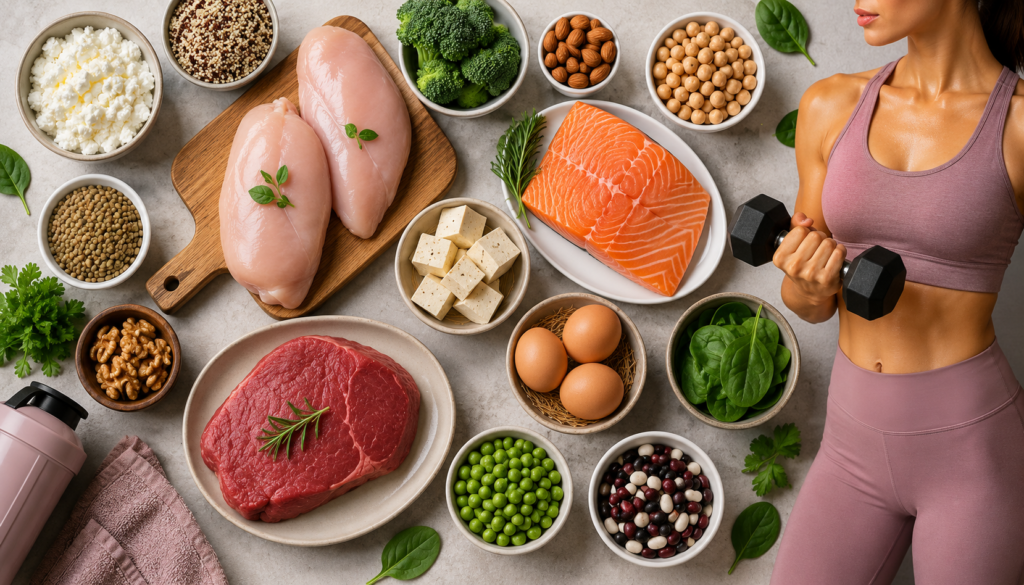
How I stopped fearing protein, started actually eating enough of it, and finally understood why everything changed when I did
The nutrient that builds the body you actually want to live in — strong, energized, and entirely your own
There was a version of me, not so long ago, who genuinely believed that eating more protein would make me bulky. I want to start with this confession because I suspect a significant number of women reading this carry some version of the same quiet, unexamined belief — a belief that has shaped breakfast choices and gym habits and entire decades of dietary patterns for women across generations, and that has almost no basis in actual physiology.
I ate salads with a token sprinkle of chicken. I had yogurt for breakfast, the low-fat kind, with barely ten grams of protein in the entire bowl. I went to the gym and did cardio almost exclusively, because lifting felt like it belonged to a category of fitness reserved for women who wanted to look a certain way that I, somewhat defensively, told myself I didn’t want. I was, in retrospect, chronically under-fuelled in a way that left me tired, slightly fragile, prone to injury, and locked in a frustrating cycle where my body never quite seemed to change no matter what I did or didn’t eat.
The shift began, as these things often do, almost accidentally. A friend who had transformed not just her physique but her entire relationship with food and her body over the course of about two years finally convinced me to actually track my protein intake for a week — not to restrict anything, just to see the number. I was eating, on a good day, somewhere around forty-five grams. For a woman of my size and activity level, the research-backed target was closer to one hundred and twenty. The gap between what I was eating and what my body actually needed was staggering, and once I started closing it, almost everything changed: my energy, my strength, my skin, my hair, my hunger and satiety signals, the way my clothes fit, the way I recovered from workouts, the way I felt in my own body.
This guide is everything I’ve learned since that week of tracking — the actual science behind why protein matters so disproportionately for women specifically, the cultural mythology that’s kept so many of us under-eating it for decades, and a genuinely comprehensive, practical exploration of the foods that make hitting your protein target feel less like a chore and more like one of the most pleasurable parts of how you eat. We’ll go deep into specific foods — the obvious ones and the genuinely underrated ones — and we’ll talk about how to build this into a life that’s already busy, beautiful, and full, without turning every meal into a calculation.
Let’s start with the why, because understanding the why is what makes the how feel less like discipline and more like genuine self-respect.
Why Protein Matters More for Women Than Almost Anyone Tells You
The cultural conversation around protein has historically been coded masculine in a way that has done genuine, measurable harm to women’s health. Protein shakes, bodybuilding supplements, the entire visual language of high-protein eating — gym bros, chicken and rice, mason jars of bulk-prepped meals — has been so thoroughly associated with a particular kind of male fitness culture that many women have internalized the idea that protein simply isn’t for them, or worse, that eating it generously will make them look like something they don’t want to look like.
The biology tells an entirely different story, and it’s worth understanding clearly, because once you do, the entire conversation shifts from a vague cultural anxiety to a concrete physiological reality you can act on with confidence.
The Muscle Mass Conversation Nobody Has With Women Until It’s Too Late
Here is something that should be common knowledge among women and somehow rarely is: beginning in our thirties, and accelerating notably after menopause, women lose muscle mass at a rate of roughly three to eight percent per decade if nothing is done to counteract it. This process, called sarcopenia, isn’t simply a matter of aesthetics. Muscle mass is metabolically active tissue — it’s a primary driver of your resting metabolic rate, it’s directly linked to insulin sensitivity and blood sugar regulation, it protects your joints and your bones, and it is one of the single strongest predictors of functional independence and longevity as you age.
Protein is the literal building material your body uses to maintain and build that muscle tissue. Without adequate protein intake, even the most dedicated strength training programme produces blunted results, because the raw material for muscle repair and growth simply isn’t available in sufficient quantity. This is true at every life stage, but it becomes particularly critical as estrogen declines through perimenopause and menopause, because estrogen itself has a protective effect on muscle tissue — meaning women in this life stage need to be even more deliberate about protein intake and resistance training to counteract the compounding effect of both reduced estrogen and the natural aging process.
The women I know who are most vibrantly strong and capable in their fifties, sixties, and beyond are, without exception, the women who took muscle maintenance seriously well before it became urgent. This isn’t about chasing a particular aesthetic. It’s about building the kind of physical resilience that allows you to carry your own groceries, get up from the floor without assistance, and move through the world with genuine ease and confidence for decades longer than you would otherwise.
Hormones, Hunger, and the Protein Connection
Protein has a uniquely powerful effect on satiety — the sensation of genuine fullness and satisfaction after eating — compared to carbohydrates or fat. This isn’t a minor detail; it’s one of the most practically significant aspects of protein for women specifically, because it directly addresses the chaotic hunger and constant snacking that so many women experience when their diet is carbohydrate-heavy and protein-light.
The mechanism involves several hormones working in concert. Protein stimulates the release of peptide YY and GLP-1, hormones that signal fullness to your brain, more powerfully than equivalent calories of carbohydrate or fat. It also has a minimal effect on insulin compared to refined carbohydrates, meaning it doesn’t trigger the same blood sugar spike-and-crash cycle that leaves you hungry again within an hour or two of eating. Women who restructure their meals to be protein-forward consistently report a dramatic reduction in the kind of urgent, almost frantic hunger and the accompanying cravings that had previously felt like a personal failing rather than what it actually was: a predictable physiological response to inadequate protein intake.
There’s also a meaningful connection between protein and the hormones that regulate mood and stress. Protein provides the amino acid building blocks for neurotransmitter synthesis — tryptophan for serotonin, tyrosine for dopamine — and adequate protein intake supports the stability of these systems in a way that chronic under-eating of protein simply cannot. The irritability, the difficulty concentrating, the low mood that so many women attribute to stress or hormones alone often has a significant and addressable nutritional component.
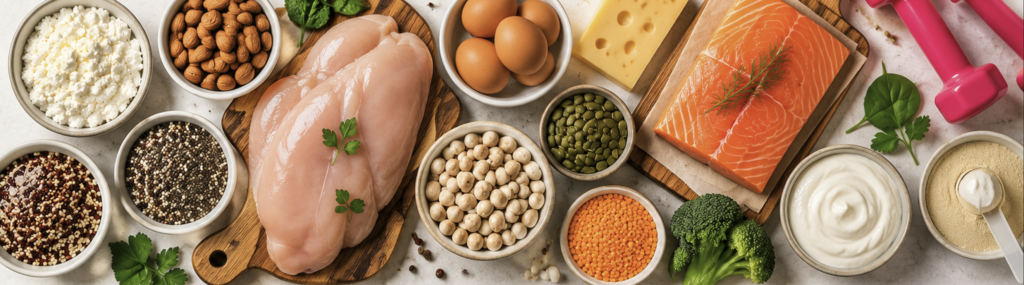
Skin, Hair, and Nails: The Beauty Case for Protein
If the muscle and metabolic arguments for protein don’t move you, the beauty case might, because it’s genuinely compelling and directly relevant to so much of the modern beauty conversation. Collagen — the structural protein responsible for skin elasticity and firmness — is built from amino acids, primarily glycine, proline, and hydroxyproline, all of which come from dietary protein. Keratin, the protein that makes up your hair and nails, is similarly dependent on adequate protein and specific amino acid availability, particularly cysteine.
Women who chronically under-eat protein often notice this first in their hair and nails — increased shedding, slower nail growth, nails that peel and break more easily — well before they notice any other symptom of inadequate intake, because hair and nail tissue, while important, are deprioritized by the body relative to vital organ function when protein is scarce. This is the body’s logical triage system: when amino acids are limited, they go first to maintaining critical functions, and only the surplus goes toward what the body considers non-essential, including the visible beauty markers so many of us care deeply about.
The clean girl aesthetic and the broader quiet luxury beauty conversation that has so thoroughly shaped the current cultural moment is, in many ways, an aesthetic built on the foundation of genuine internal health rather than purely external intervention. The lit-from-within glow, the strong glossy hair, the healthy nail beds — these are, to a significant degree, downstream effects of adequate protein intake combined with the other nutritional fundamentals, rather than achievements of any single serum or supplement.
Protein isn’t the nutrient that makes you bigger. It’s the nutrient that makes you more capable, more resilient, and more entirely yourself.
— ◆ —
How Much Protein Do Women Actually Need? (The Number That Surprises Almost Everyone)
The official dietary reference intake for protein — the number most women have seen on a nutrition label or heard referenced in passing — is 0.8 grams per kilogram of body weight per day. This number is genuinely useful for one specific purpose: it’s the minimum amount required to prevent clinical deficiency in a largely sedentary population. It was never intended to represent an optimal intake for active women, for women trying to build or maintain muscle, for women navigating perimenopause or menopause, or for women simply trying to feel their best.
The research on optimal protein intake for active women, accumulated over the past decade and a half of increasingly sophisticated sports nutrition science, points to a considerably higher number: somewhere between 1.2 and 1.6 grams per kilogram of body weight per day for most women engaged in regular strength training, with some research suggesting benefits up to 2.0 grams per kilogram for women in active muscle-building phases or significant caloric deficits.
To put this in concrete terms: a woman weighing sixty-five kilograms (roughly one hundred and forty-three pounds) following the standard 0.8 gram recommendation would eat just fifty-two grams of protein daily — barely two modest servings of meat or fish across an entire day. The same woman, following the research-supported recommendation for active women, would target somewhere between seventy-eight and one hundred and four grams daily — a number that requires genuine intention to reach through typical Western eating patterns, but that produces measurably different results in terms of muscle maintenance, satiety, energy, and body composition.
Why the Gap Exists and Why It Matters
The gap between the official minimum and the evidence-based optimal target exists partly because nutritional guidelines are, by design, conservative and population-wide, intended to prevent deficiency across an enormous range of activity levels and body types rather than to optimize performance or body composition for any specific group. It also exists because sports nutrition research has historically focused predominantly on male athletes, with research specifically examining women’s protein needs lagging significantly behind — a gap that’s only been meaningfully addressed in the past decade, as exercise science has finally begun taking women’s specific physiology seriously as a distinct area of study rather than simply extrapolating from male-centred research.
This matters practically because most women, even those who consider themselves to be eating healthily, are significantly under their optimal protein intake without realizing it. A typical day of ‘healthy’ eating for many women — oatmeal or a smoothie for breakfast, a salad with a small amount of protein for lunch, a reasonable dinner portion of protein with vegetables — frequently totals somewhere between fifty and seventy grams of protein, well below the target for most active women. The gap isn’t usually the result of poor choices; it’s the result of a food culture and a set of nutritional defaults that simply weren’t built with this target in mind.
Spreading Protein Across the Day: Why Timing Matters Too
Beyond the total daily amount, research increasingly suggests that how protein is distributed across the day matters for how effectively your body can use it to build and maintain muscle. Your body has a limited capacity to utilize protein for muscle protein synthesis in any single sitting — generally estimated at somewhere between twenty-five and forty grams, depending on body size and the specific protein source — which means a single enormous protein-heavy dinner is less effective for muscle maintenance than the same total amount spread across three or four meals throughout the day.
This is one of the most practically useful pieces of nutrition science I’ve encountered, because it directly addresses the common pattern among women of eating very little protein at breakfast and lunch and then consuming the bulk of their daily protein at dinner. Restructuring meals so that each one contains a meaningful protein anchor — aiming for roughly twenty-five to thirty-five grams at each main meal — produces better outcomes for muscle maintenance and growth than the same total protein consumed in a lopsided pattern, and it has the additional benefit of keeping hunger and energy more stable across the entire day.
— ◆ —
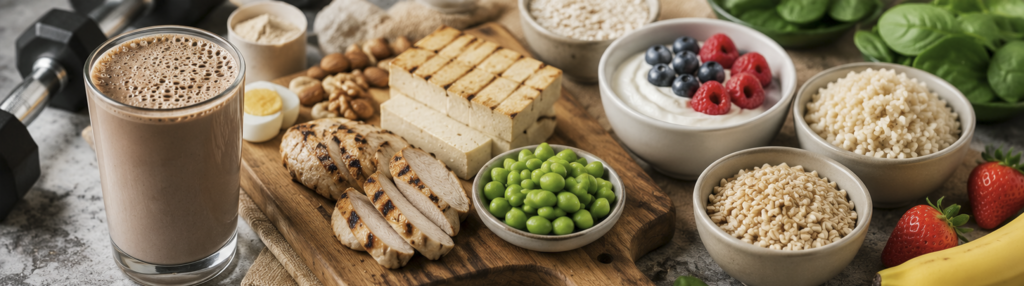
Animal Proteins: The Complete Package
Animal-based protein sources are described as ‘complete proteins’ because they contain all nine essential amino acids — the ones your body cannot synthesize on its own and must obtain through diet — in proportions that closely match what your body needs for muscle protein synthesis. This doesn’t mean plant proteins are inferior (we’ll spend considerable time making the case for them shortly), but it does mean animal proteins offer a particular efficiency and completeness that’s worth understanding as you build your own protein strategy.
Eggs: The Most Underrated Protein Powerhouse in Most Kitchens
I return to eggs again and again in my own writing about food because they genuinely deserve the attention. A large egg contains roughly six to seven grams of complete protein, along with choline, which most women don’t get nearly enough of and which is critical for brain health and liver function, plus a remarkable array of vitamins and minerals concentrated almost entirely in that golden yolk that decades of misguided dietary advice taught us to fear and discard.
Three eggs at breakfast delivers around eighteen to twenty-one grams of protein — a substantial portion of your daily target before you’ve even left the house — and the satiety effect is genuinely remarkable. Eggs at breakfast have been shown in research to produce significantly greater fullness and reduced calorie intake at subsequent meals compared to a calorie-equivalent breakfast built around refined carbohydrates, which is precisely the kind of practical, lived experience that so many women who’ve made the switch from cereal or toast to eggs describe.
Beyond breakfast, eggs are extraordinarily versatile across the entire day — hard-boiled and added to a salad for a quick protein boost, folded into a frittata for a make-ahead lunch, or even enjoyed as a simple, satisfying evening snack. The cost-per-gram-of-protein on eggs is also among the most economical of any complete protein source available, making them one of the most genuinely accessible high-protein foods regardless of budget.
Greek Yogurt and Cottage Cheese: The Dairy Duo Having a Genuine Cultural Moment
There’s a reason cottage cheese has undergone such a dramatic cultural rehabilitation over the past two years, appearing in everything from savoury toast toppings to whipped dessert bowls across every corner of social media. It deserves the attention: a single cup of cottage cheese contains roughly twenty-five grams of protein, an extraordinary density that few other foods can match, alongside calcium and B vitamins, all for a relatively modest calorie cost.
Greek yogurt occupies similar territory, with a typical serving delivering fifteen to twenty grams of protein depending on the brand and whether you opt for the increasingly available high-protein formulations, some of which push toward twenty-five grams per serving. The full-fat versions, despite the lingering low-fat mythology that still influences many women’s choices in the dairy aisle, are genuinely worth choosing over their low-fat counterparts — the fat content improves satiety, supports the absorption of fat-soluble vitamins, and the low-fat versions typically compensate for the flavour loss with added sugar, undermining much of the nutritional benefit you were seeking in the first place.
Both foods are remarkable for their versatility. Cottage cheese blends seamlessly into smoothies (genuinely — the lumpy texture disappears entirely once blended, leaving only a creamy richness and a significant protein boost), can be whipped with a touch of honey and lemon zest into a genuinely luxurious dessert-like bowl, or topped with everything from honey and fruit to everything-bagel seasoning and chili crisp for a savoury approach that’s become genuinely trendy and genuinely delicious. Greek yogurt anchors the yogurt bowl aesthetic that’s become such a defining visual of contemporary wellness culture, doubles as a substitute for sour cream or mayonnaise in savoury cooking, and works beautifully as a marinade base for chicken or fish.
Chicken and Turkey: The Reliable Workhorses
Chicken breast remains one of the most efficient protein sources available, delivering roughly thirty-one grams of protein per one hundred grams with minimal fat, making it an exceptionally versatile foundation for countless meals. I want to make a gentle case, though, for not limiting yourself to the dry, flavourless chicken breast that’s become something of a punchline in fitness culture — properly seasoned, marinated, and cooked with attention (poached gently, or seared and finished in the oven rather than overcooked on a dry pan), chicken breast can be genuinely delicious rather than merely tolerable.
Chicken thighs, often overlooked in favour of the leaner breast, offer a slightly higher fat content that many women find more satisfying and that makes the meat considerably more forgiving to cook without drying out, while still delivering roughly twenty-six grams of protein per one hundred grams. Ground turkey, similarly, provides a lean, versatile protein that works beautifully in everything from bolognese to lettuce wraps to a simple weeknight chili.
Fish and Seafood: Protein With Extraordinary Bonus Benefits
Fish deserves a particularly enthusiastic place in any high-protein eating pattern, not just for its protein content but for the remarkable additional benefits that come alongside it. Salmon delivers around twenty-five grams of protein per one hundred grams alongside a significant dose of omega-3 fatty acids, which are anti-inflammatory and have been linked in research to improved mood, better skin hydration and elasticity, and reduced cardiovascular risk. The combination of complete protein and these essential fats makes salmon one of the genuinely highest-value foods available to any woman building a nutrition strategy around both fitness and overall wellness.
Smaller oily fish — sardines, mackerel, anchovies — are nutritional powerhouses that remain underappreciated in most Western eating patterns despite delivering exceptional protein density alongside calcium (particularly when the bones are consumed, as in canned sardines), omega-3s, and a remarkably low environmental footprint compared to larger fish or land-based animal protein. A tin of sardines on good toast with a squeeze of lemon is one of the fastest, most nutrient-dense breakfasts or lunches available, delivering roughly twenty grams of protein in a meal that takes under five minutes to assemble.
White fish — cod, haddock, halibut — offers a leaner protein profile, typically around twenty to twenty-three grams per one hundred grams, with a mild flavour that makes it an excellent canvas for whatever seasoning or sauce you’re in the mood for. Prawns and shellfish round out the seafood category beautifully, offering a particularly lean, fast-cooking protein source that works wonderfully in everything from a simple garlic and lemon sauté to a more elaborate paella.
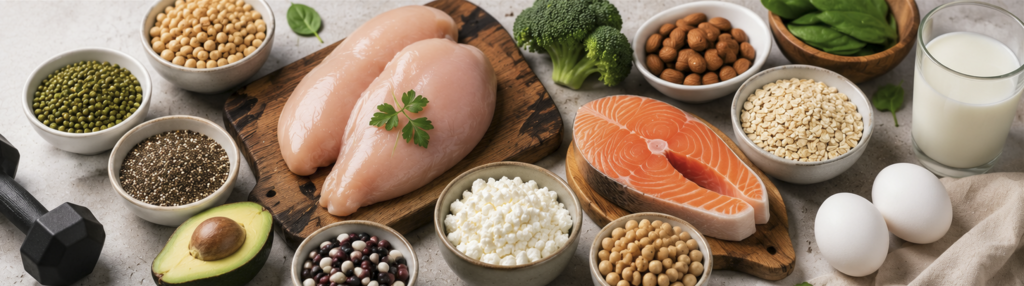
Red Meat: The Nutrient Density Champion
Red meat has had a complicated relationship with health-conscious eating over the past several decades, caught between genuine concerns about processed meat and excessive consumption on one hand, and an extraordinary nutritional profile that’s frequently underappreciated on the other. Lean cuts of beef deliver around twenty-six grams of protein per one hundred grams alongside one of the most bioavailable sources of iron available in any food, plus zinc, B12, and creatine — a compound directly relevant to muscle strength and power that vegetarian and vegan diets simply cannot provide in meaningful quantities from food alone.
For women specifically, the iron content of red meat deserves particular attention, given how common iron deficiency is among women of reproductive age and how directly it’s linked to fatigue, hair thinning, and impaired exercise performance. The heme iron found in red meat is significantly more bioavailable than the non-heme iron found in plant sources, meaning your body absorbs and utilizes it more efficiently. This doesn’t mean red meat needs to be a daily staple for every woman, but it does mean dismissing it entirely from a wellness-focused diet often means leaving meaningful nutritional value on the table, particularly for women who struggle with energy, iron status, or recovery from intense training.
— ◆ —
Plant-Based Proteins: Building a Powerful Case Beyond the Stereotypes
Whether you’re fully plant-based, mostly plant-based with occasional animal protein, or simply looking to diversify your protein sources for reasons of health, budget, environmental concern, or pure culinary pleasure, plant proteins deserve a thorough, genuinely enthusiastic treatment rather than the slightly apologetic footnote they’re often relegated to in protein-focused content.
The historical concern about plant proteins being ‘incomplete’ — lacking one or more essential amino acids in sufficient quantity — is technically accurate for many individual plant foods but practically almost irrelevant for anyone eating a varied diet across the day. The old advice about needing to combine specific plant proteins at every single meal to create a ‘complete’ amino acid profile has been largely superseded by an understanding that your body maintains an amino acid pool across the day, meaning complementary proteins eaten at different meals within the same day still combine effectively to meet your complete amino acid needs.
Legumes: The Foundation of Plant-Based Protein Done Well
Lentils, chickpeas, black beans, kidney beans, edamame — the legume family offers one of the most nutritionally complete packages available in the plant kingdom, combining meaningful protein (typically fifteen to eighteen grams per cooked cup) with substantial fiber, which most women also chronically under-consume and which offers its own significant benefits for gut health, blood sugar regulation, and satiety.
Lentils deserve particular enthusiasm for their versatility and speed of preparation compared to other legumes — no soaking required, cooking in under thirty minutes, and adaptable across an enormous range of cuisines from a simple French lentil salad with mustard vinaigrette to a richly spiced Indian dal. A generous serving of lentils alongside a grain and some roasted vegetables creates a genuinely satisfying, protein-and-fiber-rich meal that happens to be one of the most economical options in this entire guide.
Chickpeas offer similar versatility, whether roasted with olive oil and spices for a satisfying snack, blended into hummus, or used as the base for a hearty curry. Edamame, served simply steamed and salted, makes for one of the fastest, most satisfying protein-rich snacks available, delivering around seventeen grams of protein per cup alongside fiber and a range of micronutrients.
Tofu and Tempeh: The Soy Foods That Deserve Better Press
Soy has been subject to more nutritional misinformation than almost any other food category, with persistent and largely unfounded concerns about its effect on hormones circulating widely despite a substantial body of research showing that moderate soy consumption is not only safe but associated with a range of health benefits for women specifically, including potentially reduced risk of certain hormone-related cancers.
Tofu, made from condensed soy milk, delivers around eight grams of protein per one hundred grams in its standard firm form, with extra-firm and super-firm varieties offering an even higher protein density. Its remarkable quality is its neutral flavour and its capacity to absorb whatever marinade or seasoning you pair it with, making it one of the most adaptable proteins in any kitchen — crisped in a hot pan for a satisfying textural contrast, blended into a silken version for creamy sauces and desserts, or cubed and added to a stir-fry.
Tempeh, made from fermented whole soybeans, offers an even more substantial protein profile at around nineteen grams per one hundred grams, alongside a firmer, more textured bite and the additional digestive benefits that come from the fermentation process. Its slightly nutty, earthy flavour makes it particularly well suited to bold marinades and high-heat cooking methods that develop a genuinely satisfying crispy exterior.
Quinoa and the Plant-Based Complete Proteins
Quinoa holds a particular distinction among plant foods as one of the few that qualifies as a genuinely complete protein on its own, containing all nine essential amino acids in reasonably balanced proportions. A cooked cup delivers around eight grams of protein alongside significant fiber, magnesium, and iron, making it an excellent foundation for grain bowls, salads, or as a simple side dish in place of rice.
Buckwheat and amaranth offer similar complete protein profiles among grains, each bringing their own distinct flavour and texture to the table and offering excellent options for anyone looking to diversify beyond the more commonly used quinoa.
Nuts, Seeds, and Nut Butters: The Protein-Fat Power Combination
While nuts and seeds aren’t typically protein-dense enough to serve as a primary protein source on their own, they offer a meaningful contribution alongside their substantial healthy fat content, making them an excellent component of a broader high-protein eating pattern rather than its sole foundation. Almonds deliver around six grams of protein per quarter cup, alongside vitamin E and magnesium. Pumpkin seeds offer a similar protein contribution alongside an exceptional zinc content that’s particularly relevant for women’s hair, skin, and immune health.
Hemp seeds deserve particular mention for their unusually complete amino acid profile among plant foods, delivering around ten grams of protein per three tablespoons alongside omega-3 fatty acids, making them an excellent addition sprinkled over yogurt bowls, salads, or blended into smoothies. Nut butters — almond, peanut, cashew — while more calorie-dense, offer a satisfying way to boost both protein and healthy fat in a single delicious addition to toast, smoothies, or oatmeal.
— ◆ —
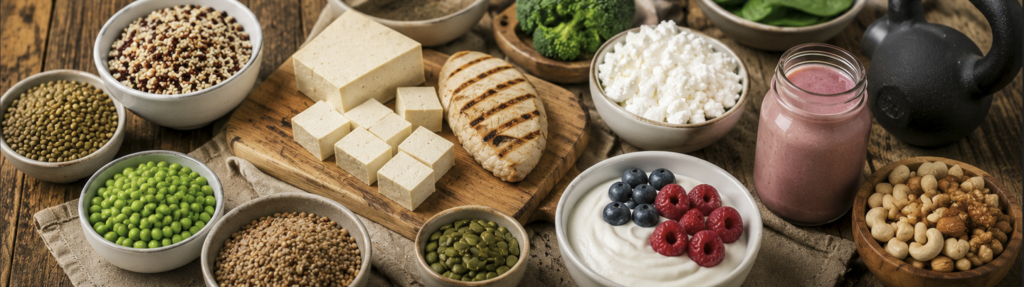
Protein Powders and Supplements: Cutting Through the Marketing
The protein powder aisle, whether in a physical shop or scrolled through online, can feel genuinely overwhelming — an enormous array of products making bold claims, featuring elaborate branding, and priced across a dramatic range that doesn’t always correlate meaningfully with quality or effectiveness. I want to offer a genuinely practical framework for thinking about supplementation, because while whole foods should always form the foundation of how you meet your protein needs, a quality protein powder can be a genuinely useful tool for closing the gap on busy days or boosting the protein content of meals that would otherwise fall short.
Whey Protein: The Gold Standard for Most Women
Whey protein, derived from milk during the cheese-making process, remains the most extensively researched and most rapidly absorbed protein supplement available, making it particularly effective for post-workout recovery when rapid amino acid delivery to muscle tissue is most beneficial. It contains all essential amino acids in proportions well-suited to muscle protein synthesis, including a notably high concentration of leucine, the specific amino acid most directly responsible for triggering the muscle-building process.
Whey protein isolate, which undergoes additional processing to remove most of the lactose and fat, is generally well-tolerated even by many women with mild lactose sensitivity, while whey protein concentrate retains slightly more of the naturally occurring nutrients alongside a small amount of lactose. For most women without significant dairy intolerance, either form works well, and the choice often comes down to personal digestive comfort and budget.
Plant-Based Protein Powders: The Improved Landscape
Plant-based protein powders have improved dramatically in both quality and palatability over the past several years, moving well beyond the chalky, gritty reputation that characterized many early formulations. Pea protein offers an excellent amino acid profile and is particularly well tolerated, often forming the base of blended plant protein powders that combine multiple sources — pea, rice, hemp — to create a more complete amino acid profile than any single plant source could offer alone.
For women avoiding dairy for reasons of intolerance, ethical preference, or simple taste, a quality blended plant protein powder can deliver comparable protein content and a genuinely similar muscle-building effect to whey, provided the total daily protein intake and the variety of protein sources across the day remain adequate.
Collagen: Useful, But Understand What It’s Actually For
Collagen supplements have become enormously popular, riding the wave of interest in skin health and the broader beauty-from-within conversation that’s so thoroughly shaped contemporary wellness culture. It’s worth understanding precisely what collagen can and cannot do: while it provides the glycine and proline that support your body’s own collagen production, it’s not a complete protein in the sense that whey or a complete plant blend would be, and it’s not particularly effective as a primary protein source for muscle building purposes.
Where collagen genuinely shines is as a complementary addition specifically for skin, joint, and connective tissue support, alongside — not instead of — adequate overall protein intake from complete sources. Many women add a scoop of collagen to their morning coffee or smoothie as a beauty-focused addition to a day that’s already meeting its broader protein targets through other complete sources, which is precisely the right way to think about where collagen fits into a comprehensive approach.
Building Your Smoothie Strategy · A genuinely effective protein smoothie combines a scoop of quality protein powder, a tablespoon of nut butter or a quarter avocado for healthy fat, a modest amount of fruit for flavour, and a liquid base of milk or a plant alternative — delivering twenty-five to thirty-five grams of protein in a format that takes under five minutes and travels beautifully for busy mornings.
— ◆ —
Building Protein Into Every Meal Without Making Food Boring
Understanding the science and knowing the foods is one thing; actually restructuring your daily eating pattern to consistently hit a meaningfully higher protein target is another challenge entirely, and it’s the piece that most nutrition content skips over in favour of more theoretical discussion. I want to spend real time here on the practical architecture of a protein-forward day, because this is where genuine, sustained change actually happens.
Breakfast: Setting the Tone for the Entire Day
Breakfast is, for most women, the single weakest link in daily protein intake, dominated by carbohydrate-heavy defaults — cereal, toast, a piece of fruit, a coffee — that contribute minimal protein relative to their calorie content. Restructuring breakfast around a protein anchor is one of the highest-leverage changes available, because it sets a more stable blood sugar trajectory for the entire morning while making meaningful progress toward your daily target before the day has even properly begun.
Three eggs, prepared however you prefer, delivers eighteen to twenty-one grams. A proper Greek yogurt bowl with a scoop of protein-rich granola and berries can deliver twenty-five to thirty grams. A well-constructed smoothie built around protein powder and Greek yogurt or cottage cheese as its base, rather than primarily fruit and juice, can easily reach thirty grams or more. Any of these approaches transforms breakfast from a passive, carbohydrate-heavy default into an active contributor to your overall daily protein strategy.
Lunch: The Meal Most Likely to Fall Short
Lunch, particularly for women eating at a desk or grabbing something quickly between obligations, is frequently the meal where protein intake falls shortest — a salad with a token amount of chicken, a sandwich with a thin slice of turkey, a bowl of soup with minimal protein content. The fix here is largely about proportion: rather than treating protein as a garnish on a primarily vegetable or carbohydrate-based meal, build lunch around a substantial protein portion — genuinely, a palm-and-a-half-sized portion rather than a few token strips — with vegetables and whole grains playing a supporting rather than dominant role.
A grain bowl built around a generous portion of grilled chicken or salmon, with roasted vegetables, a grain like quinoa or farro, and a flavourful dressing, can easily deliver thirty-five to forty grams of protein while remaining genuinely delicious and visually beautiful — exactly the kind of meal that photographs as well as it nourishes, which matters more than purely functional nutrition content tends to acknowledge.
Dinner: Where Most Women Already Do Reasonably Well
Dinner tends to be the meal where most women naturally consume the most protein, often built around a traditional protein-vegetable-starch structure that, when the protein portion is sized generously, can easily meet or exceed thirty grams. The main adjustment worth considering here is portion size — many women, particularly those who’ve internalized decades of diet culture messaging about restraint and small portions, serve themselves protein portions considerably smaller than what their body actually needs, especially relative to active lifestyles and strength training goals.
A genuinely appropriate protein portion for an active woman is closer to the size of her palm and a half to two palms, rather than the smaller portion often depicted in older nutritional guidance. Adjusting this single variable — simply serving yourself more protein at dinner — can meaningfully close the gap between current and optimal intake without requiring any other change to how you already cook and eat.
Snacks: The Overlooked Protein Opportunity
Snacking is where protein intake most consistently falls apart for busy women, because the convenient, grab-and-go snack options that dominate most kitchens and most shops — crackers, fruit, granola bars, chips — are almost universally carbohydrate-heavy and protein-light, doing little to support satiety or muscle maintenance and frequently contributing to the blood sugar instability that drives further snacking shortly after.
Restructuring your snack strategy around protein-forward options transforms this meal occasion from a nutritional gap into a genuine contributor to your daily target. A small container of cottage cheese with berries. A hard-boiled egg with a sprinkle of salt. A handful of roasted edamame. A small serving of Greek yogurt with a drizzle of honey. String cheese paired with an apple. These options each deliver meaningful protein — typically ten to twenty grams — while remaining genuinely quick and satisfying, exactly the kind of snack that prevents the energy crash and subsequent overeating that protein-light snacking so often produces.
— ◆ —
The Recipes: My Personal High-Protein Rotation
Theory is useful, but what actually changes behaviour is having a genuine repertoire of dishes you love enough to make repeatedly without it ever feeling like a chore. What follows is a selection from my own rotation — the meals that have earned permanent residence in my kitchen because they’re genuinely delicious, genuinely protein-rich, and genuinely achievable on a real weeknight.
Sheet Pan Salmon and Vegetables · Salmon fillets arranged on a sheet pan with broccoli, asparagus, and cherry tomatoes, drizzled with olive oil and lemon, roasted at 200°C for fifteen to eighteen minutes. Delivers roughly thirty-five grams of protein per serving with virtually no active cooking time required, making this one of the most efficient high-protein dinners in existence.
Greek Chicken and Quinoa Bowl · Marinated grilled chicken thighs over quinoa with cucumber, tomato, red onion, kalamata olives, and a generous portion of feta, finished with a lemon-oregano dressing. Around forty grams of protein per bowl, and genuinely one of the most requested meals when I’m cooking for friends.
Lentil and Sweet Potato Curry · Red lentils simmered with coconut milk, curry spices, diced sweet potato, and spinach until thick and fragrant, served over brown rice. A genuinely complete, deeply satisfying plant-based meal delivering around twenty-two grams of protein per serving, with leftovers that taste even better the following day.
Cottage Cheese Pasta Bake · Cottage cheese blended until smooth and combined with marinara sauce, tossed with pasta and ground turkey, topped with mozzarella, and baked until bubbling. This delivers an extraordinary protein density — often forty-five grams or more per serving — while tasting like genuine, comforting pasta bake rather than any kind of fitness-food compromise.
Tofu and Vegetable Stir-Fry · Extra-firm tofu pressed, cubed, and crisped in a hot pan before being combined with a colourful array of stir-fried vegetables and a ginger-garlic-soy sauce, served over rice. Around twenty grams of protein from the tofu alone, with the dish coming together in under twenty minutes.
Turkey and White Bean Chili · Ground turkey browned with onion and garlic, combined with white beans, diced tomatoes, and warming spices, simmered until thick. One of the most genuinely efficient batch-cooking meals available, delivering around thirty-eight grams of protein per generous serving and freezing beautifully for future easy dinners.
Shrimp and Chickpea Power Salad · Sautéed shrimp over a bed of mixed greens, chickpeas, avocado, cherry tomatoes, and feta, finished with a lemon-tahini dressing. A genuinely beautiful, restaurant-quality salad that delivers around thirty-two grams of protein while taking under fifteen minutes to assemble.
— ◆ —
Protein and Strength Training: The Partnership That Transforms Everything
Protein and resistance training work synergistically in a way that makes either intervention significantly more effective when paired with the other than either would be alone. Adequate protein without strength training provides the raw material for muscle maintenance and repair but lacks the stimulus that prompts your body to actually use that material to build new muscle tissue. Strength training without adequate protein provides the stimulus but lacks sufficient raw material, leading to blunted results, slower recovery, and a higher risk of the kind of overtraining fatigue that derails consistency.
Together, they create a genuinely powerful combination — one that explains why so many women who add both resistance training and a more deliberate protein strategy to their routine report transformations that go well beyond what either change alone would typically produce. The body composition changes, the strength gains, the improved recovery between sessions, the reduced injury risk, the more stable energy throughout the day: these compound when the nutritional foundation and the training stimulus are both genuinely adequate.
The Post-Workout Window: How Much It Actually Matters
The concept of an urgent ‘anabolic window’ immediately following exercise, during which protein absolutely must be consumed to capture training benefits, has been somewhat overstated in popular fitness culture and subsequently somewhat over-corrected in the opposite direction by more recent research, which suggests the window is considerably more flexible than once believed — total daily protein intake matters more than precise post-workout timing for most people.
That said, consuming a protein-rich meal or snack within a reasonable window after training — broadly within a couple of hours — does support more effective recovery and is a genuinely sensible practice, particularly for women training intensely or multiple times per week. The specific timing matters less than ensuring it happens at all, especially for women who tend to train fasted or who finish a workout and then delay eating for several hours due to a busy schedule.
Building Strength as a Woman: Why It Looks Different Than You Might Fear
I want to return, briefly, to the fear that opened this entire guide — the worry that eating more protein and training with resistance will produce an aesthetic outcome many women don’t want. The physiology here is worth understanding clearly: women have significantly lower testosterone levels than men, roughly fifteen to twenty times lower, and testosterone is the primary hormonal driver of the dramatic muscle hypertrophy associated with bodybuilding-style physiques. This means that for the overwhelming majority of women, building visible, substantial muscle bulk requires years of extremely dedicated, progressively overloaded training combined with a significant caloric surplus — a combination that simply doesn’t happen accidentally through normal strength training and adequate protein intake.
What actually happens, for the vast majority of women who train consistently and eat adequate protein, is a body composition shift toward a more toned, defined appearance, improved posture and confidence in how clothes fit, increased strength and functional capacity, and the metabolic benefits of increased muscle mass — all without the dramatic bulk that so many women fear and that is, frankly, considerably harder to achieve than popular anxiety suggests.
— ◆ —
Navigating Special Considerations: Life Stages, Restrictions, and Real-World Complexity
Protein needs and the practical strategy for meeting them shift across different life stages and circumstances, and I want to address some of the most common scenarios that affect how this entire guide applies to your specific situation.
Pregnancy and Postpartum
Protein needs increase meaningfully during pregnancy, supporting both the dramatic tissue growth involved in building a baby and the significant physiological changes occurring in the mother’s body, with research generally supporting an increase to roughly 1.1 grams per kilogram of body weight during pregnancy, higher than the standard recommendation though typically still somewhat below the optimal range for active, non-pregnant women. Postpartum, particularly for breastfeeding mothers, protein needs remain elevated to support both recovery from childbirth and the substantial nutritional demands of milk production. This is a conversation worth having directly with a healthcare provider given the individual variation involved, but the general principle — that this is not a life stage to be cutting corners on protein — holds true.
Perimenopause and Menopause
As discussed earlier in this guide, the hormonal shifts of perimenopause and menopause make adequate protein intake, combined with resistance training, particularly critical for counteracting the accelerated muscle loss and metabolic changes that accompany this life stage. Many women find that their appetite and food preferences shift during this period, sometimes toward less protein-dense choices, making deliberate attention to protein intake even more important precisely when natural inclination might be working against it.
Vegetarian and Vegan Approaches
For women following vegetarian or vegan eating patterns, meeting elevated protein targets requires somewhat more deliberate planning, given the lower protein density of most plant foods compared to animal sources and the need to ensure adequate variety to cover the complete amino acid spectrum across the day. This is entirely achievable — many extremely strong, athletic women build their entire nutritional strategy around plant proteins — but it does require more conscious attention to total volume of food and to including a genuine variety of legumes, soy products, grains, nuts, and seeds throughout the day, often supplemented with a quality plant-based protein powder to help close any remaining gap.
Budget-Conscious Protein Strategies
High-quality protein sources can feel expensive, particularly when shopping for salmon, quality cuts of meat, or specialty protein powders, but a genuinely effective high-protein strategy doesn’t require an unlimited budget. Eggs, canned fish, frozen chicken thighs, dried legumes, and tofu all offer exceptional protein density at a fraction of the cost of premium options, and building your rotation around these more economical staples, saving the higher-cost options for when budget allows, makes this entire approach accessible regardless of financial circumstances.
— ◆ —
The Aesthetic and the Substance: Why This Conversation Belongs in a Lifestyle Guide
I want to close by addressing something that might seem like an unusual note to strike in a guide focused on macronutrient science, but that I think genuinely matters: the way eating well, in this specific and intentional sense, connects to the broader project of living elegantly and feeling genuinely good in your own life.
There’s a particular kind of confidence that comes from physical strength and stable energy that no amount of styling or aesthetic curation can fully replicate. The woman who can lift what she needs to lift, who moves through her day without the energy crashes and frantic hunger that come from chronic under-fuelling, who feels genuinely strong and capable in her own body — she carries herself differently. It shows in posture, in the quality of presence she brings to a room, in the particular kind of ease that no amount of perfectly curated styling can quite manufacture on its own.
The current cultural moment, with its emphasis on quiet luxury, on the clean girl aesthetic’s celebration of genuine health over heavy artifice, on the broader shift toward strength and capability as aspirational qualities for women rather than purely an aesthetic of delicacy, has created genuine cultural space for this conversation in a way that simply didn’t exist a decade ago. The Pilates-honed core, the visible strength in a woman’s arms as she carries her own bags, the particular glow that comes from genuinely nourished skin and hair — these have become aspirational in their own right, not despite but partly because of their connection to actual physical capability and health rather than purely aesthetic performance.
Eating enough protein is, in this context, not a separate project from caring about how you look and how you present yourself to the world. It’s foundational to it. The most genuinely elegant version of yourself — the one with energy to spare, with the physical confidence that comes from real strength, with skin and hair that reflect genuine internal health — is built, in no small part, from the cumulative effect of consistently feeding yourself enough of the nutrient that builds and maintains all of it.
The strongest, most luminous version of yourself isn’t achieved through restriction. She’s built, meal by meal, from genuinely feeding the body that carries you through your entire life.
— ◆ —
The Woman You’re Building, One Protein-Rich Meal at a Time
I think often about that earlier version of myself, eating her token portion of chicken on a bed of greens, genuinely believing she was doing everything right while quietly, chronically under-fuelling a body that was working hard and deserved so much more than it was getting. I don’t look back at her with judgment — she was working with the information and the cultural messaging she’d been given, which had taught her, in countless subtle and not-so-subtle ways, that wanting less was somehow more virtuous than understanding what she actually needed.
What changed wasn’t a single dramatic decision but a gradual, cumulative shift in how I thought about food entirely — moving from a framework of restriction and minimization toward one of genuine, intentional nourishment. The protein became the anchor of that shift, not because it’s a magic nutrient that solves everything on its own, but because getting it right created a foundation from which everything else — energy, strength, mood stability, the satisfying absence of frantic, urgent hunger — became significantly easier to manage.
You don’t need to overhaul everything overnight. Start with breakfast — add an egg, or a scoop of protein powder to your usual smoothie, or switch from low-fat to full-fat Greek yogurt with a more generous portion. Notice how your morning feels different. Build from there, meal by meal, until the protein-forward approach feels less like a deliberate strategy and more like simply how you eat, the way it has genuinely become for me.
Your body is capable of so much — carrying you through demanding days, building the strength that makes physical life easier and more joyful, producing the hair and skin and nails that reflect genuine internal vitality. Give it what it actually needs to do all of that well. The protein is there, in foods both familiar and worth rediscovering, waiting to become the foundation of a stronger, more energized, more entirely capable version of yourself.
Begin with your next meal.
— ◆ —
Your Complete High-Protein Reference Guide
Every food and recipe in this guide, organized for quick reference as you build your own protein-forward rotation.
TOP ANIMAL PROTEIN SOURCES (per 100g unless noted)
Eggs: 6–7g per egg · Greek Yogurt: 15–20g per serving · Cottage Cheese: ~25g per cup · Chicken Breast: 31g · Chicken Thigh: 26g · Salmon: 25g · Sardines: ~20g per tin · White Fish: 20–23g · Lean Beef: 26g
TOP PLANT PROTEIN SOURCES (per cooked cup unless noted)
Lentils: 15–18g · Chickpeas: 15g · Black Beans: 15g · Edamame: 17g · Tofu (firm): 8g per 100g · Tempeh: 19g per 100g · Quinoa: 8g · Hemp Seeds: 10g per 3 tbsp · Almonds: 6g per quarter cup
DAILY PROTEIN TARGETS FOR ACTIVE WOMEN
Minimum (sedentary): 0.8g per kg body weight. Optimal (active, strength training): 1.2–1.6g per kg body weight. Active muscle-building or caloric deficit: up to 2.0g per kg body weight. Distribute across 3–4 meals at roughly 25–35g each rather than concentrated in one meal.
MY PERSONAL RECIPE ROTATION
Sheet Pan Salmon and Vegetables · Greek Chicken and Quinoa Bowl · Lentil and Sweet Potato Curry · Cottage Cheese Pasta Bake · Tofu and Vegetable Stir-Fry · Turkey and White Bean Chili · Shrimp and Chickpea Power Salad
MEAL-BY-MEAL STRATEGY
Breakfast: 3 eggs, or Greek yogurt bowl, or protein smoothie — target 25–30g. Lunch: grain bowl with generous protein portion — target 30–40g. Dinner: palm-and-a-half to two-palm protein portion — target 30–40g. Snacks: cottage cheese, hard-boiled eggs, edamame, Greek yogurt — target 10–20g each.
— With warmth, and the genuine conviction that you deserve to feel strong —
Your guide to eating like the strong, capable woman you already are
— ◆ —