
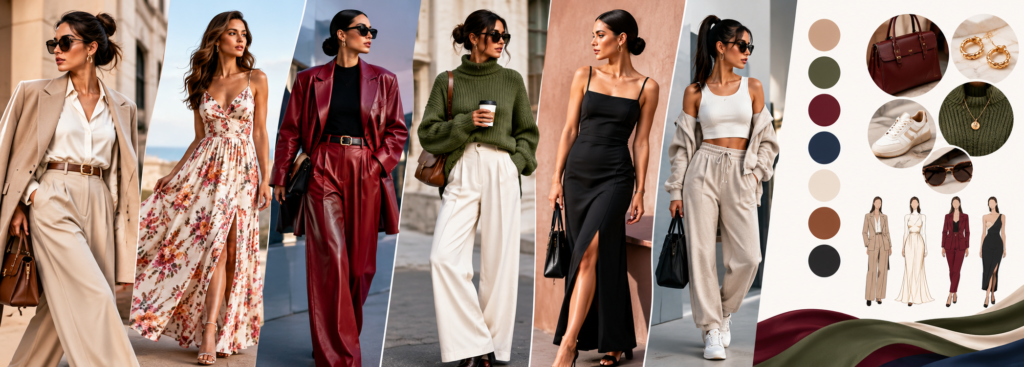
Fashion in 2026 is having a genuine identity moment — not because there’s a single dominant look defining the year, but because the runways and street style alike have embraced contrast: structured tailoring next to expressive color, quiet minimalism paired with maximalist accessories, nostalgic silhouettes rendered in updated materials. It’s a year that rewards personal interpretation over rigid trend-following, which, refreshingly, makes it easier rather than harder to actually enjoy getting dressed.
This guide walks through what’s actually defining 2026 fashion — grounded in runway reporting and current retail trend coverage — season by season, category by category, with practical guidance on how to fold these trends into a wardrobe you already own rather than starting from scratch.
The Big Picture for 2026
A few themes run consistently through 2026’s fashion coverage. Structured, architectural tailoring — sharp shoulders, defined waists, precise lapels — has returned strongly, often described as a reaction to the relaxed, oversized silhouettes that dominated recent years. At the same time, color has become considerably more expressive after a long stretch of muted, “quiet luxury” neutrals, with designers and retailers alike embracing bolder palettes. And accessories have taken on outsized importance, frequently doing the work of transforming a simple, pared-back outfit into something with real personality.
Key Colors for 2026
Color trends vary somewhat by season, but a few threads run throughout the year. Deep, wine-like hues — maroon, burgundy, and berry tones — emerged as a defining color story for fall 2026, appearing head-to-toe on runways including Giorgio Armani and Lanvin. Earthy greens (sage, olive, moss, forest) and warm terracotta and rust tones have been widely cited across retail trend forecasts as versatile, nature-inspired options that work across seasons. For warmer months, cerulean blue — spotted at Fendi, Jil Sander, and Prada — along with sunshine yellow, fresh greens, and blush pink define a brighter, more mood-lifting spring and summer palette. Benjamin Moore’s 2026 Color of the Year, Silhouette AF-655 (an espresso-charcoal hue inspired by classic suiting), reflects a broader cultural interest in tailored, brown-toned neutrals that’s showing up in fashion as much as interiors.
Popular Silhouettes
Tailoring has taken center stage this year, with lean, structured blazers, exaggerated lapels, and cinched waists replacing the relaxed, oversized fits of recent seasons. Nouveau tuxedo dressing — a fresh take on classic tuxedo tailoring — appeared at Kallmeyer, Sacai, and Michael Kors. Cocoon-shaped coats and outerwear, seen at Carolina Herrera and Khaite, offer a dramatic, oversized counterpoint to fitted tailoring elsewhere in an outfit. On the softer end, peplum silhouettes are making a notable comeback for fall, adding waist definition to tops and jackets, while spring and summer brought romantic, feminine shapes — puff sleeves, ruffles, and fluid skirts — alongside a resurgence of culottes, styled similarly to an A-line skirt.
Clothing Styles
Beyond specific silhouettes, a few broader style directions define the year. Heritage checks and plaids are back across blazers, trousers, skirts, and coats, typically styled in fresher, more modern combinations rather than traditional pairings. Statement denim has emerged as a defining category — high-rise flares, bootcut jeans, and coated finishes are being positioned as outfit centerpieces rather than background basics, versatile enough to move from casual weekends to dressier evening looks depending on styling.
Casual Fashion
Casual dressing in 2026 leans into elevated basics: well-cut, high-rise denim, relaxed knitwear (including eclectic, intarsia-pattern sweaters seen at Emporio Armani and Brandon Maxwell), and simple silhouettes finished with a standout accessory. The overall mood favors pieces that feel intentional even when relaxed, rather than the more overtly “loungewear” aesthetic that characterized casual dressing in recent years.
Workwear
Workwear in 2026 embraces structured tailoring — blazers, high-rise trousers, and polished separates — while allowing more personal expression than the traditionally rigid, uniform-like professional wardrobe of the past. Streamlined, tailored separates (seen at The Row and Elisabetta Franchi) demonstrate how a fitted blazer and trouser pairing remains a reliable workwear formula, while softened work totes and structured handbags round out a polished but not overly formal office look.
Evening Fashion
Evening dressing draws on the year’s deep, jewel-toned color palette — velvet maxi dresses in maroon and similar rich hues, as seen at Giorgio Armani, exemplify the mood. The nouveau tuxedo trend also crosses easily into evening territory, offering a sharper, more structured alternative to traditional eveningwear silhouettes.
Seasonal Trends: Spring
Spring 2026 favors vibrant, mood-boosting color — sunshine yellow, fresh greens, blush pink, and cerulean blue — alongside romantic silhouettes like puff sleeves and fluid skirts. Handcrafted textures (crochet, fringe, layered fabrics) add tactile interest, and maximalist prints, including animal motifs like zebra, offer a playful counterpoint to the season’s softer shapes.
Seasonal Trends: Summer
Summer carries spring’s bright palette forward with an emphasis on relaxed, billowy silhouettes that promote airflow in warm weather. Culottes remain a standout trouser trend, and boho-inspired pieces — voluminous sleeves, broderie detailing — pair naturally with the season’s earthy brown and neutral tones.
Seasonal Trends: Autumn
Fall 2026 shifts toward moody, richer colors — maroon, chocolate brown, olive, and deep berry tones — alongside cocoon silhouettes, leather bombers, and a fresh take on tuxedo tailoring. Heritage plaids and peplum shapes round out a season that balances classic tailoring with updated, more expressive styling.
Seasonal Trends: Winter
Winter dressing leans into the season’s structured tailoring and deep color palette, with an emphasis on quality outerwear (leather bombers, cocoon coats) and layered knitwear as both functional and style-driven choices.
Accessories
Accessories have become a central storytelling device in 2026 fashion, frequently transforming simple, minimalist outfits into something distinctive. Oversized earrings, sculptural handbags, and chunky footwear all reflect this “minimalist base, maximalist accessory” formula that stylists have widely embraced this year.
Shoes
Footwear trends span both directions: chunky sneakers and platform shoes remain popular for their comfort and statement-making presence, while sleek retro runners and classic silhouettes — loafers, ballet flats, refined sandals — offer a more timeless counterpoint that’s moved away from overly bulky styles. Sustainable materials, including recycled rubber and vegan leather, are increasingly common across footwear categories.
Bags
Handbags in 2026 favor texture and a more relaxed, lived-in silhouette over the pristine, structured bags of recent seasons. Slouchy hobo and shoulder bags, woven and raffia textures, and East-West (elongated, horizontal) silhouettes all feature prominently. Denim bags, suede finishes, and animal-print styles (leopard, zebra, snake) have also emerged as notable directions, alongside a playful return of fringe, micro bags, and one-handle “it” bag styles that prioritize personality over pure practicality.
Layering
Layering remains a practical and stylistically relevant technique for 2026, particularly given the year’s mix of lightweight knits, structured tailoring, and statement outerwear. A simple formula — a fitted base layer, a structured mid-layer (blazer or cardigan), and a statement outer piece (a cocoon coat or leather bomber) — captures much of the season’s aesthetic while remaining practical for actual weather.
Fabrics
Suede has expanded well beyond its traditional autumn association into a year-round luxury fabric, appearing at Bottega Veneta, Chanel, and Dior. Woven and textured materials — crochet, raffia, and open-weave fabrics — feature heavily in warmer-weather pieces, while structured wools and rich velvets anchor the season’s tailoring and eveningwear.
Combining Trends With Classic Wardrobe Pieces
The most sustainable way to engage with any season’s trends is to treat them as accents to an existing wardrobe rather than a full replacement. A well-cut blazer you already own pairs naturally with this year’s statement denim. A simple knit sweater takes on a fresh feel with an oversized earring or a textured bag. Trend pieces work best when they’re the single point of interest in an otherwise classic outfit, rather than one of several competing trend elements.
Affordable Ways to Update a Wardrobe
Accessories offer the most cost-effective entry point into current trends, since a single statement bag, a pair of on-trend shoes, or a piece of bold jewelry can refresh multiple existing outfits without the investment of new clothing. Beyond accessories, a single well-chosen piece — a plaid blazer, a pair of culottes, a rich-toned sweater — can anchor several outfit combinations throughout a season.
Fashion Mistakes to Avoid
A few common missteps are worth naming: trying to wear every trend simultaneously (which tends to look busy rather than intentional), buying trend pieces in a size or fit that doesn’t actually flatter your proportions simply because a specific style is popular, and neglecting fit and tailoring in favor of chasing the newest silhouette — a well-fitted, slightly older piece almost always looks better than an ill-fitting trendy one.
Adapting Trends to Different Personal Styles
Trends are most successful when filtered through an individual’s existing aesthetic rather than adopted wholesale. Someone with a minimalist wardrobe might engage with 2026’s trends purely through a single statement accessory, while someone drawn to maximalism might embrace the year’s bolder color and print combinations more fully. Neither approach is more “correct” — the goal is incorporating elements that genuinely resonate rather than following every trend uniformly.
Practical Outfit Ideas
Office: A tailored blazer in a rich maroon or olive tone, paired with straight-leg trousers, a structured East-West bag, and loafers.
Casual weekend: High-rise statement denim, a simple knit top, a woven or raffia tote, and retro-style sneakers.
Evening: A jewel-toned velvet or satin piece, minimal jewelry doubled up (earrings plus a statement necklace), and a sleek heeled sandal.
Transitional weather: A cocoon coat layered over a simple knit and tailored trousers, finished with a chunky boot.
Frequently Asked Questions
What are the biggest color trends for 2026? Deep wine and maroon tones dominate fall, while cerulean blue, sunshine yellow, and blush pink define spring and summer. Earthy greens and terracotta remain versatile options throughout the year.
Are oversized silhouettes still in style for 2026? Tailoring has become more structured and fitted compared to recent years, though oversized cocoon coats remain a notable exception, offering dramatic volume specifically in outerwear.
What handbag styles are trending in 2026? Slouchy, textured bags (woven, suede, denim), East-West silhouettes, and playful details like fringe and micro bags are all prominent this year, moving away from overly structured, formal bag shapes.
How can I update my wardrobe for 2026 without buying a lot of new clothes? Focus on accessories — a statement bag, bold jewelry, or on-trend shoes can refresh existing outfits affordably, and a single trend piece like a plaid blazer can anchor several looks.
Is quiet, minimalist fashion still relevant in 2026? Yes, though it’s increasingly paired with maximalist accessories rather than existing in complete isolation, reflecting the year’s broader theme of contrast between simplicity and expressive detail.