Bangkok’s Golden Temples Through My Eyes: Finding Calm Inside the Chaos
2/9/20266 min read
I think Bangkok was the first place in Thailand where I truly felt overwhelmed… but also completely fascinated at the same time.
Like, the moment you arrive, the city doesn’t gently welcome you. It grabs you.
The air is thick and warm, even early in the morning. The streets are loud in a way that feels constant — tuk-tuks rattling past, motorbikes weaving through impossible gaps, people calling out, music playing somewhere, the smell of grilled meat mixing with exhaust fumes and sweet fruit.
Bangkok is not quiet. Bangkok is not slow.
And I remember standing there on my first day thinking, okay Noi, breathe. This is a lot.
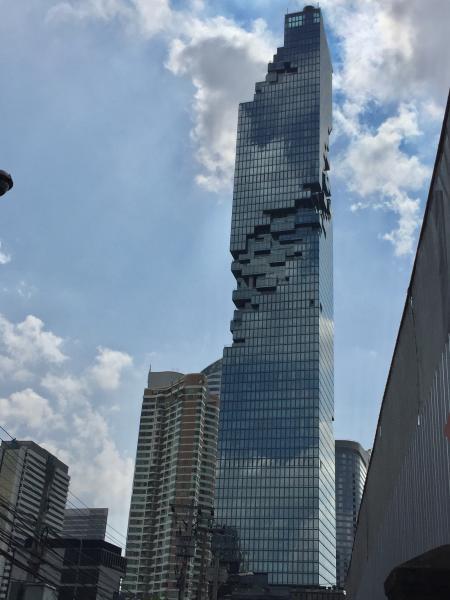
I thought I would notice the modern side first — the tall buildings, the malls, the skyline. And yes, they are there, of course. Bangkok is a huge metropolis.
But weirdly, the parts that stayed in my heart weren’t the skyscrapers.
It was the temples.
The wat.
I didn’t even know what a wat really was before Thailand. I mean, I knew it meant temple, but I didn’t understand the feeling of it. And the first time I saw one in Bangkok, I actually stopped walking like my brain needed a second to catch up.
Because it was shining.
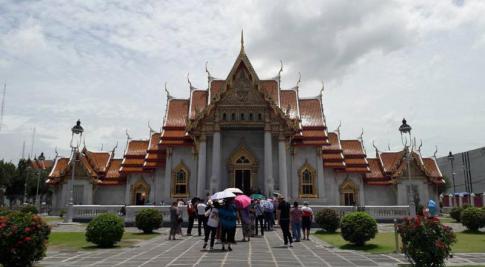
Not like a little decoration, not like “oh that’s pretty,” but shining like someone had built a piece of sunlight into the city. Gold everywhere. Bright colors. Details so sharp and perfect they looked unreal.
And I remember thinking, who made this?
Because you don’t just accidentally create something like that. The geometric shapes, the mosaics made from tiny pieces of glass, the carvings, the guardian statues at the gates… it’s artistry on a level that feels almost impossible.
And yet, you will never know the names of the craftsmen.
History remembers the kings who ordered these temples, but not the thousands of hands that created them. That thought stayed with me a lot while walking around Bangkok.
A wat is not just one building. That’s something I learned quickly. It’s a whole complex — usually a main Buddha image, a temple hall, monastery buildings where monks live, spaces for teaching, courtyards, shrines, bells, corners where people kneel quietly.
It’s like stepping into another world inside the city.
And Bangkok has so many.
Some are famous, some are hidden. Sometimes you’re just walking down an ordinary street, sweating, holding a bottle of water, and suddenly behind a wall there’s this peaceful temple space with golden rooftops and silence.
That contrast is crazy.
Outside: chaos.
Inside: calm.
One of the first temples I visited was Wat Pho.
Everyone goes there, and honestly, for good reason. Wat Pho is one of Bangkok’s most important temples, and it’s home to the Reclining Buddha.
I thought I was prepared because I’d seen photos.
I was not prepared.
You walk into the hall and it’s just… enormous. This massive golden Buddha lying down, stretching almost the entire length of the building. The feet alone are covered in intricate mother-of-pearl designs, so detailed you could stare for ten minutes and still notice new patterns.
The Buddha’s face is peaceful, almost gentle.
And the room felt different. People were whispering. Even tourists. It was like everyone instinctively understood that this wasn’t a place to be loud.
I walked slowly along the statue, and I felt strangely emotional. Not because I suddenly became spiritual, but because the atmosphere was heavy with something… time, devotion, meaning
Bangkok is loud, but inside Wat Pho, it felt like the city paused.
Wat Pho is also connected to traditional Thai massage. There’s a famous massage school there, and you can actually get an authentic Thai massage inside the temple grounds. Which feels so Thai to me — spirituality and everyday life blending together naturally.
After leaving Wat Pho, we were exhausted from the heat, so we sat outside with iced drinks. My clothes were sticking to my skin. Bangkok humidity is no joke. And we ate mango sticky rice from a small vendor nearby, sitting in the shade, watching tourists shuffle past with temple brochures in their hands.
That’s one thing about Bangkok — you go from sacred silence to street food chaos in five minutes.
Later, we visited Museum Siam because our guidebook labeled it as “unmissable.”
To be honest? It was… okay.
The ticket was cheap, about 100 baht, so it wasn’t a big loss. Some exhibits were interesting, but after the temples, it felt a bit flat. Like, I kept thinking, why am I inside a museum when outside there are golden shrines that feel alive?
But the location is convenient because it’s close to Wat Pho, so if you have extra time, sure.
And then came the Grand Palace.
The Grand Palace is one of those places people almost shout at you about.
“You HAVE to go.”
“If you don’t go, you weren’t really in Bangkok.”
So of course, we went.
And yes… it is breathtaking.
But it is also intense.
First of all, it’s expensive compared to most other temple sites. The entrance fee is around 500 baht per person, and I remember thinking, okay, this is probably the most expensive thing we’ve paid for so far.
But then you step inside and you understand why.
The palace complex is huge. It’s not one building — it’s courtyards, halls, golden spires, mosaics, mythical creatures, roofs layered like flames.
Every surface is decorated.
Gold leaf everywhere. Tiny glass tiles that sparkle like jewels. Statues guarding the gates. It feels almost unreal, like walking through a royal dream.
The Grand Palace used to be the official residence of the Kings of Thailand. Today, the current king doesn’t actually live there permanently, but the palace is still used for ceremonies and welcoming important guests.
Inside the palace grounds is Wat Phra Kaew, the Temple of the Emerald Buddha.
This is the most sacred Buddhist temple in Thailand.
And the Emerald Buddha… is surprisingly small.
Only about 70 centimeters tall.
People always imagine something huge, but it’s not about size. It’s about symbolism. It’s one of the most important religious icons in the country, and it’s dressed in different seasonal outfits throughout the year.
One thing that surprises many visitors: you cannot take photos of the Emerald Buddha.
Guards watch carefully. At first, tourists get annoyed because everyone wants the perfect shot, but honestly… I didn’t mind.
Some places feel better when they’re not turned into Instagram content.
People sat quietly. Some prayed. The atmosphere felt sacred in a way that photography would only disturb.
But let me talk about the dress code, because wow.
They are strict.
No shorts.
No short skirts.
No sleeveless tops.
Shoulders covered, legs covered below the knee.
And Bangkok is HOT.
So you see tourists arriving in tank tops, already sweating, thinking it’s fine… and then they get turned away at the entrance.
Some people argue. Some look embarrassed. And then there’s this whole strange clothing rental system where you can borrow cover-ups — sometimes thick, synthetic fabric that feels like torture in forty-degree heat.
My honest advice: just dress properly from the beginning.
Wear loose long pants or a long skirt. Bring a light scarf. Save yourself the stress.
Also: go early.
The palace opens around 8:30 AM, and arriving early makes a huge difference. By 10 or 11, the tour groups arrive in waves, and suddenly the place is packed. The heat becomes heavier, and it’s hard to enjoy anything when you’re constantly moving with the crowd.
In the early morning, though, the Grand Palace feels almost magical. The gold shines softly. The air is slightly cooler. You can actually pause.
Outside the Grand Palace, you also have to ignore scammers. Some tuk-tuk drivers will tell you, “Palace closed today,” and offer to take you somewhere else. It’s a classic Bangkok tourist trick.
Just keep walking.
By the end of the day, my feet hurt, my head was tired from the heat and the crowds, and Bangkok was still roaring outside the temple walls.
But inside me, something was calm.
Because Bangkok surprised me.
It’s not just malls and traffic and noise.
It’s devotion.
It’s artistry.
It’s history carved into gold and mosaic.
It’s the feeling of stepping through temple gates and suddenly being somewhere timeless, even while the city keeps rushing outside.
When I think of Bangkok now, I don’t first picture skyscrapers.
I picture golden rooftops against a bright blue sky.
I picture incense smoke curling upward in the heat.
I picture the Reclining Buddha’s calm face.
I picture the dazzling palace walls sparkling like gemstones.
And I remember how Bangkok can feel overwhelming and sacred at the same time.
That’s what the temples gave me.
Not just something to see.
But something to feel.