
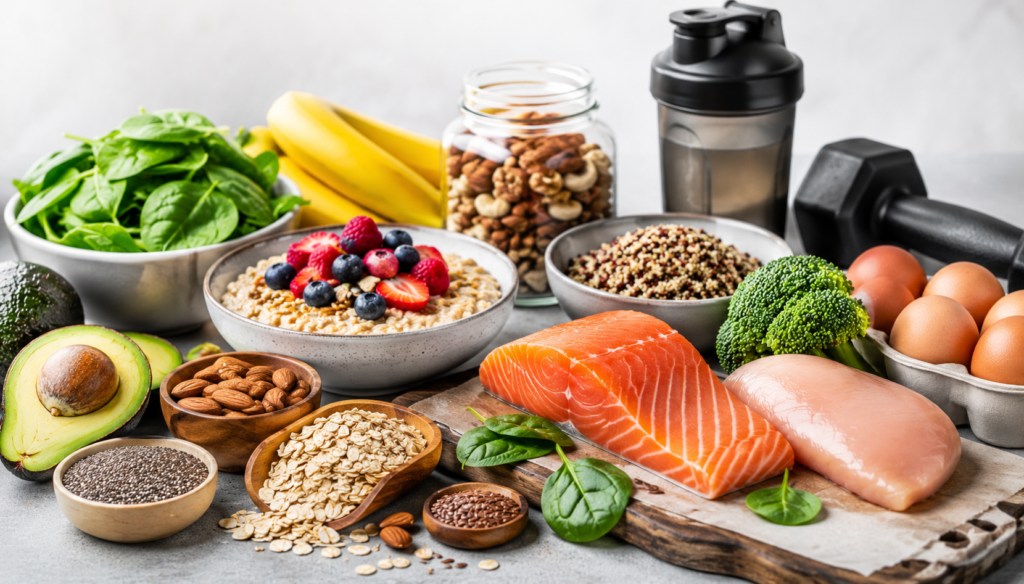
I think there’s a particular moment every woman who’s ever taken her fitness seriously eventually reaches, somewhere after the initial excitement of starting a new workout routine has settled into something steadier, more habitual. It’s the moment you realize that what you’re eating either supports everything you’re working toward in those workouts or quietly undermines it, no matter how disciplined and consistent your actual training has become. For me, that realization arrived somewhere around month three of finally, genuinely sticking with a strength training habit I’d built at home, the one I’ve written about at length elsewhere on this site. My workouts were going beautifully. My energy during them, less so. And it took me embarrassingly long to connect those two things.
I want to walk you through everything I’ve learned since then about eating in a way that genuinely supports performance, recovery, and the kind of sustained energy that makes consistent training actually feel good rather than like something you’re constantly dragging yourself through. I want to say clearly and honestly: I’m not a registered dietitian or sports nutritionist, and nothing here replaces personalized guidance from someone qualified to give it, especially if you’re training intensely, managing a specific health condition, or have particular nutritional needs that a general article like this one genuinely can’t account for in any meaningful depth. What I can offer is the real, lived experience of someone who has spent years paying close attention to the relationship between what she eats and how her body actually performs, and who has learned, sometimes slowly, what genuinely seems to help versus what was simply trendy noise that never delivered on its confident promises.
I also want to say clearly, the same way I did when writing about common nutrition mistakes elsewhere on this site, that this article isn’t about restriction, about eating less, or about treating food as something to be carefully managed and minimized. It’s the opposite, genuinely. Fueling your body well for fitness is fundamentally about adequacy and timing, giving your body what it actually needs to perform and recover, rather than about cutting things away in pursuit of some narrower, more restrictive ideal. If anything, I’ve found that women trying to improve their fitness often need to think more seriously about eating enough, and eating with more intention around their training, rather than eating less overall.
Why Performance Nutrition Looks So Different From Diet Culture’s Usual Messaging
I think it’s worth pausing on this distinction before getting into anything specific, because I genuinely believe it’s one of the most important mindset shifts available to any woman serious about her fitness. So much of the broader nutrition and wellness conversation circulating across social media is built around restriction, around minimizing intake, around treating food primarily as something to be managed in pursuit of a smaller body. Performance nutrition, the genuine kind that actually supports better workouts and faster recovery, operates from an almost entirely different premise.
When the goal is genuine athletic performance, however modest or ambitious that performance goal happens to be, the question shifts from “how little can I eat” to “what does my body actually need to do this well.” That’s a fundamentally different starting point, and I think it produces a fundamentally different, far more sustainable and far more enjoyable relationship with food. I noticed this shift in myself once I started training more seriously and paying closer attention to how genuinely under-fueled I’d been during a stretch of my life when I was simultaneously trying to exercise more and eat less, a combination that, in retrospect, was working directly against itself in ways I simply hadn’t recognized at the time.
I think this distinction matters enormously for the broader audience of women reading content like this, women who are drawn to the elegant, considered, quiet-luxury aesthetic that surrounds so much of fitness and wellness content right now, but who might also be carrying some of the restrictive messaging that’s woven through that same content without always realizing it. I want to be genuinely clear, the way I’ve tried to be throughout everything I write on this topic: eating enough, and eating with real intention around your training, is not in tension with looking and feeling elegant, capable, and confident. If anything, it’s the foundation that makes all of that genuinely sustainable rather than something achieved through depletion and constant low-grade exhaustion.
Understanding What Your Body Actually Needs Around Exercise
Before walking through specific foods, I think it helps to understand, at a genuinely general level, what’s actually happening in your body around exercise and why certain categories of food matter more at certain times than others. I’m going to keep this conversational rather than overly technical, because I think the broad strokes matter more for most of us than the precise biochemistry, but a little context genuinely helps make sense of everything that follows.
Your body relies heavily on carbohydrates as a primary fuel source during exercise, particularly anything moderately to highly intense, breaking them down into the glucose your muscles actually use for energy during a workout. This is part of why under-fueling on carbohydrates specifically, something I see happen constantly among women who’ve absorbed messaging treating carbs as something to minimize, tends to show up so directly as poor workout performance, that heavy, sluggish, can’t-quite-push-through feeling that so many of us have experienced without always connecting it back to what we did or didn’t eat earlier that day.
Protein plays a different, equally important role, providing the building blocks your muscles need to repair and adapt following the stress of a workout, which is genuinely how strength and capability actually build over time. Inadequate protein intake doesn’t typically show up as immediately during the workout itself the way carbohydrate inadequacy does, but it genuinely affects how well you recover and how effectively your training actually translates into the strength and capability gains you’re working toward.
Fats, often the most maligned category in restrictive nutrition messaging, genuinely matter too, supporting hormone production, the absorption of certain vitamins, and providing sustained energy, particularly for longer, lower-intensity activity. And hydration, which I’ll come back to in real detail later in this article, affects essentially everything, from how your muscles function during exercise to how efficiently your body recovers afterward.
I think understanding this basic picture, even at this general level, helps make sense of why specific food choices around training matter so much, and why the restrictive, carbohydrate-minimizing, fear-based approach to eating that circulates so widely tends to work directly against genuine fitness performance rather than supporting it the way its confident marketing often implies, regardless of how aesthetically polished or culturally pervasive that particular messaging has become.
The Pre-Workout Foods That Actually Make a Difference
I want to walk through what I’ve genuinely found makes the biggest difference in how my workouts feel, starting with what happens before I train, because I think this is the piece most commonly either neglected entirely or approached with unnecessary restriction by women trying to be “good” about their eating before exercising.
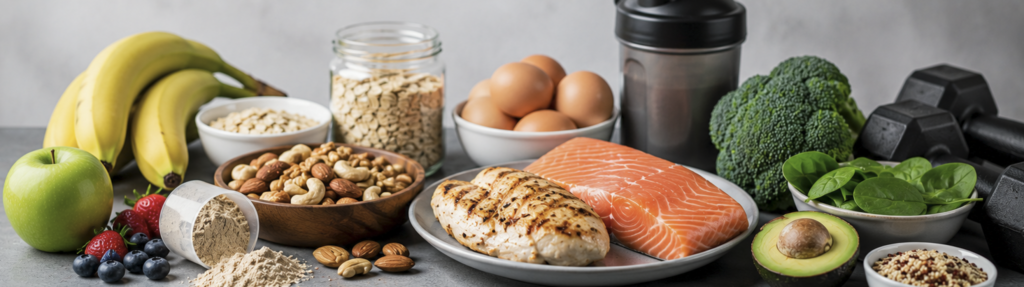
A combination of carbohydrates and a moderate amount of protein, eaten somewhere between thirty minutes and a couple of hours before training depending on how your body responds and how much time you have available, tends to provide the kind of sustained, accessible energy that makes a real, noticeable difference in how a workout actually feels. I’ve found that something like a banana with a small amount of nut butter, or a slice of whole grain toast with eggs, gives me genuinely more sustained energy through a workout than training on an empty stomach or, just as problematic, eating something heavy and overly rich in fat right before training, which tends to sit uncomfortably and divert blood flow toward digestion rather than toward the muscles I’m actually trying to fuel.
I think the timing here genuinely matters more than most casual fitness content acknowledges. Eating something substantial immediately before training, with no time for any digestion to begin, often leaves me feeling sluggish and uncomfortable rather than energized, while eating too far in advance without any closer pre-workout fuel leaves me running on empty by the time I actually start moving. I’ve learned, through genuine trial and error rather than any precise formula, what timing window works best for my own body, and I’d encourage you to do the same kind of patient experimentation rather than assuming any single universal timing rule applies identically to everyone.
For earlier morning workouts specifically, when time before training is often genuinely limited, I’ve found that something smaller and quicker to digest, perhaps simply a piece of fruit or a small amount of something easily digestible, provides enough accessible energy without requiring the longer digestion window a more substantial meal would need. I think this is worth mentioning because I know how many of us are training first thing, squeezing a workout in before an already demanding day begins, and the logistics of fueling well within that compressed morning window genuinely look different from fueling before a midday or evening session when more time is typically available.
Why Carbohydrates Deserve So Much More Respect in Fitness Conversations
I want to spend real time specifically defending carbohydrates, because I think this particular food category has been so thoroughly maligned across broader diet culture that even women genuinely trying to support their fitness performance often approach carbohydrates with unnecessary anxiety and restriction, working directly against their own training goals without fully realizing it.
I went through a phase myself, years ago, of dramatically minimizing carbohydrate intake, having absorbed enough confident-sounding messaging about carbs being somehow problematic that I genuinely believed reducing them was the responsible, health-conscious choice. What actually happened was a steady decline in my workout performance, increasingly heavy, joyless training sessions that felt nothing like the energized, capable feeling I associated with my better workouts, combined with a persistent, low-grade fatigue that I didn’t initially connect back to how dramatically I’d reduced this particular category of food.
Reintroducing adequate carbohydrates, genuinely listening to what my body actually needed rather than following restrictive rules I’d absorbed from sources with no specific knowledge of my own training demands, made an almost immediate, noticeable difference in how my workouts felt. Whole grains, fruit, starchy vegetables like sweet potatoes, even foods like rice and oats that diet culture has spent considerable energy demonizing, became genuine allies in my training rather than something to be carefully minimized and managed.
I think this matters enormously for the specific audience reading content like this, women drawn to elegant, considered, wellness-focused content who might also be carrying some of the carbohydrate anxiety that’s woven through so much of that same content without always recognizing where it came from or whether it’s actually serving their genuine fitness goals. I’d genuinely encourage questioning any messaging that frames carbohydrates broadly as something to minimize if your actual goal is improved exercise performance, since the evidence, and my own lived experience, both point fairly clearly in the opposite direction.
Protein: Building the Foundation for Genuine Recovery
I want to talk about protein with the same care and nuance I just gave carbohydrates, because I think this category, while genuinely important, also gets oversimplified in a lot of fitness content, often reduced to a single confident number that’s supposed to apply universally regardless of individual body size, training intensity, or specific goals.
What I can say with genuine confidence, without giving you a specific number I’m not qualified to prescribe, is that adequate protein intake genuinely matters for muscle repair and recovery following exercise, and that many women, particularly those newer to strength training, may be eating considerably less protein than would genuinely support their training goals, having absorbed messaging that treats protein as a secondary concern compared to managing overall intake more broadly.
I’ve found that intentionally including a source of protein at most meals, rather than concentrating it all into a single meal or treating it as an afterthought, has genuinely supported how I feel and perform throughout consistent training. Eggs, Greek yogurt, lean poultry, fish, legumes, and tofu have all become regular, comfortable parts of my eating, not because I’m following some rigid, calculated protein target, but because I’ve noticed genuine differences in my recovery and energy when these foods show up consistently throughout my week rather than sporadically.
I think it’s worth mentioning that protein needs genuinely vary based on factors like training intensity, body size, and individual goals, which is exactly why I’m not going to give you a specific number to aim for here. If you want genuinely personalized guidance on this, particularly if you’re training intensely or working toward specific strength goals, a registered dietitian with sports nutrition experience can provide far more useful, individualized guidance than any general article, however thoughtfully written, ever could.
The Role of Healthy Fats in Sustained Energy and Recovery
I want to give fats their genuine due in this conversation, because I think this is the category most thoroughly demonized across broader diet culture, despite playing genuinely important roles in hormone production, nutrient absorption, and sustained energy, particularly for longer or lower-intensity activity where fat becomes a more significant fuel source than it is during shorter, higher-intensity training.
Avocados, nuts and nut butters, olive oil, fatty fish like salmon, and eggs have all become regular parts of my eating, providing genuine satisfaction and sustained energy that purely lean, fat-minimized eating never quite managed to deliver in the same way. I noticed, during the same restrictive period I described regarding carbohydrates, that I’d also dramatically minimized fat intake, leaving my meals feeling genuinely unsatisfying and my energy levels considerably less stable than they became once I reintroduced adequate, varied fat sources back into my regular eating.
I think there’s something worth mentioning here about the aesthetic, quiet-luxury appeal of foods like good olive oil and properly ripe avocado, the kind of ingredients that photograph beautifully for the same Pinterest-inspired content so many of us enjoy scrolling through, while also genuinely supporting fitness performance rather than working against it. This is one of the rare places where what looks elegant and what’s genuinely nutritionally supportive align beautifully, rather than the aesthetic appeal and the actual nutritional substance pulling in different directions the way they so often do across more trend-driven wellness content.
Hydration: The Performance Factor Almost Nobody Takes Seriously Enough
I touched on hydration briefly earlier, but I want to come back to it with the same depth I gave it when writing about general nutrition mistakes elsewhere on this site, because I genuinely believe it’s one of the most underrated factors in exercise performance specifically, separate from its broader role in overall health and wellbeing.
Even mild dehydration measurably affects exercise performance, showing up as reduced strength, decreased endurance, impaired concentration, and a generally heavier, more difficult feeling throughout a workout that’s genuinely traceable, at least in part, to inadequate fluid intake rather than simply being an inevitable part of training hard. I noticed this pattern clearly once I started paying genuine attention to my own hydration habits around training, finding that workouts following a day of consistent, adequate water intake felt measurably different, lighter and more capable, compared to workouts following a day when I’d let hydration slip in favor of more coffee and less water than my body actually needed.
I’m not going to give you a specific number of ounces or glasses to aim for, the same caveat I gave when discussing this topic previously, because individual hydration needs genuinely vary based on body size, climate, sweat rate, and exercise intensity. What I will say is that paying closer, more consistent attention to hydration throughout your entire day, not just immediately before or during a workout, tends to make a more meaningful difference than trying to compensate for an otherwise under-hydrated day with a large amount of water gulped down right before training.
I keep a water bottle visible and accessible throughout my entire day now, the same simple environmental cue I’ve mentioned using to support other habits I genuinely want to maintain, and this small, consistent habit has done more for my training performance than almost any other single change I’ve made to how I eat and drink around exercise.
What to Eat After Training: The Recovery Window That Actually Matters
I want to talk about post-workout eating, because I think this is a piece of the puzzle that gets either completely neglected or unnecessarily complicated by overly precise, anxiety-inducing timing rules that circulate widely across fitness content without nearly as much solid backing as their confident delivery suggests.
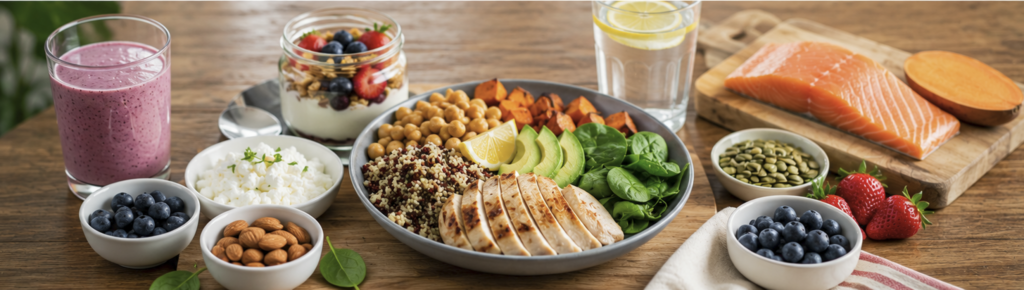
What genuinely seems to matter most, based on both my own experience and what I understand from more qualified sources, is eating a combination of protein and carbohydrates within a reasonably timely window following a workout, supporting muscle recovery and replenishing the energy your body used during training. I’ve found that something like a smoothie with protein, fruit, and a source of healthy fat, or simply a balanced meal eaten within an hour or two of finishing training, supports how I feel and recover far more than either skipping post-workout nutrition entirely or, on the other end, falling into the kind of rigid, anxious timing precision that treats missing some narrow specific window as a meaningful setback.
I think the rigid, anxiety-inducing version of post-workout timing advice that circulates so widely does more harm than good for most casual and even moderately serious exercisers, creating unnecessary stress around a window that’s genuinely more flexible than that confident messaging implies. Unless you’re training at a genuinely elite, competitive level where marginal differences in timing precision might meaningfully matter, eating a reasonably balanced, protein-and-carbohydrate-containing meal within a few hours of training, rather than precisely within some specific narrow window, tends to support recovery just as effectively without the added stress.
My own go-to post-workout choices have become things like eggs with whole grain toast and fruit, a yogurt bowl with granola and berries, or simply whatever balanced, satisfying meal happens to be next on my regular schedule, eaten with genuine appetite rather than anxious calculation about precise timing.
Building a Genuinely Sustainable Eating Pattern Around Regular Training
I want to step back from specific foods for a moment and talk about the broader pattern of eating that’s actually supported my consistent training over the longer term, because I think the bigger picture matters more than any single pre or post-workout meal in isolation.
What’s worked best for me is eating consistently and adequately throughout my entire day, every day, rather than only thinking carefully about fueling specifically around training days while eating more carelessly or restrictively on rest days. Your body’s recovery and adaptation happen continuously, not just in the hours immediately surrounding a workout, which means consistent, adequate nourishment across your entire week genuinely matters more than perfecting the specific timing of any single pre or post-workout meal.
I’ve also found enormous value in genuine variety across my regular eating, the same point I made when writing about common nutrition mistakes more broadly, ensuring I’m getting a wide range of different foods and nutrients rather than relying narrowly on the same small rotation of “approved” performance foods repeated endlessly. This variety supports more comprehensive nutritional adequacy while also keeping eating genuinely enjoyable rather than reducing it to a narrow, repetitive set of rules organized entirely around training performance.
I think this connects to something I’ve written about regarding building a considered, intentional approach to other areas of life, the same elegant, thoughtful variety I’d encourage in a wardrobe or a fragrance collection rather than a narrow, rigid rotation followed out of anxious habit rather than genuine enjoyment and adequate nourishment.
The Specific Foods That Have Earned a Permanent Place in My Routine
I want to get genuinely specific now, walking through the particular foods that have become consistent, reliable parts of how I fuel my training, not as some rigid prescription you need to follow exactly, but as honest examples of what’s worked well for me that might offer useful inspiration for your own approach.
Oats have become a genuine staple, providing sustained, slow-releasing energy that works beautifully before a morning workout or as part of a satisfying recovery breakfast afterward. I’ll often prepare them with fruit and a scoop of protein powder, creating something that feels indulgent and genuinely satisfying while also providing exactly the combination of nutrients that supports both performance and recovery.
Eggs have earned an almost daily place in my eating, providing genuinely excellent protein alongside a range of other beneficial nutrients, versatile enough to work across breakfast, lunch, or a simple dinner depending on what the rest of my day looks like. I think eggs are genuinely one of the most underrated, accessible performance foods available, despite some lingering, largely outdated concerns about them that circulated through nutrition messaging years ago and have since been considerably revised by more current understanding.
Greek yogurt has become a reliable, quick source of protein that pairs beautifully with fruit and a little honey or granola for a satisfying snack or light meal, particularly useful on busier days when more elaborate meal preparation simply isn’t realistic. Bananas, genuinely one of nature’s most convenient pre-workout foods, provide quick, accessible energy along with potassium that supports proper muscle function during exercise.
Salmon and other fatty fish have become regular parts of my weekly rotation, providing both quality protein and beneficial fats that support recovery and overall health beyond just exercise performance specifically. Sweet potatoes, leafy greens, and a wide range of colorful vegetables round out my regular eating, providing the broader nutritional variety and adequacy that supports genuine, comprehensive health rather than narrowly focusing only on the specific nutrients most directly tied to athletic performance.
Pre-Workout Snack Ideas for Every Kind of Morning
I think it helps to walk through some genuinely practical, real-world options for different scenarios, because I know how different an unhurried Sunday morning workout feels from a rushed weekday session squeezed in before an already demanding day. For mornings with genuine time to prepare something more substantial, I love oatmeal with fruit and a little nut butter, or whole grain toast with eggs and avocado, giving my body real, sustained fuel well ahead of training.
For genuinely rushed mornings, when even a few extra minutes feel impossible to spare, I keep things simple: a banana, a small handful of dried fruit, or occasionally a quick smoothie I can drink in the few minutes before heading into my workout space. I think having a few of these quicker, lower-effort options genuinely on hand, rather than only planning for the ideal, unhurried version of pre-workout fueling, has made consistent fueling far more realistic across the genuine range of mornings my actual schedule produces, busy and unhurried alike.
For evening workouts, following a full day of regular eating, I often need less in the way of a dedicated pre-workout snack, since my body is generally already reasonably fueled from earlier meals. I’ll sometimes have a small, light snack an hour or so before training if my last meal was several hours earlier, paying attention to how my body actually feels rather than following any rigid rule about what evening pre-workout eating is supposed to look like regardless of my specific day’s eating pattern up to that point.
Recovering Well on Rest Days, Not Just Training Days
I want to address something I think gets overlooked in a lot of fitness nutrition content, which is how to think about eating on rest days, the days you’re not actually training but your body is still actively recovering and adapting from your previous sessions. I see a pattern, sometimes in myself during less mindful stretches, of eating more restrictively on rest days, as though the absence of a workout that day means food matters less or should be more carefully limited.
What I’ve come to understand, and what genuinely qualified sources consistently emphasize, is that recovery happens continuously, including on rest days, which means your body still genuinely needs adequate nourishment even on days you’re not actively training. Restricting more dramatically on rest days, treating food as something you’ve “earned” only through exercise, genuinely works against the recovery process your body needs to actually benefit from the training you did on the days surrounding it.
I’ve made a genuine effort to eat just as consistently and adequately on rest days as on training days, recognizing that the recovery happening on those rest days is just as important to my overall progress as the training itself. This shift, treating rest days as an active, important part of the process rather than a day food matters less, has genuinely supported how I feel and perform across my entire training week, rather than creating the kind of restrict-then-compensate pattern that so often undermines consistent progress.
Navigating Social Situations Around a Consistent Training Schedule
I want to touch on something practical here, because I know how genuinely tricky it can feel to maintain consistent, supportive eating around training while also navigating an active social life, dinners out, celebrations, the countless occasions that don’t perfectly align with whatever specific timing or food choices might feel ideal for a particular workout.
What’s worked best for me is genuine flexibility rather than rigid rules that don’t bend for real life. If a workout happens to fall around a dinner out with friends, I simply pay attention to eating reasonably well earlier in the day and trust that an evening out, even one that doesn’t precisely match my usual pre or post-workout routine, genuinely isn’t going to meaningfully derail my overall training progress. The bigger picture, the consistent pattern across weeks and months, matters so much more than any single workout’s nutrition being executed with perfect, rigid precision.
I think this flexibility connects to something I wrote about more broadly regarding social eating in my piece on common nutrition mistakes, the same principle applying just as well here in the more specific context of fitness performance. A sustainable approach to fueling your training has to be able to accommodate the genuine, wonderful reality of an active social life, rather than treating every dinner out or celebration as a threat to carefully managed training nutrition.
What I’d Tell My Younger, More Restrictive Self About All of This
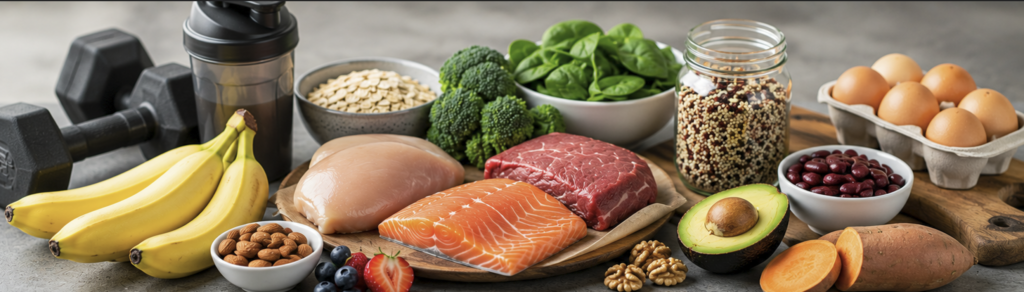
If I could go back and talk to the version of myself who spent years minimizing carbohydrates and fats in the name of being “responsible” about her eating, while simultaneously wondering why her workouts felt so heavy and unrewarding, I think I’d tell her this: the restriction you believe is supporting your fitness goals is very likely working directly against them. Your body needs genuine, adequate fuel to perform and recover well, and the confident, restrictive messaging you’ve absorbed from various corners of diet culture is built on a fundamentally different goal, smallness rather than genuine capability, than the one you’re actually trying to achieve through your training.
I’d tell her that eating enough, eating with real variety, and paying genuine attention to fueling around her workouts isn’t going to undermine the elegant, put-together life she’s working to build across every other area. If anything, it’s going to support it, giving her the genuine energy and capability that makes everything else, the workouts, the confidence, the quiet, settled sense of trusting her own body, actually sustainable rather than achieved through a kind of depletion that was always going to eventually catch up with her.
Quick Answers to the Questions I Get Asked Most About Fueling Fitness
Do I really need to eat before every single workout? Most people perform better with some pre-workout fuel, but individual tolerance varies, and some people genuinely train well in a more fasted state depending on workout timing, intensity, and personal preference; paying attention to how your own body responds matters more than any universal rule you might encounter online.
Is the post-workout nutrition window really as urgent as fitness content makes it sound? For most casual and moderately serious exercisers, eating a reasonably balanced meal within a few hours of training supports recovery just as well as rigid precision within some narrow window, and the anxious, overly precise version of this advice tends to create more stress than benefit for the vast majority of women training for general health and capability rather than elite competition.
Should I be eating differently on rest days versus training days? Your body continues recovering and adapting on rest days, so I’d encourage eating just as consistently and adequately rather than restricting more on days you haven’t trained, treating rest as an active, important part of the overall process rather than a day nutrition matters less, since the adaptations you’re hoping to see from your training largely happen during this recovery time, not during the workout itself.
Are carbohydrates really necessary for good workout performance? Genuinely yes, for most types of moderate to intense exercise; carbohydrates are your body’s primary, most readily accessible fuel source during exercise, and significantly restricting them tends to show up fairly directly as reduced performance and energy during training, often well before any other visible sign of inadequate fueling becomes apparent.
How do I know if I’m eating enough to support my training? Signs that you might not be eating enough include persistent fatigue, declining performance despite consistent training, difficulty recovering between sessions, and disrupted hunger signals; if you suspect this might be happening, it’s genuinely worth discussing with a doctor or registered dietitian with sports nutrition experience, who can help you assess your specific situation far more accurately than general guidance like this article ever could on its own.
I hope this long, detailed walk through everything I’ve learned about fueling my own training gives you something genuinely useful to bring into your own fitness journey, whatever that journey currently looks like. The goal, the same goal I keep returning to across everything I write in this space, was never restriction or minimizing what you eat. It was building a genuine, sustainable, generous relationship with food that actually supports the strength and capability you’re working so consistently to build, one well-fueled, genuinely satisfying meal at a time.
The Micronutrients and Electrolytes Nobody Talks About Enough
I want to go a little deeper into something that gets far less attention than carbohydrates, protein, and fat in most fitness nutrition conversations, despite genuinely mattering quite a bit for how training actually feels and how well your body recovers. Micronutrients, the vitamins and minerals that don’t get nearly as much glamorous attention as the bigger macronutrient categories, and electrolytes specifically, play a genuinely important role in exercise performance that I think deserves more thoughtful conversation than it typically receives.
Iron, for instance, plays a critical role in how oxygen gets transported to your working muscles, and iron deficiency, which research suggests affects a meaningful proportion of active women, can show up as fatigue, decreased endurance, and a generally heavier feeling during exercise that’s easy to mistake for simply needing to train harder or push through, when the actual underlying issue might be a nutritional gap worth addressing properly. I learned this somewhat by accident a few years back, mentioning a persistent, unexplained fatigue during workouts to my doctor during an otherwise unrelated appointment, and discovering through routine bloodwork that my iron levels were lower than ideal, something I’d never have identified on my own without that conversation.
Electrolytes, specifically sodium, potassium, and magnesium, become particularly relevant during longer or more intense training sessions, especially in warmer conditions where sweat losses are more significant. These minerals support proper muscle function and fluid balance, and inadequate intake, particularly during longer training sessions, can contribute to cramping, fatigue, and decreased performance that simple water alone doesn’t fully address. I’ve found that foods like bananas, leafy greens, and a reasonable amount of salt in my regular cooking provide adequate electrolyte support for my own typical training intensity, though I know athletes training at higher intensities or for longer durations sometimes benefit from more deliberate electrolyte supplementation, ideally guided by a sports nutrition professional who can assess actual individual need rather than general assumption.
I’d genuinely encourage anyone experiencing persistent, unexplained fatigue or declining performance despite consistent training and reasonable overall nutrition to mention this to a doctor, since underlying nutritional gaps like the iron deficiency I experienced myself are genuinely common, identifiable through simple bloodwork, and addressable once properly diagnosed, rather than something to simply push through or attribute purely to needing more willpower or discipline in your training, a conclusion I jumped to myself for far longer than I should have before finally asking the right question of the right professional.
Meal Prep That Actually Supports Consistent Fueling
I want to talk about the practical, logistical side of all of this, because I think even the best understanding of what foods support performance doesn’t matter much if the actual logistics of preparing and having that food available consistently feel too overwhelming to sustain alongside an already busy life. This is where genuine meal preparation, approached thoughtfully rather than as another elaborate, perfectionist project, has made such a meaningful difference in my own consistency.
I’ve settled into a rhythm of preparing certain staples in larger batches once or twice a week, things like cooked grains, roasted vegetables, and a protein source I can easily incorporate into multiple different meals throughout the following days. This isn’t about rigid meal planning down to the exact dish for every single day; it’s simply about ensuring that when I’m hungry, tired, and genuinely don’t feel like cooking from scratch, there’s something reasonably nutritious and supportive of my training already available rather than defaulting to whatever’s quickest and easiest in a moment of genuine depletion.
I’ve also become a genuine believer in keeping a small rotation of quick, reliable options always stocked, the same kind of considered, intentional approach I’ve written about building into a capsule wardrobe elsewhere on this site. Eggs, Greek yogurt, frozen fruit for quick smoothies, a few good cuts of protein in the freezer, canned beans and legumes that require no advance planning at all; having these genuinely reliable staples consistently available removes so much of the friction that otherwise makes consistent, supportive eating feel harder than it actually needs to be.
I think this connects to something important about sustainability more broadly. The most nutritionally perfect meal plan in the world means very little if it’s too elaborate or too demanding to actually maintain alongside a genuinely busy, full life. What’s worked far better for me is a simpler, more flexible system built around a small rotation of reliable staples, prepared with just enough advance thought to remove the friction of needing to figure everything out fresh every single day, while still leaving plenty of room for spontaneity, variety, and the genuine pleasure of trying new things when time and energy allow.
Adjusting How You Eat Across Different Training Seasons
I want to bring in the same seasonal thinking I’ve applied to skincare, fragrance, and even wardrobe elsewhere on this site, because I genuinely believe how you eat around training benefits from some thoughtful seasonal adjustment too, rather than a single, fixed approach applied identically regardless of what season you’re actually in or what your training currently looks like.
During more intense training blocks, periods when I’m pushing harder, training more frequently, or working toward a specific goal that demands more from my body than usual, I genuinely need to eat more, with particular attention to adequate carbohydrate and protein intake supporting both the performance and recovery demands of that more intense period. I’ve learned to expect and accommodate increased appetite during these stretches rather than viewing it with any suspicion or treating it as something to manage or minimize, recognizing it as my body genuinely communicating an increased need that deserves to be honored rather than questioned.
During lighter training periods, perhaps a deliberate, planned reduction in intensity, or simply a season of life where training has naturally become less frequent due to other demands, my overall intake adjusts somewhat to match that reduced demand, though I still prioritize the same general principles of adequacy and variety rather than swinging into any kind of restrictive compensation for training less than usual during that particular stretch.
Weather and climate genuinely factor into this too, the same way I’ve described with hydration specifically. Warmer months and more intense heat increase hydration and electrolyte needs considerably compared to cooler months, and I’ve learned to pay closer attention to fluid and electrolyte intake specifically during summer training compared to winter sessions, when the same level of vigilance simply isn’t as critical given the reduced sweat losses that come with cooler conditions.
A Word of Caution About Performance Supplements
I want to address sports and performance supplements directly, because I think this is an area, much like general wellness supplements more broadly, where marketing claims often dramatically outpace genuine evidence, and where I’d encourage real caution before assuming any specific product is necessary or even particularly beneficial for your own training.
Pre-workout supplements, protein powders, and various performance-enhancing products marketed specifically to women training at home or in gyms have become a genuinely massive industry, often advertised with the same beautiful, aspirational visual language that fills so much of the broader wellness and beauty content we’ve discussed throughout this entire piece. What I’d encourage, the same skepticism I brought to broader nutrition trends in my previous article on this topic, is questioning whether any specific supplement is genuinely necessary for your own training goals, or whether the underlying need it claims to address could be met just as effectively, and considerably more affordably, through whole foods and the genuinely foundational principles I’ve described throughout this entire article.
Protein powder specifically, while genuinely useful and convenient for some women, particularly as a way to boost protein intake during busier periods, isn’t strictly necessary if you’re able to meet your protein needs through whole food sources, and I’d encourage viewing it as one convenient option among many rather than an essential requirement for genuine fitness progress. Pre-workout supplements, often containing significant amounts of caffeine and various other ingredients marketed for an energy boost, can genuinely work for some people but also carry considerations around tolerance, timing, and potential side effects that are worth discussing with a doctor before incorporating regularly, particularly if you’re sensitive to caffeine or training at times that might affect your sleep.
I think the most important message here, the same one I keep returning to throughout this entire conversation, is that whole foods, eaten consistently and adequately, remain the genuine foundation of supporting fitness performance, with supplements serving, at most, a supportive, optional role for specific identified needs rather than a necessary requirement that the broader supplement industry’s confident, aspirational marketing often implies.

Building Body Trust Through Consistent, Supportive Fueling
I want to close this practical conversation by returning to something more foundational, the same theme I keep returning to across everything I write about food and nutrition on this site. The most meaningful shift in how I fuel my training wasn’t really about any specific food or precise timing rule. It was learning, gradually and with real patience, to trust my body’s signals about what it genuinely needed, rather than overriding those signals with external rules absorbed from sources with no actual knowledge of my specific training, my specific body, or my specific goals.
This trust builds slowly, through consistent attention and a genuine willingness to notice how different choices actually affect how you feel and perform, rather than through any single dramatic realization or quick fix. I think this is ultimately the most valuable thing I can offer you, more valuable than any specific food recommendation I’ve walked through across this entire article: the encouragement to pay genuine, patient attention to your own body’s response to different foods and timing, building your own individual understanding rather than rigidly following anyone else’s specific approach, including my own, without that genuine personal calibration.
Your body, given adequate, varied, consistent nourishment, is remarkably capable of communicating what it actually needs to perform and recover well. Learning to listen to that communication, rather than overriding it with restrictive rules borrowed from sources with no genuine knowledge of your specific situation, is, I genuinely believe, the single most valuable skill available to any woman serious about building lasting strength and capability through her training.
How Fueling Well Connects to Everything Else You’re Building
I want to draw a connection here that I think matters more than it might initially seem, between the way you fuel your training and the broader, more intentional approach to self-care I’ve written about across other areas of this site. There’s a reason I keep returning to the same underlying themes, consistency over perfectionism, genuine variety over rigid restriction, patient self-trust over anxious external rules, whether I’m writing about skincare, fragrance, dressing with intention, or, here, fueling your body well around exercise. These aren’t really separate categories of self-care so much as different expressions of the same underlying philosophy.
I think about the mornings my entire routine comes together cohesively, when I’ve fueled my body well the evening before, woken with genuine energy rather than the heavy, sluggish feeling that comes from inadequate or poorly timed eating, moved through my skincare ritual with the same patient intention I’ve written about elsewhere, dressed in something that genuinely makes me feel capable and put-together, and then trained with real energy rather than dragging myself through a workout running on empty. These pieces genuinely reinforce each other, each one supporting the others in ways that become more apparent the longer you pay attention to how they all fit together across an ordinary day.
This is part of why I think fueling your fitness deserves to be approached with the same elegant, considered intentionality as everything else in this broader lifestyle conversation, rather than treated as some separate, purely functional category disconnected from the rest of how you’re building an intentional, well-cared-for life. The quiet luxury, soft glam, considered aesthetic that runs through so much of what we love about this particular corner of fashion and lifestyle content isn’t really separate from genuine physical capability and energy. It’s deeply connected to it, the same underlying confidence and self-respect expressing itself across every visible and invisible part of how you move through your days.
What a Genuinely Well-Fueled Week Actually Looks Like
I think it helps to walk through a realistic example of an entire week, rather than only discussing individual meals or principles in isolation, so let me describe, honestly and without excessive precision, what a genuinely well-fueled training week tends to look like for me right now, not as a rigid template, but as one honest example of these principles actually applied across real days.
My mornings, regardless of whether I’m training that particular day, tend to start with something combining protein and carbohydrates, whether that’s eggs with toast, a yogurt bowl with fruit and granola, or oatmeal prepared with a scoop of protein powder and some berries. On training days specifically, I pay a little closer attention to timing this relative to when I’m actually planning to work out, while on non-training days, I simply eat according to genuine hunger without that additional timing consideration.
Lunches throughout the week tend to center around a protein source, a substantial portion of vegetables, and a carbohydrate source like rice, quinoa, or bread, prepared in whatever way genuinely sounds appealing that particular day rather than following any rigid, repetitive formula. I’ve found that having a few reliable combinations I genuinely enjoy, rotating between them based on what sounds good rather than forcing strict variety for its own sake, works better for me than either eating the exact same thing daily out of convenience or constantly searching for novelty that sometimes just adds unnecessary mental effort to an already busy day.
Dinners often become the most flexible, most socially influenced meal of my day, sometimes a simple, home-prepared meal following the same general principles as lunch, sometimes a dinner out with friends or family that I approach with the same flexible, non-anxious attitude I described earlier regarding social eating. Snacks throughout the day, when genuine hunger calls for them, tend toward things like fruit, nuts, yogurt, or simple combinations that provide real nourishment rather than purely empty, unsatisfying options that leave me hungry again shortly afterward.
Across an entire week like this, training days and rest days alike, the consistent thread is adequacy and genuine variety rather than restriction or rigid, anxious precision. This is, I think, what a genuinely sustainable, performance-supportive eating pattern actually looks like in real, ordinary life, considerably less dramatic and considerably less photogenic than the carefully staged “what I eat in a day” content that circulates so widely, but genuinely more sustainable and more supportive of the actual training and capability I’m working to build over the long term.
A Final Word on Patience and Genuine Progress
I want to close this entire conversation the way I tend to close everything I write on this topic, with genuine acknowledgment that building this kind of sustainable, supportive relationship between your eating and your training takes real time, considerably more time than any single article, however thorough, can fully convey. The patterns I’ve described throughout this piece, eating adequately rather than restrictively, trusting your body’s signals, building genuine flexibility rather than rigid rules, took me years of patient, sometimes uncomfortable unlearning to genuinely internalize, and I won’t pretend that reading about them here will instantly transform your own relationship with fueling your training overnight.
What I can offer, having walked this entire path myself, is genuine reassurance that this patient work is worth every bit of the effort it requires. The version of myself who trains now, genuinely energized, genuinely capable, genuinely trusting her own body’s signals rather than fighting against them, feels worlds away from the version who spent years minimizing and restricting in the name of being responsible, all while wondering why her workouts felt so heavy and her progress felt so frustratingly slow despite all that careful, anxious management.
I hope, whatever stage of this journey you’re currently in, that something in this long, detailed conversation gives you permission to eat more generously, more intentionally, and with considerably less anxiety around your training than diet culture’s confident, restrictive messaging might have led you to believe was necessary. Your body, given the genuine, adequate fuel it needs, is remarkably capable of the strength and performance you’re working toward. It simply needs you to trust it, and to feed it accordingly, one consistent, well-fueled day at a time, for as long as this practice continues to matter to you.
And if there’s one final thought I’d leave you with, beyond everything specific I’ve walked through across this entire conversation, it’s this: the relationship between how you eat and how you train doesn’t need to be complicated to be genuinely effective. It needs to be consistent, generous, and patient, built slowly through real attention to your own body’s responses rather than borrowed wholesale from whatever confident-sounding approach happens to be circulating most widely at any given moment. That kind of relationship, quiet and unglamorous as it might sound compared to the more dramatic promises filling so much of the broader fitness and nutrition conversation, is genuinely the one that lasts, carrying you through years of consistent training rather than just the enthusiastic first few weeks before motivation and rigid rules inevitably start to fray under the weight of real, ordinary life.