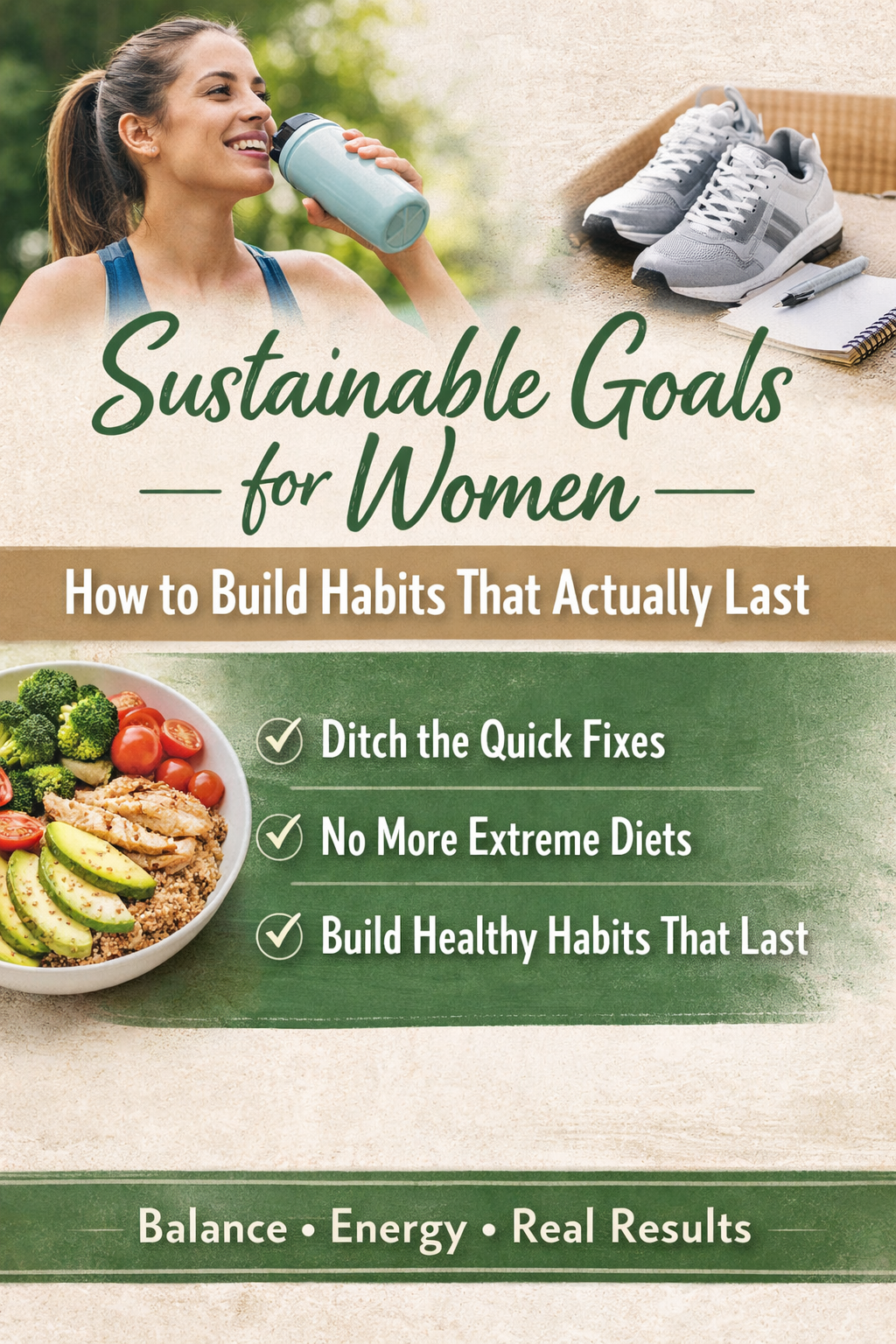
I used to set goals the way most of us do when we’re tired of feeling uncomfortable in our own lives. I wanted fast results, visible changes, and something that would finally make me feel like I was “doing it right.” I promised myself I would wake up earlier, work out harder, eat perfectly, and somehow become a more disciplined version of myself overnight. I believed that if I just pushed enough, I could fix everything that felt messy inside me. And for a while, it worked. I would start strong, feel motivated for a few weeks, maybe even see some changes, and then real life would show up. I would get tired, overwhelmed, bored, or frustrated. The routine would feel heavy, the rules would feel restrictive, and I would slowly slide back into my old habits, feeling disappointed in myself for “failing again.” It took me a long time to realize that the problem wasn’t my motivation or my willpower. The problem was the way I was setting goals in the first place.
We live in a world obsessed with quick fixes and instant gratification. Everywhere you look, there is a promise of fast results. Lose weight in thirty days. Transform your body in six weeks. Reset your life by Monday. These messages sound hopeful when you’re tired of where you are, but they quietly teach us to expect change without change in how we live. They sell the idea that transformation is something you can download, buy, or complete like a short project, instead of something you slowly build into your daily life. I didn’t realize how deeply this thinking had shaped me until I noticed how I approached my own goals. I didn’t design goals that fit my real life. I designed goals for an imaginary version of myself who had endless energy, perfect discipline, and no emotional needs. When that version of me didn’t show up every day, I felt like I was the problem.
At some point, I became more curious about why I kept starting over. Not in a self-blaming way, but in a genuinely honest way. I started to notice patterns. I noticed that whenever my goals were extreme, my behavior became extreme too. I would go all in, cut out foods I loved, follow rigid routines, and push myself through workouts I secretly hated. For a short time, I felt powerful, like I was finally in control. But control is exhausting when it’s built on pressure instead of understanding. My body would get tired. My mind would get tired. My motivation would fade. And then I would stop, not because I was lazy, but because the life I was trying to live didn’t fit the life I actually had.
That’s when I started to think differently about goals. Instead of asking, “How fast can I change?” I began asking, “How can I change in a way I can live with?” This question changed everything. Sustainable goals aren’t about getting somewhere as quickly as possible. They are about creating a way of living that you don’t constantly want to escape from. They are about building habits that fit into your real days, your real energy levels, your real responsibilities, and your real emotions. When goals align with your actual life instead of an idealized version of it, they stop feeling like a punishment and start feeling like support.
What I learned is that sustainability starts with balance. Balance doesn’t mean doing everything perfectly or evenly all the time. It means recognizing that your life has seasons, demands, and limits. There are days when you have more energy and days when you have less. There are weeks when you can focus on movement more and weeks when rest matters more. When I stopped treating balance as weakness and started seeing it as intelligence, my goals became kinder and more realistic. I began choosing movement I actually enjoyed instead of what looked impressive. I stopped trying to be perfect with food and started focusing on nourishment and consistency instead of restriction. I allowed rest to be part of my routine instead of something I had to earn. This balance didn’t make me less disciplined. It made me more consistent, because I wasn’t constantly burning myself out.
Understanding myself was the second shift that changed how I set goals. For years, I followed plans that worked for other people without asking whether they made sense for me. I ignored my own rhythms, my own preferences, and my own limits. I thought discipline meant forcing myself into routines that felt unnatural. But real discipline, I’ve learned, is about creating systems that support you instead of fight you. Understanding your body means noticing how you respond to stress, sleep, food, movement, and rest. It means paying attention to when you feel energized and when you feel drained. It means recognizing that your emotional state affects your physical habits more than any plan ever will. When I started setting goals that worked with my nature instead of against it, they stopped feeling like a constant struggle. They felt like something I could actually carry into my everyday life.
The third shift was learning to frame change as something positive instead of something corrective. For a long time, my goals were built on what I wanted to fix about myself. I wanted to be less lazy, less emotional, less inconsistent, less tired. Even when the goals sounded healthy, the energy behind them was critical. I was trying to improve myself from a place of dissatisfaction. Over time, I noticed how heavy that felt. Sustainable change feels different. It’s rooted in care, not in punishment. When I started focusing on what I wanted to add to my life instead of what I wanted to take away, my mindset softened. I focused on adding movement because it made me feel more alive, not because I needed to “burn something off.” I focused on adding nourishing meals because they supported my energy, not because I was trying to control my body. I focused on adding rest because I deserved to feel regulated and present, not because I had failed to be productive enough. This shift didn’t make me complacent. It made me compassionate, and that compassion made it easier to stay consistent.
Creating a sustainable blueprint for my goals meant getting honest about what actually mattered to me. Not what sounded good on social media, not what I thought I “should” want, but what truly made my life feel better. I had to ask myself uncomfortable questions. What kind of energy do I want to have in my daily life? How do I want to feel when I wake up? What does a healthy day look like for me, not for an influencer or a fitness model? When my goals were connected to how I wanted to feel instead of how I wanted to look, they became more meaningful. They became part of my identity instead of just another project.
I also learned to make my goals clearer and more realistic. Vague intentions like “I want to be healthier” didn’t give me anything concrete to hold onto. When I started setting specific, measurable, and achievable goals, I felt less overwhelmed. Instead of trying to change everything at once, I focused on small actions I could repeat. Walk a few times a week. Drink more water. Go to bed a little earlier. These things sound simple, almost too simple, but simplicity is what makes consistency possible. Long-term change doesn’t come from dramatic plans. It comes from small actions done often enough to become normal.
Consistency became more important to me than intensity. I stopped chasing perfect weeks and started valuing average, repeatable days. Sustainable goals thrive on routines you can keep even when life is messy. That meant choosing habits that didn’t require perfect conditions. Movement that could be done at home. Simple meals that didn’t take hours to prepare. Rest that didn’t depend on having a completely free schedule. When I built my goals around consistency instead of perfection, I stopped quitting on myself every time life got busy.
Support also became part of my blueprint. I used to believe I had to do everything on my own to prove I was strong enough. But strength doesn’t mean isolation. Having someone who understands your goals, whether it’s a friend, a group, or a coach, makes a huge difference. Not because they magically give you motivation, but because being seen and supported changes how accountable you feel to yourself. Sharing your journey with someone else reminds you that you’re not failing when things feel hard. You’re human.
And finally, I learned to celebrate progress in a quieter way. Not just big milestones, but small shifts. Feeling less tired in the morning. Moving with less stiffness. Noticing that my habits felt more natural than forced. Sustainable change doesn’t usually arrive with dramatic moments. It shows up in how your daily life slowly feels lighter, more manageable, more connected to your body and your needs.
Setting sustainable goals is not about reaching a final destination where everything is suddenly perfect. It’s an ongoing process that evolves as you evolve. Your needs will change. Your seasons of life will change. Your energy will change. And your goals can change with you. When you prioritize balance, understanding, and positive change, you’re not just chasing results. You’re building a way of living that supports you in the long run. If you feel overwhelmed by where to start, that’s normal. You don’t need to overhaul your entire life. You just need a roadmap that fits your real world, and then the willingness to follow it one small step at a time. Cheering you on always.