
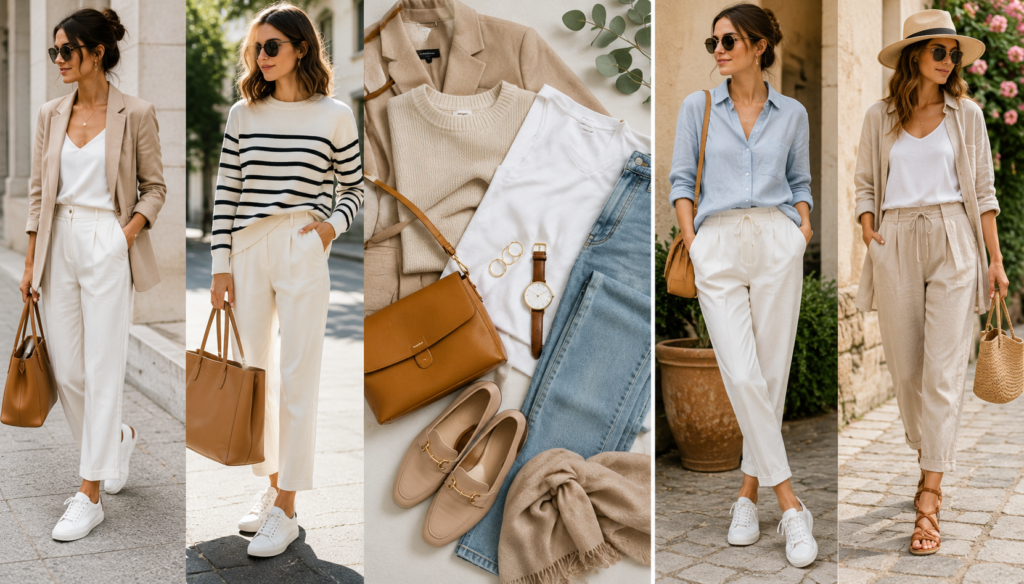
A Fashion Guide for Women Who Love Comfortable Yet Elegant Streetwear
— By a Woman Who Believes Getting Dressed Should Feel Like a Gift, Not a Chore —
There’s a moment, I think every woman knows it, when you open your wardrobe first thing in the morning and feel absolutely nothing. Not excitement. Not inspiration. Just a quiet, slightly exhausted stare at a rail of clothes that somehow don’t feel like you anymore. You own things, plenty of things, but the idea of putting them together into something that feels both effortless and beautiful? That feels like work you didn’t sign up for before coffee.
I lived in that feeling for an embarrassingly long time. I’d scroll Pinterest at midnight, saving image after image of women who looked impossibly put-together in what appeared to be the simplest outfits — a cream blazer thrown over wide-leg trousers, a silk slip dress layered under an oversized knit, a pair of well-cut jeans with the softest camel coat you’ve ever seen. And I’d think: why can’t I do that? Why does my version of ‘casual and chic’ always end up looking like I just grabbed whatever was nearest the door?
The answer, I eventually figured out, wasn’t about buying more clothes. It wasn’t about following every trend, or investing in a capsule wardrobe of thirty-seven identical beige pieces, or watching another ‘how to dress like a Parisian’ video. It was about understanding a very specific kind of dressing — one that I now call elegant streetwear — and learning the quiet rules that make it look so effortless even when it absolutely isn’t.
That’s what this guide is. It’s everything I’ve learned, tested on real mornings with real schedules and real budgets. It’s about dressing like yourself but the best, most polished version. It’s about looking like you made an effort without looking like you tried too hard. And most importantly, it’s about actually feeling good in what you wear — which, when you think about it, is the whole point.
What ‘Casual Chic’ Actually Means in 2026 (And What It Doesn’t)
Let’s start by clearing something up, because the phrase ‘casual chic’ has been so overused by algorithm-driven content that it’s started to lose all meaning. Search it online and you’ll find everything from a sequined blazer worn to brunch to a cotton tee tucked into a midi skirt. The definition has become so broad that it’s almost useless.
But when I talk about casual chic — specifically when I talk about it in the context of elegant women’s streetwear — I mean something very precise. I mean the art of looking polished and considered without sacrificing comfort. I mean dressing in a way that reads as intentional rather than overthought. It sits perfectly between ‘I just threw this on’ and ‘I spent two hours getting ready,’ and the goal is always to land closer to the former even if the latter is sometimes true.
In 2026, the aesthetic has matured in beautiful ways. The quiet luxury wave that swept through 2023 and 2024 didn’t disappear — it evolved. What we’re seeing now is a richer, warmer version of that aesthetic, one that feels more personal, more textured, and significantly more wearable in everyday life. The all-beige-everything look has given way to deeper tones: warm chocolates, dusty roses, olive greens, slate blues. The clean girl aesthetic that dominated social media has softened into something that allows for more character, more layering, more visible personality.
The women who are doing this best right now aren’t necessarily the ones with the biggest fashion budgets. They’re the ones who’ve developed a clear sense of their own aesthetic and built a wardrobe around it with great discipline. They know what works on their body, what aligns with their lifestyle, and what genuinely makes them feel like themselves when they get dressed in the morning.
Elegant streetwear, at its core, is fashion designed for real life. It moves with you. It looks good on the tube and at dinner. It doesn’t require you to sacrifice your spine for the sake of a heel or to wear something so structured that sitting comfortably is out of the question. It’s the idea that your clothes should serve you — not the other way around.
The most elegantly dressed women I’ve ever seen weren’t necessarily wearing the most expensive clothes. They were wearing the right clothes, in the right way, with the right energy. And that’s a learnable skill.
The Foundations: Building Your Casual Chic Wardrobe from the Ground Up
Before we talk about specific pieces, trends, or outfit formulas, we need to talk about foundations. Because the real secret to looking effortlessly elegant isn’t a particular item — it’s a wardrobe that’s been built with intention. And that starts with understanding what I call your ‘style anchors’: the pieces that appear in almost every outfit you genuinely love, the garments you reach for instinctively without having to think.
Spend a week paying attention to this. Notice which items you keep gravitating toward. Notice what you feel most like yourself in. Notice what kinds of fabrics make you feel calm and pulled-together versus restricted and self-conscious. These observations are worth more than any style quiz or shopping guide, because they’re telling you something true about who you actually are, rather than who you think you should be.
Fabric First, Always
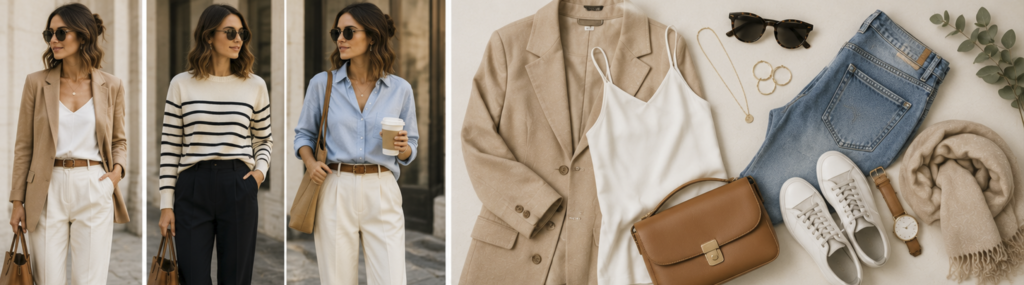
If there’s one principle that separates women who always look elegant from women who don’t, it’s fabric intelligence. The single fastest way to elevate any casual outfit is to pay attention to what your clothes are made of. A pair of wide-leg trousers in a fluid crepe will always look more expensive than the same silhouette in stiff polyester — even if the former cost less. A cotton-modal blend T-shirt will drape differently and feel different against your skin than a purely synthetic version.
This doesn’t mean you need to exclusively shop luxury labels. Far from it. But it does mean training yourself to feel fabrics before you buy them, to notice how they move and drape and photograph. The materials that tend to read as effortlessly elegant — linen, silk, cashmere, viscose, high-quality cotton blends, fine wool — are ones that have natural weight and movement. They hang well. They don’t cling awkwardly. They photograph beautifully even in a casual context.
In the current moment, there’s a particular love for fabrics that have slight texture — bouclé, ribbed knits, brushed cashmere, textured linen. These add depth and interest to otherwise simple silhouettes, which means you can build an entirely monochrome outfit in a single neutral tone and still have visual complexity because the texture does the work.
The Colour Story
Colour is deeply personal and I’ll never tell you that you need to stick to a specific palette to look elegant. But I will say this: women who look effortlessly put-together tend to have a personal colour story — a relatively consistent range of tones that work together and work for them. Not necessarily neutrals only, though neutrals do have a kind of quiet power. But colours that belong to the same emotional family.
What does that mean in practice? It means if you love colour, you might gravitate toward warm, saturated tones — terracotta, rust, deep mustard, forest green — rather than mixing cool pastels with bright neons in the same outfit. Or you might have a wardrobe that’s primarily in cool neutrals but with occasional pops of one specific accent colour that runs through everything you own. The point is cohesion. Not rigid colour matching, but a sense of visual harmony that makes even casual outfits feel considered.
In 2026, the tones dominating the elegant streetwear aesthetic are rich and warming. Chocolate brown in all its variations — from dark espresso to milky latte — is having an extended moment that shows no signs of ending. Warm ivory and off-white have replaced stark white as the preferred light neutral. Deep burgundy and wine tones are entering the space in a way that feels both classic and completely current. And quiet sage green has settled in as a forever neutral for women who want something other than beige.
The Fit Equation
Here is the rule that I wish someone had told me years earlier: in elegant casual dressing, proportions matter more than silhouette. What this means is that it’s not about whether something is fitted or loose — it’s about how the loose and the fitted elements relate to each other within a single outfit.
The most enduring formula in casual chic dressing is contrast: one relaxed piece balanced with one more fitted piece. A fluid, wide-leg trouser with a sleek fitted top. An oversized blazer with slim straight-cut jeans. A billowy silk blouse with tailored shorts. This principle works because it creates visual interest without effort, and it stops an outfit from feeling either too casual (everything loose and shapeless) or too try-hard (everything fitted and structured).
This is also why the way you wear your clothes matters as much as the clothes themselves. A blazer worn open over a simple tee reads completely differently to the same blazer buttoned up. A silk blouse half-tucked into trousers has an entirely different energy to a blouse worn fully tucked or worn out. Learning to manipulate these small details — the tuck, the roll, the drape — is what separates ‘putting on clothes’ from ‘getting dressed.’
The Wardrobe Edit: Key Pieces Every Casually Chic Woman Should Own
I want to be clear upfront: this is not a prescriptive list. Not every piece here will belong in every wardrobe, and that’s entirely as it should be. Consider this more like a menu — a considered selection of the garments and accessories that consistently appear in the most elegant casual wardrobes, from which you choose the ones that actually align with your real life.
The Perfect-Fit Trousers
I cannot overstate how transformative the right pair of trousers can be. And I mean the right pair — not just well-cut trousers in general, but the specific cut that works on your particular body with your particular height, hip shape, and preferred heel height. It’s worth spending serious time finding this piece because once you have it, getting dressed becomes so much easier.
In 2026, the trouser shapes doing the most work in elegant casual wardrobes are the wide-leg, the straight-leg, and the barrel. Wide-legs — particularly in fluid fabrics like crepe, satin-back crepe, and fluid suiting — have become almost a uniform for women who’ve figured out the casual chic code. They’re incredibly comfortable, they photograph beautifully, and they create that long, fluid line that elevates even the most basic top. The key is getting the length right: they should graze or just break at the floor with your chosen shoe, which means if you want to wear them with flat shoes (which is entirely valid and often more chic than heels), you might need them hemmed accordingly.
Straight-leg trousers occupy a slightly more versatile middle ground. They work with almost everything — sneakers, ballet flats, loafers, heeled boots — and they have an ageless quality that makes them feel relevant season after season. In a warm camel, a deep chocolate, or a classic navy, a well-fitted straight-leg trouser is one of the most reliable pieces in a casual chic wardrobe.
The Knit That Does Everything
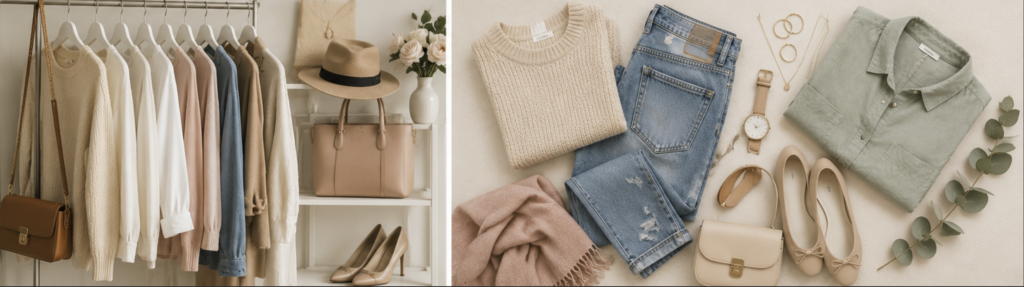
There is a type of knitwear that exists in perfect harmony with elegant casual dressing, and it’s not the thin, slightly scratchy jumper from a fast fashion chain. It’s a properly substantial knit — whether that’s a fine-gauge cashmere in a classic crewneck or V-neck, a ribbed wool-blend turtleneck with real weight to it, or an oversized mohair-blend that photographs like a dream and feels like wearing a very stylish cloud.
The knit is the casual chic piece par excellence because it is inherently comfortable while also being inherently luxurious-looking when made well. A beautiful, well-fitted cashmere crewneck in oatmeal or camel, worn with a well-cut pair of straight-leg trousers and a leather loafer, is one of the most elegant outfits a woman can wear. It requires almost no thought. It photographs beautifully. It’s comfortable enough to wear all day. And it reads as completely intentional and polished.
Mohair-blend knits in particular have had a major resurgence and are deeply embedded in the current elegant aesthetic. Their slightly fuzzy, romantic texture photographs extraordinarily well, gives instant depth to an outfit, and has a quiet feminine energy that feels very of-the-moment without being trend-dependent.
The Coat That Changes Everything
If there is a single outer layer that can elevate the most casual outfit to something that reads as genuinely elegant, it is a beautifully constructed coat. Not necessarily an expensive coat — though quality does show here more than almost anywhere else — but a coat with the right weight, the right drape, and the right proportions for your body.
The camel coat has become so synonymous with quiet luxury and elegant casualness that it’s almost become a cliché — and yet it remains one of the most reliably elegant pieces a woman can own, because it works. A knee-length or midi-length camel coat thrown over literally anything — jeans and a white tee, a slip dress, wide-leg trousers and a knit — immediately pulls the outfit into a higher register. The secret is the structure of the coat itself: it needs to have enough weight and construction that it hangs properly rather than looking like a particularly long cardigan.
In the current moment, the oversized overcoat — particularly in chocolate brown, warm grey, or deep navy — is working beautifully as a statement piece. The key to making an oversized coat look elegant rather than shapeless is the same principle we discussed earlier: contrast. Wear it over something more fitted or streamlined underneath, and let the coat be the deliberate, voluminous element of the outfit.
The Shoe Situation
Shoes are where a lot of otherwise elegant casual outfits either soar or quietly fall apart, and I think it’s because so many of us grew up thinking that elegance required height. That heels were the default dress-up shoe and flats were the compromise you made when your feet hurt. This is an idea that the current fashion landscape has very thoroughly dismantled, and I couldn’t be more grateful.
The shoes doing the heaviest lifting in elegant streetwear wardrobes right now are loafers, ballet flats, and clean-lined ankle boots. Loafers — particularly in leather, suede, or a polished patent — are arguably the most versatile shoe in this space. They can be dressed up or down with equal ease, they work with trousers, skirts, and dresses, and they have an inherent chic quality that somehow makes the whole outfit look more put-together. The horsebit loafer in particular has become a quiet classic, the kind of shoe that reads as expensive even in versions that aren’t.
Ballet flats had their enormous comeback in the past few years and have settled into wardrobe permanence, which is exactly where they belong. They’re elegant, they’re comfortable, and in the right proportions — a slightly squared-off or elongated toe rather than a very rounded one — they have a genuine refinement. Slingback flats in particular have a vintage-tinged elegance that works beautifully with midi skirts, wide-leg trousers, and even straight-leg jeans.
The Bag as a Finishing Detail
Bags could have their own entire guide, but let me give you the distilled version. In the casual chic aesthetic, the bag should feel like a deliberate choice rather than an afterthought, and it should be in proportion with the outfit — neither so tiny it’s purely decorative nor so enormous it overwhelms everything else.
The structured tote remains a cornerstone of elegant casual dressing because it is genuinely practical and genuinely beautiful. A well-made leather tote — in camel, cream, chocolate, or black — works with almost everything and has a kind of working-woman elegance that never feels overdressed. The shoulder bag in a medium size, particularly in a soft, unstructured leather that develops its own character over time, has a similar versatility with a slightly more relaxed energy.
What’s worth paying attention to right now is the rise of interesting texture and detail in bags as a way of adding visual interest to otherwise neutral outfits. A bag in woven leather, quilted fabric, or interesting suede can be the one element that lifts a monochromatic outfit from simple to genuinely interesting. This is where you can have some fun with your accessories without disrupting the overall elegance of the look.
Outfit Formulas That Always Work: The Reliable Combinations
I have a confession: I’m a formula dresser. Not in a boring, predictable way — but in the sense that I’ve identified a handful of outfit combinations that I know work, that I genuinely love, and that I can execute with minimal mental effort on any given morning. And I’m absolutely evangelical about the value of having these in your life, because they are the thing that saves you from standing in front of your wardrobe for twenty minutes at 7am.
These aren’t rigid prescriptions. They’re more like reliable starting points — proven combinations that you can then personalise with your own accessories, colour preferences, and the specific pieces you own. Think of them as the skeleton. You provide the flesh.
Formula One: The Elevated Basics
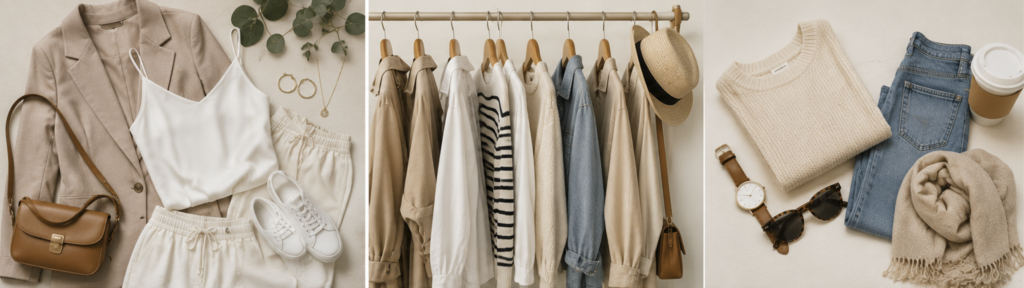
The most foolproof casual chic formula is simply elevating your basics. By which I mean: take the most ordinary outfit in the world — jeans and a T-shirt — and do it in the most beautiful, considered way possible. The jeans should fit impeccably, be in a current but not aggressively trendy cut, and be in a wash that reads as clean and intentional. The T-shirt should be in a high-quality fabric that doesn’t pill or go transparent after three washes, with a neck shape that works for your body, and it should be properly fitted — not tight, but not borrowed-from-someone-twice-your-size.
Add a beautiful pair of loafers or ballet flats. Carry a structured leather bag. Put on a simple gold necklace and maybe a subtle ring. Walk out the door. That’s it. That’s the formula, and it works because every element has been chosen with care, even though the combination itself is deeply ordinary. The magic is entirely in the quality and fit, not in any spectacular individual piece.
Formula Two: Tailoring Made Easy
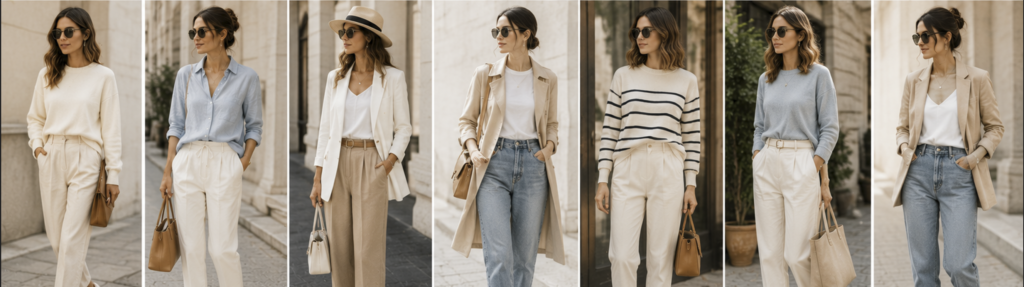
The second formula involves taking tailored pieces out of formal contexts and wearing them in entirely casual ways. A blazer worn over a simple white tee and straight-leg jeans. A pair of wide-leg suit trousers worn with a fitted knit and sneakers. A tailored shirt in a beautiful fabric — silk, fine cotton, or even a high-quality poplin — worn half-tucked into wide-leg trousers with the collar open.
This formula works because tailored pieces have inherent structure and intention built into them. Even when they’re worn casually, they bring a sense of polish to the outfit that’s hard to achieve otherwise. The contrast between the formal element (the blazer, the suit trouser, the structured shirt) and the casual element (the tee, the knit, the sneaker) creates that perfectly calibrated tension that is the hallmark of elegant casual dressing.
Formula Three: The Monochrome Tone Palette
Dressing in tonal monochrome — meaning an outfit that’s composed of different shades of the same colour family — is one of the easiest ways to look instantly elegant. Not necessarily head-to-toe identical colour (which can look more costume-y than chic) but a range of related tones that create a cohesive, considered whole.
A chocolate brown ensemble, for example, might include a pair of rich brown wide-leg trousers, a cream or ivory lightweight knit, a tan leather belt, and caramel-toned loafers. Everything reads within the warm brown family, but it’s not matchy-matchy in a way that feels overly deliberate. An all-ivory look might include a cream ribbed knit, off-white wide-leg trousers, and nude ballet flats. A green tonal outfit might pair olive trousers with a sage knit and tan loafers (tan reading as a warm neutral rather than strictly in the green family).
The reason this works so reliably is that when you remove colour contrast from an outfit, the eye moves to other things — to texture, to fit, to proportion — and those are exactly the elements that communicate real elegance. Tonal dressing is also the reason why women with strong personal style often look incredible in the simplest outfits: they’ve removed the noise and left only the signal.
Formula Four: One Statement, Everything Else Quiet
This is the formula for when you want to wear something interesting without the outfit tipping into ‘too much.’ The principle is simple: choose one element that makes a statement — a beautiful printed skirt, a bold coloured coat, an interesting textured knit, a pair of wide-leg trousers in a rich jewel tone — and build everything else around it in the quietest possible way.
The statement piece doesn’t need to be loud or brightly coloured. It just needs to be the visual focal point. An incredible textured camel coat is a statement piece even though camel is technically a neutral. A wide-leg trouser in deep burgundy is a statement piece. A printed silk scarf worn as a top is a statement piece. The point is that it draws the eye, and everything else in the outfit is designed to support it rather than compete with it.
This formula is particularly useful for women who love interesting individual pieces but find that they struggle to put them together without the outfit feeling cluttered. The answer, almost always, is radical restraint in everything except the hero piece. Let the statement breathe.
The Role of Beauty in Elegant Streetwear: The Complete Picture
Fashion and beauty are not separate conversations. The way you wear your hair, the makeup you choose, even the way you carry yourself — these are all part of the same aesthetic picture. And in elegant casual dressing, beauty plays a very specific role: it completes the look without dominating it.
What I’ve noticed about the women who consistently nail the casual chic aesthetic is that their beauty looks almost always have one thing in common: they look cared for without looking like they’re trying very hard. There’s a version of this that sounds like ‘no-makeup makeup’ and in some ways that’s accurate, but it’s a little more nuanced than that. It’s less about wearing minimal makeup and more about wearing makeup that enhances without transforming.
The Skin-First Philosophy
The foundational beauty shift of the past few years — and one that has absolutely settled into the mainstream in 2026 — is the complete prioritisation of skin over coverage. The idea that a luminous, healthy-looking complexion is the most elegant beauty statement you can make has become cultural consensus, and it’s influenced everything from how people shop for skincare to how they apply foundation.
The clean girl aesthetic, which first emerged on social media and has since evolved into something more sophisticated, is built almost entirely on this premise. Slick, healthy-looking skin. Eyebrows that look groomed and defined rather than filled and drawn. A light wash of colour — either on the eyes or the lips, rarely heavily on both. Flushed, healthy-looking cheeks. The overall impression is someone who has naturally glowing skin and has simply amplified rather than concealed it.
In terms of actual products, this translates to investing in your skincare before your makeup. A truly well-moisturised, regularly exfoliated, properly SPF-protected complexion will wear any makeup better and will look more elegant bare-faced than a complexion that’s been covered with heavy foundation but not cared for underneath it. The most elegant beauty look starts with the skin, and the skin starts with the routine.
Hair as a Style Element
The hair approaches most closely aligned with elegant casual dressing in 2026 are not elaborate or heavily styled. They’re beautiful in their simplicity, which is not the same as being careless. The most common approach is an elevated version of natural texture — a blowout that’s been left to settle into soft waves, braids that feel artisanal rather than precise, a bun that’s gathered with visible intention but without aggressive sleekness.
The slicked-back bun remains perhaps the most consistently chic hair option for casual elegant dressing, because it’s simultaneously effortless and put-together, it photographs beautifully from every angle, and it works with essentially every outfit. The key is getting the tension right — too tight and it looks severe; too loose and it reads as genuinely undone rather than intentionally casual. The sweet spot is a medium tension with a few soft pieces around the face.
Long, loose waves or a simple middle-parted blowout are the other reliable approaches for women who prefer their hair down. The key word is ‘soft’ in both cases — soft waves rather than tight curls, a blowout with visible movement rather than aggressively flat-ironed straightness. The aesthetic is always warmly romantic and natural rather than overly polished.
Dressing for Your Actual Life: Casual Chic from Morning to Evening
One of the most practical arguments for building an elegant casual wardrobe rather than a wardrobe with strict categories for every occasion is versatility. Life in 2026 doesn’t divide neatly into ‘work’ and ‘weekend’ and ‘evening’ the way it might have for previous generations. We move between contexts constantly — a coffee meeting, a few hours at a desk, a spontaneous late lunch, a gallery opening we almost forgot about, dinner with friends. Our wardrobes need to move with us.
The elegant casualwear approach handles this beautifully, because its core pieces are designed to transition rather than to belong to a single moment. A well-cut pair of wide-leg trousers with a beautiful knit is entirely appropriate for a morning work call, for wandering around a city in the afternoon, and for a dinner reservation in the evening — if you want to take it up a notch for dinner, you add a more elegant shoe and a beautiful bag, and that’s your transition done in thirty seconds.
The Morning Look: Ease Without Sacrifice
The most important thing I’ve learned about getting dressed in the morning is that your outfit should require the minimum number of decisions. This doesn’t mean dressing boringly — it means having a wardrobe of pieces that work together so naturally that decisions make themselves. You reach for the cream ribbed knit and you already know it works with your chocolate wide-legs and your tan loafers. You don’t have to think about it.
For morning dressing specifically, the looks that consistently work in the casual chic space are the ones built around your most comfortable high-quality pieces. The perfect trouser with a favourite knit. Straight-leg jeans with a beautiful silk or cotton blouse. A simple yet well-made jersey midi dress with a leather belt and ballet flats. The goal is something that feels as easy as loungewear but looks considered and pulled-together.
Coffee in your outfit feels like a metaphor here — you want it to be smooth. No irritating waistbands. No pulling or pinching. No shoes that require a degree in origami to put on. The morning outfit should slide on easily and immediately make you feel ready to face the world, not like you’re preparing for battle.
The Weekend Aesthetic: Refined Leisure
Weekend dressing is where the casual chic formula really gets to express itself, because the weekend is where genuine casual — truly unstructured, truly comfortable — is the context, and ‘chic’ has to do all the heavy lifting. The difference between a woman who looks elegantly casual on a Saturday morning and one who just looks like she’s running errands is almost entirely in the quality and fit of the pieces.
Saturday morning refined leisure might look like: beautifully cut wide-leg linen trousers in ivory or tan, a well-made oversized tee or a lightweight linen shirt worn open over a simple camisole, and white leather trainers or simple leather sandals. It looks completely casual. It is completely casual. But because every piece fits properly and is made of quality material, it reads as effortlessly elegant.
Sunday might call for the midi dress in a soft jersey fabric — not a bodycon or a formal dress, but the kind of effortless knit dress in a beautiful neutral that works with a denim jacket and flat sandals during the day and becomes a different outfit entirely with a simple cardigan and loafers for brunch. The weekend wardrobe is built on pieces that understand the energy of leisure without surrendering the elegance.
The Evening Transition: Same Wardrobe, Different Story
The real test of an elegant casual wardrobe is how well it transitions to evening without requiring an entirely new outfit. And the answer, when the wardrobe is built correctly, is: beautifully. Because the pieces that make up a casual chic wardrobe are inherently elegant in their materials and construction, they almost always have an evening mode.
The transition is almost never about the clothes themselves — it’s about the styling. Wide-leg trousers worn with a simple knit for a day meeting become an entirely different proposition when the knit is replaced by a slip of a camisole in silk or satin, a delicate gold necklace is added, and the loafers are swapped for a low-heeled slingback. The same wide-leg trousers. A completely different occasion.
A silk midi skirt worn with a fitted knit and ballet flats in the day becomes a genuinely evening-ready outfit when the ballet flats become strappy heeled sandals and a simple blazer is added over the knit. The key is thinking of your wardrobe as a system of interchangeable parts rather than as a collection of complete outfits — it multiplies your options exponentially and makes the transition from day to evening a matter of minutes rather than a full re-dress.
The Accessory Edit: Small Choices That Make a Big Difference
There is a version of accessorising that can make even the most considered outfit look cluttered and confused, and there is a version that elevates a simple outfit into something genuinely beautiful. The difference is mostly in restraint — which is ironic, because restraint is the thing that doesn’t come naturally to most of us when we’re standing in front of a mirror with a jewellery box in hand.
The guideline I always return to: accessories should feel like punctuation, not decoration. They should support and complete the sentence of your outfit, not add new sentences. Which means that most of the time, you need fewer of them than you think. One beautiful, considered pair of earrings will always read as more elegant than three pairs of mismatched studs. A single delicate necklace will always look more refined than three necklaces layered together, unless you’re doing layering very deliberately and very well.
Jewellery: The Quiet Luxury Approach
The jewellery aesthetic that aligns most naturally with casual chic dressing in 2026 is what I’d describe as ‘quiet gold.’ Not ostentatious, not performatively minimal, but a considered collection of pieces in warm gold tones that feel personal and worn-in. The 14-carat gold hoop that’s slightly more substantial than a basic huggie. The delicate chain necklace with a single small pendant. The signet ring or the thin gold band. A simple bangle in a slightly irregular, hand-hammered finish.
These pieces work because they look both expensive and effortless at the same time — which is the whole goal. They suggest that you’ve collected them over time rather than bought them in a single batch, which gives them a sense of history and personality that fashion jewellery rarely achieves. And they photograph beautifully, which matters in a world where so many of us are at least occasionally documenting our outfits.
The recent resurgence of interesting, somewhat sculptural fine jewellery is also worth noting — pieces with a slight artistic quality to them, an unusual shape or a refined boldness that makes them a statement piece without being loud. A pair of beautifully crafted 18-carat gold earrings with a slightly abstract shape can be the most interesting element in a very simple outfit. This is where investing in one or two genuinely special pieces, rather than accumulating a large collection of costume jewellery, pays dividends.
The Scarf: A Chronic Underutilised Tool
I am so passionate about the role of a beautiful scarf in casual chic dressing that I might need a whole separate article. But the short version: a silk or cashmere scarf in a beautiful print or a luxurious solid is one of the most versatile and impactful accessories you can own, and most women are massively underusing it.
Worn around the neck over a blazer in the French style, it adds an immediate note of Parisian elegance. Tied at the top of a bag as a bag charm — a trend that has settled into a genuine wardrobe behaviour rather than a fleeting moment — it adds colour and personality to even the most understated look. Worn in the hair as a headband or tied loosely around a ponytail, it elevates even the simplest hairstyle. Worn as a top tied at the waist or front, it becomes a fashion statement in itself.
The scarves that reward you most in this context are ones in real silk with interesting prints or in fine cashmere in a beautiful solid colour. They’re one of the accessories where genuine quality really shows — a silk scarf drapes and behaves completely differently to a polyester alternative, and the difference is visible from across a room.
Sunglasses: The Instant Polish Hack
Sunglasses are genuinely magical in casual elegant dressing because they have an almost unreasonable ability to make any outfit look more intentional and more expensive than it is. A truly excellent pair of sunglasses — with properly dark, quality lenses and frames that suit your face shape — can elevate jeans and a tee to something that photographs like a fashion editorial.
The frames doing the most work in the elegant casual space right now tend toward the quieter end of the spectrum: tortoiseshell in warm brown tones, matte black with subtle gold detail, warm beige or sand frames, or a deep burgundy-tinted acetate. The shapes are either slightly oversized and square-ish (a modern evolution of the classic aviator) or gently rounded in the manner of vintage frames — never too extreme, never too on-trend.
The Social Media Effect: Navigating Style Inspiration Without Losing Yourself
We need to talk about Pinterest boards and Instagram saves and TikTok outfit inspo, because I think the relationship between social media and personal style is one of the most complicated elements of getting dressed in 2026. On one hand, we have access to more genuine style inspiration than any generation of women before us. On the other hand, we’re also more likely than any generation before us to buy things impulsively, to mistake someone else’s aesthetic for our own, and to end up with a wardrobe full of beautiful individual pieces that somehow never work together.
The Pinterest board is not the problem. The inspiration image is not the problem. The problem is when we approach these things without the filter of self-knowledge — when we save something because it’s beautiful rather than because it genuinely resonates with who we are and how we live. A stunning editorial image of a woman in a sculptural white coat on a marble staircase might be objectively gorgeous and completely irrelevant to your actual life.
Curating Your Own Aesthetic: The Method
The approach that has served me best is creating a very specific, highly edited personal style file — not a Pinterest board with 4,000 pins, but a small collection of images (twenty to thirty maximum) that genuinely reflect my own aesthetic at its best. Images not of clothes I wish I could buy, but of outfits I could actually recreate. Images that reflect the kind of life I actually live rather than the life I’m romanticising about having.
When you look at a tightly edited collection of images that you’ve chosen with genuine self-awareness, patterns emerge. You’ll see the same silhouettes appearing over and over. The same tonal range. The same kinds of shoes, the same approach to accessories. These patterns are telling you what your actual personal aesthetic is, which is infinitely more valuable than any style quiz or professional wardrobe consultation.
From this edited file, you can start to identify gaps in your existing wardrobe — pieces that appear repeatedly in the images you love but that you don’t currently own — and this becomes your actual shopping list. Not impulse purchases. Not trend items that will feel outdated in six months. Actual pieces that align with a clear, self-defined aesthetic.
The Trend Question: What to Follow, What to Skip
The best approach to fashion trends, if you’re building an elegant casual wardrobe for the long term, is to filter every trend through a single question: does this align with my existing aesthetic, or does it require me to completely change my look to accommodate it? If the answer to the second part is yes, it’s probably worth passing.
Trends that slot naturally into the casual chic aesthetic tend to be about refinements and evolutions rather than radical departures. The shift from very structured tailoring to a slightly more relaxed interpretation. The move from all-white to warmer neutrals. The evolution from minimal gold jewellery to slightly more interesting gold jewellery. These are trends you can participate in simply by buying one new piece and incorporating it into an already-functioning wardrobe.
The trends worth treating with more caution are the ones that are clearly about novelty over wearability — very extreme silhouettes, very loud prints, very specific colour combinations that clash with everything else you own. These can be incredibly beautiful in isolation and deeply impractical in a real wardrobe. If you genuinely love a trend that doesn’t align with your aesthetic, a better approach than rebuilding your wardrobe around it is to experiment with one carefully chosen piece — a bag, a scarf, a single statement item — and see whether it actually works in your real life before committing further.
The Confidence Variable: Why Wearing Your Clothes Matters as Much as What You Wear
There is a woman you’ve probably met — maybe multiple times — who can walk into a room wearing the most basic possible combination of clothes and somehow radiate an elegance that other women with objectively more beautiful outfits can’t match. She might be wearing simple straight-leg jeans and a white tee. She might be in a classic black dress you’ve seen a hundred times. And yet something about the way she wears it makes it look like fashion.
This is the confidence variable, and it’s one of the most significant factors in how clothing registers in the world. Clothes worn with genuine ease and self-possession look better than clothes worn with uncertainty. The woman who is comfortable in what she’s wearing moves differently, stands differently, engages differently — and all of these things register aesthetically in ways that are almost impossible to fake with even the most perfectly chosen outfit.
The good news is that this kind of confident ease in dressing is not a personality trait you either have or don’t have. It’s a relationship you build with your wardrobe over time, as you develop a clearer understanding of what genuinely works for you and as you stop trying to wear things that don’t. The more your wardrobe actually aligns with who you are, the easier it becomes to wear it with ease. Because you’re not performing a version of yourself — you’re just being yourself, in clothes that happen to express that beautifully.
Getting to Ease: The Practice
The practical route to sartorial ease is, somewhat counterintuitively, through doing less. Buying less. Owning less. Having a smaller wardrobe of better-loved, better-fitting pieces rather than a large wardrobe of things you sort of like. When everything in your wardrobe is something you genuinely love and feel good in, the experience of getting dressed becomes a pleasure rather than a stress. And that pleasure is visible in the way you wear your clothes.
It also involves being honest with yourself about what doesn’t work, and letting those things go. The beautiful dress that makes you feel self-conscious rather than confident. The shoes that look incredible on the hanger and uncomfortable on your feet. The coat that photographs beautifully but makes you feel stiff and overdressed in real life. These things are costing you more than their retail price — they’re cluttering your wardrobe and your mind with things that don’t actually serve you.
Elegant casual dressing, done well, is a form of self-knowledge expressed through clothing. It says: I know who I am. I know what I like. I know what makes me feel good. And I’ve built a wardrobe around those things rather than around what I think I should want or what I think other people expect of me. That knowledge, in the end, is the most elegant thing of all.
Shopping Smarter: The Investment vs. Save Framework
Let’s talk about money, because it’s impossible to have an honest conversation about fashion without doing so. The comfortable fiction that you can build a genuinely elegant casual wardrobe exclusively from budget fashion chains is, unfortunately, exactly that — a fiction. But the counterpoint myth, that you need to spend enormous amounts of money on designer pieces to look truly elegant, is equally false.
The truth is more nuanced and, I think, genuinely empowering: some pieces reward investment dramatically, and some pieces don’t. Knowing which is which saves you both money and disappointment.
Where Investment Pays
The pieces that reward investment most dramatically are the ones you wear most often and the ones where quality is immediately visible. A coat, worn potentially every day through an entire season, over the course of many years, rewards every penny of investment. The difference between a beautifully constructed wool coat in a quality fabric and an inexpensive version of the same coat is visible not just in how it looks but in how it moves, how it drapes, and how it ages. A quality coat, properly cared for, will look better at five years old than a cheap coat looked on its first day.
Similarly, leather goods — bags and shoes — reward investment because the quality of the leather is immediately apparent and because quality leather ages beautifully while poor-quality leather simply deteriorates. A well-made leather loafer or tote bag will look more expensive after a year of wearing than it did when you bought it, developing a patina and character that can’t be replicated with synthetic materials.
Knitwear is another category where investment matters enormously. Cheap cashmere pills, stretches, and loses its shape quickly. Quality cashmere, particularly from producers who use longer fibres, stays smooth, holds its shape, and remains beautiful through years of wearing. The cost-per-wear calculation on a beautiful cashmere knit that you wear fifty times a year for ten years is actually extraordinarily low.
Where Saving Is Smart
There are, equally, categories where less expensive options genuinely work without any real quality sacrifice. Basic T-shirts and simple camisoles, for instance, are pieces where a mid-range option from a quality basics brand performs essentially the same as a luxury version, particularly if you’re treating them as layering pieces rather than heroes. Fine-gauge knits in mid-price ranges from brands that focus on basics have also improved dramatically in quality in recent years.
Trend pieces that you’re trying deliberately rather than investing in are also sensible places to spend less. If you’re trying a particular silhouette or colour for the first time to see whether it actually works in your wardrobe, a mid-price version is a perfectly sensible experiment. If it doesn’t work, you haven’t lost much. If it does, you can invest in a better version later.
The framework I use is this: ask yourself how often you’ll wear it, how central it is to your look, and how immediately visible the quality is. If the answer to all three is ‘a lot,’ ‘very,’ and ‘immediately,’ invest. If the answer to any of them is more modest, a more economical option is probably fine.
A Final Thought: Elegant Streetwear Is a Practice, Not a Destination
I want to close with something that took me a long time to fully understand, and that I think is genuinely important for anyone who wants to develop their own casual chic aesthetic rather than simply borrowing someone else’s.
Personal style — real personal style, the kind that feels authentic and that evolves with you rather than being replaced every season — is not something you arrive at. It’s not an endpoint. It’s a practice, in the same way that good skincare is a practice, or fitness is a practice, or any other ongoing relationship you have with your own wellbeing. You’re always learning something new about yourself. You’re always discovering pieces that work better than you expected or that disappoint you in ways you didn’t predict. You’re always refining.
This means that the most important thing you can do for your style isn’t to buy the right pieces (though that helps) or to follow the right accounts (though that can be inspiring) or to read the right guides (though I sincerely hope this one has been useful). The most important thing you can do is to pay attention. To notice what makes you feel genuinely good and what makes you feel self-conscious. To understand why certain combinations work on you and others don’t. To give yourself permission to evolve and change rather than locking yourself into an aesthetic that no longer fits who you are.
Elegant casual dressing, elegant streetwear, casual chic — whatever you want to call it — is ultimately about this: knowing yourself well enough to dress in a way that expresses something true. It’s about choosing quality over quantity, intention over impulse, and genuine ease over performed effortlessness. It’s about building a relationship with your wardrobe that feels good, that serves your real life, and that makes you feel like yourself every single morning.
That, to me, is what getting dressed is for. And when it works — when you’ve found your version of it, the specific pieces and combinations and accessories that make you feel most authentically yourself — it’s one of the quietest, most personal, most reliable forms of joy.
Take your time with it. Enjoy the process. And remember that the most elegantly dressed woman in the room is almost always the one who looks like she genuinely loves what she’s wearing.
~ ~ ~
Casual Chic Fashion Guide for Elegant Women — ElegantStreetwear.com — 2026