
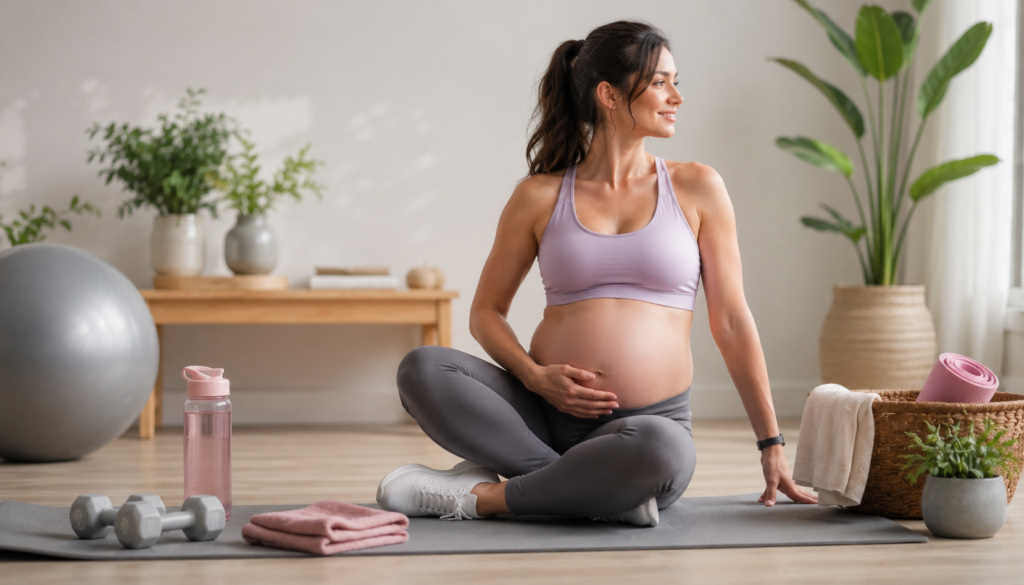
Somewhere between the excitement of a positive pregnancy test and the practical business of preparing for a baby, a familiar question tends to surface: is it still okay to exercise? For many women, this question arrives loaded with decades of conflicting advice — grandmothers who were told to rest for nine months, fitness influencers promoting intense workouts well into the third trimester, and everything in between. The truth sits, as it usually does, somewhere more nuanced and more reassuring than either extreme.
For the majority of women with uncomplicated pregnancies, staying physically active isn’t just permitted — it’s actively encouraged by major medical organizations, including the American College of Obstetricians and Gynecologists (ACOG), which recommends that pregnant women without contraindications engage in at least 150 minutes of moderate-intensity aerobic activity per week. Exercise during pregnancy has been associated with reduced risk of excessive gestational weight gain, lower rates of gestational diabetes, reduced back pain, better mood, improved sleep, and in some studies, shorter labors and fewer cesarean deliveries. And yet, pregnancy is also a time of real physiological change, and the way exercise is approached needs to evolve alongside those changes.
This guide walks through what fitness during pregnancy can look like, trimester by trimester, activity by activity, while holding two truths simultaneously: movement is broadly beneficial, and every pregnancy is different. There is no single universal program that fits every pregnant woman, and this guide is not a substitute for individualized medical guidance — particularly for women with pregnancy complications, high-risk conditions, or specific concerns raised by their own healthcare provider.
Why Movement Can Be Beneficial During Pregnancy
The physiological case for exercise during pregnancy is substantial. Regular aerobic activity helps maintain cardiovascular fitness during a period when blood volume increases dramatically and the heart works considerably harder. It supports healthy blood sugar regulation, which matters given that gestational diabetes affects a meaningful percentage of pregnancies and is influenced by both genetics and lifestyle factors. Strength training helps counteract some of the postural changes pregnancy introduces — the forward-shifting center of gravity, the loosening of ligaments, and the added load on the lower back — by keeping supporting muscles engaged and capable.
There’s also a substantial mental health dimension. Pregnancy involves significant hormonal shifts, and rates of anxiety and depression during pregnancy are notably higher than many people realize — research suggests roughly one in seven to one in ten pregnant women experience clinically significant depressive symptoms. Exercise is one of the more robust, well-studied interventions for supporting mood, partly through the release of endorphins and partly through the simple structure and sense of agency that a consistent routine provides during a time when so much feels physically out of one’s control.
None of this means every pregnant woman must exercise, or that a woman who doesn’t exercise during pregnancy is doing something wrong. Nausea, fatigue, complications, and simple preference are all valid reasons a woman might exercise less during pregnancy than she otherwise would. The framing here is about what’s possible and often beneficial for women who are able and interested, not a mandate.
Understanding Pregnancy and Physical Activity
Before getting into trimester-specific guidance, it’s worth understanding a few overarching principles that apply throughout pregnancy. First, the general medical consensus — reflected in ACOG guidance — is that women who were exercising before pregnancy can generally continue their routines with modifications as needed, and women who were not previously active can generally begin a moderate exercise program during pregnancy, ideally starting gently and building gradually.
Second, pregnancy introduces physiological changes that affect how exercise feels and how the body responds to it. Relaxin, a hormone that increases joint laxity to help prepare the pelvis for birth, affects ligaments throughout the body — not just the pelvis — which means joints may feel less stable than usual, and traditional stretching cues (like pushing into a deeper stretch) may need to be approached with more caution, since overstretching an already-lax joint doesn’t build useful mobility. Blood volume increases substantially, and cardiac output rises to meet the demands of a growing fetus and placenta, meaning heart rate at any given exercise intensity tends to be somewhat higher during pregnancy than before it.
Third, the standard advice to avoid exercising flat on your back (supine) after approximately the 20-week mark exists because in this position, the weight of the uterus can compress the inferior vena cava — a major vein returning blood to the heart — which can, in some women, reduce blood flow and cause dizziness or discomfort. This is why many pregnancy-specific exercise modifications involve inclines, side-lying positions, or all-fours positions instead of flat, on-the-back movements later in pregnancy.
Exercising During the First Trimester
The first trimester often brings a mix of excitement, uncertainty, and — for many women — significant fatigue and nausea that can make even modest exercise feel like a heavier lift than it did a few weeks earlier. This is developmentally normal and worth naming clearly: if the first trimester is the period when exercise feels hardest to maintain, that’s common, not a sign of doing something wrong.
For women who feel well enough to continue their pre-pregnancy routines, the first trimester generally doesn’t require dramatic changes, since the physiological shifts that most affect exercise (the growing belly, the shift in center of gravity, more significant joint laxity) become more pronounced later. The main considerations in the first trimester are usually managing energy levels realistically, staying well hydrated (nausea can make this harder, which is worth being deliberate about), and avoiding overheating, since core body temperature regulation is a genuine consideration in early pregnancy — this generally means avoiding hot yoga, saunas, and exercising in extreme heat, particularly in the first trimester when some research has associated significant maternal hyperthermia with increased risk to fetal development.
For women just beginning an exercise routine in the first trimester, starting gently — walking, prenatal yoga, gentle swimming — and building gradually as energy allows is a sensible approach. There’s no need to “catch up” on missed workouts during weeks of significant nausea or exhaustion; the first trimester is a reasonable time to simply do what feels manageable and build from there as the second trimester (often, though not universally, a period of renewed energy) approaches.
Exercising During the Second Trimester
The second trimester is often described as the “sweet spot” of pregnancy for many women — nausea has frequently subsided, energy often improves, and the belly, while growing, hasn’t yet reached a size that dramatically limits movement. This tends to be a period when women who felt too depleted to exercise in the first trimester can pick activity back up, and when established exercisers often feel closest to their pre-pregnancy capacity.
That said, changes are underway that affect exercise selection. The growing uterus begins to shift the center of gravity forward, which can affect balance — something to be mindful of with activities involving quick direction changes, uneven surfaces, or significant balance demands. Around this time, many providers begin advising against exercises performed lying flat on the back for extended periods, given the vena cava compression concern mentioned earlier; modifications include using an incline bench, propping the upper body up with pillows, or switching to side-lying or seated variations of core and strength exercises.
This is also a good period to introduce or reinforce pelvic floor and deep core coordination work if it hasn’t already been part of the routine, since these systems are increasingly loaded as the pregnancy progresses. Prenatal-specific classes (yoga, Pilates, or general fitness classes designed for pregnancy) often become more valuable during this trimester, both because instructors are trained to offer appropriate modifications and because the community and structure can support consistency.
Exercising During the Third Trimester
The third trimester brings the most significant physical changes, and exercise typically needs to adapt accordingly — not necessarily by stopping, but by shifting toward lower-impact, more controlled, and often lower-intensity movement. The belly has grown substantially, balance is more significantly affected, joints are looser, and simple daily tasks may already feel more physically demanding, which naturally raises the relative intensity of any additional exercise.
Many women continue walking, swimming, and modified strength training well into the third trimester, sometimes right up until labor begins, and there’s nothing inherently wrong with that for women who feel well and have no complications. What typically changes is the intensity and the specific exercise selection: less running (or a shift to walking for women who were runners), avoiding exercises with a significant fall risk (given both the balance changes and the practical concern of protecting the abdomen), and generally listening more closely to the body’s signals, since fatigue, breathlessness, and general discomfort tend to increase.
It’s worth noting explicitly that some women find continuing exercise into the third trimester more comfortable than stopping — moderate movement can help with common late-pregnancy discomforts like swelling, back pain, and sleep difficulty. Others find that reducing activity feels better as the body prepares for labor. Both responses are normal, and neither is objectively “better” — this is a period for tuning into individual comfort rather than following a rigid external standard.
Walking
Walking deserves particular mention as perhaps the single most accessible and broadly appropriate form of exercise throughout all three trimesters. It’s low-impact, requires no equipment, can be easily adjusted in pace and duration, and carries minimal fall or injury risk compared to many other activities. A daily walking habit — even broken into shorter segments if a continuous walk becomes uncomfortable later in pregnancy — supports cardiovascular health, mood, and digestion, and many women find it becomes even more valuable in the final weeks as a way to stay active when other forms of exercise feel less appealing.
Swimming
Swimming and water-based exercise offer a unique advantage during pregnancy: buoyancy. The water supports a significant portion of body weight, which can relieve pressure on joints, reduce swelling, and make movement feel considerably easier, particularly in the third trimester when the added weight of pregnancy is most noticeable on land. Swimming provides a genuine cardiovascular workout with essentially no impact and minimal fall risk, which is part of why it’s frequently recommended as one of the safest and most comfortable options throughout pregnancy for women who enjoy it and have access to a pool.
Stationary Cycling
Stationary cycling offers a good cardiovascular option that removes the balance and fall-risk concerns associated with outdoor cycling, which becomes more relevant as the pregnant body’s center of gravity shifts. A recumbent bike (which offers back support and a more reclined position) can be particularly comfortable in later pregnancy. As with other activities, intensity and duration should be adjusted based on comfort and energy rather than pushed toward pre-pregnancy benchmarks.
Prenatal Yoga
Prenatal yoga classes, specifically designed with pregnancy modifications in mind, offer a combination of gentle strength work, mobility, breathing practice, and relaxation that many women find valuable throughout pregnancy. Unlike general yoga classes, prenatal yoga instructors are trained to avoid poses that involve deep twists (which can compress the abdomen), extended time on the back later in pregnancy, and overstretching that could strain already-lax ligaments. The breathing techniques taught in prenatal yoga — particularly slow, controlled breathing patterns — also have direct relevance to labor, where breath control is a genuinely useful coping tool.
Modified Pilates
Pilates, adapted for pregnancy, emphasizes core stability, postural alignment, and controlled movement, all of which are relevant to the postural changes pregnancy introduces. Prenatal-modified Pilates typically avoids exercises that involve significant abdominal crunching or twisting, which can place unwanted pressure on the abdominal wall, and instead emphasizes exercises that support rather than strain the midline. As with yoga, working with an instructor trained in prenatal modifications — or a video program specifically designed for pregnancy — is preferable to adapting a general class independently, since the specific modifications matter.
Strength Training
Strength training can generally continue throughout pregnancy with appropriate modifications, and there’s good reason to maintain it: strength supports the postural and structural changes pregnancy introduces and helps preserve muscle mass and functional capacity for the physically demanding postpartum period ahead.
Modifications typically include avoiding exercises performed flat on the back after roughly 20 weeks, being more cautious with exercises that require significant balance (especially as the belly grows), potentially reducing load somewhat as joint laxity increases (since very heavy loads on unstable joints carry more injury risk during pregnancy), and paying close attention to breathing — specifically, avoiding breath-holding during lifts (the Valsalva maneuver), since this increases intra-abdominal pressure in a way that may not be ideal for a system already under increased pressure from the growing uterus. Exhaling during the exertion phase of a lift, rather than holding the breath, is a commonly recommended adjustment.
Mobility and Stretching
Gentle mobility work remains valuable throughout pregnancy, though the approach to flexibility needs some adjustment given increased joint laxity from relaxin. Rather than pushing into deeper and deeper stretches (chasing increased flexibility, which isn’t really the goal here), pregnancy-appropriate mobility work focuses more on maintaining comfortable range of motion and relieving tension — particularly in the hips, lower back, and upper back, all of which tend to feel tighter or more strained as posture shifts.
Balance and Posture
As the pregnant body’s center of gravity shifts forward, balance genuinely changes — this isn’t just a perception, it’s a measurable biomechanical shift. This has practical implications for exercise selection (favoring stable, supported positions over activities requiring precise balance, like certain yoga poses or activities on uneven or narrow surfaces) and for general daily awareness (being more mindful on stairs, wet floors, or uneven ground).
Postural awareness also matters considerably. Many pregnant women develop an exaggerated lower back curve (lordosis) as the belly grows, which can contribute to lower back pain. Consciously practicing good posture — engaging the core gently, avoiding locking the knees while standing, and being mindful of how weight is distributed — can meaningfully reduce discomfort, and this is an area where physical therapy, if back pain becomes significant, can offer targeted, individualized guidance.
Breathing and Relaxation
Breathing practice serves multiple purposes during pregnancy: it supports the pelvic floor and deep core coordination discussed throughout this guide, it’s a genuinely useful relaxation and stress-management tool during a time of significant physical and emotional change, and it builds skills directly transferable to labor, where controlled breathing is one of the most widely taught coping strategies. Practicing slow, diaphragmatic breathing — inhaling to expand the belly and ribs, exhaling slowly and fully — for even a few minutes daily can be a meaningful addition to a pregnancy fitness routine, independent of any other exercise.
Pelvic Floor Awareness
The pelvic floor takes on increasing significance throughout pregnancy, as it bears more weight from the growing uterus and will play a central role in labor. Continuing pelvic floor coordination work — both strengthening (contraction) and relaxation (release) — supports continence during pregnancy (when many women experience some degree of urinary leakage, particularly with coughing, sneezing, or jumping, due to the added pressure) and may support labor preparation, since the ability to consciously relax the pelvic floor is relevant to the pushing stage of labor. Many providers recommend pelvic floor physical therapy during pregnancy, not only for women experiencing symptoms like leakage or pelvic pain, but as a proactive measure.
Core Training and Appropriate Modifications
Core training during pregnancy requires real adaptation, not just avoidance. As the abdominal muscles stretch to accommodate the growing uterus, the two sides of the rectus abdominis (the “six-pack” muscle) naturally separate somewhat along the connective tissue at the midline — a normal process called diastasis recti that occurs to some degree in the majority of pregnancies. Traditional crunches and sit-ups, which involve significant abdominal flexion, can place additional strain on this already-stretching connective tissue and are generally discouraged during pregnancy, particularly in the second and third trimesters.
Instead, core training during pregnancy typically emphasizes deep stabilization work: modified planks (often performed on an incline or with knees down to reduce load), bird dogs, seated or standing Pallof presses, and breath-coordinated core engagement exercises. The goal shifts from building visible abdominal definition (which isn’t really achievable or particularly relevant during pregnancy anyway) to maintaining functional stability and setting up favorable conditions for postpartum core recovery.
Hydration
Hydration needs increase during pregnancy, both because blood volume expands substantially and because amniotic fluid, increased perspiration, and other physiological changes all draw on fluid reserves. General guidance suggests around 10 cups (about 2.3 liters) of total fluid daily during pregnancy, with additional intake during and after exercise, particularly in hot weather. Dehydration during pregnancy can contribute to symptoms like headaches, dizziness, and in some cases, has been associated with contractions, which is part of why staying consistently hydrated — rather than only drinking when thirsty — is emphasized during pregnancy specifically.
Nutrition and Recovery
Nutrition during pregnancy needs to support both the growing baby and the mother’s own increased physiological demands, and exercise adds another layer of energy requirement on top of that. Most healthy-weight women need only a modest increase in daily caloric intake during pregnancy — commonly cited figures suggest roughly no additional calories in the first trimester, about 340 additional calories daily in the second trimester, and about 450 additional calories in the third, though individual needs vary considerably based on activity level, starting weight, and other factors, which is why individualized guidance from a healthcare provider or registered dietitian is valuable.
Protein intake becomes particularly important for women who are exercising regularly during pregnancy, both to support the significant tissue growth pregnancy requires and to support muscle recovery from exercise. Iron and calcium needs also increase, and many prenatal vitamins are formulated with these increased needs in mind, though food sources remain valuable alongside supplementation.
Exercise Intensity and Listening to the Body
A frequently cited guideline for exercise intensity during pregnancy is the “talk test” — the ability to hold a conversation while exercising, which suggests the intensity is at a moderate rather than vigorous level. This is a useful, accessible heuristic precisely because heart rate zones, which are commonly used to gauge intensity outside of pregnancy, become less reliable during pregnancy due to the physiological changes in cardiac output and resting heart rate discussed earlier.
Beyond the talk test, learning to interpret the body’s signals becomes an increasingly important skill throughout pregnancy. Fatigue that feels different from typical post-exercise tiredness, unusual shortness of breath, dizziness, or a sense that something feels “off” are all signals worth heeding rather than pushing through, in a way that might be more dismissible outside of pregnancy.
How the Changing Body Affects Exercise
Beyond the specific modifications already discussed, it’s worth naming the cumulative physical reality of pregnancy: by the third trimester, many women are moving with 25 to 35 additional pounds distributed in a way that shifts posture, increases the load on joints (particularly the lower back, hips, and knees), and generally makes movements that were once automatic — getting up from the floor, rolling over in bed, bending to tie a shoe — noticeably more effortful. This is not a sign of poor fitness; it’s simply the physical reality of carrying significant additional weight in a concentrated area, and it’s worth naming explicitly so that the increased effort required for exercise later in pregnancy doesn’t feel discouraging or confusing.
Modifying Exercises as Pregnancy Progresses
A practical way to think about exercise modification through pregnancy is as a continuum rather than a series of hard cutoffs. Early pregnancy often requires minimal modification beyond managing fatigue and avoiding overheating. The second trimester introduces modifications around supine positioning and balance. The third trimester generally calls for further reductions in intensity, more attention to fall risk, and often a natural shift toward lower-impact activities like walking, swimming, and prenatal yoga as higher-impact or higher-balance-demand activities become less comfortable. This progression looks different for every woman — some continue running well into the third trimester, others shift to walking by the second — and there’s no single “correct” pace of modification.
Activities That May Require Additional Caution
Certain categories of activity warrant particular caution or avoidance during pregnancy, according to ACOG guidance: activities with a significant risk of falling (downhill skiing, horseback riding, gymnastics, competitive team sports involving contact), activities with a risk of abdominal trauma (contact sports, activities involving projectiles aimed at the torso), scuba diving (due to decompression risks to the fetus), and exercise at high altitude without prior acclimatization (relevant primarily for women who don’t already live at altitude). Hot yoga and hot Pilates are also generally discouraged due to the overheating concerns discussed earlier.
Warning Signs That Require Stopping Exercise and Seeking Medical Advice
Certain symptoms during exercise warrant stopping immediately and contacting a healthcare provider: vaginal bleeding, regular painful contractions, fluid leaking from the vagina, dizziness or feeling faint, chest pain, headache, calf pain or swelling (which can indicate a blood clot), muscle weakness affecting balance, and decreased fetal movement. These are not signs to push through or self-diagnose — they warrant prompt medical attention, and any pregnant woman experiencing them during or after exercise should contact her provider without delay.
The Importance of Professional Guidance in Higher-Risk Pregnancies
Certain pregnancy conditions and complications change the exercise calculation substantially, and women with these conditions should work closely with their healthcare provider to determine what activity, if any, is appropriate. These include (but aren’t limited to) certain heart or lung conditions, cervical insufficiency, persistent bleeding, placenta previa after a certain gestational age, preeclampsia or pregnancy-induced hypertension, and severe anemia. This is precisely why this guide, and any general pregnancy fitness resource, cannot substitute for individualized medical guidance — a woman’s own provider has the full clinical picture that a general guide simply cannot account for.
Common Pregnancy Fitness Myths
A handful of persistent myths deserve direct correction. The idea that pregnant women shouldn’t raise their heart rate above a specific fixed number (commonly cited as 140 beats per minute) has been largely abandoned in current medical guidance, since heart rate response to exercise varies too much between individuals for a single number to be meaningful; the talk test is now generally considered more useful. The idea that exercise during pregnancy increases miscarriage risk isn’t supported by evidence for women with uncomplicated pregnancies engaging in moderate activity. The idea that women who didn’t exercise before pregnancy shouldn’t start during pregnancy is also inaccurate — beginning a moderate exercise program during pregnancy is generally considered safe and beneficial for most women, ideally starting gently. And the notion that pregnant women need to “eat for two” in a literal caloric sense overstates the actual increased caloric needs, which are far more modest than that phrase suggests.
How to Remain Active Without Putting Pressure on Yourself
Perhaps the most important mindset shift for pregnancy fitness is releasing the idea that this is a period for achievement or progress in the traditional fitness sense. Pregnancy is not the time to chase personal records, and a workout that would have felt easy pre-pregnancy may feel genuinely challenging now — that’s expected, not a sign of declining fitness. Reframing the goal from “improvement” to “maintenance and comfort” tends to reduce frustration considerably. Some days will feel strong and energized; others will call for nothing more than a short walk or a few minutes of stretching, and both are legitimate.
Creating a Realistic Weekly Movement Routine
A flexible framework — adjustable to trimester, energy level, and individual comfort — might include daily walking (10 to 30 minutes, broken up as needed), two to three sessions of modified strength training per week, one to two sessions of prenatal yoga or dedicated mobility and breathing work, and swimming as an option whenever access and enjoyment align. This is not a rigid prescription; it’s a starting template meant to be adjusted continuously based on how each week, and each day, actually feels.
Maintaining Confidence and Body Positivity
Pregnancy brings visible, sometimes rapid physical changes that can be genuinely difficult to navigate for women who’ve spent years developing a particular relationship with their body. It’s worth naming this directly: it’s normal to have complicated feelings about a changing pregnant body, even while feeling excited about the pregnancy itself. Focusing on what the body is doing — sustaining a pregnancy, adapting remarkably to new demands — rather than exclusively on its appearance can help. So can choosing exercise for how it makes you feel (more energized, less achy, mentally clearer) rather than for any effect on appearance, since appearance-focused goals during pregnancy tend to set up standards the body isn’t meant to meet right now.
Key Takeaways
-
For most women with uncomplicated pregnancies, staying active throughout pregnancy is both safe and beneficial, supported by major medical organizations including ACOG.
-
Exercise modifications generally increase as pregnancy progresses: reduced impact, avoidance of prolonged flat-on-the-back positions after roughly 20 weeks, and more attention to balance and fall risk.
-
Walking, swimming, prenatal yoga, modified Pilates, and modified strength training are all generally appropriate activities throughout pregnancy for most women.
-
The “talk test” is a more practical intensity guideline during pregnancy than fixed heart rate targets.
-
Certain symptoms during exercise (bleeding, contractions, dizziness, chest pain, decreased fetal movement) warrant stopping immediately and contacting a healthcare provider.
-
Women with certain pregnancy complications need individualized medical guidance, since general fitness recommendations may not apply to their specific situation.
-
The goal of pregnancy fitness is maintenance and comfort, not performance or progress in the traditional sense.
Frequently Asked Questions
Can I start exercising during pregnancy if I wasn’t active before? Yes, for most women with uncomplicated pregnancies, beginning a moderate exercise program during pregnancy is considered safe and beneficial. Starting gently — with walking or prenatal yoga — and building gradually is a sensible approach, ideally after discussing your plans with your healthcare provider.
Is it safe to run during pregnancy? Many women who ran before pregnancy continue running throughout, adjusting pace, distance, and duration as needed, particularly as balance and comfort change in later pregnancy. It’s a personal decision made in consultation with a healthcare provider, especially in the third trimester.
How do I know if I’m exercising too hard during pregnancy? The talk test is a widely used guideline: if you can hold a conversation while exercising, the intensity is likely appropriate. Symptoms like dizziness, unusual shortness of breath, or a sense that something feels wrong are signals to slow down or stop.
Can exercise cause miscarriage or preterm labor? For women with uncomplicated pregnancies engaging in moderate exercise, there’s no evidence that exercise increases the risk of miscarriage or preterm labor. Women with certain pregnancy complications may be advised differently by their own provider.
Do I need to avoid all abdominal exercises during pregnancy? Traditional crunches and sit-ups are generally discouraged due to increased strain on the abdominal connective tissue, but modified core stabilization exercises (like bird dogs, modified planks, and breath-coordinated engagement) are generally appropriate and beneficial throughout pregnancy.
Final Thoughts
Fitness during pregnancy isn’t about proving anything or chasing an ideal — it’s about supporting a body that’s doing extraordinary work, in whatever way feels sustainable and good on any given day. Some pregnancies allow for vigorous, near-normal training routines right up until labor; others call for gentle walks and rest. Both are entirely valid, and neither reflects better or worse commitment to health. What matters most is staying attuned to your own body, maintaining open communication with your healthcare provider, and letting go of any external benchmark for what pregnancy fitness is “supposed” to look like.