I still remember the first time I stumbled across Fit Bottomed Girls. It was 2009, I was sitting on the floor of my tiny apartment, laptop balanced on a stack of laundry I hadn’t folded, Googling something like “how to be healthy without dieting.” I had just sworn off my third attempt at a restrictive meal plan that promised me a “new body” in 30 days. I didn’t want a new body anymore. I wanted peace with the one I had.That’s when I found Fit Bottomed Girls.The name made me laugh first. It was cheeky, bold, unapologetic — a playful nod to Queen’s 1978 anthem, but it felt like more than a joke. It felt like a quiet rebellion. In a world that constantly told women to shrink, here was a space that celebrated strength, curves, sweat, and real life.And honestly? That felt revolutionary.
Back in 2008, when founders Jennipher Walters and Erin Whitehead launched the site, the internet looked very different. Instagram didn’t exist yet. Wellness culture wasn’t the billion-dollar machine it is now. Most of the “women’s fitness” advice floating around online revolved around fast weight loss, thigh gaps, and how to get a “bikini body” in time for summer — as if our bodies had expiration dates tied to the calendar.Jenn and Erin were friends who simply wanted something better. Not perfect. Not polished. Better. They were tired of the endless cycle of deprivation, guilt, and starting over every Monday. They wanted to talk about health in a way that felt sustainable, joyful, and real. They wrote about workouts they actually did, recipes they genuinely enjoyed, and the messy, imperfect relationship they both had with their bodies.They didn’t position themselves as gurus. They weren’t promising a miracle transformation. Instead, they offered honesty.And women responded.Within months, the blog took off. It turned out that we were starving — not for another 1,200-calorie meal plan — but for validation. For someone to say, “You are not broken. You don’t need to be fixed. You can pursue health without hating yourself.”
I didn’t know it then, but I was stepping into the early waves of the body-positive movement. Long before it became a trending hashtag, Fit Bottomed Girls was quietly building a community around a radical idea: that fitness could be about feeling strong, energized, and confident, not just smaller.The writers shared their wins and their failures. They talked about running races and struggling with motivation. They admitted when they overtrained. They spoke openly about emotional eating, stress, and the pressure to look a certain way. That vulnerability created something powerful — a sense of belonging.I remember reading a post where Jenn described finishing a tough workout and feeling proud not because she burned X number of calories, but because she proved to herself she could do hard things. That shifted something in me. I had always measured my workouts by how much they might help me lose weight. What if I measured them by how they made me feel?What question changed my entire relationship with exercise.
Over the years, the community grew. Writer Kristen Seymour joined the team and later became a business partner, bringing her own voice and perspective. Together, they expanded the conversation beyond workouts and meal ideas. They talked about mental health, relationships, career stress, pregnancy, postpartum recovery, and aging. They acknowledged that women’s bodies change — and that those changes are not failures.When Erin stepped away in 2017 to focus on her family and pursue other interests, it wasn’t framed as some dramatic ending. It was life. It was another example of the message they’d always shared: health isn’t about grinding yourself into exhaustion. It’s about honoring your season.Meanwhile, Fit Bottomed Girls was evolving. They weren’t just blogging anymore. They were speaking at events, hosting retreats, consulting with brands. And not just any brands — but companies aligned with their mission, like Brooks Running, Marshalls, and Pure Protein. Partnerships mattered to them. Integrity mattered.
In 2016 and 2017, Jenn and Kristen were recognized by Greatist as two of The 100 Most Influential People in Health and Fitness. Later, Healthline listed the site among the best healthy living blogs multiple years in a row. But what always stood out to me wasn’t the accolades. It was the comment sections. Women supporting women. Sharing stories. Cheering each other on.By then, I had moved through different phases of my own life. I trained for my first half marathon. I navigated a stressful job that left me exhausted and emotionally drained. I experienced hormonal shifts in my thirties that made my body feel unfamiliar. Through it all, the message from Fit Bottomed Girls remained consistent: your worth is not tied to a number on a scale.And that message becomes even more powerful as we age.
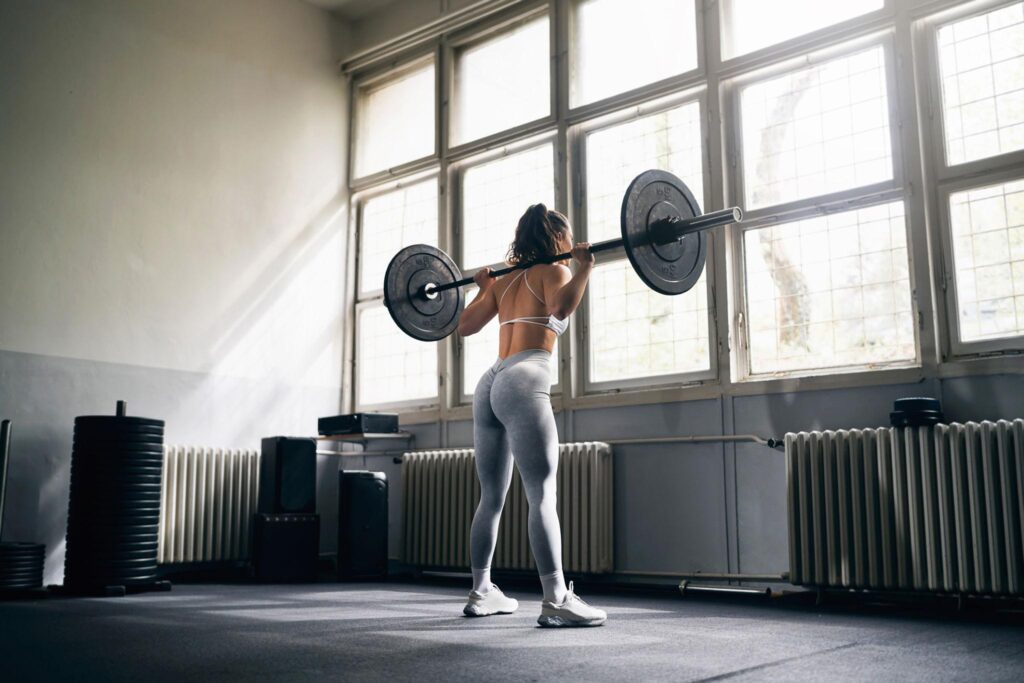
We don’t talk enough about how women’s bodies evolve. In our twenties, we might chase aesthetics. In our thirties, we juggle careers, relationships, maybe motherhood. In our forties and beyond, we confront perimenopause, menopause, changing metabolisms, new aches and pains. The mainstream fitness industry still tends to center youth. But Fit Bottomed Girls widened the lens.They talked about strength training not as a way to sculpt a “bikini-ready body,” but as a tool to protect bone density and support longevity. They highlighted the importance of rest, of stress management, of sleep. They explored intuitive eating and the psychology behind our relationship with food. They reminded us that chasing extreme thinness can disrupt hormones, mood, and overall well-being.That nuance mattered to me when I started noticing subtle shifts in my own body. Workouts that once felt easy suddenly felt more demanding. Recovery took longer. My priorities changed. I didn’t want to punish myself anymore. I wanted to train for the life I was building.
In 2023, another transition happened. Jenn and Kristen reached out to Alison Heilig, a multi-certified fitness professional and founder of Miles To Go Athletics, who had already contributed more than 100 articles to the site over the years. She wasn’t a stranger. She had been part of the community, part of the voice. When she said “HELL YEAH!” to carrying the torch forward, it felt less like a takeover and more like a continuation.There’s something deeply symbolic about that. A brand rooted in empowerment passing into the hands of another woman who believes in evidence-based training, sustainable progress, and supporting athletes through every stage of life.And that phrase — athletes through every stage of life — is important. Because being athletic doesn’t mean being elite. It means moving your body with intention. It means setting goals that excite you. It means showing up, imperfectly.
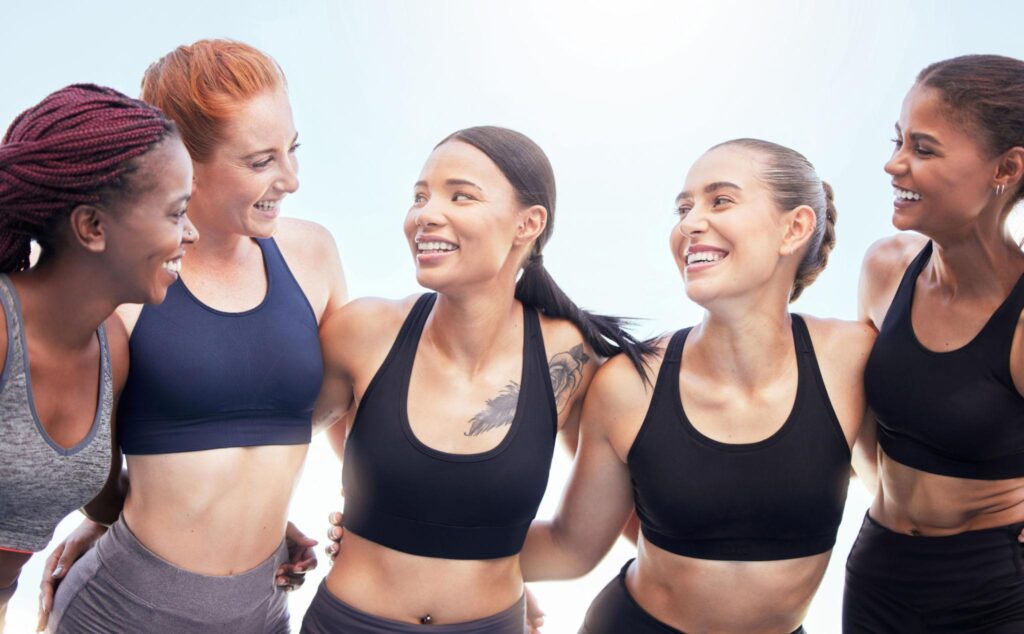
Fit Bottomed Girls has always insisted that “fit” is not a size. It’s not a clothing label. It’s not a single aesthetic. Fit bottoms come in all shapes, sizes, and ages. That statement might sound simple, but it pushes against decades of messaging that told us only one body type was worthy of celebration.From a woman’s perspective, that shift is enormous. We grow up absorbing images of “ideal” bodies. We compare ourselves constantly. We internalize the idea that if we just lose five more pounds, tone this one area, smooth that cellulite, then we’ll finally be confident.But confidence doesn’t come from shrinking. It comes from ownership.For me, ownership looked like signing up for a strength class even though I was intimidated by the weight room. It looked like unfollowing social media accounts that made me feel inadequate. It looked like learning about macronutrients not to restrict, but to fuel my runs properly. It looked like forgiving myself for rest days.
Fit Bottomed Girls didn’t hand me those decisions. But they created an environment where those decisions felt possible.They also never pretended that health is purely physical. They wrote about therapy. About burnout. About boundaries. They acknowledged that women carry invisible labor — emotional and otherwise — and that stress has real physiological consequences. Cortisol impacts sleep, hunger, recovery. Ignoring mental health while chasing a “perfect body” is like trying to build a house on sand.The blog made space for that complexity.As motherhood entered the conversation — for the founders and for readers — the narrative expanded again. Postpartum bodies were not treated as “before and after” projects. They were honored for what they had done. Midlife was not framed as decline, but as a transition requiring smarter training, adequate protein intake, resistance work, and honest conversations about hormones.
These are not just feel-good platitudes. They are grounded in research. Strength training supports muscle mass, which naturally declines with age. Adequate dietary protein supports recovery and satiety. Weight-bearing exercise supports bone health, especially crucial as estrogen levels shift. Cardiovascular training supports heart health — still one of the leading health concerns for women.But here’s what I appreciate most: the information was always delivered in a human voice. Not sterile. Not condescending. Not “doctor knows best.” It felt like a friend who had done her homework and wanted you to have the facts without the fear.After more than 15 years, Fit Bottomed Girls remains relevant because the core message never wavered: women deserve a relationship with health that is expansive, not restrictive.When I look back at that younger version of myself — sitting on the floor, exhausted from dieting — I wish I could tell her what I know now. That the scale will fluctuate. That life will get messy. That strength feels better than starvation. That community matters.And I would tell her this: health is not a finish line.
It is a conversation. With your body. With your circumstances. With your priorities.Fit Bottomed Girls didn’t just change how I exercised. They changed how I defined success. Success is finishing a workout feeling capable. It’s eating a balanced meal without guilt. It’s recognizing when you need rest. It’s embracing the laugh lines forming around your eyes because they reflect a life fully lived.In a culture still obsessed with “before and after,” that perspective is quietly radical.We don’t need another promise of losing 10 pounds in 10 minutes. We need spaces that remind us we are already worthy of taking up space. Spaces that educate without shaming. Spaces that evolve as we do.For me — and for millions of women since 2008 — Fit Bottomed Girls has been that space.And the truth is, the torch isn’t just carried by the founders or the current leadership. It’s carried by every woman who chooses to pursue health from a place of respect rather than punishment.Fit bottoms really do come in all shapes, sizes, and ages.And finally, we’re starting to believe it.