

There was a time when I believed that a “real” workout only counted if it happened inside a gym. If I wasn’t surrounded by heavy barbells, mirrors, and the steady hum of treadmills, it somehow felt less legitimate. Home workouts were something I did when I couldn’t make it to the gym — a backup plan, a compromise. At least, that’s what I told myself.
Then life shifted. My schedule became unpredictable. Some days were packed with work, deadlines, responsibilities. Other days I simply didn’t have the mental energy to commute, change, train, shower, and come back. And slowly, almost reluctantly, my living room became my training space.
What surprised me most wasn’t that exercising at home “worked.” It was how deeply it changed my relationship with movement.
When you train at home, there’s no audience. No one watching how much weight you lift. No pressure to look a certain way. No comparison. It’s just you and your body. At first, that felt uncomfortable. I had to face the truth about my motivation. Was I training to impress? To compete? Or to actually feel strong and capable?
Home workouts stripped everything down to intention.
One of the biggest lessons I learned early on is that your environment shapes your mindset more than you think. When I first started exercising at home, I would roll out a mat in the middle of the living room, laptop open, notifications pinging, laundry half-folded on the sofa. Unsurprisingly, my workouts felt scattered. I’d pause between sets to check messages. I’d shorten sessions because I “had things to do.”
Eventually, I realized that if I wanted my body to take the workout seriously, I had to signal that it mattered.
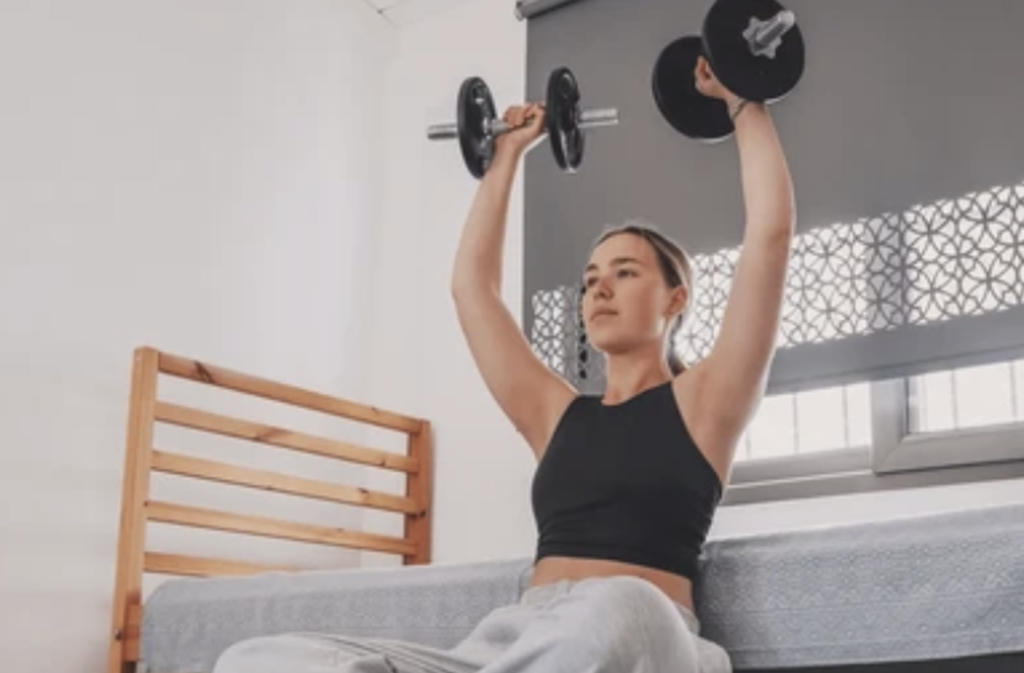
I carved out a small, consistent space. Sometimes it was just a corner near the window. I moved a chair aside. I lit a candle in the winter. I placed my water bottle and towel nearby like I would in a gym. It sounds simple, but creating a designated training zone shifted something mentally. When I stepped into that space, I wasn’t just at home. I was training.
Safety became important too. At home, you don’t have rubber floors or perfectly spaced equipment. I learned quickly to clear the area properly, especially for movements like lunges, jump squats, or burpees. Slippery rugs and coffee tables are not your friends mid-workout. Choosing a surface that feels stable — whether that’s hardwood, a mat, or even the garden patio — matters more than aesthetic.
Speaking of the garden, training outdoors changed everything for me during warmer months. There is something grounding about feeling fresh air during sprints or bodyweight circuits. The cooler temperature, the openness — it made high-intensity sessions feel less suffocating than indoors. And physiologically, being outside often reduced perceived effort. I didn’t feel as trapped in my own breathing.But not every day is sunny. Some days, especially in winter, motivation dips. And that’s where structure became my anchor.
I used to scroll endlessly through social media workouts, saving routines I never followed. What finally helped was committing to a simple weekly structure. Three strength-focused days. One or two cardio or conditioning days. One mobility or yoga session. It wasn’t rigid, but it gave me direction.
Strength training at home, without heavy weights, forced me to become creative. Tempo work — slowing down the lowering phase of squats or push-ups — increased time under tension and made lighter loads surprisingly challenging. Single-leg movements like Bulgarian split squats, step-ups, and single-leg deadlifts intensified workouts without extra equipment. Glute bridges evolved into hip thrust holds. Planks turned into shoulder-tap variations. Suddenly, I didn’t miss heavy barbells as much.
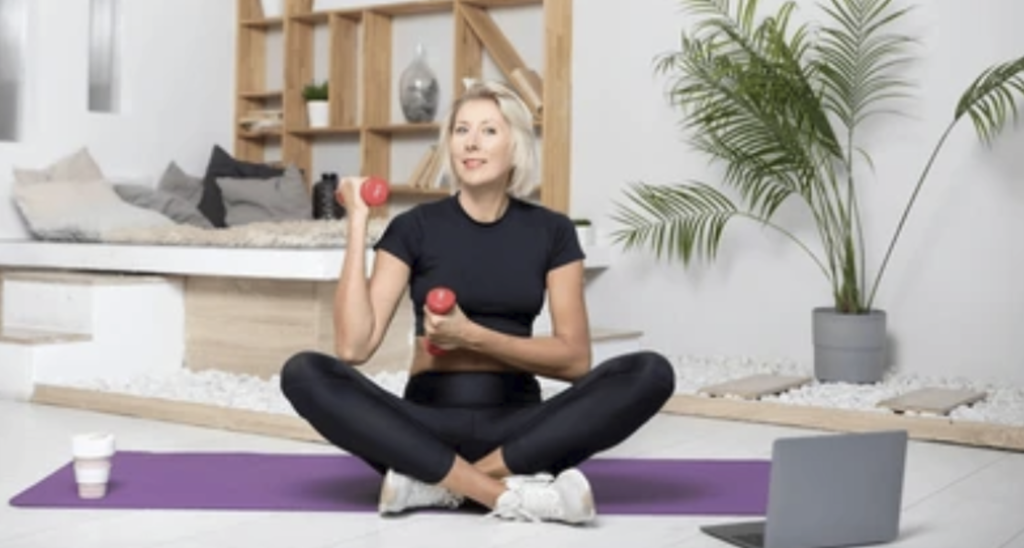
There’s a common misconception that you need advanced gym equipment to build muscle or improve fitness. In reality, progressive overload — gradually increasing difficulty over time — can be achieved through reps, tempo, rest periods, and range of motion. Even adding a backpack with books for resistance can elevate a workout.
Cardio at home also became more intuitive. I stopped equating cardio with long treadmill sessions. Instead, I incorporated short intervals — 30 seconds of jump squats, 30 seconds of mountain climbers, brief sprint bursts outside. High-intensity interval training can be effective for improving cardiovascular fitness and burning calories in shorter time frames. But I also learned not to overdo it.
As a woman, I noticed quickly that my recovery fluctuated across my menstrual cycle. There were weeks when explosive movements felt empowering. And there were weeks when even moderate intensity felt draining. Training at home gave me flexibility to adapt. On lower-energy days, I chose yoga, mobility flows, or steady-state walking. On stronger days, I pushed circuits harder.
That flexibility became one of the greatest advantages of home workouts. There’s no waiting for machines. No commuting. No strict time slot. If I had 25 minutes between meetings, I could train. If I only had 15, I could still move. The all-or-nothing mindset started dissolving.
Time efficiency became my secret weapon. Short rest periods kept my heart rate elevated. Circuits minimized downtime. Supersets — pairing two exercises back-to-back — maintained intensity. Scientifically, shorter rest intervals can increase metabolic demand, though they may reduce maximal strength output. For home training focused on general fitness and fat loss, this balance worked beautifully.
But beyond physiology, the real challenge of exercising at home is psychological.

There are so many distractions. The fridge. The sofa. Your phone. Family members. The mental pull of unfinished tasks. I had to develop small rituals to protect my focus. Changing into workout clothes, even if I wasn’t leaving the house. Starting a specific playlist that signaled “training mode.” Using a timer app so I wasn’t constantly checking the clock.
Music became a powerful motivator. There’s something about blasting a favorite song during the final set that shifts effort levels. Studies show music can reduce perceived exertion and improve performance. I felt that firsthand — especially on days when motivation was low.
Motivation itself, I learned, is unreliable. It fluctuates. Some mornings I wake up energized, ready to sweat. Other days, the thought of moving feels heavy. That’s where habit takes over. By anchoring workouts to a consistent time — usually late morning or early evening — my body began expecting movement. There’s evidence suggesting that training at the same time each day can improve adherence and performance through routine adaptation. I didn’t need the science to feel it; I lived it.
Morning workouts have a certain clarity. They set the tone. Endorphins elevate mood, and I feel productive before the day unfolds. Evening sessions, on the other hand, release stress accumulated from work. Cortisol levels naturally decline in the evening, and gentle yoga or mobility flows help signal to my nervous system that it’s safe to unwind.
I stopped trying to find the “perfect” time and started choosing the realistic time. Consistency mattered more than theory.
Tracking progress at home also required creativity. Without increasing heavy weights weekly, I measured growth differently. More push-ups than last month. Longer plank holds. Faster circuit completion times. Even subjective measures — how I felt waking up, energy levels, mood stability — became valid markers of progress.
I began rating my mornings out of ten. Not in a perfectionist way, but as a self-awareness tool. If my scores dipped repeatedly, it signaled poor sleep, excessive stress, or inadequate nutrition. Exercise at home wasn’t isolated from the rest of my life; it was integrated.
Nutrition naturally aligned with my training. On strength-focused days, I prioritized protein intake to support muscle repair — aiming roughly for 1.6 to 2.2 grams per kilogram of body weight, a range supported by research for active individuals. Carbohydrates before higher-intensity sessions improved performance and reduced fatigue. Hydration became non-negotiable, especially indoors where airflow is limited.
Recovery also took on new importance. Without gym trainers observing form, I became more mindful of technique. Quality over speed. Controlled movements. If something felt sharp or unstable, I adjusted immediately. Injury prevention at home requires humility. There’s no one correcting you.
Mobility work, once an afterthought, became part of my weekly rhythm. Tight hips from sitting all day. Shoulders rounded from laptop posture. Stretching wasn’t glamorous, but it improved my strength sessions and reduced soreness.
Perhaps the most unexpected gift of home workouts was emotional resilience. There’s empowerment in knowing you can create progress without ideal conditions. Without fancy equipment. Without external validation.
Some days, my workouts are messy. My dog wanders into the frame. A family member interrupts. I sweat more because the room is warm. But the imperfections make it real.
Exercising at home taught me that movement doesn’t require perfection. It requires intention.
I no longer see home workouts as a backup plan. They are a legitimate, effective, empowering way to train. They fit into seasons of life when time is tight, budgets are stretched, or energy is low.
If you’re hesitant to start exercising at home, begin simply. Choose a space. Clear it. Decide on three foundational movements — a squat variation, a push movement, a core exercise. Set a timer for 20 minutes. Move with focus. That’s enough.
Over time, expand. Add circuits. Add intervals. Add mobility days. Track how you feel. Adjust with your cycle. Protect your sleep. Fuel your body. Build rituals that make your workouts feel sacred, not optional.
Home training is not about replicating a gym. It’s about building a practice that supports your life as it is right now.
There’s something deeply empowering about finishing a sweaty session in your own space, knowing that you showed up without external pressure. Just you, your breath, your effort.
And maybe that’s the real reward — not just the endorphins or the physical results — but the quiet confidence that comes from realizing you don’t need perfect conditions to take care of yourself.