
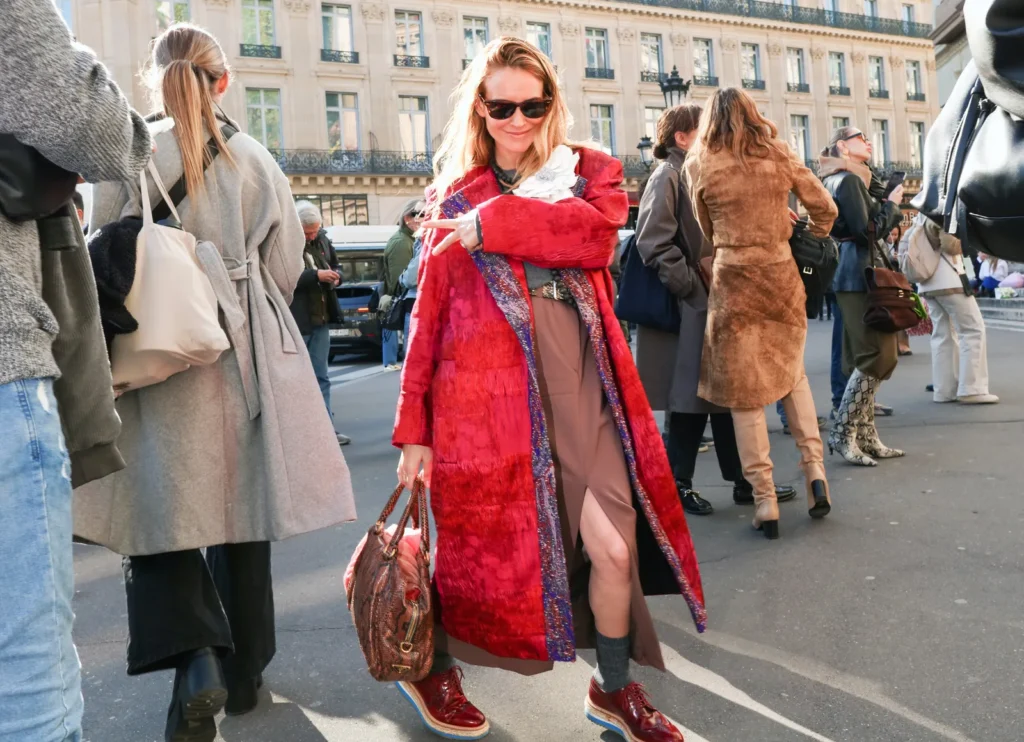
Quiet luxury meets the pavement. How to dress for real life without ever sacrificing the feeling of being beautifully, intentionally put together.
here’s a particular kind of woman you notice in a city. She’s not wearing a gown. She’s not dressed for a red carpet or a board meeting. She’s simply walking — down a cobblestone street, or through a farmer’s market, or stepping out of a coffee shop with a latte in one hand and a tote bag slung over her shoulder — and yet something about her stops you. Something about the way she carries herself, the way her outfit seems considered without being overthought, elegant without being stiff. She looks, somehow, like she stepped out of a beautifully curated Pinterest board and into real life. That woman? She’s mastered the art of elegant streetwear. And in 2026, she is absolutely everywhere.
I’ve been obsessed with this aesthetic for longer than I care to admit. It started, honestly, with a pair of wide-leg trousers I bought on a whim from a small Italian brand three years ago. Ivory, slightly creased in the way good fabric always is, with a hem that grazed the top of my loafers. I wore them with a simple white tank and a loose blazer, and when I stepped outside that morning, I felt something I hadn’t felt in a while. I felt like myself — but the best version of myself. Dressed down enough to be practical, dressed up enough to feel like I cared. It was the sweet spot. And I’ve been chasing that feeling ever since.
Elegant streetwear is not a new concept, but in the last two years or so it has crystallized into something far more defined — a real movement, a real aesthetic philosophy — and it has become the dominant visual language of the modern, style-conscious woman. It’s what happens when the quiet luxury trend grows up and puts on sneakers. It’s what happens when the clean girl aesthetic gets a little more polish. It’s what happens when women collectively decide they’re done choosing between comfort and elegance, between practicality and beauty. Why should we have to choose? The answer, more and more, is that we don’t.
What Does “Elegant Streetwear” Actually Mean in 2026?
Before we dive deeper, let’s clarify what we’re actually talking about — because “elegant streetwear” is one of those phrases that can mean a hundred different things depending on who’s saying it. When I use it, I don’t mean athleisure with a designer logo. I don’t mean a ball skirt paired with a hoodie (though that can be delightful in the right context). And I certainly don’t mean expensive basics that look like they’ve given up.
What I mean is this: clothing designed to be worn in the everyday world — on the street, at the market, during coffee runs, on casual lunch dates — that is constructed, chosen, and put together with a genuine sense of elegance. Fabrics that drape. Silhouettes that flatter. Colors that feel considered. Pieces that have, as the French might say, une certaine allure — a certain allure that doesn’t demand attention so much as quietly commands it.
It is an aesthetic deeply rooted in femininity — but the kind of femininity that is powerful, not performative. The kind that comes from a woman who knows exactly who she is and has stopped dressing for anyone else’s expectations. She’s passed through every trend cycle that has come and gone and has arrived, finally, at herself. And what she wears reflects that.
“Elegant streetwear is what happens when a woman stops trying to dress for the occasion and starts dressing for herself. The result is always more interesting.”
The aesthetic is also deeply intertwined with what’s been happening in the broader fashion conversation over the past few years. Quiet luxury — that understated, logoless approach to dressing that champions quality over hype — laid the groundwork. The clean girl trend added a focus on skin-first beauty and minimalism. Soft glam gave us permission to be polished without being overdressed. And the ongoing Pinterest revival has brought back a genuine love of beautiful, feminine, thoughtfully curated style imagery. Elegant streetwear is where all of these streams converge.
The Wardrobe Pillars: Building an Elegant Street Style Closet
Let’s get practical for a moment, because the most beautiful aesthetic philosophy in the world is useless if you can’t actually translate it into what you pull out of your wardrobe on a Tuesday morning. Over the years I’ve thought a lot about the pieces that make up the elegant streetwear wardrobe — the foundations, the statement makers, the quiet heroes — and I’ve arrived at what I’d call the five pillars. Everything else is detail.
1. The Trouser — Your Single Most Important Purchase
I know, I know. You were probably expecting me to say something about a great coat or a silk blouse. But hear me out: nothing transforms a casual outfit into an elegant one more reliably or more dramatically than the right pair of trousers. And I mean trousers specifically — not jeans, not leggings, not joggers, but proper, structured, beautifully cut trousers.
The silhouettes that are defining elegant streetwear right now are wide and straight-leg cuts with a slightly high rise. Think of the trouser as the architecture of your outfit — the structural element around which everything else is arranged. In a neutral palette — camel, ivory, warm grey, chocolate brown, chalk white — they become endlessly versatile. They dress up a plain tee; they soften a sharp blazer; they elevate the simplest slip-on flat into something that looks intentional.
What you’re looking for in a great street-style trouser: weight to the fabric (it should hang, not cling), clean tailoring at the waist, a hem length that works with both flats and low heels, and a color that earns a place in at least five different outfit combinations. Invest here. Spend more than feels comfortable, and wear them constantly. They’ll pay for themselves within the month.
2. The Knit — The Piece That Changes Everything
The right knit is magic. It’s the piece that bridges casual and chic, that adds texture and softness to a look without sacrificing elegance. And within the elegant streetwear world, the knit has become something of a cornerstone piece — not the chunky, oversized options that dominate autumn Pinterest boards, but something more refined. Think lightweight cashmere in a slightly relaxed fit. Think fine-gauge merino in a gentle ribbed texture. Think a longline cardigan in oatmeal or dusty sage that works equally well open over a tank top or buttoned up as a top on its own.
The color story for elegant streetwear knits leans heavily into the kinds of tones that feel expensive without being showy. Ivory. Oatmeal. Warm taupe. Dusty blush. Buttery caramel. Soft grey. These are not exciting colors. That’s rather the point. They’re the kind of tones that your eye returns to because they’re quietly, consistently beautiful — the sartorial equivalent of a perfectly emulsified sauce. The technique is what you notice, not the drama.
Knit Direction
The Refined Cashmere
Lightweight, slightly boxy, worn tucked half into wide-leg trousers or fully into a midi skirt. The single piece that earns its price per wear faster than anything else.
Knit Direction
The Longline Cardigan
Open over a slip dress for evening, belted loosely over a turtleneck for day. It’s the layering piece that gives every outfit a gentle sense of volume and femininity.
Knit Direction
The Fitted Polo Neck
Not the overwhelming chunky kind — the sleek, fine-gauge kind. Under a blazer, tucked into trousers, worn alone with wide pants. It makes everything look more sophisticated immediately.
Knit Direction
The Vest / Sleeveless Knit
One of 2026’s most persistent pieces. Layered over a shirt, worn as a standalone top with tailored trousers, or dressed down with straight-leg jeans. Quiet, versatile, incredibly chic.
3. The Outer Layer — Where the Magic Happens
If the trouser is the architecture of an elegant street outfit, then the outer layer is the facade. It’s often the first thing people notice and the piece that sets the tone for the whole look. Within the elegant streetwear world, outerwear is taken extremely seriously — and rightfully so, because the right coat or jacket doesn’t just keep you warm. It transforms you.
The pieces I keep returning to are: the structured single-button blazer in a neutral — one of the most flattering and elegant garments ever invented, full stop; the floor-length or midi-length coat in camel or cream, worn open over everything from jeans to evening slip dresses; the soft leather jacket in a warm cognac or butter tan, not the stiff, structured kind but the kind that drapes like suede and gets better with every wear; and — for the warmer months — the oversized linen shirt worn as a duster jacket over a simple fitted tee and straight-leg jeans.
The throughline in all of these is fit. Not tight, not billowing — but right. The blazer that rests exactly where it should on your shoulders. The coat whose hem hits exactly where it flatters. This is why elegant streetwear requires a degree of investment and intentionality. Getting a blazer tailored costs less than you think and changes the piece entirely. It’s not about spending more; it’s about ensuring that what you do spend serves you fully.
“The difference between an outfit and a look is almost always in the outer layer. Get the coat right and everything underneath falls into place.”
4. The Shoe — Your Silent Statement
Shoes are where the elegant streetwear aesthetic gets particularly interesting, because the footwear choices in this world are deliberately unexpected. You are far less likely to see stilettos than you are to see a beautifully crafted leather loafer. You’re far more likely to see a well-chosen clean white sneaker than you are a strappy sandal. The aesthetic prizes shoes that feel contemporary and grounded — literally and figuratively — while still maintaining that sense of craft and elegance that runs through everything else.
The loafer has become, without question, the defining shoe of this aesthetic. Not the chunky, platform version (though that has its moment), but the classic, leather, barely-there loafer in black, cognac, tan, or ivory — worn with trousers, with midi skirts, with straight-leg jeans, with literally everything. There is something about a beautiful leather loafer that communicates both taste and practicality, both elegance and ease, in a way that almost no other shoe can match.
After the loafer, the ballet flat has returned with genuine force in 2026. The ones I love most are the pointed-toe variety in soft leather or satin — in neutral tones, of course, or occasionally in a dusty rose or chocolate that reads as a near-neutral anyway. They lengthen the leg, they’re endlessly comfortable, and they look like they belong in a French New Wave film, which is never a bad thing.
Then there are the sneakers. Within the elegant streetwear world, the sneaker choice is crucial — the wrong one can collapse an entire outfit, while the right one ties it together. The clean, minimal, leather sneaker in white or ivory is the unanimous favorite: the Adidas Samba, the New Balance 574 in a tonal coloring, the classic white leather court shoe. The rule is simple: the sneaker should look like it was chosen with the same care as everything else. Because it was.
5. The Bag — The Final Word
Bags within the elegant streetwear world operate on a slightly different principle than shoes. Where shoes tend toward the understated and practical, bags are allowed to be a little more expressive — a little more obviously beautiful. This is, after all, the piece you carry with you all day, and within the quiet luxury framework that underpins much of this aesthetic, the bag is one of the few places where a quality investment is immediately and unmistakably visible.
The shapes that define the look are structured over slouchy, medium over large, and interesting over obvious. The top-handle bag — that ladylike shape that has been having a sustained revival for the past several seasons — remains central. The slightly oversized tote in a beautiful leather or waxed canvas is a daily workhorse that still manages to look utterly polished. The boxy, sculptural shoulder bag that lands somewhere between practicality and art object is having an enormous moment right now. And the old-money classics — the trapezoidal shapes, the structured flaps, the clean-lined satchels — continue to anchor the aesthetic with their understated confidence.
The Color Philosophy of Elegant Streetwear
We need to talk about color, because nothing is more central to the elegant streetwear aesthetic than its particular, instantly recognizable palette. This is not a bold, maximalist color story. It is not a rainbow. It is not even particularly varied. And that is precisely what makes it so effective.
The core palette is warm and neutral: ivory, cream, camel, oat, warm white, sand, taupe, chocolate brown, warm grey, and black. These are the foundations. They work together effortlessly, they photograph beautifully, they require almost no thought once you’ve committed to them, and they age extraordinarily well — both in terms of how they look over time and in terms of how they sit within the fashion cycle. No one has ever looked at a woman in beautifully fitted ivory trousers and a camel coat and thought: that’s dated.
The accent colors within this world are carefully chosen and used sparingly. Dusty rose and blush are perennial favorites. Soft sage and muted forest green have been steadily gaining ground over the past year. Cognac and warm tan feel like natural extensions of the neutral palette rather than true accents. And occasionally — occasionally — a deep burgundy or a rich chocolate steps in as what I’d call an elevated neutral. The color equivalent of a low whisper in a quiet room.
What you almost never see in the elegant streetwear palette, at least not in its purest form: bright primaries, neon, stark contrast patterning, or heavily saturated jewel tones. Not because these colors aren’t beautiful — they are — but because they work against the particular quiet confidence that this aesthetic is built upon. The elegance here is in the tone. The restraint is the statement.
The Elegant Streetwear Color System
Foundation Neutrals: Ivory, cream, oatmeal, warm white, chalk — these form the base of most outfits and work as top-to-toe monochromes or as the background against which everything else sits.
Warm Earths: Camel, tan, sand, biscuit, light brown — the middle layer of the palette, adding warmth and richness without drama. A camel coat over ivory trousers over tan loafers is one of the most effortlessly beautiful combinations in existence.
Deep Anchors: Chocolate, espresso, warm black — the grounding tones that give the palette depth. A chocolate leather bag or a pair of near-black wide-leg trousers adds weight and contrast without jarring.
Soft Accents: Dusty rose, blush, sage, soft grey-blue — these are your personality notes. Used in small doses — a knit, a scarf, a shoe — they add individuality without disrupting the overall harmony.
Quiet Luxury and Its Influence: The Fabric Story
You cannot talk about elegant streetwear in 2026 without talking about the quiet luxury movement that has, over the past four years, fundamentally changed how many women approach fashion. The central thesis of quiet luxury — that true elegance comes from quality of construction rather than loudness of branding, from the feel of a fabric rather than the visibility of a logo — has been deeply absorbed into the elegant streetwear aesthetic.
This means that fabric choice is not incidental. It is central. The woman building an elegant streetwear wardrobe thinks about fabric the way an architect thinks about materials. What does it feel like? How does it move? How does it age? Will it hold its shape? Does it breathe? Does it have weight without being heavy, structure without being stiff?
The fabrics that define this aesthetic are, almost without exception, natural: cashmere and merino for knits; fine cotton, linen, and silk for tops and layering pieces; wool and wool-blend for trousers and coats; leather (or high-quality leather alternatives) for shoes and bags. Synthetic fabrics are not banned — a beautiful ponte knit trouser or a good quality jersey midi dress absolutely has a place — but they are used mindfully, and they are never the first choice when a natural alternative exists at a comparable price point.
Linen deserves a special mention here because it has undergone something of a reputation rehabilitation over the past few years. Once associated primarily with summer casualwear (and with the particular crime of arriving at every occasion looking comprehensively wrinkled), linen in its more elevated forms — tightly woven, heavy-weight, slightly structured — has become one of the cornerstone fabrics of the elegant streetwear aesthetic. Linen trousers. Linen shirt-dresses. Linen blazers in ivory or warm white. Worn with a degree of intentional relaxation, linen embodies everything the aesthetic is trying to achieve: natural, beautiful, a little effortless, a little old-world.
“When you buy fabric rather than fashion, the clothes don’t go out of style. They just become more yours.”
Social Media and the Aesthetic: How Pinterest, Instagram, and TikTok Are Shaping the Look
It would be dishonest to talk about fashion trends in 2026 without acknowledging the enormous role that social media — and especially the visual platforms — plays in shaping and spreading aesthetic movements like this one. Elegant streetwear did not emerge from a single designer’s runway or a single moment in popular culture. It emerged, organically and collectively, from thousands and thousands of images shared across Pinterest boards, Instagram feeds, and TikTok style channels. And it continues to evolve there, in real time, in the hands of real women living real lives.
Pinterest, in particular, has been instrumental. The Pinterest revival of the past few years — driven partly by younger women discovering the platform’s unique format for the first time, and partly by longer-term users returning after a period of social media fatigue — has created a rich, beautifully curated visual archive of the elegant streetwear aesthetic. Search any combination of “quiet luxury outfit,” “minimal feminine style,” “old money aesthetic,” or “elegant street style” on Pinterest and you will find yourself falling down a rabbit hole of images that feel like they were made specifically to make you want to reorganize your entire wardrobe. The algorithm, in this particular case, is doing the Lord’s work.
Instagram remains important too, though its role has shifted. Where once the platform was about outfit documentation — the flat lay, the OOTD, the posed street style shot — it now functions more as a kind of living lookbook, with the women who embody the elegant streetwear aesthetic sharing not just their clothes but the full texture of their lives: their apartments, their coffee rituals, their travel destinations, their reading lists. The aesthetic extends beyond the wardrobe and into an entire way of approaching daily life with a certain considered beauty. This is part of what makes it so compelling and so aspirational. It is not just about what you wear. It’s about how you live.
TikTok has contributed something slightly different: a democratization of the language around the aesthetic. The “get ready with me” format, the “what I wear in a week” video, the outfit breakdown with thrift store finds and dupe discoveries — all of these have made the elegant streetwear aesthetic feel accessible as well as aspirational. You don’t need to spend a fortune to participate. You need a point of view, a willingness to invest strategically, and a genuine love of dressing well.
· · ·
How to Actually Get Dressed: Building Real Elegant Streetwear Outfits
All of the above is wonderful to know, but the true test of any aesthetic is whether it translates into actual outfit decisions on actual mornings when you’re running slightly late and the question of what to wear needs to resolve itself in under seven minutes. With that practical reality in mind, let me walk you through how elegant streetwear actually looks in practice — the real combinations, the formulas, the things that always work.
The Elevated Uniform Formula
The most reliable elegant streetwear outfit is also the simplest: one beautiful tailored piece (trouser or midi skirt), one great top (a fine knit, a silk or satin blouse, a clean white button-down), and one considered outer layer (the blazer, the trench, the cashmere cardigan). Shoes in a complementary neutral. Bag that doesn’t compete. Simple jewelry — something gold and delicate if anything at all. That’s it. That’s the formula. It sounds almost too simple, but executed with quality pieces in the right proportions, it is devastatingly effective every single time.
The secret lies in what I’d call outfit tension — the deliberate contrast between something slightly structured and something slightly relaxed. Crisp wide-leg trousers with an oversize cashmere knit. A beautifully fitted blazer with a slightly undone silk blouse. Tailored midi trousers with a loosely tucked white tank. One structured thing, one soft thing, a shoe that’s a little unexpected — that’s the recipe for a look that feels both polished and genuine.
The Casual Elevation
Elegant streetwear also includes a version that starts with what most people would consider a “casual” base and elevates it through considered additions. This is the outfit for the days when you genuinely need to be comfortable — when you’re running around the city, sitting through long meetings, doing the thousand small practical things that everyday life requires.
It might look like this: well-fitted straight-leg jeans in a deep indigo or a clean white, a finely-knit tank or a slim-fit turtleneck in ivory, a perfectly tailored blazer, and leather loafers. Or: a simple slip dress in silk or satin — one of those pieces that looks incredibly simple and is profoundly elegant — worn with a fitted longline cardigan and ballet flats. Or: straight-leg trousers in a warm neutral with a beautiful linen or chambray shirt left slightly open, sleeves pushed up, a small leather bag.
The throughline in all of these casual elevated looks is the same principle that governs the whole aesthetic: the casualness is in the ease of the silhouette, not in the carelessness of the choice. Everything is chosen. Everything is intentional. The relaxation is deliberate. That’s what makes it elegant.
The Unexpected Piece
Every genuinely great outfit within the elegant streetwear world has what I think of as the unexpected piece — the element that makes you look twice, that prevents the whole thing from feeling too safe or too expected. It might be a beautiful scarf tied low around the neck. A pair of interesting earrings — sculptural, unusual, maybe a little architectural. A bag in an unexpected material or shape. A shoe in a color that’s slightly surprising but deeply right. A vest layered over a shirt in a combination you wouldn’t have predicted but somehow looks completely inevitable.
The unexpected piece is the thing that reveals personal taste within a codified aesthetic. It’s the part of the outfit that’s most uniquely you — the signal that you’re not simply following a Pinterest board but that you’ve understood the principles deeply enough to apply them with your own instincts. This is, I think, the real goal of any sustained engagement with a fashion aesthetic: not to replicate it perfectly, but to internalize it so fully that you can use it as a framework for genuine self-expression.
Beauty Within the Aesthetic: The Elegant Streetwear Face
Fashion and beauty are, of course, inseparable — and the elegant streetwear aesthetic has a corresponding approach to makeup and hair that is just as considered, just as quietly specific, as the clothes themselves.
The beauty philosophy that sits alongside elegant streetwear is most closely aligned with what has been called “soft glam” — an approach that prioritizes skin over everything else, that works with your natural features rather than dramatically transforming them, and that achieves a sense of visible effort without ever looking overdone. The goal is not perfection. The goal is luminosity — the sense that the person is glowing from within, that the makeup is enhancing something already beautiful rather than creating a mask over it.
In practice, this means: serious skincare as the foundation — the moisturiser, the SPF, the subtle primer that gives everything else something beautiful to sit on. Then, a skin-true base — whether that’s a light-coverage foundation, a tinted moisturiser, or simply skincare products that give you that lit-from-within quality. Concealer used sparingly and precisely. A soft, natural brow that follows your actual arch. Blush — and blush is having an enormous moment right now within this aesthetic — applied to the high points of the cheek for a healthy, almost sun-touched warmth. A mascara that lifts and defines without overdoing. And lips — either a barely-there gloss or balm, or, for the evenings and the more dressed-up days, a beautiful muted rose or a tawny nude that feels modern without being stark.
The clean girl aesthetic — that particular corner of the beauty world that prizes dewy skin, slicked-back hair, and an almost sculptural simplicity — feeds directly into this. But the elegant streetwear iteration is slightly warmer, slightly softer. It’s less about extreme minimalism and more about a curated naturalness. Less “I woke up like this,” more “I spent twenty minutes on this, and I’d like you to appreciate that without making it obvious.”
Hair in the World of Elegant Streetwear
Hair within this aesthetic follows the same principles as everything else: considered ease. The styles that recur most often in the elegant streetwear visual vocabulary are the low bun — messy enough to feel organic, structured enough to feel intentional; the half-up style with a few soft pieces falling around the face; the simple middle or side part with hair falling loose and clean; and, increasingly, the chignon that sits low at the nape of the neck, pinned with something beautiful (a clip, a stick, a small bow) and left with a few deliberate wisps escaping at the front.
What all of these styles have in common is a quality of effortfulness-without-effort — the hair looks like it took time and thought but doesn’t look like it took too much. The blowout is always slightly undone. The bun always has at least one escaped strand. The half-up always has pieces that frame. It’s deliberate imperfection, which sounds paradoxical until you see it and immediately understand.
The Soft Glam Beauty Routine: Key Pieces for the Elegant Streetwear Woman
Skin First, Always: A great vitamin C serum, a quality SPF moisturiser, and a hydrating primer make the difference between makeup that sits on your face and makeup that becomes part of it. No base product in the world compensates for dehydrated skin.
The Luminous Base: Tinted moisturiser or a light-coverage serum foundation applied with your fingers for a skin-like finish. Build where you need it, leave the rest alone. The goal is healthy, not heavy.
Blush as the Hero: Cream blush in a peachy-pink or warm mauve applied to the tops of the cheeks and blended upward. This is the single most transformative step in the elegant streetwear beauty routine — it adds warmth, life, and that inexplicable freshness that makes people say you look wonderful.
The Defined Eye: A brown or dark brown mascara rather than black, which can feel harsh with this palette. A soft smudge of warm brown eyeshadow in the crease for depth. Nothing too graphic, nothing too structured.
The Right Lip: Tinted lip balm for most days. For elevated days: a satin-finish lipstick in a muted rose, a soft brick, or a warm caramel nude. Never too matte, never too glossy — the texture should be somewhere beautifully in between.
The Mindset Behind the Aesthetic: Dressing as Self-Care
I want to take a moment here to talk about something that goes beyond the clothes themselves — something that I think is at the heart of why the elegant streetwear aesthetic resonates so deeply with so many women right now.
We are living in a moment of significant re-evaluation of how we spend our time, our money, and our energy. The pandemic, and everything that came after it, prompted a mass reconsideration of what actually matters — what brings genuine pleasure, what has lasting value, what deserves the limited resources of attention and care that we each have. And within that reconsideration, many women have discovered — or rediscovered — something that perhaps their grandmothers already knew: that the daily ritual of getting dressed, when approached with care and intention, is not vanity. It is self-respect. It is a form of self-care that is available to us every single morning, regardless of what else is happening in our lives.
Getting dressed well — choosing pieces that are beautiful, putting them together thoughtfully, taking a moment to look in the mirror and feel genuinely pleased with what you see before you walk out the door — this is not a frivolous act. It is an act of claiming yourself. Of deciding, in a small but not insignificant way, that you are worth the effort. That the life you are walking out the door to live is worth showing up to properly dressed.
The elegant streetwear aesthetic, more than almost any other trend I’ve observed over the years, embodies this principle. It is not about dressing for occasions or for other people or for the algorithm. It is about developing a personal visual language — a way of presenting yourself to the world that is recognizable, considered, and genuinely you — and then living inside that language every day with a quiet kind of pleasure. The goal is not to be noticed. The goal is to feel like yourself.
“Getting dressed beautifully every morning is not vanity. It’s the small daily act of deciding that your life — this ordinary, magnificent life — is worth showing up to properly.”
Building the Wardrobe: Where to Shop and What to Spend
One of the most common questions I get about elegant streetwear is how to actually build the wardrobe without spending an obscene amount of money. And it’s a fair question, because the aesthetic is associated with quality, and quality can be expensive. But I want to be clear about something: elegant streetwear is not a wealthy woman’s aesthetic. It is a thoughtful woman’s aesthetic. The difference matters enormously.
The approach I recommend — and the one I have used myself over the years to build what I consider a deeply satisfying, genuinely functional wardrobe — is what I call the investment-versus-cost framework. The basic principle is simple: identify the pieces in your wardrobe that you wear most frequently and are most visible, and invest more in those. Identify the pieces that are peripheral — the novelty items, the seasonal additions, the trend-driven experiments — and spend less. Buy better, buy less, and buy specifically.
In practice, this means: spend on trousers, coats, shoes, and bags — the pieces that last for years, that are worn constantly, and that are structurally complex enough that quality genuinely shows. These are the investments. For tops, tanks, basic knits, and layering pieces, a combination of mid-market and occasional luxury makes sense. And for the trend-adjacent pieces — the slightly more adventurous additions that reflect what’s happening in fashion right now — the high street and secondhand markets are your friends.
Speaking of secondhand: it cannot be overstated how well the elegant streetwear aesthetic lends itself to vintage and pre-owned shopping. The aesthetic’s core palette of neutrals, its preference for natural fabrics and timeless silhouettes, its distrust of logos and trend-specific details — all of these qualities make it absolutely perfect for hunting through charity shops, vintage rails, and resale platforms. A 1990s Italian-made cashmere polo neck. A 1970s camel coat from a now-defunct French brand. A pair of barely-worn wide-leg trousers from a contemporary designer at a fraction of the retail price. These finds are not only financially sensible — they are, in many cases, genuinely better than what you can buy new today. The fabrics are often richer. The construction is often more considered. And the small pleasure of wearing something with a history, something that has been chosen and worn and loved before it arrived with you, adds a dimension of meaning that fast fashion simply cannot offer.
The Brands That Define the Aesthetic in 2026
Without wanting to turn this into an advertisement, it feels useful to name some of the brands that are most reliably producing the kinds of pieces that the elegant streetwear aesthetic calls for. These are the names that come up again and again on the Pinterest boards, the TikTok channels, the Instagram saves of women who have really leaned into this look.
At the investment end: The Row remains the ultimate quiet luxury reference point, and while it’s not accessible for most everyday wardrobes, it functions as a useful aesthetic compass. Toteme continues to produce the Scandinavian version of this look with extraordinary consistency — the tailoring, the coats, the knits are among the best in this space. Khaite brings a slightly more sensual, more American take on the same principles. And Loro Piana, for those with the means, remains the definitive source for the kind of fabrics that make everything else obsolete.
At more accessible price points: &Other Stories and Massimo Dutti have been quietly producing elegant, well-made pieces in exactly the right palette and silhouettes for years. COS remains a reliable source for minimal, considered basics. Arket covers the middle ground between workmanlike and special with real consistency. And in the shoes and bags category, newer DTC brands and Italian leather goods companies that sell direct have been producing extraordinary quality at prices that make the investment more accessible than ever.
· · ·
Dressing for the Seasons: How the Aesthetic Shifts Through the Year
One of the things I love most about the elegant streetwear aesthetic is that it doesn’t need to fundamentally change with the seasons. The core principles remain consistent; what shifts is the fabric weight, the layering, and the occasional palette adjustment. This is deeply practical and also, I think, part of what gives the aesthetic its sense of cohesion and identity. You’re not a different person in October than you are in May. Why would you dress like one?
In spring and early summer, the aesthetic leans into linen, fine cotton, and lightweight silk. Trouser suits in ivory linen. Slip dresses in pale satin worn with a light cardigan and ballet flats. Wide-leg cotton trousers in cream or warm white with a simple knit tank. The palette stays consistent but becomes slightly airier — more cream, more ivory, more of the soft warm whites that look extraordinary in natural light.
In late summer and early autumn — that transitional period that is, honestly, one of the best times to dress — the layering begins and the warmer tones come forward. Camel appears. Chocolate brown arrives. The cashmere comes out of storage. The trench coat makes its triumphant return. This is the season of the beautiful leather bag, of the slightly oversized blazer worn over a silk top, of the ankle boot making its first appearance after months of flats and slides.
Winter is the season of the coat — and within the elegant streetwear aesthetic, it is taken deeply seriously. A great coat is worth every penny, every minute of searching, every degree of deliberation. The mid-length wool coat in camel or cream or warm grey, the floor-length cashmere blend in chocolate or ivory, the belted wrap coat in a double-faced wool — these are the pieces that will define how you look for the next four months, and they deserve the investment. Underneath: layered fine knits, warm wool trousers, leather boots with a low stack heel, a silk scarf at the neck.
The Lifestyle Extension: When Fashion Becomes a Way of Living
I want to end where I started — with that woman walking down the cobblestone street, the one whose outfit seems so right that you notice it without being able to quite explain why. Because I’ve been thinking about her, and I think I finally understand what it is that makes her so compelling.
It’s not the clothes. Or rather: it’s not only the clothes. It’s the integration. It’s the sense that the way she dresses is continuous with the way she lives — that the same values that inform her wardrobe choices (quality over quantity, beauty over trend, authenticity over performance) also inform the apartment she lives in, the coffee she takes the time to make properly in the morning, the books on her nightstand, the way she has furnished the ordinary moments of her life with a certain considered loveliness.
This is what I mean when I say that elegant streetwear is ultimately about a way of living rather than merely a way of dressing. It’s the aesthetic philosophy made daily practice. The conviction — quiet but unwavering — that beauty is not a luxury reserved for special occasions but something woven into the fabric of the everyday. That it’s worth taking the time, most mornings, to choose well. To dress in a way that honours the day you’re about to have, the life you’re in the process of building, the woman you are still in the process of becoming.
If that sounds like a lot to ask of a pair of trousers — well, maybe. But great clothes have always carried more meaning than their fabric weight might suggest. They carry intention. They carry identity. They carry, in their small and quiet way, a kind of beauty that accompanies you through your days and makes those days, somehow, slightly more yours.
That’s the art of elegant streetwear. And it’s worth mastering.
A Final Word: The Outfit You’ll Actually Wear
Before I close, I want to leave you with something practical — the outfit I keep coming back to when I need to feel like myself and I have approximately six minutes to get dressed. Because we’ve talked about aesthetics and philosophy and the poetry of a great camel coat, but the real proof of any fashion approach is the Tuesday morning when none of that feels relevant and you just need to not look like you’ve given up.
Cream-coloured wide-leg trousers, slightly worn in now, that I know fit perfectly. A ribbed merino tank in warm ivory. A single-button blazer in warm oatmeal — slightly oversize, slightly slouchy, slightly everything. White leather loafers. A small top-handle bag in tan leather. One thin gold chain, one small gold ring. Mascara, a very good moisturiser, blush high on the cheeks. Hair in a low twist with two pieces pulled out at the front.
That’s it. That’s the whole thing. Five minutes to execute, looks absolutely intentional, and it still — after three years of wearing variations of it — makes me feel exactly like myself. The best version of myself. Dressed down enough to be practical, dressed up enough to feel like I care.
That sweet spot. That’s what we’re all looking for. And once you find it — once you build the wardrobe and develop the eye and stop dressing for everyone else and start dressing for yourself — you stop looking for it. Because you’ve arrived.
Welcome, darling. You look magnificent.
Veloria Femme
Fashion writer, wardrobe obsessive, and lifelong believer in the transformative power of a great coat. Based between London and Paris. Currently reorganizing her wardrobe for the fourth time this year and calling it research.