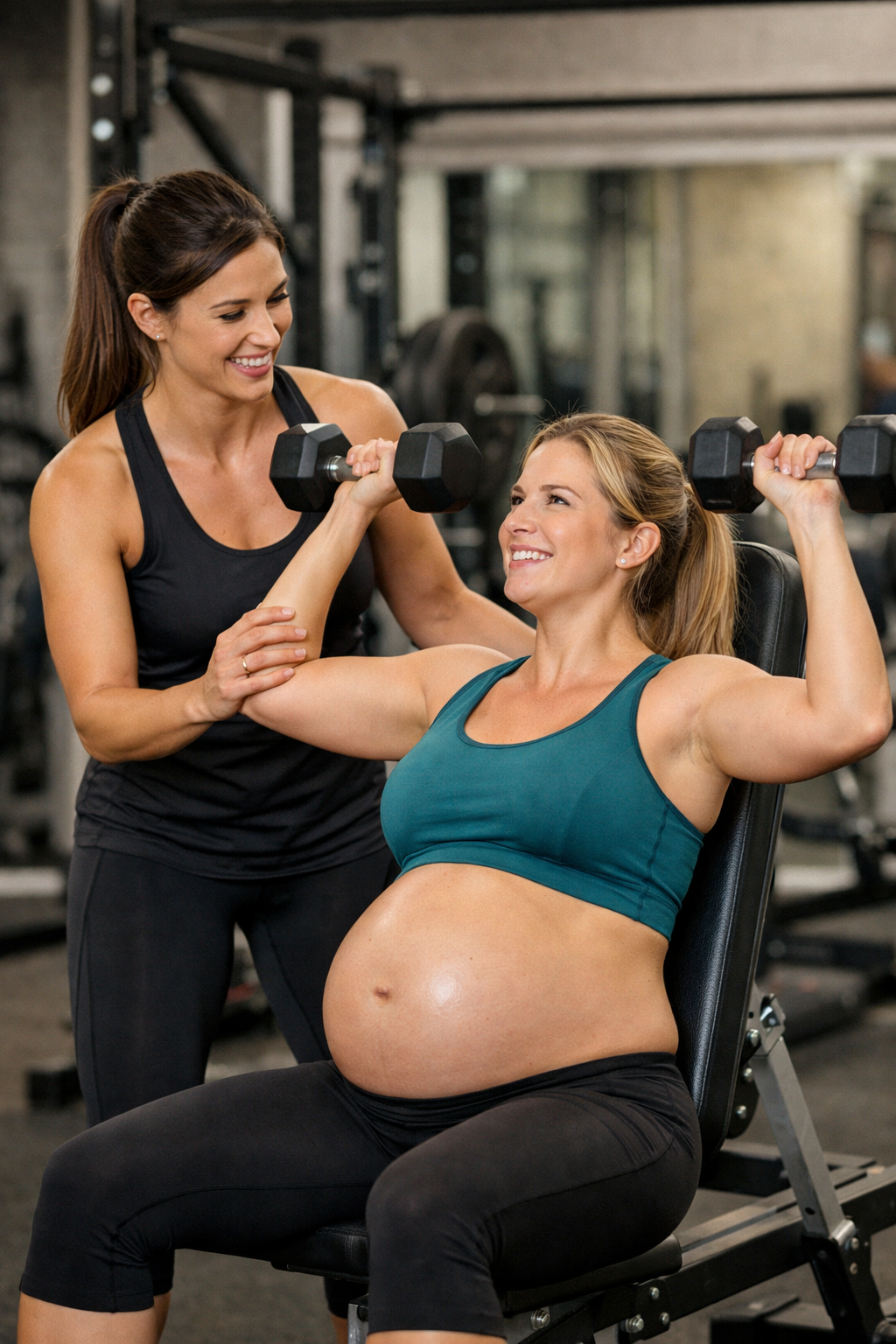
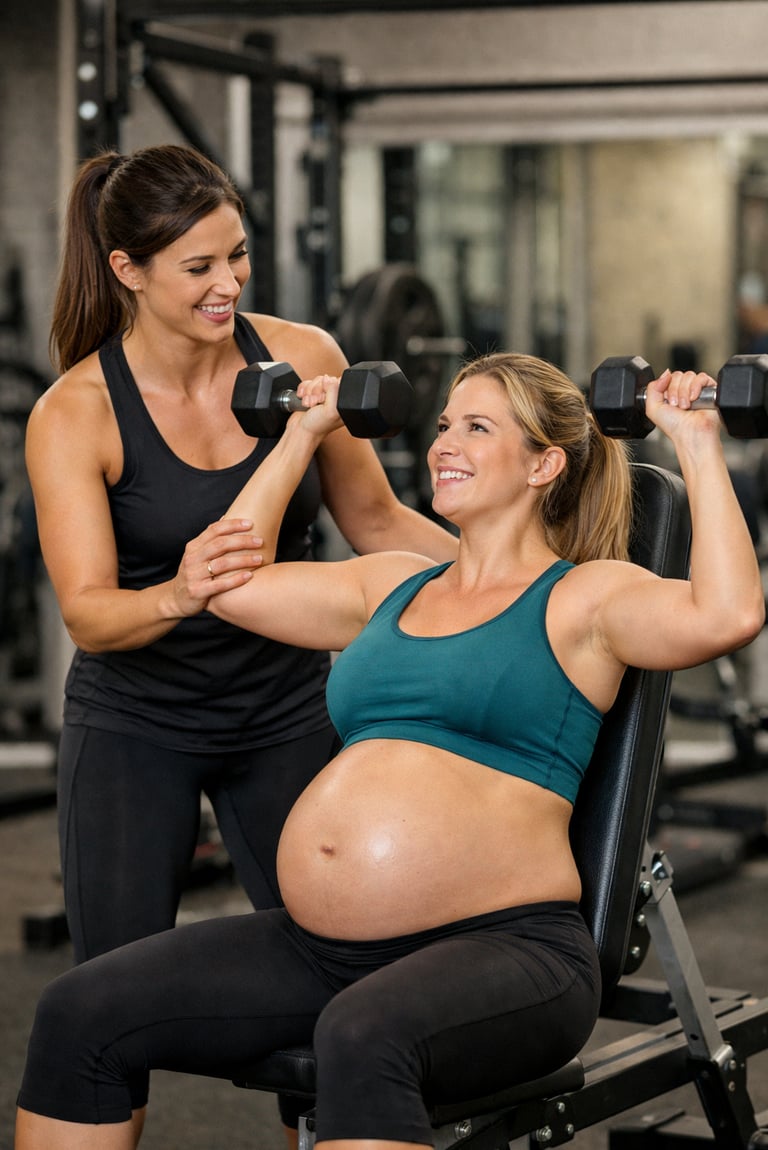
I was sitting on the couch, one hand resting on my growing belly, the other mindlessly scrolling through Instagram. Perfect bodies, sculpted arms, round glutes, flat stomachs, glowing skin, “day 1 to day 30” transformations. One story after another: someone running 10 kilometers before breakfast, another woman posting her “bounce-back body” just weeks after giving birth.
And there I was, pregnant, tired, swollen ankles, back pain, wondering if I was already failing before I even became a mother.
Social media has a way of quietly reshaping our expectations. We don’t just compare ourselves to others anymore – we compare ourselves to highlight reels. As women, we already carry so much pressure to look a certain way, to perform, to “do it all.” Pregnancy doesn’t make that pressure disappear. In many ways, it amplifies it. Suddenly, the expectations shift: stay fit, don’t gain “too much” weight, have a smooth pregnancy, recover fast, look amazing after birth. And if you struggle? Well, it feels like everyone else is doing it better.
This is usually the point where many of us start searching for quick solutions. We type phrases like “fast results personal training,” “effective personal training in a few months,” “how to transform your body quickly.” We start to believe that if we just find the right personal trainer, everything will finally fall into place. The body, the energy, the confidence, the motivation – all fixed within weeks or a couple of months.
I’ve been there. Not only during pregnancy, but long before it. And pregnancy taught me something surprisingly honest about “fast and effective” personal training.
Of course, personal training can be incredibly powerful. Working with a professional who understands movement, anatomy, progression, and individual needs can change how you experience exercise completely. Especially during pregnancy, guidance matters more than ever. Your body is not the same body you had before. Hormones soften your ligaments, your center of gravity shifts, your breathing changes, your pelvic floor is under constant load, and your core functions differently. Random workouts from social media are no longer just ineffective – they can be risky.
A good personal trainer doesn’t just give you exercises. They see you. Your posture. Your breathing patterns. Your weak points. Your daily habits. Your fears. They help you move in a way that supports your body rather than punishes it. During pregnancy, that means protecting your lower back, stabilizing your hips, keeping your glutes strong, maintaining deep core connection, and supporting your posture as your belly grows heavier week by week.
That alone can feel like magic when the back pain eases, when you can stand up from a chair without discomfort, when you sleep better, when your body feels more “together” instead of falling apart.
So yes, personal training is effective. But is it fast? And more importantly: what does “fast” even mean when you’re growing a human inside your body?
Here’s the uncomfortable truth: there is no healthy shortcut to building strength, stability, confidence, and sustainable fitness. Pregnancy doesn’t change that – it makes it even more true. Your body is already working overtime. Your cardiovascular system adapts. Your muscles are under new load. Your energy fluctuates daily. Some days you feel strong and capable. Other days walking up the stairs feels like a workout. No personal trainer can override biology, hormones, sleep deprivation, nausea, emotional shifts, or the simple reality that pregnancy is not a performance sport.
What personal training can do – when done well – is accelerate clarity, safety, and consistency. Instead of wasting months doing random exercises, guessing what’s safe, or quitting because something hurts, you get a structured, personalized approach. You learn how to move consciously. You understand why certain movements help your lower back, why your glutes protect your pelvis, why your breathing matters for your core, why posture is not just about standing straight but about distributing load efficiently through your body.
In a few months, you can absolutely feel stronger, more stable, less achy, more confident in your body. That is a real, meaningful result. But it’s not the same as “instant transformation.” It’s not a miracle makeover. It’s something deeper and far more valuable: you start to feel at home in your changing body again.
One of the biggest lies we absorb from social media is that change should be dramatic and visible immediately. We see before-and-after pictures and forget everything that happened in between. We don’t see the consistency, the bad days, the slow progress, the setbacks, the moments of doubt. We just see the final photo with perfect lighting and a confident smile. As a pregnant woman, comparing yourself to that is especially cruel. Your body is not in a “shaping phase.” It’s in a creating phase. It’s building life. That deserves respect, not criticism.
A good personal trainer during pregnancy understands this mindset shift. The goal is not to shrink your body or chase aesthetics. The goal is to support your body so it can carry pregnancy with less pain, more stability, better posture, and more functional strength. Strong glutes help stabilize your pelvis and reduce lower back pain. A well-functioning deep core supports your spine as your belly grows heavier. Balanced upper-body strength helps counter the forward pull of your chest and belly. Conscious breathing supports your nervous system and prepares you for labor.
These are not “Instagram goals.” These are real-life goals. These are the kinds of results that change how pregnancy feels day to day.
Many women also expect that hiring a personal trainer will automatically fix motivation. The truth is: a trainer can support you, encourage you, structure your sessions, and keep you accountable, but they can’t move your body for you. There will still be days when you’re tired, emotional, uncomfortable, or simply not in the mood. Especially during pregnancy, your energy is not predictable. And that’s okay. Effective personal training adapts to that reality instead of fighting it. Some sessions will be lighter, more mobility-focused, more about breathing and connection. Other days you’ll feel strong and capable of real strength work. Progress during pregnancy is not linear – and that’s not failure. That’s physiology.
So can you achieve your goals in a few months with personal training? It depends on what you define as your goals. If your goal is to feel more supported in your body, reduce pain, move with more confidence, stay active safely, and prepare your body for birth and recovery – then yes, personal training can help you reach meaningful results within months. If your goal is a dramatic visual transformation that matches filtered social media images, then no. And chasing that goal during pregnancy is not only unrealistic, it’s unfair to yourself.
There’s also something deeply emotional about being guided by another human during this phase of life. Pregnancy can feel isolating. Your body is changing in ways you didn’t choose. Some days you recognize yourself in the mirror, other days you don’t. Having a trainer who sees you not as a “project” but as a woman in a powerful transition can be grounding. It reminds you that movement is not about punishment or control – it’s about care, support, and presence.
What surprised me most was how personal training shifted my relationship with my body. Instead of constantly asking, “How do I look?” I started asking, “How do I feel?” Do I feel supported when I stand up? Do I feel stable when I walk? Do I feel less tension in my lower back? Do I breathe more freely? Do I trust my body more than I did last month? These questions led to answers that felt far more real than any number on a scale or comparison on a screen.
Fast results are tempting because they promise relief from discomfort, insecurity, and impatience. But pregnancy taught me that some of the most important transformations happen quietly. Stronger hips don’t always look dramatic, but they change how you carry your growing belly. Better breathing doesn’t show up in photos, but it changes how you handle stress and discomfort. Improved posture doesn’t go viral, but it changes how your back feels at the end of the day. These are slow, deep changes. And they are the ones that last.
So if you’re considering personal training during pregnancy because you feel pressured to “fix” your body quickly, I want to gently say this: your body is not broken. It is doing one of the most complex things a human body can do. Personal training can support you, guide you, and help you move with more ease and confidence – but it should never be about rushing your body into someone else’s timeline.
The most effective personal training is not the fastest one. It’s the one that respects where you are today, adapts to how your body changes tomorrow, and helps you build a relationship with movement that you can carry into motherhood and beyond.
And that kind of progress doesn’t scream on social media.
But you feel it in your spine when you stand up.
You feel it in your hips when you walk.
You feel it in your breath when you pause.
You feel it in the quiet confidence of knowing that your body is not something to fight against – it’s something to work with.
If pregnancy has taught me anything, it’s this: true effectiveness isn’t about speed. It’s about alignment – with your body, your needs, and the season of life you’re in right now.