When I look back at my twenties, I see a woman who loved movement but didn’t yet understand strength.I ran several days a week, chasing faster splits like they were proof of worth. I packed my schedule with high-intensity yoga classes where sweat felt like virtue and exhaustion felt like discipline. When I lived in New York in my early twenties, I had a gym membership, but I stayed loyal to the cardio machines. The treadmill was safe. The elliptical was familiar. The StairMaster was punishment if nothing else was open. I walked past the weight machines quickly, pretending I wasn’t curious. I didn’t know how to use them, and I didn’t want to look foolish asking.It didn’t occur to me then that none of what I was doing was actually about becoming stronger. It was about becoming smaller.That was the mid-to-late 2000s. Tabloids zoomed in on women’s thighs. A size 4 body could be labeled “too big.” Entire conversations revolved around shrinking, tightening, flattening. You absorbed it whether you wanted to or not. I certainly did. I told myself I exercised because I loved it—and I did love it—but underneath that love was a quieter, more controlling voice whispering: smaller is better.
The truth is, I had loved moving my body long before diet culture found its way into my bloodstream. I started dancing as a child and remember the thrill of learning choreography, the way music made my body feel alive. Sometimes I did Jane Fonda workouts in the living room with my mom, laughing at the leotards but loving the burn. In high school, I joined the volleyball team and started running. Running became therapy as much as exercise—a way to metabolize stress, to feel capable, to carve out space in my own head.In college, I found yoga. It felt spiritual and strong at the same time. I could balance in a handstand, hold long warrior sequences, flow for what felt like hours. I genuinely believed I was strong.But here’s the part I don’t talk about lightly: while I was training like an athlete, I wasn’t eating like one.I underfueled constantly.I restricted calories while asking my body to perform. I ran hard and ate little. I took intense yoga classes and then told myself I didn’t “need” dinner. I was hungry most of the time, but I had normalized that feeling. Hunger felt like evidence that I was doing something right.
And yes, I did get smaller.I also had brittle nails. My skin broke out constantly. I experienced occasional heart palpitations that I brushed off as stress. I felt lightheaded more often than I admitted. I was cold a lot. I was irritable. My energy came in sharp spikes and crashes.Looking back now, with more knowledge and more compassion, I understand what was happening physiologically. When you chronically under-eat while training hard, your body doesn’t interpret that as dedication. It interprets it as threat. Energy availability drops. Hormones shift. Cortisol rises. Reproductive hormones can decrease. Thyroid function can downregulate. The body prioritizes survival over performance.But in my twenties, I wasn’t thinking about endocrine systems or bone density. I was thinking about thigh gaps.It wasn’t until after I had my first baby that my definition of strength cracked open.
Before pregnancy, I could run six miles without blinking. I could float into arm balances in yoga. I felt fit. But pregnancy and birth changed my body in ways no treadmill ever had. I grew a human. I delivered her. My abdominal wall stretched. My pelvic floor worked overtime. My joints felt loose from hormonal shifts. I was sore in deep, unfamiliar places.After giving birth, I didn’t feel strong. I felt wobbly. Overstretched. Soft in a way that scared me.And I was hungry—ravenous, actually. Breastfeeding is metabolically demanding. Producing milk requires energy. My body was asking, loudly, for more fuel.Running didn’t feel right in that season. Intense yoga left me feeling depleted instead of centered. So almost on a whim, I tried strength training.At first, it was through HIIT classes. There was still a cardio edge to it, which felt comfortable, but now there were dumbbells involved. I remember the first time I finished a session and felt powerful instead of drained. My muscles were tired, yes, but in a grounded way. I felt stable walking out of the studio, not shaky.It was the first time I associated exercise with building rather than burning.
I also noticed something inconvenient: on days I did HIIT or lifted weights, my hunger spiked dramatically. I could no longer ignore it without feeling awful. So I started eating more on those days. Not as a reward, but because if I didn’t, I felt like I might collapse.Still, my eating was inconsistent. I ate more on hard workout days and then restricted on rest days, as if my body functioned on a daily accounting system. This mindset—“earn your calories”—is deeply rooted in diet culture. It frames food as transactional. But human physiology doesn’t reset every midnight. Muscle repair, glycogen replenishment, hormonal regulation—all of these processes extend beyond a single workout window.Your body doesn’t only need fuel for the hour you train. It needs fuel to recover, adapt, and build.
It took me years to truly understand that.As I moved into my forties, something shifted again. It wasn’t dramatic. It was quieter than that. I started thinking about the long game. I didn’t want to age into fragility. I didn’t want the cliché of everything hurting “just because.” I didn’t want to spend decades chasing a smaller version of myself while neglecting what my body could actually do.Research is clear that muscle mass and bone density naturally decline with age, particularly for women as estrogen levels drop during perimenopause and menopause. Resistance training is one of the most effective tools we have to counteract that decline. Lifting heavy loads—relative to your capacity—stimulates muscle protein synthesis. It sends a mechanical signal to bones, encouraging them to maintain or even increase density. It improves insulin sensitivity. It enhances joint stability. It supports balance and reduces fall risk.
Moderate weights and higher repetitions can absolutely build muscle, especially for beginners. But progressive overload—gradually increasing the demand placed on the body—is key if you want continued adaptation. For me, that eventually meant lifting heavier barbells.The first time I loaded plates onto a bar and realized I was about to lift more than my bodyweight, I felt a flicker of fear. Not physical fear—though there was some of that—but identity fear. Who was I becoming if I prioritized strength over thinness?I discovered quickly that you cannot lift heavy consistently if you are undernourished. It’s almost impossible to generate force when glycogen stores are chronically depleted. Protein provides amino acids necessary for muscle repair and growth. Carbohydrates replenish muscle glycogen, which fuels high-intensity work. Fats support hormonal function. Micronutrients—iron, calcium, magnesium, B vitamins—play essential roles in energy metabolism and recovery.
When I began lifting seriously, my hunger didn’t just increase on workout days. It increased overall. That scared me. Even after years of work around body image, the old voice whispered: what if you gain weight?But another voice, stronger now, asked: what if you gain strength?I follow a plant-based diet, which means being slightly more intentional about protein sources. Contrary to some trends, you don’t need absurd amounts of protein, nor do you need to spike every snack with isolate powders. For most active women, a general target of around 1.2 to 1.6 grams of protein per kilogram of bodyweight per day supports muscle maintenance and growth. That can be achieved through whole foods: lentils, tofu, tempeh, beans, edamame, quinoa, nuts, seeds, soy yogurt, and yes, sometimes protein powder for convenience.
I chose not to track macros obsessively. Given my history of disordered eating, that path felt risky. Instead, I focused on including a meaningful protein source at each meal and eating until I felt satisfied. I made sure my plates contained carbohydrates—not just vegetables, but rice, potatoes, oats, bread—especially around training. I added healthy fats without fear. I paid attention to iron and B12. I stopped skipping dessert out of principle.I also stopped moralizing rest days.Recovery is where adaptation happens. When you lift weights, you create microtears in muscle fibers. Given adequate nutrition and rest, those fibers repair and become stronger. Chronic under-recovery—through under-eating, overtraining, or poor sleep—blunts that adaptation and increases injury risk. As women, particularly in midlife, sleep quality can already be challenged by hormonal shifts. Protecting recovery becomes non-negotiable.Something beautiful happened as I consistently fueled and trained: my body responded.
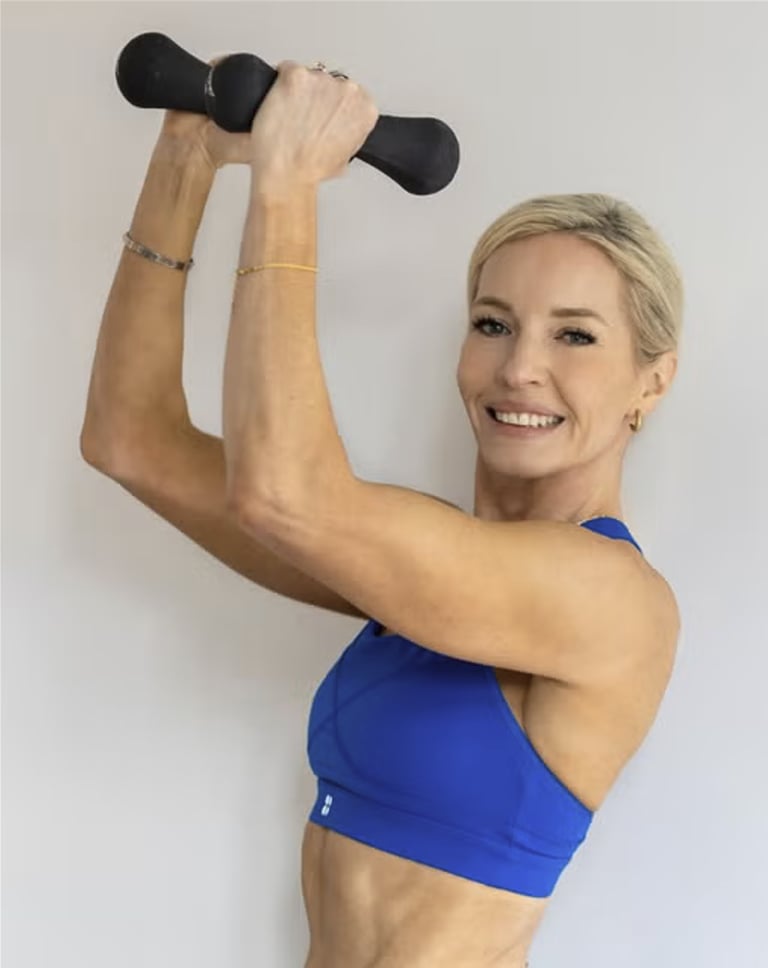
In the past year of lifting heavy, I have felt more at home in my body than at any other point in my life. My joints feel stable. My back rarely aches. I can pick up awkward loads without hesitation. I dance three times a week—still in love with movement—and I don’t feel intimidated standing next to women twenty years younger. In many ways, I am stronger now at 44, after three pregnancies, than I was at 24.The aesthetic changes? They matter less than I expected. Yes, my body looks different than it did when I was chronically underfed. My shoulders are broader. My legs are solid. But what I notice more is capability. I notice that I don’t feel fragile. I notice that I trust my body.And perhaps most importantly, I no longer believe I have to earn my food.
There are still moments when the old conditioning surfaces. A mirror catches me off guard. A comment lands wrong. The culture we live in hasn’t suddenly healed its obsession with women’s bodies. But I have more tools now. I understand that muscle is metabolically active tissue that supports long-term health. I understand that bone density is built through load-bearing stress. I understand that hunger is not a moral failure but a biological signal.Strength training has given me something cardio never did: a sense of expansion rather than contraction.It has also deepened my respect for nourishment. Eating enough is not indulgent; it is foundational. Especially for women in midlife, when muscle preservation becomes protective against metabolic decline, when bone health becomes critical, when resilience matters more than aesthetics.
If I could speak to my younger self, the one sprinting on the treadmill with a clenched jaw and an empty stomach, I wouldn’t shame her. She was navigating a culture that equated smallness with success. I would simply tell her this: your body is not a problem to be solved. It is a system to be supported.Feed it. Challenge it. Let it take up space.Strength is not loud. It doesn’t always show up as visible muscle or impressive lifts. Sometimes it’s choosing lunch when your brain says skip it. Sometimes it’s adding five more pounds to the bar because you can. Sometimes it’s resting without guilt.In my forties, strength feels like freedom. Freedom from chasing thinness. Freedom from constant calorie math. Freedom from shrinking myself to fit an outdated ideal.I still love to move. I still dance. I still sweat. But now, when I step under a barbell, I’m not trying to disappear.I’m trying to build something that will carry me—confidently, powerfully—into the decades ahead.