There was a time when I genuinely believed consistency meant doing the exact same workout over and over again.
Every Monday I did the same strength circuit. Every Wednesday was my “cardio day.” Friday? Abs and a quick stretch before rushing home. I loved the comfort of it. I knew exactly what to expect. I knew which exercises I was “good at,” which ones I could survive, and how long everything would take. It felt disciplined. It felt committed.
And then one day I looked in the mirror and realized… nothing was really changing.
I wasn’t getting weaker. I wasn’t out of shape. But I also wasn’t progressing. My energy felt flat. My body looked the same. My motivation slowly started slipping. I blamed hormones. Stress. Sleep. Anything but the truth.
The truth was simple: my body had adapted.
As women, we’re often told that consistency is everything. And yes, it is. But no one talks enough about intelligent variety. The female body is incredibly adaptive. We are biologically designed to adjust — to stress, to workload, to repetition. If you do the same squats, the same treadmill pace, the same weight selection week after week, your body becomes efficient. Efficient sounds good. But in fitness, efficiency without progression means plateau.
And that’s where I was.
I had to relearn something that sounds obvious but feels uncomfortable: growth requires change.
When I started rethinking my training, I realized I had been unintentionally neglecting parts of my fitness that actually mattered most. I thought I was “balanced.” In reality, I was stuck in my comfort zone. That’s when I began focusing on what I now call the four pillars of sustainable female fitness: cardiovascular conditioning, strength training, core stability, and flexibility.
Not in a textbook way. Not in a rigid schedule. But in a way that felt supportive to my body.
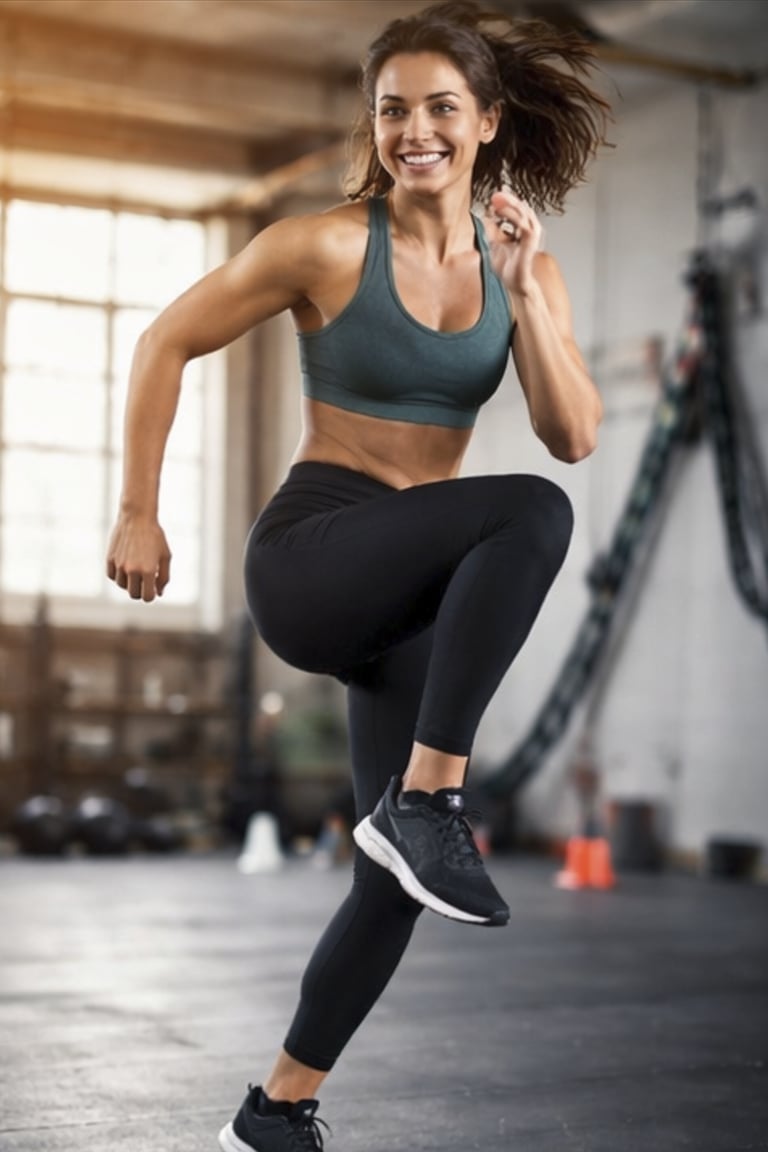
Cardiovascular conditioning was the first area I changed. For years, my cardio meant steady-state jogging or the elliptical. It was safe. Predictable. And honestly, a little boring. My heart rate barely fluctuated because I stayed in that comfortable middle zone. Once I introduced variety — interval-based training, dance-inspired workouts, and short bursts of high-intensity intervals — everything shifted.
Some days I would push hard with sprint intervals. Other days I’d take a high-energy dance class where I barely noticed how hard I was working because I was smiling the entire time. The difference wasn’t just physical. My endurance improved, yes. But more importantly, my mindset changed. Cardio stopped feeling like punishment and started feeling like expression.
As women, we often approach cardio with a fat-loss mindset. “Burn calories.” “Earn dinner.” I had to unlearn that thinking. Cardiovascular training is about heart health, stamina, circulation, mental clarity. When I reframed it that way, I stopped chasing exhaustion and started chasing vitality.
Strength training was the next revelation.
For a long time, I hovered around light dumbbells because I was afraid of “bulking up.” It sounds cliché now, but that fear is still deeply rooted in many of us. We’ve been conditioned to believe that smaller is better, softer is safer.
But once I started lifting heavier — progressively, intelligently — my entire body composition changed. Not in a dramatic, overnight way. But in a steady, empowering way.
Muscle tone improved. My posture improved. My confidence improved.
What surprised me most was how much stronger I felt outside the gym. Carrying groceries. Moving furniture. Even just walking with better alignment. Strength training is not just about aesthetics; it’s about capability. And there is something profoundly powerful about feeling capable in your own body.
However, I learned quickly that strength also needs variation. If you repeat the same leg press, same chest press, same rep scheme forever, your muscles adapt just like they do with cardio. So I began cycling between heavier weeks and lighter endurance-focused sessions. I added bodyweight-based workouts like barre-style sessions that targeted smaller stabilizing muscles. I experimented with tempo changes — slowing down the eccentric phase of movements. Small tweaks made massive differences.
And then there’s core stability.
For years, my “core training” meant a rushed five-minute ab finisher at the end of a workout. Crunches. Maybe a plank. Done. I thought visible abs equaled core strength.
I couldn’t have been more wrong.
True core stability goes far beyond surface muscles. It includes the pelvis, deep abdominal muscles, lower back, and even the diaphragm. Once I began focusing on intentional engagement — especially through Pilates-inspired training — I realized how disconnected I had been from my own center.
Learning how to properly activate my transverse abdominis changed everything. My lower back discomfort decreased. My lifts improved because I had a stable base. Even my breathing patterns became more controlled.
There is something incredibly grounding about strong core work. It teaches patience. Precision. Awareness. As women, especially if we’ve experienced pregnancy, hormonal shifts, or posture changes from long desk hours, reconnecting with our core can feel almost therapeutic.
And finally, stretching and flexibility — the most underestimated component of all.
If I’m honest, stretching used to be the thing I skipped when I was short on time. “I’ll stretch later,” I would tell myself. Later rarely came.
But tight hips, stiff shoulders, and limited range of motion eventually forced me to pay attention. Flexibility isn’t about being able to do the splits for Instagram. It’s about joint health, circulation, and long-term mobility.
Once I began dedicating real time — more than five rushed minutes — to stretching, I noticed immediate changes. My squats felt deeper. My lunges more stable. My recovery improved. And mentally, those slow, breath-focused moments became my reset button.
Yoga-style flows helped me connect movement with breath. Slower mobility sessions allowed my nervous system to calm down. In a world where we are constantly rushing, those sessions became sacred.
What I’ve come to understand is that variety doesn’t mean chaos. It doesn’t mean changing everything every week. It means rotating stimulus so your body never gets too comfortable.
It also means listening.
As women, our energy fluctuates throughout the month. Some weeks we feel powerful and explosive. Other weeks we crave slower, grounding movement. Instead of fighting those rhythms, I began working with them. Heavier lifts when I felt strongest. More mobility and flow when I felt depleted.
That shift alone reduced burnout.
Plateaus are often not a sign that you need to work harder. Sometimes they are a sign that you need to work differently.
Adding variety reignited my motivation. Walking into a class or starting a session without knowing exactly how it would challenge me brought back excitement. My body responded. My mindset responded.
Most importantly, I stopped viewing fitness as a checklist and started experiencing it as a relationship.
A relationship with my heart health.
A relationship with my strength.
A relationship with my core stability.
A relationship with my flexibility and longevity.
When all four elements are present, something beautiful happens. You don’t just look fit. You feel integrated.
Your cardio sessions support your strength sessions. Your core supports your lifts. Your flexibility supports your recovery. Everything works together.
If you’re currently stuck doing the same routine week after week and wondering why nothing is changing, I say this gently: your body is simply doing what it was designed to do. It adapted.
That’s not failure. That’s intelligence.
The solution isn’t punishing yourself with longer workouts or harsher diets. It’s introducing thoughtful variety. Try a different format. Lift heavier. Slow down your tempo. Spend real time on your core. Stay in a stretch longer than feels comfortable. Let your body experience something new.
Growth doesn’t always come from doing more. Often, it comes from doing differently.
From a woman’s perspective, fitness isn’t just about chasing a number on a scale or fitting into a certain size. It’s about feeling strong in your skin. It’s about having energy for your life. It’s about walking into a room with quiet confidence because you know what your body is capable of.
That kind of fitness cannot exist in a monotonous routine.
It lives in movement. In exploration. In variety.
And once you embrace that, plateaus stop feeling like dead ends. They become invitations to evolve.