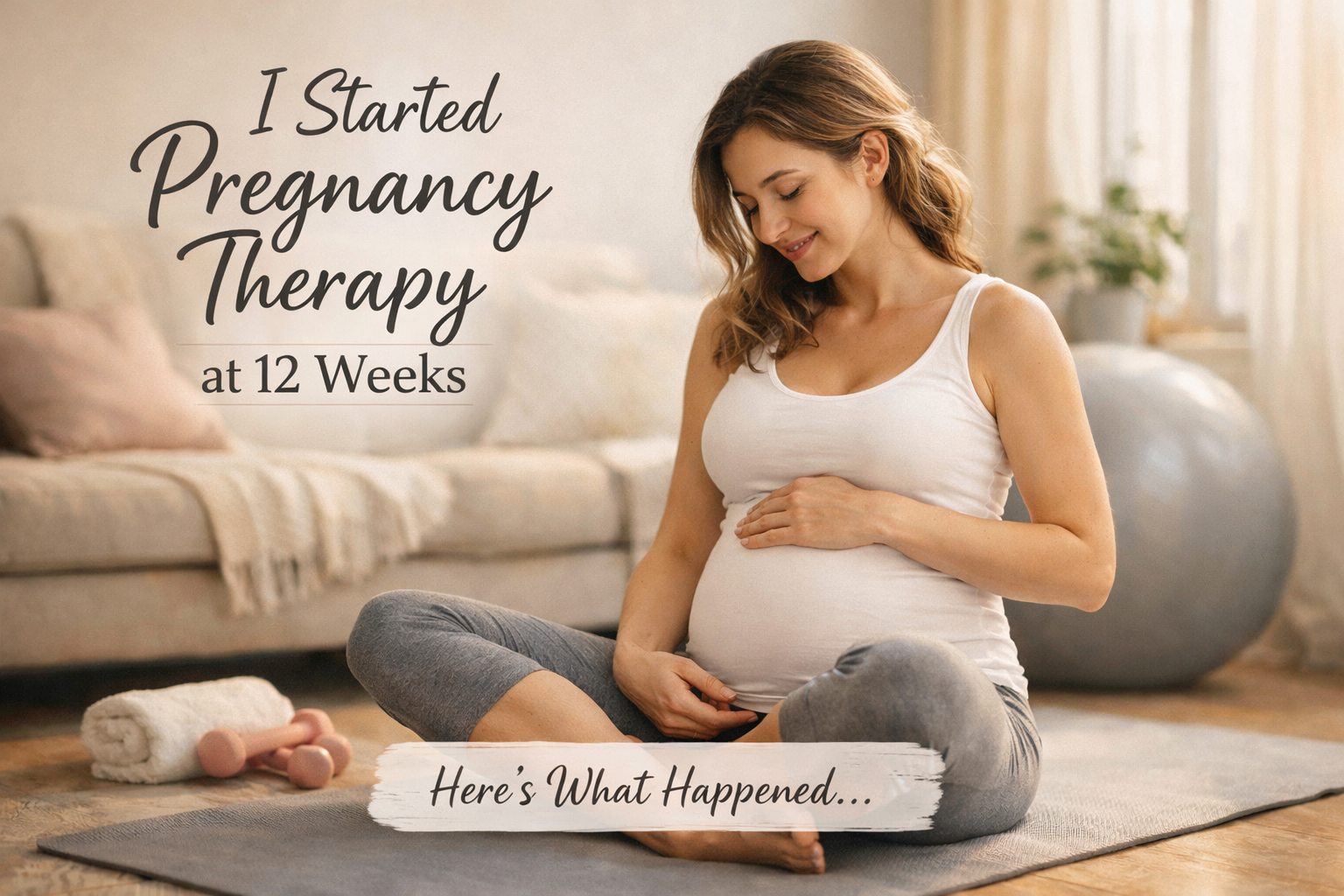
I didn’t plan to become “that woman” who talks about her body all the time. Before pregnancy, my body was something I mostly ignored unless it hurt or my jeans felt tighter. Then suddenly, I was living inside it in a completely new way. Every small sensation felt louder. My back spoke up in the morning. My legs felt heavier by the afternoon. My breath changed when I climbed stairs. And somewhere between my first ultrasound and the moment I realized I could no longer tie my shoes comfortably, I understood something very clearly: pregnancy is not just about growing a baby — it’s about learning how to live in a body that is constantly changing.
In the beginning, I thought I had to “rest” my way through pregnancy. I imagined lying down more, moving less, protecting my body from effort. That’s what many of us are taught, subtly or directly: don’t lift, don’t strain, don’t move too much. But as my belly slowly started to grow, the stiffness grew with it. My lower back began to ache after long days. My legs felt swollen in the evenings. I noticed that my posture changed without me realizing it — my shoulders rounded forward, my pelvis tilted, my neck stiffened. It wasn’t dramatic pain, just a constant low-level discomfort that whispered: something isn’t aligned anymore.
That was the moment I heard about starting preventive physiotherapy for pregnant women, ideally from the end of the first trimester, around weeks 10–12. At first, I hesitated. I wasn’t “sick.” I didn’t have a serious problem yet. I felt like therapy was something you start when something is already wrong. But pregnancy is different. Your body is not injured — it’s adapting. Hormones soften your ligaments. Your center of gravity shifts forward. Your abdominal wall stretches. Your pelvic floor carries more load every single week. The smart thing isn’t to wait for pain — it’s to guide your body while it’s changing.
Starting individual pregnancy physiotherapy felt less like going to treatment and more like entering a safe space where someone finally understood what my body was going through. It wasn’t about pushing harder or training like an athlete. It was about learning how to move in a body that no longer follows the old rules. I realized how many small movements I did on autopilot — how I stood up from a chair, how I rolled in bed, how I carried groceries, how I breathed when I felt tired. Those little habits suddenly mattered. When your joints become more flexible due to relaxin, stability becomes more important than strength alone. When your belly grows, your back muscles work differently. When your ribcage opens, your breathing patterns change. Nothing is “wrong,” but everything is different.
What surprised me the most was how calming it felt to move with intention. Instead of random exercises from the internet, I had guidance that respected the stage of my pregnancy. We focused on stabilizing muscles — not just strengthening them aggressively, but teaching them to support my changing posture. My deep core muscles, which I had never thought about before, suddenly felt like silent helpers holding me upright. We worked on maintaining abdominal tone without straining or flattening my belly in unnatural ways. It wasn’t about having a “flat stomach” — it was about supporting my spine and giving my organs space to shift safely.
Posture correction became a daily awareness practice. I learned how easy it is to collapse into myself when you’re tired, how pregnancy invites your body to curve forward as your belly grows. Gently opening my chest, stacking my ribcage over my pelvis, letting my head float instead of jutting forward — these tiny adjustments reduced my back and neck pain more than any pillow ever did. It felt empowering to realize that comfort wasn’t something I had to wait for — I could create it through how I moved and held myself.
One of the most emotionally meaningful parts of my pregnancy training was pelvic floor work. Before getting pregnant, I thought of the pelvic floor only in relation to childbirth. Now I understand that it’s not just about delivery — it’s about how you carry yourself through pregnancy, how you protect your organs, how you recover afterward. Strengthening those muscles gently and consciously gave me a sense of internal stability. I wasn’t just preparing for birth; I was taking care of the part of my body that would support me long after my baby arrived. There’s something deeply grounding about connecting to muscles you can’t see but can feel when you breathe into them properly. It made me feel less afraid of what was coming.
Breathing itself changed for me during pregnancy. As my uterus grew, my lungs had less space to expand downward, and I found myself taking shallower breaths without noticing. Learning pregnancy-appropriate breathing patterns helped me feel calmer, more oxygenated, and more connected to my body. Practicing the breathing techniques used during labor didn’t make birth suddenly feel easy, but it made it feel more familiar. Instead of imagining labor as something that would happen to me, I began to see it as something I would actively participate in with my body.
Another thing I didn’t expect was how much attention we gave to my feet and circulation. As relaxin softened my connective tissue, my foot arches felt more tired by the end of the day. Gentle foot exercises helped prevent that sinking, achy feeling. Venous exercises became part of my routine too — small movements that supported circulation, reduced swelling in my ankles, and even helped me feel lighter in my legs. It sounds simple, but when your feet don’t ache and your legs don’t feel heavy, your whole day feels easier. And knowing that improving my circulation also supported my baby’s circulation gave those little movements emotional weight. I wasn’t just moving for myself — I was moving for both of us.
Balance and coordination exercises also became surprisingly important. As my center of gravity shifted forward, I noticed I felt slightly less stable, especially when turning quickly or stepping off curbs. Training my balance wasn’t about becoming athletic — it was about safety. About trusting my body in a body that was changing its proportions. It made everyday movements feel less awkward and less risky. I stopped feeling clumsy and started feeling more present in my steps.
What I loved most about individual pregnancy physiotherapy was that it respected my emotional state as much as my physical one. Some days I came in energized, curious, ready to move. Other days I was tired, overwhelmed, emotional without knowing why. Pregnancy does that to you. Having a space where my changing energy levels were okay, where exercises adapted to how I felt that day, made movement feel supportive instead of demanding. It wasn’t another thing I had to “perform well” at. It was something that held me.
Over time, I realized that preventive therapy during pregnancy isn’t about avoiding all discomfort — because pregnancy will always bring sensations you can’t eliminate completely. It’s about making your body more resilient, more adaptable, more supported. It’s about reducing the chance that small discomforts turn into persistent pain. It’s about preparing not only for birth, but for the postpartum period — when your body is tired, your hormones are shifting again, and your muscles need to find their balance after carrying life.
Looking back, I wish more women were told that starting around the end of the first trimester is not “too early” — it’s actually the perfect time. By then, the initial nausea often softens, your energy slowly returns, and your body is just beginning its visible changes. Supporting those changes early feels kinder than trying to correct them later. It feels like meeting your body with curiosity instead of reacting to it with frustration.
Pregnancy taught me that movement doesn’t have to be intense to be meaningful. Sometimes, the smallest adjustments — a conscious breath, a gentle pelvic floor activation, a slow spinal alignment — can change how you feel in your body for the rest of the day. And when you feel more comfortable in your body, you feel more emotionally grounded too. You feel more present in the experience of becoming a mother, rather than just enduring it.
I don’t move now because I’m afraid of pain. I move because it makes me feel more at home in my changing body. Pregnancy physiotherapy didn’t turn me into a superwoman. It simply gave me tools to listen to my body, support it, and trust it. And in a time when so much feels unknown, that sense of trust is quietly powerful.