Pregnancy has a way of changing how you feel about your body almost overnight. I remember the first time I really noticed the extra weight pressing down on my lower back. My baby was growing, and suddenly my spine felt heavier, my hips were shifting, and my once-comfortable posture seemed to ask for a complete reset. It was in that moment I realized: if I wanted to keep moving comfortably and avoid pain, I needed to pay attention to the muscles that support my hips and lower back.
Before pregnancy, I had always thought of glute exercises as something for aesthetics—strong, round, toned glutes. But now, as I felt the gentle pressure of my baby growing inside me, I started to understand their real value: the glute muscles are vital stabilizers for the pelvis and lower spine. Strong glutes mean a more stable hip and lumbar region, which helps absorb the growing weight in my belly. They act like a protective shield for my back, reducing the risk of lower back pain that seems to accompany almost every stage of pregnancy.
At first, it was intimidating. The last thing I wanted was to hurt myself—or my baby—by doing the wrong exercise. I had read that some exercises could be dangerous if done incorrectly during pregnancy, especially those that involve lying flat on your back for extended periods. So I started doing my research, talking to my physiotherapist, and experimenting carefully. That’s when I discovered that the most effective way to work my glutes safely was through hip thrusts, done in ways adapted to the changing needs of my body during pregnancy.
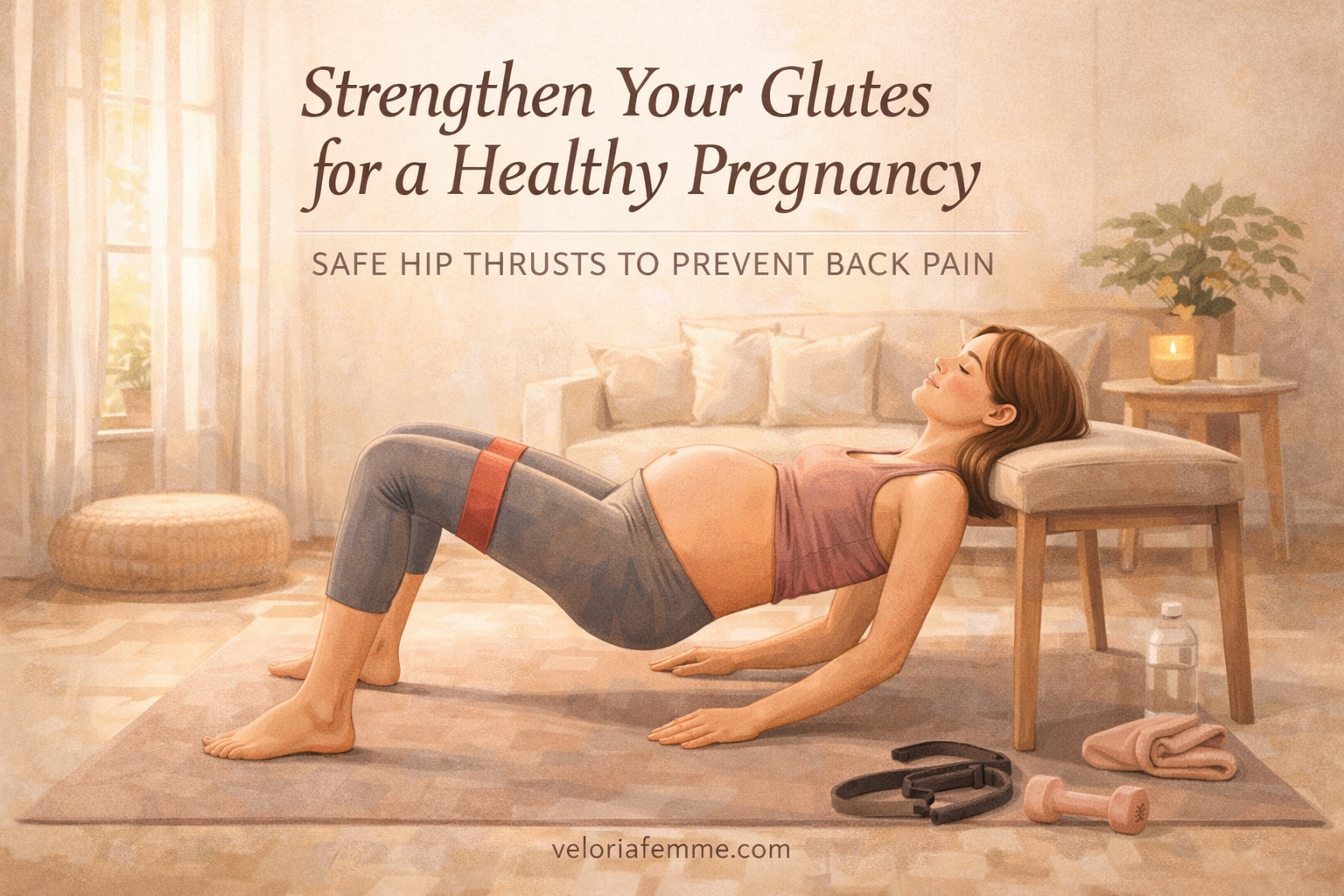
Hip thrusts are simple in concept: you push your hips upward, engaging your glutes while keeping your core strong and spine supported. But during pregnancy, technique is everything. For me, the most comfortable and safest version was the hip thrust done with my upper back elevated on a bench or sofa. Sitting or lying flat on the floor with my back completely down was mostly safe only up until mid-second trimester, after which it started to feel awkward and uncomfortable. The elevated version keeps the pelvis in a neutral position, reduces strain on the lower back, and allows me to feel in control of the movement throughout my range of motion.
I started slowly, without any additional weight. At first, I did just a few repetitions, focusing entirely on feeling my glutes activate. It was surprising how subtle the sensation was at first; my glutes had to “wake up” and remember how to do their job in this new, heavier body. Once I felt confident, I added a miniband around my knees to increase tension slightly, and occasionally used a light power band to gently challenge my muscles. But even with added resistance, my focus stayed on maintaining proper alignment: spine neutral, core engaged, pelvis safe. I learned quickly that any discomfort in my belly, lower abdomen, or pelvic area was a sign to pause, reset, and reduce intensity.
One of the most important lessons I learned was that glute exercises during pregnancy are not about how much weight you can lift or how many repetitions you can complete. They are about control, awareness, and building a foundation that supports your body in a very real, physical way. A strong glute is not just aesthetic—it is functional. It helps my pelvis stay level, supports my lower back, improves posture, and even helps me maintain balance as my center of gravity shifts with my growing belly.
I noticed that as my glutes became stronger, I experienced fewer aches during daily life. Standing for long periods was easier. Walking felt smoother. My lower back pain, which had started to appear in the first trimester, began to diminish. I realized that this small, focused exercise had an impact far beyond the minutes I spent performing it on my mat. My body felt stronger, more supported, and more confident in its ability to carry my baby comfortably.
Another benefit I discovered was how hip thrusts helped prepare my body for labor. The glutes, along with the pelvic floor and core muscles, play an essential role during childbirth. Engaging them regularly helped me feel more in tune with these muscles, and it gave me a sense of empowerment over the physical challenges to come. Breathing deeply while lifting the hips, feeling the glutes activate, and noticing the subtle support for my lower back all became part of a practice that felt both physical and meditative.
I learned to integrate hip thrusts into a full prenatal routine that also included mobility work for my hips, gentle stretches for my lower back, and mindful breathing exercises. One of my favorite routines was simple: 5–6 controlled hip thrusts in one direction, holding for a few seconds at the top, then slowly lowering. Then I’d rest, breathe, and repeat. I made sure to keep my movements slow, deliberate, and attentive to my body’s signals. If anything felt off, I paused or modified. This approach helped me respect my changing body, rather than forcing it into positions or intensity it wasn’t ready for.
Adding a band or light weight came later, once I was comfortable with the movement. The bands helped create a slight outward push with my knees, which activated the glute medius, a muscle that supports hip stability and helps prevent knee or pelvic misalignment. Even small adjustments like this made me more aware of my muscles and how they worked together to support my posture. I started to notice that I was engaging my core, my lower back, and my glutes in a coordinated way, which translated into more comfortable daily movement—walking up stairs, getting in and out of the car, or simply standing from a seated position.
Over time, I realized that hip thrusts had become a kind of ritual for me. They weren’t about pushing limits—they were about connection. Connection to my body, my baby, and the growing awareness of how movement could help me feel strong and prepared. Some days I did fewer repetitions; other days I added a bit more intensity. But the focus remained the same: slow, controlled, safe, glute-activating movement that supported my lower back and pelvis.
One of the hardest parts was learning patience. My body was changing rapidly, and some days I couldn’t do the movements I had done easily the week before. On those days, I reminded myself that growth isn’t always linear. My glutes and supporting muscles were still being trained; the difference was that the progress was measured not just in reps or strength, but in comfort, stability, and posture. Learning to celebrate these subtle signs of progress made the practice feel rewarding in a new way.
I also had to adjust my expectations about other forms of exercise. Squats and lunges were still fine in moderation, but explosive moves or heavy weights felt risky. I found that focusing on glute activation through hip thrusts, bridges, and controlled leg lifts gave me the stability I needed for other movements, without creating unnecessary strain. The glutes became the foundation for all my other prenatal exercise, supporting posture, balance, and daily function.
Another practical tip I discovered was the importance of cues and setup. Sitting on a small mat or placing a folded towel under my upper back helped me maintain proper alignment. I always kept my feet firmly on the ground, shoulder-width apart, and ensured my pelvis stayed neutral. I focused on slowly lifting the hips while engaging the glutes, pausing at the top, and then lowering gently. A mindful breath at each stage kept the movement safe and intentional.
As my pregnancy progressed into the third trimester, I continued to adapt. I noticed that maintaining good glute strength helped me carry my baby with less strain on my lower back. It also gave me confidence for labor, knowing that the muscles supporting my pelvis were strong and responsive. This awareness made daily life feel easier—standing, walking, bending, even getting in and out of bed. My posture improved, and my body felt more balanced despite the weight of my growing belly.
Ultimately, what I learned is that glute work during pregnancy is about more than just exercise—it’s about empowerment. It’s about respecting your body, understanding its changing needs, and giving it the support it deserves. Hip thrusts and glute-focused movements became a way to nurture strength safely, reduce discomfort, and prepare for the demands of childbirth and postpartum recovery.
Pregnancy taught me patience, awareness, and the value of small, intentional movements. Each controlled hip thrust, each mindful breath, each gentle squeeze of my glutes was not just exercise—it was preparation. Preparation for the incredible journey of birth, for carrying my baby with stability and comfort, and for moving through daily life without pain.
Now, as I near the end of my pregnancy, I look back and feel grateful for the time I spent focusing on my glutes. These simple, mindful exercises have had a lasting impact on how I move, how I feel, and how confident I am in my changing body. They remind me that pregnancy is not a time to push, but a time to support, strengthen, and listen. And for me, that support begins with my glutes, my hips, and the stable foundation they provide for the adventure of motherhood ahead.