I didn’t plan on falling in love with a cable machine.
Honestly, when I first started building my home gym, I thought I knew exactly what I needed: a good barbell, some plates, a squat rack, and maybe a set of dumbbells if I was feeling fancy. Simple. Strong. Efficient. That was the mindset. But somewhere between my third set of rows and yet another awkward attempt at chest flyes with dumbbells, I realized something was missing.
Control. Fluidity. That smooth, continuous tension you just can’t quite replicate with free weights alone.
That’s when cable machines entered the picture—and suddenly, what seemed like a simple purchase turned into a surprisingly personal decision. One stack or two? Heavy or versatile? Minimalist or all-in?
If you’re standing in that same place right now, trying to decide what actually fits your training style, let me walk you through it the way I experienced it—not like a manual, but like a conversation between two people who just want their workouts to feel right.
The first thing that surprised me was how different cable machines feel. Not just in terms of resistance, but in how your body moves with them. With free weights, gravity dictates everything. Up and down. Controlled or not. But cables? They meet you where you are. They follow your movement.
And that’s where pulley ratios quietly become the most important detail no one talks about—until you feel the difference.
When I first tried a single-stack machine at a friend’s place, I remember thinking, “Wow, this is heavier than I expected.” Later, I learned that it used a 1:1 pulley ratio. Which basically means: if you select 50 kg, you’re actually pulling 50 kg. No tricks, no scaling. Just pure, direct resistance.
It felt solid. Grounded. Almost like a barbell, but smoother.
Then I tried a functional trainer at a gym. Same number on the stack, completely different feeling. Lighter. Faster. More range. That one used a 2:1 ratio—so the 50 kg I selected actually felt like 25 kg in my hands, but I could move it twice as far.
And that’s when it clicked: this isn’t just about weight. It’s about how you train.
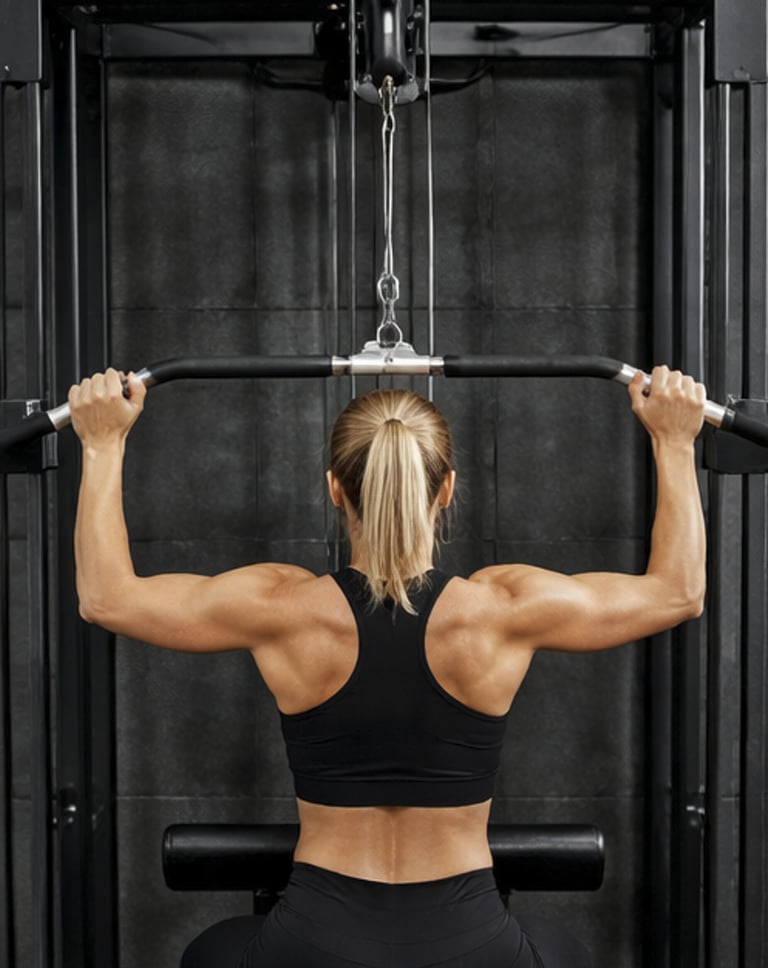
If I’m being honest, there’s something deeply satisfying about lifting heavy. That feeling when you sit down, lock your legs in place, grab the bar, and pull with everything you’ve got—it’s empowering. Grounding. It makes you feel strong in a very real, physical way.
That’s where single stack machines shine.
They’re not trying to be everything. They’re built for one purpose: pulling weight, and pulling it well.
Lat pulldowns feel stable because you’re anchored properly. Seated rows feel powerful because you can brace your feet and really drive through the movement. There’s no wobbling, no adjusting angles, no trying to “make it work.” It just… works.
And if your goal is progressive overload—getting stronger week by week, adding weight, building a solid back—this setup makes sense. It supports that mindset.
But I’ll say this, as someone who doesn’t train like a machine: it can feel a little limiting after a while.
Because not every workout is about going heavy.
Some days, I want slower reps. Controlled contractions. Movements that burn in a different way. I want to isolate, rotate, stretch, and feel muscles working through a full range—not just up and down.
And that’s where I started craving something more flexible.
Dual stack systems are a completely different experience.
The first time I used one properly, it felt almost… playful. In the best way. I could adjust the arms, change the angle, switch attachments, and suddenly I wasn’t just doing exercises—I was exploring movement.
One arm at a time. Both arms together. High to low. Low to high. Across the body. Rotating. Stabilizing.
It opened up a whole new way of training that felt less rigid and more intuitive.
As a woman, I think this matters more than we often admit. Not because we can’t train heavy—we absolutely can—but because many of us value connection to the movement just as much as the load itself.
Cable flyes suddenly made sense. Instead of awkwardly pressing dumbbells together and hoping for the best, I could actually feel my chest working through the entire motion.
Lateral raises became smoother, more controlled. No jerking. No swinging. Just clean, consistent tension.
Even core work changed. Rotational movements, anti-rotation holds, woodchoppers—things that felt clumsy before suddenly felt natural.
And then there’s unilateral training.
Working one side at a time isn’t just about balance—it’s about awareness. You notice differences. Weak points. Subtle imbalances. And over time, you fix them without even realizing it.
That’s something a dual stack setup gives you effortlessly.
But—and this is important—it’s not perfect.
There’s a tradeoff.
Because of that 2:1 pulley ratio, you’re not going to lift as heavy as you would on a single stack. And you feel it. Especially on big pulling movements.
Lat pulldowns? They’re doable, but not ideal. You’re missing that anchored, locked-in feeling. Same with rows. Without proper foot bracing or leg support, it’s harder to generate force safely.
So if your heart is set on building serious pulling strength, relying only on a dual stack might leave you wanting more.
And this is exactly where I found myself stuck for a while.
I didn’t want to give up versatility—but I also didn’t want to sacrifice strength.
What I’ve learned, both from my own training and from working with clients, is that this decision isn’t really about equipment.
It’s about identity.
How do you train?
Are you the kind of person who thrives on structure, numbers, and progression? Do you love tracking your lifts, pushing heavier each week, and feeling that raw strength build over time?
Or do you lean toward variety? Do you enjoy adjusting movements, focusing on muscle connection, and keeping your workouts dynamic and engaging?
Neither is better. But they lead you in different directions.
If your training is built around strength and simplicity, a single stack machine fits beautifully. It supports that focus without distraction.
If your training is more fluid, more exploratory, and maybe even a little creative, a dual stack system will feel like home.
And if you’re like me—somewhere in between—it gets more interesting.
Because the truth is, you don’t always have to choose just one.
There are hybrid options out there that try to bridge the gap. Systems that give you the freedom of a functional trainer, but also allow for heavier, more traditional pulling movements.
And while they’re not always cheap, they do solve the problem of compromise.
But even without going that route, you can still build a setup that works for you.
For example, pairing a dual stack trainer with a pull-up bar and resistance bands can cover a surprising amount of ground. Or adding a simple low row attachment or bench setup can make your training feel more complete.
It doesn’t have to be perfect—it just has to support the way you move.
If I could go back and give myself advice at the beginning, it would be this:
Don’t choose based on what looks impressive.
Choose based on what you’ll actually use.
Because the best equipment in the world means nothing if it doesn’t fit into your routine naturally.
Think about your workouts right now. The exercises you keep coming back to. The ones you enjoy, the ones you avoid, and the ones you wish felt better.
That’s where your answer is hiding.
For me, cables changed everything.
They made my training feel more connected, more intentional. Less like I was just moving weight, and more like I was working with my body instead of against it.
And maybe that’s the real reason this decision matters.
Not because of stacks or ratios or technical details—but because the right setup makes you want to show up.
Again and again.
And that’s where real progress lives.