I still remember the first time I really paid attention to my biceps. I wasn’t chasing an Instagram-perfect look or trying to compete with anyone — I just wanted strength. I wanted to feel capable in my own body, to pick up heavy grocery bags without wincing, to lift my cat off the floor without straining, to feel like my arms could actually do what I needed them to do. And honestly, I also wanted a little definition. Who doesn’t want to feel strong and look a little toned while doing it?
I used to be intimidated by weight training. I remember walking past the dumbbell racks at my gym, watching people curl and lift, their form precise, their muscles flexing, and feeling this mixture of awe and fear. “I’ll never get that right,” I told myself more than once. But curiosity won over, and I decided that if I wanted stronger arms, I had to start somewhere.
That somewhere began with learning how muscles actually work — not in a textbook sense, but by really feeling them. I discovered that the biceps brachii, those round muscles at the front of the upper arm, are more than just decorative. They play a crucial role in almost every upper-body movement: picking things up, pulling, pushing, even twisting your wrist to turn a doorknob. They’re small but mighty, and when trained correctly, they can transform both function and appearance.
A few months into my journey, I stumbled across an interesting study. Researchers had set out to see which biceps exercises actually activated the muscle most efficiently. They put EMG electrodes on volunteers’ arms — tracking the biceps, anterior deltoid, and brachioradialis — to see which movements recruited the biceps most directly. The results were eye-opening: the concentration curl outperformed every other exercise, producing significantly higher activation of the biceps than any of the other moves tested.
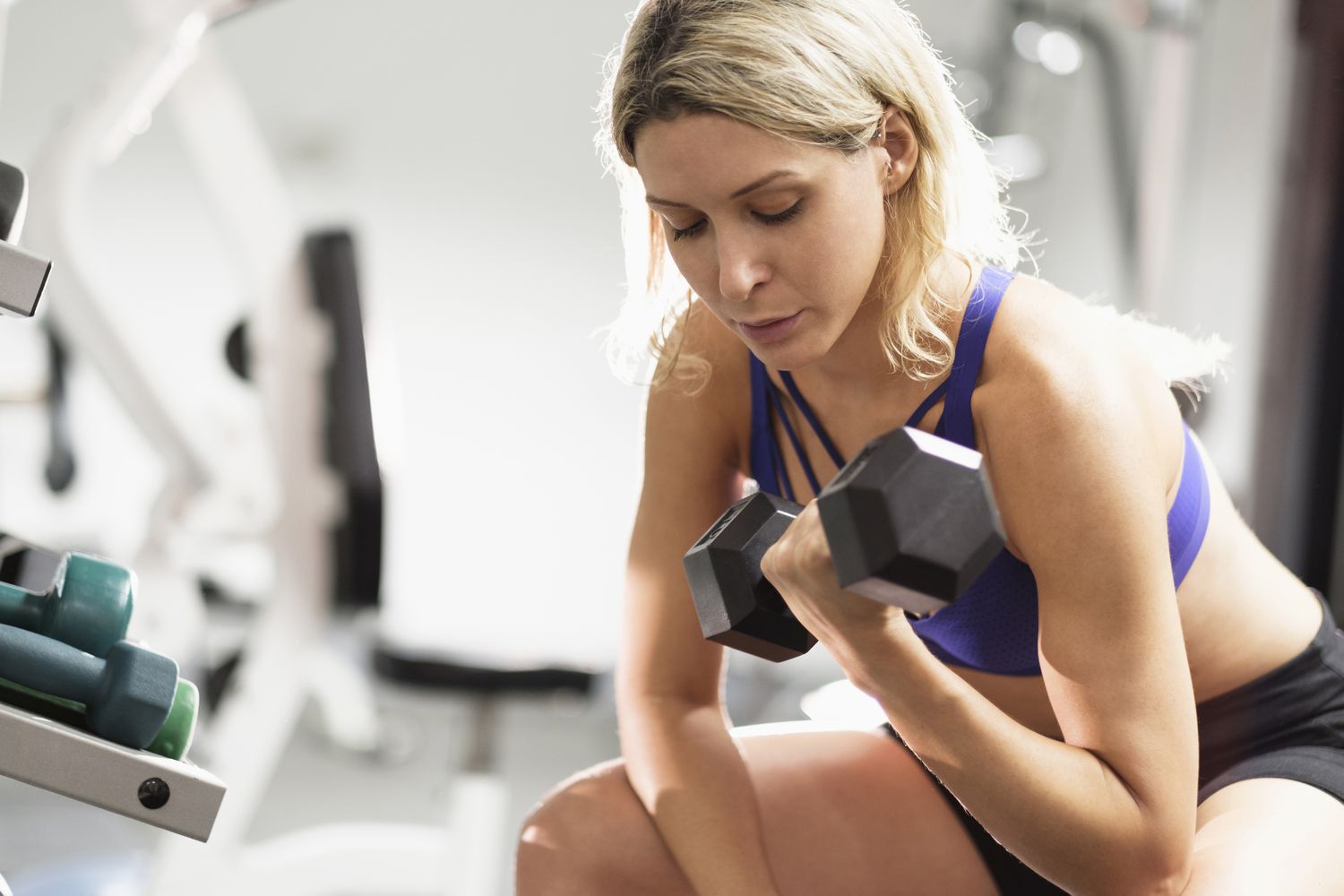
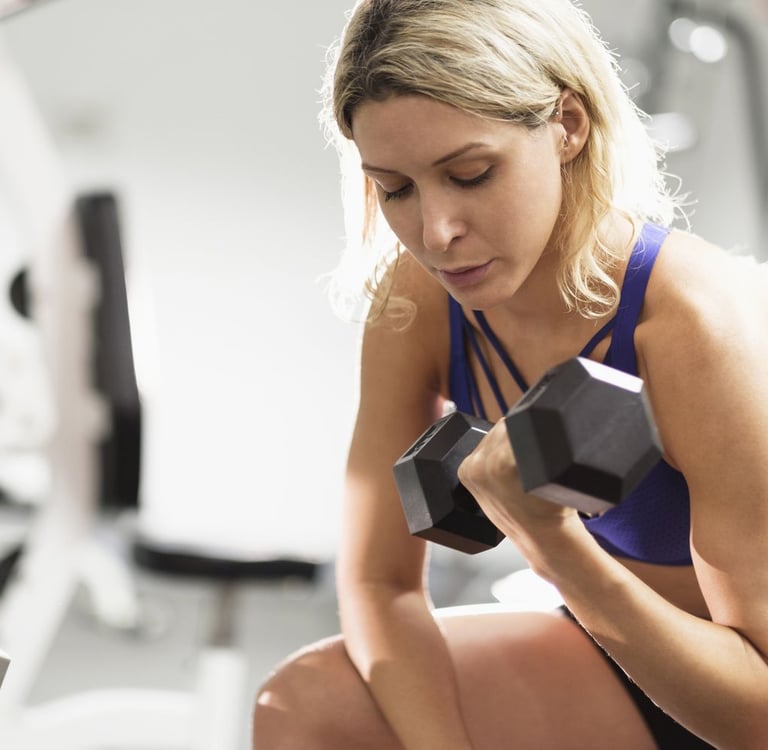
At first, I was skeptical. The concentration curl isn’t flashy or complicated. It’s not a barbell curl or a cable machine extravaganza. You sit on a bench, lean forward slightly, rest your elbow on your inner thigh, and curl a dumbbell slowly, feeling every millimeter of contraction in your biceps. But that simplicity is exactly why it works. Unlike other movements that allow the deltoids or forearm muscles to steal some of the workload, the concentration curl isolates the biceps like nothing else. I tried it that week, and the burn hit immediately. I had a new favorite exercise.
Still, the study and my own experience reminded me that isolation isn’t always the end-all for everyone. If someone is training for functional fitness, for the type of strength you use every day, variety matters. Concentration curls are incredible for building the biceps, but integrating multi-joint exercises ensures that supporting muscles like the forearms, shoulders, and back are strong too. I began mixing in other movements to see what felt best for me — but I always kept concentration curls as my go-to when I wanted pure biceps engagement.
I also reached out to experts, because I wanted more than just research — I wanted practical tips. Jacque Crockford, DHSc, and ACE Director of Product Development, introduced me to TRX biceps curls. These became a game-changer. Using a suspension trainer, I could adjust my angle to make the exercise easier or more challenging, depending on the day. Sometimes I’d step back a little, letting gravity make the pull lighter; other days, I’d lean forward more and feel the resistance spike. The versatility made me fall in love with this move — it’s challenging but adaptable, and it forces you to control every inch of your motion.
Jacque also suggested eccentric bent-over rows, which at first I underestimated. “It’s more for advanced exercisers,” she warned. But curiosity won. The eccentric phase — that slow lowering of the weight — made my biceps fire like I’d never felt before. I quickly learned that flexibility in my hamstrings and core strength were necessary to keep my form clean. But once I got it right, the controlled pull felt amazing. My biceps, along with my back and shoulders, were all engaged, and I could feel real progress after just a few sessions.
Then there were the classics, like barbell curls and close-grip lat pull-downs, recommended by Anthony Wall, PhD, ACE Senior Director. At first, I thought, “Barbell curls? I’ve done those a million times.” But performing them intentionally, really focusing on the contraction and maintaining form, made a difference. And the close-grip lat pull-down? I never realized how much your biceps participate until you pull the bar to your chest with elbows tucked close to your sides. Multijoint exercises like these may not isolate the biceps completely, but they build real-world strength, the kind that makes carrying groceries, lifting a suitcase, or helping a friend move a couch feel manageable.
Over the course of experimenting with all these exercises, I noticed something else — biceps training isn’t just about arms that look good. It’s about function, confidence, and feeling capable in your own skin. When I can lift my groceries, my toddler, or a heavy box without strain, I feel powerful in a way that’s different from how I felt when I first started lifting purely for aesthetics. And honestly, the mirror perks up too — but that’s just the icing on the cake.
I also discovered the mental side of arm training. Sitting down for concentration curls, slowing each movement, feeling each contraction — it’s almost meditative. My mind focuses, stress melts away, and I’m present in my body. Those few minutes are empowering. I’m in control, building strength intentionally, learning my limits, and respecting them. That sense of agency is addictive. It’s part of what keeps me coming back day after day, not because I “have to” work out, but because I want to.
One of my favorite things about this journey has been tracking progress. I started with light dumbbells, sometimes only 10 or 12 pounds, concentrating on form and contraction. Slowly, I increased the weight, and the muscles responded. Not only did my biceps grow, but my grip strength improved, my posture felt better, and other exercises — push-ups, rows, even planks — became easier. Seeing incremental gains week by week, month by month, made the experience rewarding in a way that instant results never could.
Another revelation came when I learned how much variety matters. I now rotate concentration curls, TRX curls, eccentric rows, barbell curls, and lat pull-downs. Some days I want isolation; some days I want compound movements that challenge multiple muscles. Mixing things up keeps workouts interesting and keeps the biceps guessing, which, as any trainer will tell you, is key for muscle growth. Plus, it keeps me motivated — monotony is a killer, and fun is underrated in fitness.
Alongside strength training, I began to notice that my arms felt more energetic throughout the day. Simple tasks — carrying laundry, lifting a box off a high shelf — didn’t feel cumbersome. That functional strength changed my confidence. I no longer hesitate before lifting something heavy. I trust my body, and that trust has spilled over into other areas: standing taller, moving faster, feeling less fatigued. Strength training became more than just a workout; it became a practice in self-reliance and resilience.
It also made me rethink the way I train in general. Strength isn’t about perfection. It’s about showing up, respecting your body, challenging yourself safely, and gradually progressing. I can’t expect to lift my heaviest weight on day one and expect my body to respond perfectly. But I can commit to consistent, intentional effort, track my form, and increase intensity when my body is ready. That mindset has helped me not just with biceps but with every other muscle group.
Through all this, I’ve realized that arm training is deeply personal. No one’s journey looks exactly the same. Some people crave quick results, others seek gradual functional strength. Some love isolation, some love compound movements. And all of that is okay. The important thing is to listen to your body, respect your limits, and enjoy the process. Fitness isn’t a race; it’s a lifelong conversation with your body.
The final insight I want to share is this: strength builds confidence. The day I realized I could lift something that would have previously made me hesitate — without struggle, without fear — I felt invincible. Not in a show-off way, but in a real, everyday way. Strength training, particularly for the arms, is empowering because it transforms the ordinary: grocery bags, suitcases, household chores — everything becomes an opportunity to feel capable. And that confidence radiates outward into every part of life.
So, to anyone reading this who’s nervous about lifting, unsure where to start, or wondering whether biceps exercises really matter: yes, they matter. But not just for aesthetics. They matter for strength, confidence, function, and the quiet joy of knowing you can handle what life throws at you. Start simple — a set of concentration curls, a few TRX curls, some eccentric rows — and pay attention. Feel the contraction, respect your limits, celebrate small wins, and gradually increase challenge. Your arms, and your confidence, will thank you.
In the end, it’s not about perfect form, Instagram-worthy biceps, or matching anyone else’s journey. It’s about showing up for yourself, building functional strength, feeling powerful, and enjoying the process. Each curl, each lift, each focused repetition is a step toward a stronger, more confident you — inside and out. And that, more than anything, is worth every ounce of effort.