Woman’s Reflection on Resilience, Softness, and the Courage to Keep Going
2/20/20268 min read
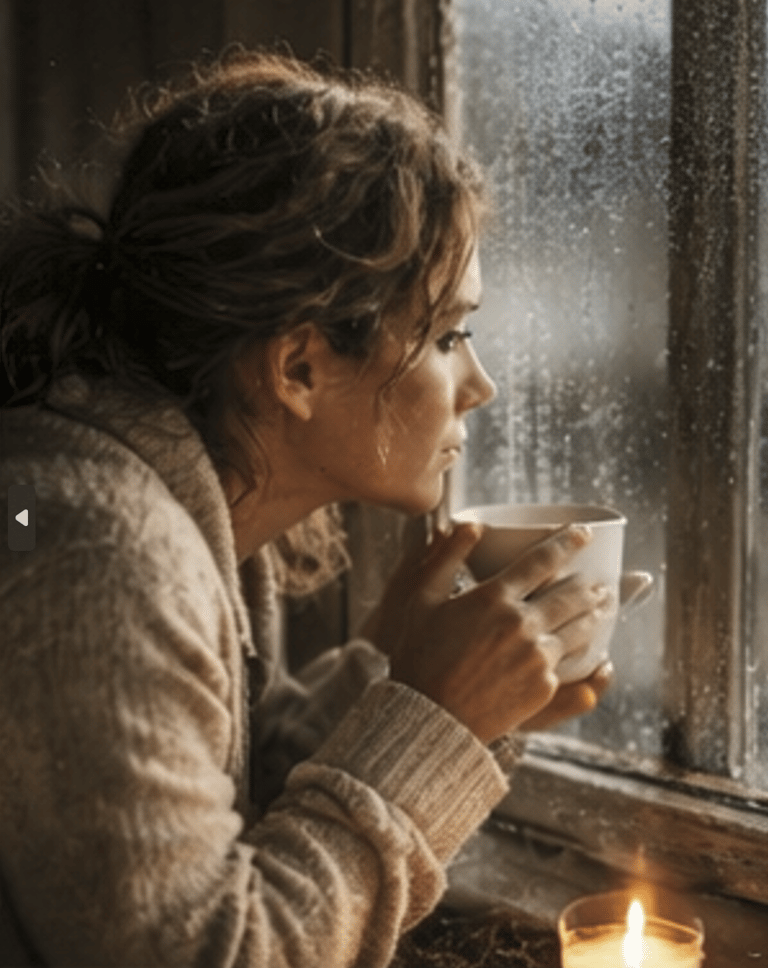
Some evenings arrive quietly, without drama, yet carry a strange heaviness that settles somewhere between your chest and your thoughts. One of those evenings found me standing in my kitchen long after everything that needed to be done was done. The sink was clean, the lights were dim, and the house held that soft, familiar silence that usually brings relief. But instead of calm, I felt this quiet exhaustion that didn’t belong to my body so much as to my spirit. I remember wrapping my hands around a mug of tea that had already gone lukewarm, staring out into the dark window that reflected my own tired face back at me. It wasn’t sadness exactly. It was more like emotional fatigue — the kind that builds slowly from being needed, from trying to be patient, from carrying invisible thoughts that never quite get spoken out loud.
In moments like that, I’ve always found myself searching for words. Not solutions, not advice, just words that remind me that someone else has lived inside similar feelings and survived them. I’ve loved quotes for as long as I can remember, but not in the decorative sense. They aren’t wall art to me. They’re emotional bookmarks. Little pieces of borrowed clarity that arrive exactly when my own thoughts feel tangled. That night, as I scrolled absentmindedly, a line appeared that made me pause longer than I expected: you never know how strong you are until being strong is the only choice you have. I didn’t feel strong reading it. If anything, I felt exposed. But something about the honesty of that sentence softened me. It didn’t ask me to perform resilience or pretend everything was fine. It simply acknowledged that strength often appears not as a choice we proudly make, but as something we stumble into because life quietly removes alternatives.

For a long time, I believed resilient women were built differently. More certain, more emotionally steady, the kind of women who seemed to glide through challenges without visible cracks. I admired them from a distance, convinced that resilience was a personality trait I lacked. I was the sensitive one, the overthinker, the woman who replayed conversations in her head while folding laundry, who carried guilt over small mistakes, who felt overwhelmed by the constant mental balancing act of motherhood, relationships, work, and identity. But life, in its gentle and sometimes ruthless way, has a habit of dismantling the stories we tell ourselves about who we are. Somewhere between sleepless nights, quiet disappointments, unexpected transitions, and the endless rhythm of showing up for others, I began to notice something subtle. I was still standing. Still trying. Still loving. Still hoping, even when hope felt fragile. And maybe resilience wasn’t the absence of sensitivity after all. Maybe it was the willingness to continue despite it.
There was a morning that now feels symbolic in hindsight. I had just dropped my child off at school and sat in the car longer than necessary, hands resting on the steering wheel, unsure why tears suddenly blurred my vision. Nothing dramatic had happened. It was simply the accumulation of small emotional weights: the pressure to do everything well, the quiet fear of not being enough, the exhaustion of juggling invisible responsibilities. I remember feeling guilty for feeling overwhelmed because, objectively, life was good. But feelings don’t follow objective logic. They move through us in waves, shaped by exhaustion, expectations, hormones, memories, and quiet fears we don’t always name. In that moment, I felt like I was failing at everything — not dramatically, but in the subtle way women often feel they’re falling short in invisible categories no one else is measuring.
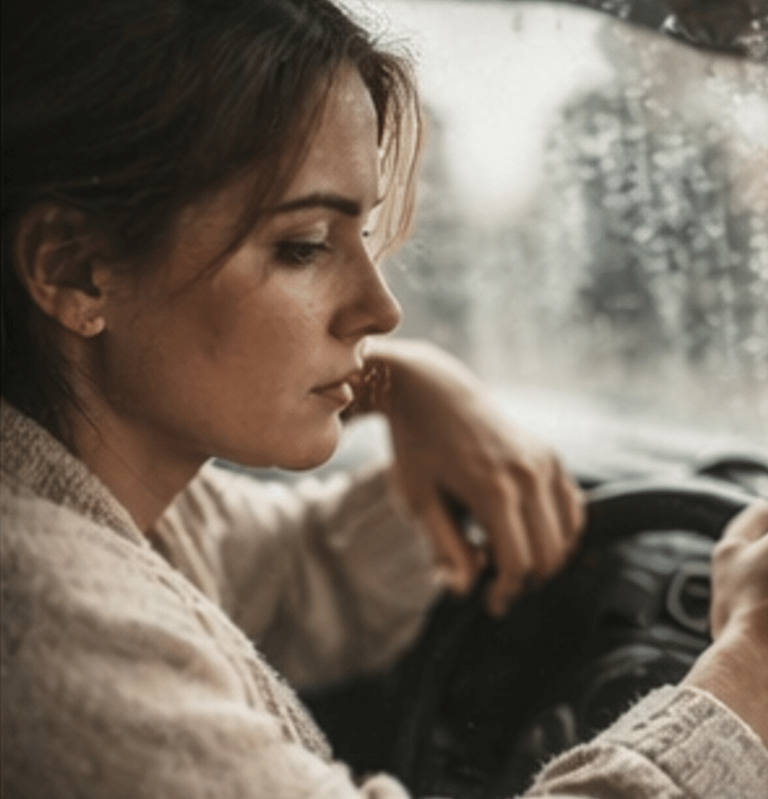
What helped wasn’t fixing anything. It was remembering a simple truth: life doesn’t necessarily become easier, but we become stronger. I didn’t embrace that idea immediately. I wanted life to soften. I wanted fewer storms, fewer emotional tests, fewer moments that forced me to confront my own limitations. But slowly, I began to see that strength wasn’t replacing softness. It was growing alongside it. Like emotional muscle built through ordinary repetition — patience practiced daily, forgiveness extended to oneself after mistakes, courage summoned in small, quiet decisions that never make headlines.
There’s a particular kind of invisible labor women carry that rarely gets acknowledged fully. The mental lists that run in the background. The emotional anticipation of others’ needs. The constant internal negotiation between personal dreams and shared responsibilities. That labor can feel exhausting in ways that are hard to explain, especially when it looks like “just life” from the outside. And yet, within that quiet weight, resilience forms in subtle ways. It appears in the patience you didn’t know you had, in the tenderness you offer despite being tired, in the decision to try again after a day that felt messy and imperfect. I used to think resilience meant pushing harder and suppressing vulnerability, but that version of strength left me disconnected from myself. Real resilience, I’ve discovered, is softer and more flexible. It bends like bamboo rather than standing rigid. It allows space for tears, rest, uncertainty, and even moments of retreat.


One of the hardest lessons I’ve faced was letting go of imagined timelines. The version of life I thought I would have by a certain age, the version of myself I expected to become effortlessly. Letting go of those expectations didn’t feel liberating at first. It felt like quiet grief. But inside that grief was space — space to redefine success in gentler terms, space to grow without comparison, space to accept that adjusting your sails isn’t failure but navigation. That realization didn’t arrive all at once. It unfolded through conversations, journaling, therapy, silence, and countless small reflections that slowly reshaped how I saw my life and myself within it.
Resilience also lives in perspective, and perspective often grows through discomfort. There was a season when I felt unseen in subtle ways, like parts of my effort and emotion existed in the background of other people’s lives. During that time, self-doubt crept in quietly. I questioned my worth, my direction, my voice. But over time, I realized that being unseen doesn’t mean you lack light. Sometimes it simply means you’re learning to recognize your own glow before seeking it in others’ reflections. That internal shift toward self-trust was gradual and fragile, but deeply transformative. It taught me that resilience includes protecting your inner world, nurturing your identity, and continuing to create and love even when external validation feels distant.
Fear has remained a constant companion in my life. Fear before new steps, fear before vulnerable conversations, fear before decisions that carry uncertainty. I used to believe courage required the disappearance of fear, but now I understand that courage is simply fear walking beside action. I remember hesitating over a decision that felt both exciting and terrifying, my mind spinning with worst-case scenarios. Eventually, I moved forward not because fear disappeared but because staying stuck felt heavier than risking change. That experience taught me that resilience isn’t measured only by outcomes but by willingness — willingness to try, to risk discomfort, to remain open despite uncertainty.
There have been darker emotional seasons too, moments when I felt like I was carrying a quiet box of sadness I didn’t know how to unpack. At the time, those periods felt like detours, interruptions in the life I was trying to build. But looking back, they offered depth, empathy, and a softer understanding of others’ struggles. Pain doesn’t automatically create wisdom, but when held gently, it can expand our emotional capacity. Some of my most meaningful connections with other women have come not from shared success but from shared vulnerability — conversations where we admitted exhaustion, confusion, insecurity, and laughed through tears because recognition felt comforting.
Resilience is deeply personal, but it’s also communal. It lives in friendships that hold space without judgment, in the quiet understanding exchanged between women navigating similar invisible battles, in the stories we share that remind each other we are not alone. And yet, some of resilience’s most profound moments are solitary — late-night reflections, private realizations, decisions made in silence that slowly reshape our lives. There is quiet heroism in continuation, in waking up on a difficult day and choosing to participate in your life anyway, in offering kindness when irritation feels easier, in believing in a future version of yourself even when today’s version feels uncertain.
Over time, I’ve come to see resilience not as a destination but as a rhythm. A dance between falling and rising, doubting and believing, breaking and healing. Some days I feel grounded and capable; other days, small inconveniences unravel me. That fluctuation doesn’t erase resilience; it humanizes it. I’ve learned to forgive my inconsistencies, to recognize that strength doesn’t require perfection, and that emotional setbacks don’t cancel growth. Instead, they deepen compassion — both for myself and for others navigating their own storms.