Krabi Through My Eyes: A Personal Journey Into Thailand’s Quiet Paradise
2/9/20265 min read
I still remember the first time I arrived in Krabi, and honestly, it didn’t feel like I was just visiting another beach destination in Thailand. It felt like stepping into a different rhythm of life. Everything slowed down the moment I saw the landscape outside the window — the dramatic limestone cliffs rising out of nowhere, the soft green fields stretching toward the horizon, and the air that smelled faintly of the sea even before I could see it.
People talk about Krabi as if it’s one single place, but the truth is, Krabi is a whole province, a collection of islands, beaches, towns, jungles, and hidden corners that feel completely different depending on where you are. And that’s what makes it so special. Krabi isn’t just something you “tick off” your Thailand itinerary. It’s a place you feel, slowly, day by day.
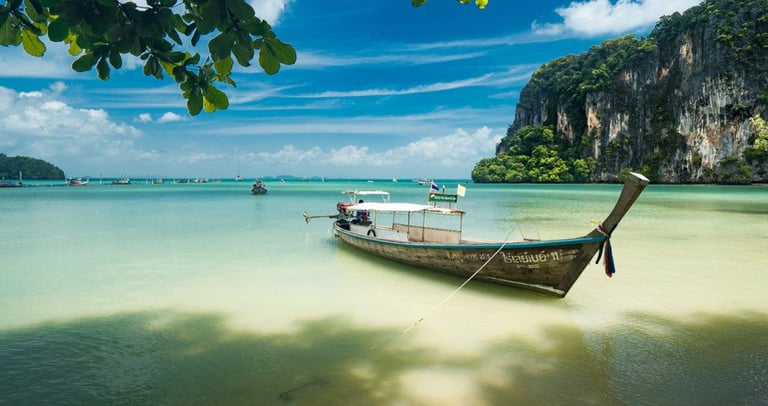
When I told friends I was going to Krabi, most of them immediately pictured Ao Nang — the famous tourist beach area with longtail boats lined up on the sand. And yes, Ao Nang is part of Krabi, and it’s probably where most travelers stay. But what surprised me was how much more there is beyond that one postcard image.
One of the first things I had to understand myself was that Ao Nang and Krabi Town are not the same. It sounds obvious once you know, but so many people mix them up. Krabi Town is the administrative heart of the province. It’s not on the beach, and it doesn’t try to entertain you with resorts or nightlife. It’s a real Thai town, where people wake up early for work, where the markets smell of grilled chicken and fresh herbs, and where life feels grounded.
I spent one evening walking along the river in Krabi Town, watching the sky turn deep orange while families sat together eating street food. There were no loud clubs, no flashy tourist signs, just a calm kind of beauty. That night, I remember thinking: this is the Krabi that doesn’t always show up on Instagram, but it matters just as much.
Ao Nang, on the other hand, is where Krabi becomes more international. It’s lively, full of restaurants offering everything from pad thai to pizza, massage shops, beach bars, tourists planning island-hopping adventures. And yet… even Ao Nang, busy as it can be, still feels softer than Phuket. It’s less overwhelming. The energy is more relaxed, like Krabi is still holding onto its natural charm.
What I loved most about Ao Nang wasn’t even the beach itself, but what it represents: a doorway. From Ao Nang, the sea opens up into countless possibilities. Every morning, you can stand on the shore and watch longtail boats heading out toward Railay, Phi Phi, Hong Island, places that look like they belong in a dream.
And that’s the thing about Krabi — the most beautiful beaches are often not the ones you can reach by car. They’re the ones you have to float toward.
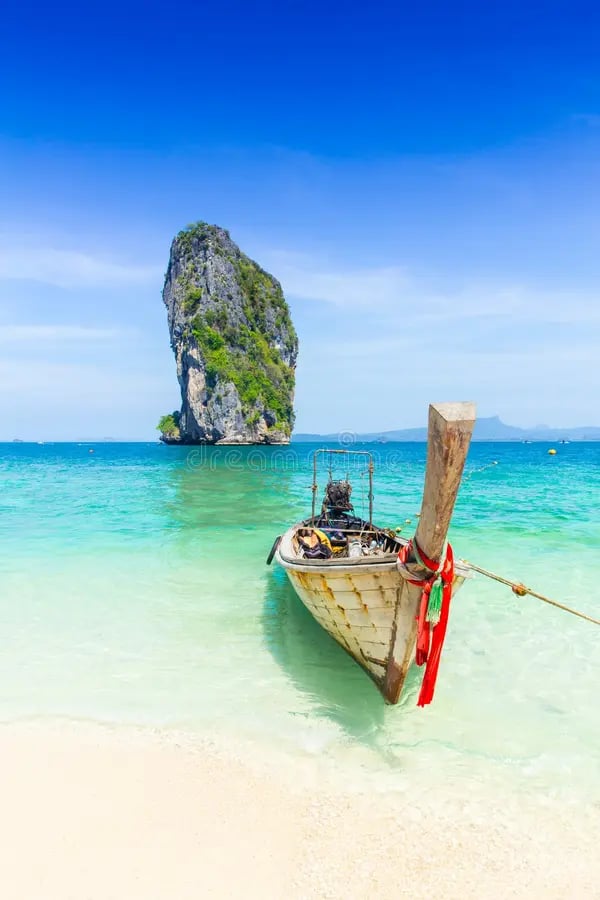
The first time I took a longtail boat to Railay Beach, I felt like a child again, full of wonder. The boat cut through the Andaman Sea, the water sparkling under the sun, and then suddenly the cliffs appeared — huge, towering walls of limestone rising straight out of the ocean. Railay is technically part of the mainland, but it feels like an island because there are no roads leading there. Only boats.
When I stepped onto the sand, I just stood there for a moment, barefoot, stunned. The beach was framed by cliffs, jungle, and water so clear it looked unreal. Rock climbers clung to the cliffs like tiny silhouettes, and the whole place had this quiet adventurous spirit. It wasn’t just beautiful — it was cinematic.
I sat under the shade of a palm tree with a coconut in my hands, listening to the waves, watching the boats come and go, and I remember thinking: this is why people fall in love with Krabi.
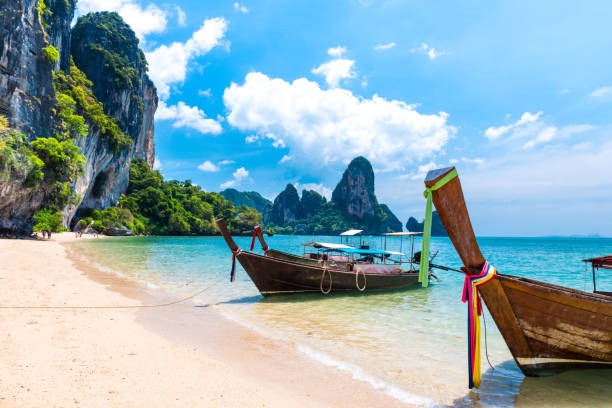
But Krabi isn’t only about beaches. That’s something I didn’t fully expect. There’s a wild, green interior too — waterfalls hidden in the jungle, caves carved into the mountains, natural pools glowing emerald under the trees.
One day, I visited the Emerald Pool, and walking through the forest felt like entering another world. The air was humid, heavy with the scent of leaves and earth, and then suddenly the water appeared — a natural pool so clear and green it almost looked enchanted. Swimming there was completely different from swimming in the sea. It felt quiet, sacred, like nature was holding you gently.
Krabi has so many of these moments. Moments where you stop thinking like a tourist and start feeling like you’re simply present.
Of course, Krabi is not untouched. It’s not a hidden secret anymore. Millions of visitors come every year, especially in the high season. And you feel it most in places like Ao Nang or Phi Phi, where the boats are constant and the beaches can get crowded.
Sometimes, I won’t lie, it can be hard to find a peaceful spot to swim when dozens of boats are arriving with tour groups. The longtail engines break the silence, and you realize that paradise is fragile. Krabi’s beauty is powerful, but it needs care. The environment here is sensitive — coral reefs, marine life, beaches that can only handle so much traffic.
That’s why I think visiting responsibly matters so much in Krabi. Choosing smaller tours, respecting the ocean, avoiding leaving trash behind — these things aren’t just “nice ideas.” They’re necessary if we want these places to remain beautiful.
Still, even with tourism, Krabi has an ability to surprise you with quietness. You can leave Ao Nang for just twenty minutes by boat, and suddenly you’re on a beach where the only sound is the tide. That contrast is something Phuket doesn’t always offer. Krabi feels more spread out, more protected by its geography.
The limestone cliffs are like guardians. They rise everywhere — from rice fields, from jungle, from the sea itself. They give Krabi its signature look, but also its mood: dramatic, peaceful, timeless.
One evening, I watched the sunset from the beach in Ao Nang. The sky slowly turned pink, then purple, then deep blue. The cliffs became dark silhouettes against the horizon, and the boats floated quietly like shadows. People around me were silent, as if everyone understood that this was something you don’t interrupt.
That’s what Krabi does. It makes you slow down. It makes you notice.
It’s not just the scenery, but the feeling of space — space to breathe, to explore, to wander without rushing.
If you come to Krabi expecting only a typical beach holiday, you’ll get that. But if you come with curiosity, you’ll find much more: local life in Krabi Town, adventure in Railay, hidden jungle pools, islands scattered like jewels across the Andaman Sea.
Krabi is a place of contrasts — lively tourist streets and quiet fishing villages, crowded boats in high season and empty beaches at sunrise, dramatic cliffs and soft sand.
And maybe that’s why it stays with you.
Because Krabi isn’t just somewhere you visit.
It’s somewhere you feel.
Even now, when I close my eyes, I can still picture the limestone cliffs rising out of the sea, the warm wind on my skin, the sound of waves against the longtail boats, and that sense that the world was bigger and more beautiful than I remembered.
And that’s what Krabi gave me.
Not just photos.
But memories that feel like sunlight.