You can move safely during pregnancy by following a few basic rules
When I saw those two lines on the test, my entire world shifted in an instant. Not just emotionally, but physically too. Suddenly, my body wasn’t “just mine” anymore. Every sensation felt amplified, every choice felt heavier, and even the way I thought about movement changed. Before pregnancy, I used to train, push myself, chase progress. I loved the feeling of getting stronger, fitter, faster. But once I became pregnant, I realized something important: this season of life isn’t about improving performance. It’s about maintaining balance, supporting my changing body, and moving with care.
That’s why I don’t even like to call it “training” anymore. Training is about progressive overload, about pushing limits. Pregnancy is different. Now the goal is to maintain, not increase. To support, not stress. To move with respect for what my body is already doing every single day: growing a human being.
Pregnancy is intense physical work. My heart works harder, my blood volume increases, my posture changes as my belly grows, and my joints feel looser because of hormonal changes. My center of gravity shifts week by week, and movements that once felt automatic suddenly require awareness. Living inside this body feels completely different than observing pregnancy from the outside.
In my first trimester, I was exhausted in a way I had never experienced before. Even standing up from the couch felt like a workout. In the second trimester, I felt a wave of energy return and finally enjoyed gentle movement again. Now, in the later months, every step reminds me that my body has changed. My balance is different, my breathing is different, and I need more rest. And that’s okay.
Movement during pregnancy has become a form of communication with my body. I don’t move to burn calories. I move to reduce back pain, to ease tension in my hips, to support my posture, to improve circulation, and honestly, to feel more like myself. There is something grounding about moving when your body feels unfamiliar. It reminds me that I still live inside this body, even as it transforms.
Before I started any pregnancy-friendly movement, I spoke to my doctor. Not because something was wrong, but because I wanted reassurance. Every pregnancy is different. Some women have complications, restrictions, or conditions that require modified or limited activity. Listening to medical guidance is part of respecting your body during this time. Pregnancy movement should never be about ignoring red flags. Safety comes first — always.
Once I knew I could move safely, I let go of rigid plans. I stopped forcing myself into structured workouts and instead let movement become part of my day. Some days, that’s just a slow walk. Some days, it’s a gentle prenatal workout at home. Other days, it’s a few stretches before bed. There are also days when I do nothing but rest — and that is part of pregnancy too. This flexibility is what makes movement sustainable during pregnancy. My body isn’t predictable anymore, and my routine doesn’t need to be either.
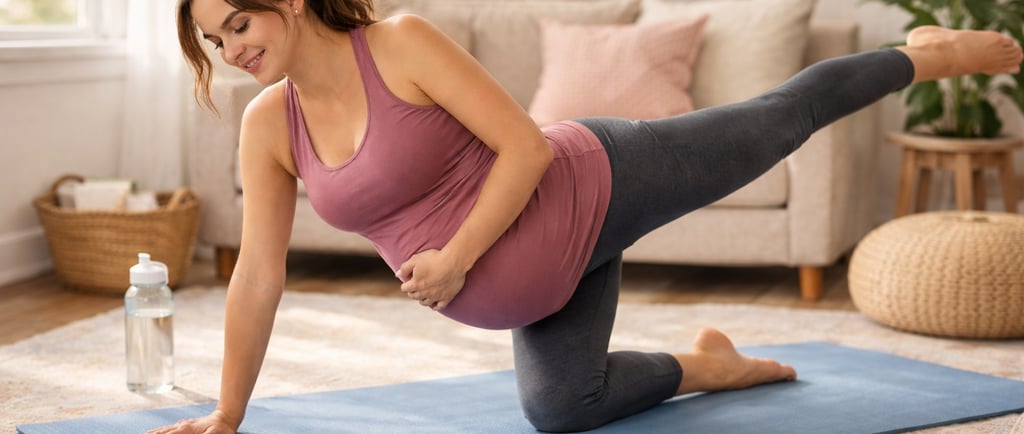
Prenatal exercise, for me, is mostly about maintaining strength in the muscles that support my growing belly: my back, glutes, legs, and deep core. The topic of abs during pregnancy is often misunderstood. Many people believe you should never train your core when pregnant, but that’s not entirely true. Traditional crunches and sit-ups are not recommended, especially because of abdominal separation (diastasis recti), but gentle core activation, posture-focused exercises, and breathing-based stability work can be incredibly supportive. These movements don’t look impressive, but they make a huge difference in how my body feels throughout the day.
Breathing has become a huge part of how I move. Before pregnancy, I never thought about my breath. Now I notice how much tension I hold in my chest, shoulders, and jaw. Slow, deep breathing during movement helps me relax, stay connected to my body, and stabilize my core naturally. Learning how to breathe with awareness has also helped me feel more prepared for birth, not because I’m trying to control the outcome, but because I feel more connected to what my body is doing.
Pelvic floor exercises were something I avoided thinking about at first. It felt awkward, invisible, and not very “fitness-related.” But the more I learned, the more I realized how essential this muscle group is. The pelvic floor supports the internal organs, plays a huge role in birth, and affects recovery afterward. Training it gently during pregnancy isn’t about tightening or forcing — it’s about learning awareness, control, and relaxation. This is not about perfection. It’s about building a relationship with a part of the body that carries a lot of responsibility.
There are movements I now avoid completely. Anything with jumping, sudden direction changes, or high risk of falling doesn’t feel right for me anymore. Not because those activities are inherently bad, but because my joints are more vulnerable and my balance isn’t the same. Hormonal changes make ligaments more flexible, which means injuries can happen more easily. One wrong step can take me out of movement completely for weeks, and that’s not worth the risk.
Walking, on the other hand, has become my daily ritual. There is something calming about walking with my belly, feeling the rhythm of my steps, breathing in fresh air, and watching the world go by. It helps with digestion, circulation, swelling, and mental clarity. Sometimes I talk to my baby while I walk. Sometimes I just let my thoughts wander. These quiet moments feel deeply grounding during a time when everything feels new and unknown.
The most important rule I’ve learned is to never push through discomfort. If I feel dizzy, short of breath, or experience pain, I stop. Pregnancy has taught me the difference between effort and strain. Movement should support me, not deplete me. This season of life isn’t about discipline through pain — it’s about listening, adjusting, and respecting my limits.
There are days when fear creeps in. Fear of birth, fear of not being strong enough, fear of losing myself in motherhood. On those days, gentle movement helps me come back into my body. It reminds me that my body is not fragile — it is capable. It is adapting every day in ways I don’t fully understand, and movement helps me trust that process a little more.
Pregnancy movement isn’t about perfect routines or comparing yourself to other expecting moms on social media. Some women stay very active. Some slow down dramatically. Both are valid. What matters is that your movement comes from care, not pressure. From respect, not punishment. From connection, not fear.
As I move closer to the end of this pregnancy, my relationship with movement feels softer, kinder, and more honest than ever before. I no longer move to change my body. I move to support it. I move to stay connected to myself in the middle of transformation. If I could say one thing to any expecting mother who feels unsure: you don’t need to be strong in the way the world defines strength. You just need to stay present in your body, treat it gently, and let movement be an act of love — not performance.