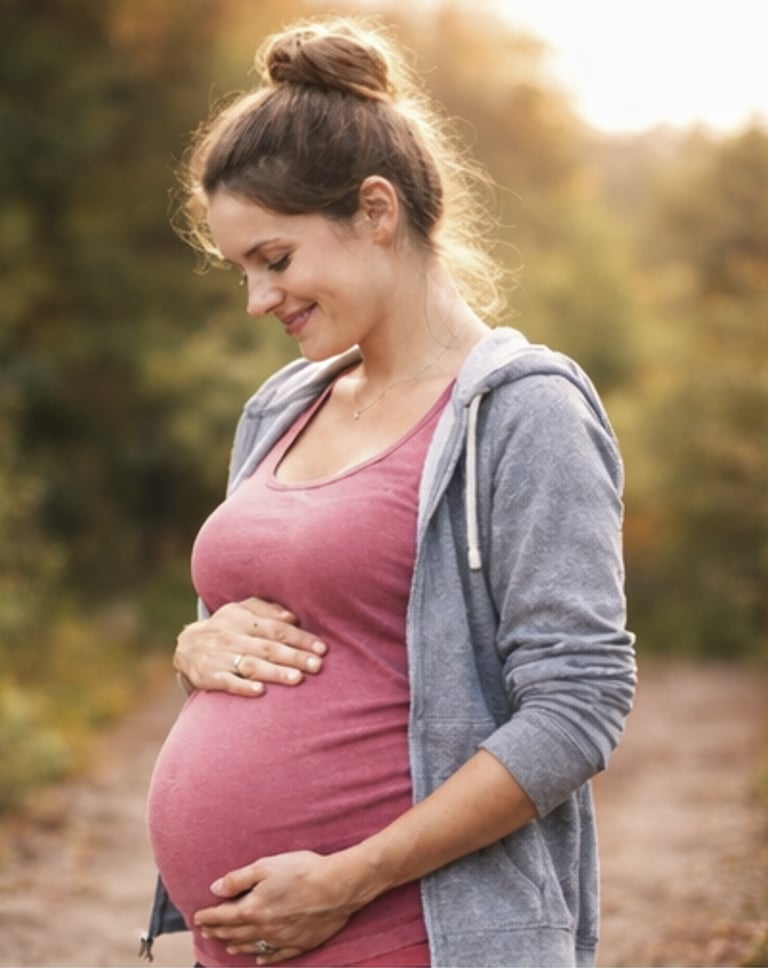
I still remember the moment I saw the positive test. Everything in my life suddenly shifted in the quietest yet most powerful way. There was excitement, disbelief, joy, and underneath it all a very real question that stayed with me every single day after: how do I take care of myself now that I am also taking care of someone else inside me?
Before pregnancy, exercise had always been something I did for shape, energy, or stress relief. But now it felt different. It wasn’t about pushing limits anymore. It was about listening. Really listening. To my body, to my breath, to the subtle changes happening week by week that no one can fully prepare you for until you are living them.
Very early on, I started reading recommendations from health professionals like the American College of Obstetricians and Gynecologists, who suggest around 150 minutes of moderate activity per week during pregnancy. At first, that number sounded clinical and a bit intimidating. But when I broke it down into real life, it simply meant moving my body most days in a way that felt sustainable. Not exhausting, not extreme, just consistent and gentle.
What surprised me most was how quickly my definition of “exercise” changed. It stopped being about gym routines and became something far more natural and emotional. Some days it was just a walk outside, breathing in fresh air and feeling my body adjust to the weight and softness that was beginning to grow inside me. Walking became my anchor. Not fast, not competitive, just present. There were mornings when I would step outside feeling heavy with fatigue and worry, and within ten minutes of walking slowly, I could feel my mind settle. My posture would naturally straighten, my thoughts would soften, and I would feel connected again to myself instead of only the changes happening in my body.
As the weeks passed, I noticed that rhythm mattered more than intensity. Some days I could walk briskly and feel strong and energized, especially in the earlier part of pregnancy. Other days, especially later on, my pace naturally slowed. I stopped fighting that change. Instead, I learned to respect it. That respect became the foundation of everything I did moving forward.
Swimming was another experience that surprised me deeply. The first time I stepped into the water, I remember feeling an immediate sense of relief, like my body was finally allowed to float again instead of carry everything alone. The pressure on my joints disappeared almost instantly. I could move in a way that felt light and free, even as my belly grew heavier. In the water, I didn’t feel limited. I felt supported. There was something almost emotional about that feeling, like the water was gently reminding me that I didn’t have to carry everything by myself all the time.
There were also days when I used simple equipment like a stationary bike or an elliptical machine. I preferred these because they gave me stability. Balance becomes such a subtle concern during pregnancy, even before you fully realize it. I never wanted to risk falling or overexerting myself, so staying in one place while still moving felt like a safe compromise. Those sessions were never long. Sometimes just twenty minutes. But they gave me a sense of control over my energy levels, especially on days when fatigue felt heavier than usual.
What I learned quickly is that pregnancy doesn’t reward intensity. It rewards consistency and awareness. I stopped trying to “push through” workouts the way I used to. Instead, I would ask myself simple questions: Do I feel okay right now? Am I breathing comfortably? Is my body asking me to slow down? And if the answer was yes, I slowed down without guilt.
One of the most unexpected parts of this journey was strength training. I had always associated weights with performance and progression, but during pregnancy, everything shifted toward maintenance and support. I continued some very basic movements that I had already been comfortable with before pregnancy, but I modified almost everything. I remember doing wall push-ups in front of my hallway wall one afternoon and laughing a little because it felt so different from the push-ups I used to do at the gym. But at the same time, it felt right. It felt appropriate for where I was in life. My focus was no longer on how many I could do, but on how stable my core felt and how controlled my movement was.
Squats became one of my favorite movements, not because they were easy, but because they felt functional. I could feel my legs working, my glutes activating, and my body staying grounded. There was something deeply reassuring about maintaining that kind of strength while everything else was changing so quickly. Sometimes I would hold onto a chair for balance. Sometimes I would do them slowly in front of a mirror just to check my posture. I learned to prioritize alignment over depth or speed. And that shift alone changed everything about how I approached movement.
As my pregnancy progressed, I also had to accept that certain exercises were no longer comfortable. Anything that put too much strain on my back or required lying flat became less appealing and eventually unnecessary. Instead of seeing this as a limitation, I started seeing it as adaptation. My body was not breaking down; it was adjusting to something incredibly complex. And my job was to adjust with it, not against it.
Weight training, when done gently and with awareness, remained part of my routine for a while. But even that evolved. I lowered weights, slowed down movements, and focused more on how each exercise felt rather than how it looked. There was a moment when I realized I was no longer chasing progress in the traditional sense. I was building something quieter: stability, endurance, and trust in my own body.
What I didn’t expect was how emotional this entire process would be. Exercise wasn’t just physical anymore. It became mental space. There were days when I would go for a walk feeling anxious about everything—birth, responsibility, identity, the unknown—and return feeling slightly more grounded, even if nothing external had changed. Movement became a way of processing emotions I couldn’t always put into words.
There were also days when I did nothing at all. And at first, I struggled with that. I felt guilty, like I was supposed to be doing something every day. But over time, I learned that rest is also part of the routine. Some days my body simply needed stillness. And listening to that need became just as important as any workout I ever did.
If there is one thing I would tell myself at the beginning of this journey, it would be this: you don’t need to perform pregnancy. You just need to live it, gently and honestly. Move when you can, rest when you need to, and let go of the idea that there is a perfect way to do any of this.
Now, looking back, I see that those months of movement were not about fitness in the way I once understood it. They were about connection. To my body, to my baby, and to a slower, more intentional way of living that I didn’t know I needed until I was forced to find it.
And maybe that is the real lesson. Not how much you move, or how perfectly you follow guidelines, but how deeply you are willing to listen to yourself as you change. Because pregnancy is not just about preparing for birth. It is also about learning a new relationship with your own body, one step, one breath, and one gentle movement at a time.