
Between Coconut Palms and Concrete Towers: A Woman’s First Impressions of Pattaya After a Long Journey
2/9/20266 min read
I landed in Thailand just after midday, that strange, slightly unreal hour when your body has no idea what time zone it belongs to anymore. Fourteen and a half hours of actual flight time followed by a three-hour bus ride had left me feeling like I’d been folded into an airplane seat and forgotten there. Still, there’s something about arriving in a new place—especially somewhere as famous and contradictory as Pattaya—that gives you just enough energy to keep going.
At Bangkok’s Suvarnabhumi Airport the first practical lesson is simple: go downstairs. If you head down to the ground floor and find Gate 8, you can buy a bus ticket to Pattaya for 120 baht. It’s one of those small pieces of information that makes a big difference when you’re exhausted and slightly overwhelmed. The buses are perfectly decent—air-conditioned, organized, and running almost every half hour—so despite the distance, the transfer is straightforward and relatively comfortable. After hours in the air, the hum of the road and the steady blast of cool air from the vents almost felt luxurious.
By the time I reached Pattaya, the sun had already shifted into that hazy, golden afternoon light. My accommodation was in an eight-story complex, newly built and clearly designed with care—good construction quality, a convenient location, and services that were noticeably above average. I had rented an apartment on the seventh floor facing toward the sea. “Facing the sea” sounds romantic, and technically it was true, although in reality the view was filtered through a forest of other buildings. I could see just enough of the water to remind myself that yes, I was in a coastal city.
Check-in was efficient in its own way. I paid the accommodation fee and a 7,500 baht deposit after arrival, which seems fairly standard for longer stays in apartment-style rentals here. Communication, however, was an adventure. The English spoken by the staff was minimal, and understanding each other required patience, gestures, and the occasional translation app. It wasn’t unfriendly—just one of those moments where you realize how easily we take shared language for granted.
Once I finally dropped my suitcase inside the apartment and stepped onto the balcony, the fatigue hit properly. But curiosity is stronger than jet lag. Pattaya is not a place you can ignore—it has a reputation that stretches far beyond Thailand.
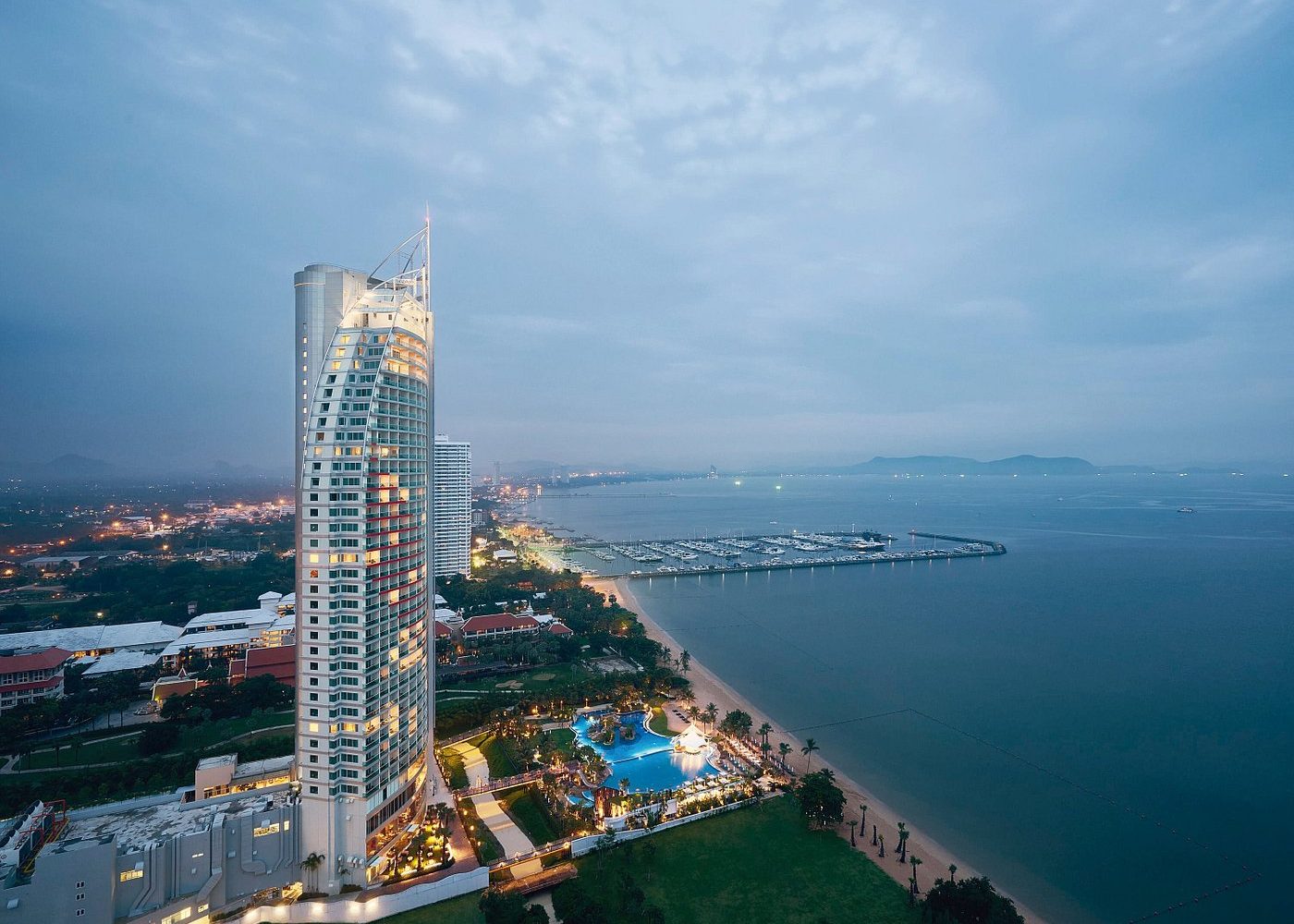
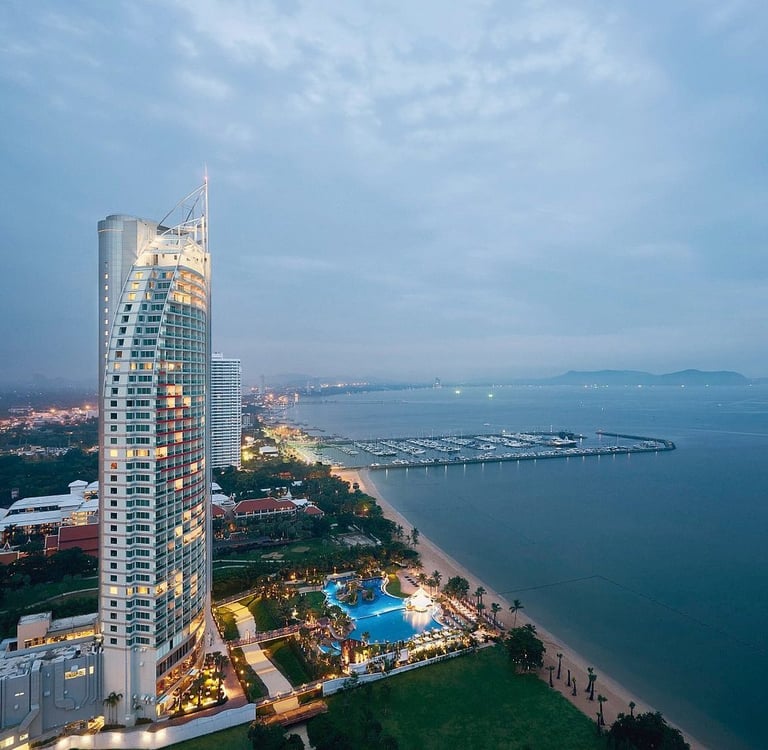
The city itself is surprisingly large. With roughly 130,000 residents and a coastline stretching for at least 20 kilometers, it’s not just a beach town—it’s an entire urban strip lined with high-rise buildings, many between twenty and forty floors. From above, it looks like someone kept adding towers without ever stopping to ask how they fit together.
One of the first things that becomes obvious—especially if you’re paying attention to languages around you—is who actually spends time here. As an Eastern European woman, and one who notices demographics perhaps more than most, I quickly realized I was part of a minority group. The number of foreign residents and long-term visitors is striking—somewhere between seventy and eighty thousand white foreigners at any given time, and a very large portion of them are Russian. It’s not an exaggeration to say that Russian is heard constantly.
In certain streets, every 200–300 meters you’ll see stands offering Russian-language information and maps. Small restaurants advertise in Cyrillic, and yes—kvass is actually available if you look for it. Families stay here for months at a time. German visitors also make up a noticeable percentage—perhaps around fifteen percent—while the rest are scattered among various European nationalities, Scandinavians, French travelers, and others. Older Western European men often stay long-term, some even year-round. It creates a curious atmosphere—part resort town, part expat enclave.
About 700 meters from my apartment was the nearest stretch of beach—a relatively quiet section lined with coconut palms that were actually bearing fruit. That detail charmed me more than I expected. It’s one thing to see decorative palms, another to stand beneath trees that are genuinely part of the landscape’s ecology.


The beach itself is narrow. Sandy, pleasant enough underfoot, but almost always crowded. Conversations drift through the air—mostly Russian, occasionally German or English, rarely anything else. The constant murmur of unfamiliar conversations becomes background noise after a while, like waves or wind.
It isn’t perfectly peaceful, though. Even in the quieter parts of Pattaya, you’re never entirely removed from movement. A nearby road sends a steady trickle of vehicle noise, and out on the water motorized craft buzz back and forth. It’s not chaotic, but it’s not the isolated tropical silence that travel brochures like to promise.
Compared with other parts of the city, this beach area is relatively clean. Not pristine—but better. However, there are moments when the unmistakable smell of drainage or sewage drifts through certain sections, a reminder that rapid development hasn’t always been matched by infrastructure.
The quieter district where I stayed has clearly been developing somewhat haphazardly for about twenty years. Buildings appear wherever there was space, often nestled between small clusters of trees rather than clearing entire areas. In a strange way, that means the environment hasn’t been completely erased. You still see pockets of greenery—shrubs, trees, patches of wild growth—existing side by side with concrete.
But the lack of planning is visible too. Empty lots hold piles of abandoned construction materials. Weeds push through gaps in pavement. The impression is less of neglect and more of a place that never paused long enough to finish organizing itself.
Walking toward the city center, the contrast becomes sharper. The central areas have a completely different energy—louder, denser, more chaotic. One of the most striking visual details is the electrical and communication infrastructure. Instead of neat underground systems, cables run everywhere, bundled and tangled across poles in thick black masses. Entire neighborhoods seem powered by what looks like millions of wires draped overhead. It’s functional, obviously—but visually overwhelming.
As a woman traveling alone—or at least observing the environment through a female perspective—I find myself paying attention not only to scenery but to atmosphere. Pattaya is layered. On one hand, there’s convenience, accessibility, affordable transport, and a wide variety of services. On the other, there’s a sense of improvisation in how the city has grown, as though expansion was driven by demand faster than planning could keep up.
Daily life settles into a rhythm quickly. The apartment building feels secure, the staff—despite language barriers—are helpful in practical ways, and the presence of so many long-term residents creates a feeling that this is not just a tourist stop but a place people genuinely live for months or years.
In the mornings, the light over the partial sea view is soft and hazy, filtered through neighboring buildings. By afternoon the heat becomes more assertive, and the balcony becomes less inviting. Evenings bring a slight breeze that carries salt air mixed with city smells—food stalls, traffic, humidity, and occasionally that persistent drainage scent.
What fascinates me most is the mixture of expectations and reality. Pattaya is often imagined as either a tropical paradise or a chaotic party destination. In truth, it’s both—and also neither. It’s a functioning city stretched along a beach, filled with retirees, families, seasonal residents, and travelers who stay far longer than they intended.
From a practical perspective, getting here is easy, accommodation options range widely, and daily costs—depending on lifestyle—can be manageable. From an emotional perspective, it’s a place that requires adjustment. You have to accept the noise, the density, the visual clutter, and the occasional infrastructural oddities.
And yet, there are moments—standing beneath fruit-heavy coconut palms, watching the thin strip of sea turn silver at sunset—when the exhaustion of that fourteen-and-a-half-hour journey feels completely justified.
Travel, especially long-distance travel, rarely delivers a perfect postcard version of reality. Instead, it gives you something more complicated and far more interesting. Pattaya is not polished. It’s crowded, multilingual, sometimes messy, sometimes surprisingly peaceful. It is a place where towering buildings and stray vegetation coexist, where international communities overlap, and where the ocean is always present—even if you can only glimpse it between concrete structures.
Arriving here after such a long journey felt less like reaching a destination and more like stepping into an ongoing story—one that has been building for decades without a clear plan, shaped by tourism, migration, economics, and climate all at once.
And perhaps that’s why, despite the fatigue, the imperfect view, and the occasional communication struggle, I found myself standing on that seventh-floor balcony, breathing in warm air, and thinking: I’m really here.