What to nourish, what to skip, and how to stay glowing through every single trimester.
There’s a specific kind of overwhelm that hits you somewhere between that first positive test and your first prenatal appointment. Suddenly everyone — your mother, your mother-in-law, the well-meaning woman at Whole Foods — has an opinion about what you should and absolutely should not be putting in your body. And if you’re anything like me when I found out I was pregnant, you’ll spend approximately three evenings deep in a spiral of conflicting information online before closing your laptop and making a cup of decaf tea just to feel like you’ve done something right.
Here’s what I want to tell you first, before anything else: you are going to be fine. Your baby is going to be fine. Pregnancy nutrition is genuinely important — but it doesn’t have to be complicated, punishing, or joyless. The goal isn’t perfection. It’s consistency, awareness, and a little bit of grace with yourself when your first trimester self is surviving on crackers and ginger ale because that’s literally all you can stomach.
This guide exists because I wished something like it had existed when I was navigating my own pregnancy. Not a clinical pamphlet. Not a listicle so dry it makes your eyes glaze over. Something real — written by a woman who has been there, who understands that you still want to live your life, go out to brunch, drink a beautiful sparkling water in a champagne flute and feel like herself — just a more conscious, intentional, nourished version.
So let’s talk about food. The good stuff, the stuff to avoid, the stuff that will actually make you feel glowing rather than depleted — and the context you need to make smart, confident choices for the next nine months.
The Quiet Luxury of Nourishing Yourself
I’ve always believed that the way you eat is, in many ways, a form of self-respect. Not in a restrictive, punishing sense — quite the opposite, actually. Choosing foods that genuinely fuel your body, that are colourful and seasonal and thoughtfully sourced, is one of the most elegant things you can do for yourself. And when you’re pregnant, that philosophy takes on a whole new dimension. You’re not just nourishing yourself anymore. You’re quite literally building a human being, cell by cell, day by day.
That’s extraordinary when you really stop to sit with it.
The clean girl aesthetic that’s been dominating our feeds for the past few years — the green smoothies, the farmers market hauls, the effortlessly wholesome grain bowls — isn’t just an aesthetic. It turns out, it’s actually a pretty solid pregnancy nutrition philosophy, minus the more extreme versions. Think whole foods. Think colour. Think variety. Think hydration as a non-negotiable ritual rather than an afterthought.
“Nourishing yourself during pregnancy isn’t about eating perfectly — it’s about eating intentionally, with love for both yourself and the tiny person you’re growing.”
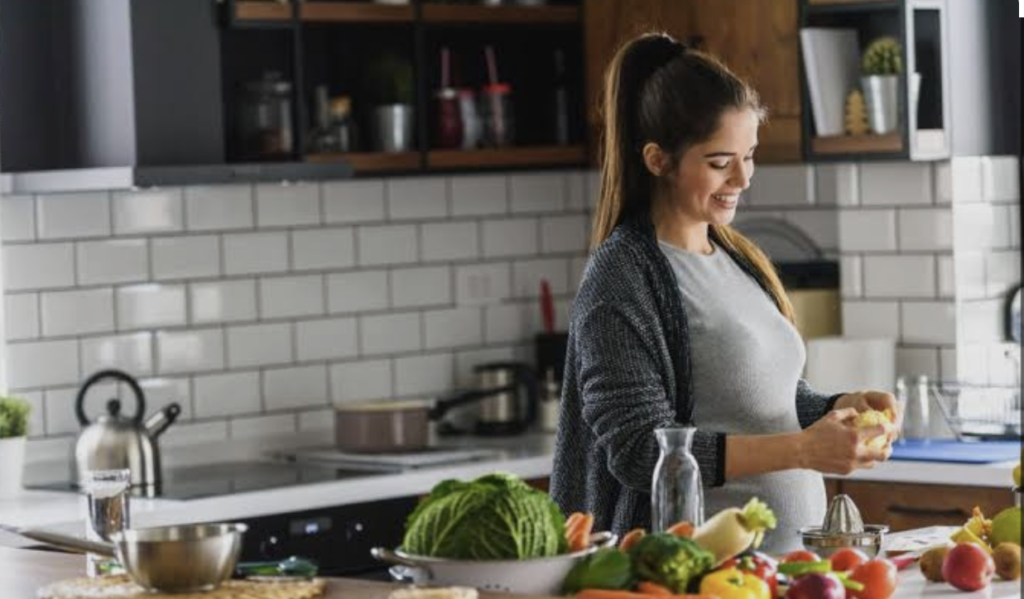
The good news is that the foods that are genuinely beneficial during pregnancy are, for the most part, the same foods that make anyone feel their absolute best. Rich, leafy greens. Protein-dense legumes. Creamy avocados. Good-quality dairy. Lean meats. Eggs — glorious, nutrient-dense, endlessly versatile eggs. We’re not talking about deprivation here. We’re talking about abundance. A plate full of colour and goodness and intention.
Your Pregnancy Plate: The Foods That Actually Matter
Let’s get specific, because “eat well” is advice so vague as to be nearly useless. Here are the foods that nutritionists, midwives, and OBs consistently recommend during pregnancy — along with the reasons why they’re so valuable, because I find that understanding the why makes it so much easier to actually follow through.
A word about iron, because it deserves its own moment
Iron is one of the nutrients that genuinely deserves to be taken seriously during pregnancy, and yet it’s one that so many women find themselves deficient in — often without realising it until they’re exhausted, pale, and wondering why the stairs feel like a marathon. Your blood volume increases by up to 50% during pregnancy. That takes iron. Your baby needs iron to develop healthy red blood cells. That takes more iron. The demand is real.
Lean red meats, dark leafy greens, lentils, and fortified whole grains are your best dietary sources. Crucially, pair iron-rich foods with vitamin C — a squeeze of lemon on your spinach salad, some berries alongside your oatmeal — because vitamin C dramatically improves non-haem (plant-based) iron absorption. And try to avoid coffee or tea immediately around iron-rich meals, as tannins can inhibit absorption. Small tweaks, meaningful difference.
The folate conversation
If there’s one nutrient that’s been discussed at length in prenatal care, it’s folate — and for good reason. Folate (or folic acid in its synthetic form) is critical in the very early weeks of pregnancy for neural tube development, which is why most guidelines recommend starting supplementation before conception if possible. Leafy greens, lentils, asparagus, avocado, and citrus are all excellent dietary sources. But most healthcare providers will recommend a prenatal supplement to ensure you’re consistently meeting the recommended dose. Do both. Don’t rely on diet alone.
“The clean girl pantry and the pregnancy pantry have far more in common than you’d think — whole foods, good fats, real proteins, and lots and lots of greens.”
The Foods That Are Actually Worth the Hype
There’s a tendency — especially in wellness spaces — to overcomplicate pregnancy nutrition with superfoods and supplements and routines that require a spreadsheet and a personal chef. I want to bring us back to earth here, because the truth is that the most powerful pregnancy foods are mostly very ordinary, very accessible, and very delicious when prepared well.
On salmon and omega-3s
Salmon has become something of a wellness darling over the past few years, and during pregnancy, it earns that reputation. The DHA and EPA in fatty fish are critical for foetal brain and eye development — and the research here is genuinely robust. Most guidelines suggest two to three portions of low-mercury, fatty fish per week. Salmon, sardines, and trout are your best options. If you’re not a fish eater, an algae-based DHA supplement is a brilliant alternative that also happens to be vegan-friendly.
On dairy and calcium
We’re in an era where dairy has become weirdly controversial — and I say that as someone who has genuinely gone back and forth on it myself. But during pregnancy, high-quality dairy is your friend. Greek yoghurt is particularly wonderful: it’s higher in protein than regular yoghurt, rich in calcium, and the live cultures support gut health. Cheese is fine — with one important caveat that we’ll get to in the avoid section. Full-fat options are generally preferable during pregnancy; this is not the time to fear healthy fats.
On broccoli and its quietly heroic nutritional profile
I know broccoli doesn’t sound glamorous. It doesn’t photograph as beautifully as an acai bowl or a smashed avocado on sourdough. But broccoli is one of those vegetables that just quietly delivers across nearly every nutritional category. Folate, iron, calcium, vitamin C, vitamin K, fibre — it has most of what your pregnant body needs in a single, humble floret. Roast it with good olive oil and flaky salt and a squeeze of lemon and I promise you, it’s actually delicious.
The Hydration Chapter (Yes, It Gets Its Own Chapter)
Water is not optional. It’s foundational.
During pregnancy, your blood volume increases significantly, your kidneys are working overtime, and your body is doing the extraordinary work of growing a human being. Dehydration affects all of this. Aim for 8–12 glasses of water daily — and more if you’re in warm weather, exercising, or experiencing morning sickness.
I want to pause on hydration for a moment because it genuinely gets underestimated. We talk so much about food — and rightly so — but the way you drink can be just as impactful as the way you eat during pregnancy. Dehydration, even mild, can trigger headaches, dizziness, and fatigue that you might otherwise attribute to just “pregnancy symptoms.” And sometimes, that 3pm exhaustion that feels insurmountable? It’s just thirst wearing a disguise.
Make water feel luxurious. Get a beautiful glass bottle you actually want to carry. Add cucumber and mint or sliced citrus if plain water bores you. Sparkling water absolutely counts — the bubbles can actually help with nausea in the first trimester. Herbal teas (most are safe during pregnancy, though there are a few to avoid — check with your midwife) add warmth and variety. Coconut water is wonderful for electrolytes, especially if you’ve been nauseated and losing fluids.
Think of hydration as a non-negotiable part of your morning routine — as automatic as skincare, as intentional as choosing what you eat. A large glass of water first thing in the morning, before anything else, sets the tone for the whole day.
What to Avoid — And the Reasons Actually Matter
Now, the part that tends to generate the most anxiety: the foods you need to stay away from. I’m going to give you the list, but more importantly, I’m going to give you the context — because “just avoid it” without understanding why can feel arbitrary and controlling, and knowing the actual reason makes it much easier to make smart, confident decisions on the fly.
The overarching principles are two: avoid anything that might carry harmful bacteria, and avoid anything that carries toxins or contaminants that could harm foetal development. That’s it. Most of the specific items on any “foods to avoid” list trace back to one of these two concerns.
The Avoid List, With Context
01
High-mercury fish
Shark, swordfish, king mackerel, and tilefish accumulate mercury in their tissue — and mercury, even in small doses, is a neurotoxin that can affect foetal brain development. Stick to low-mercury options like salmon, sardines, trout, and light canned tuna (in moderation).
02
Undercooked or raw meat and processed deli meats
The concern here is primarily listeria and toxoplasma — bacteria and parasites that can cause serious pregnancy complications. Deli meats are a particular risk because listeria can survive and even thrive in cold environments. If you love a sandwich, heat the meat through until steaming before eating.
03
Raw or undercooked eggs
Salmonella is the primary concern. In practice, this means avoiding runny yolks, homemade mayonnaise, some hollandaise sauces, and raw cookie dough. Fully cooked eggs are completely safe and, as we’ve established, extremely good for you.
04
Organ meats in excess
Liver is actually a nutrient powerhouse — but it contains very high levels of preformed vitamin A (retinol), which in large amounts can cause birth defects. Occasional small portions are generally considered fine; eating liver regularly is not recommended.
05
High caffeine intake
Most guidelines suggest limiting caffeine to under 200mg per day — roughly one medium-sized cup of coffee. Caffeine crosses the placenta, and your baby cannot metabolise it as efficiently as you can. High intake has been associated with increased miscarriage risk and lower birth weight. One coffee a day is generally considered fine; more than that, be cautious.
06
Unpasteurised dairy and soft cheeses
Unpasteurised milk and cheeses like brie, camembert, and blue cheeses can harbour listeria. Stick to pasteurised dairy and hard cheeses, which are safe. Harder cheeses like cheddar, parmesan, and manchego are completely fine and wonderful sources of calcium.
07
Ultra-processed and high-sugar foods
These don’t pose the same acute risk as the others, but they displace the nutrient-dense foods your body genuinely needs. Excessive sugar intake during pregnancy has been linked to increased risk of gestational diabetes and excessive weight gain. Think of ultra-processed food as empty space on a plate that could be filled with something meaningful.
08
Alcohol — completely
There is no established safe level of alcohol consumption during pregnancy. Foetal alcohol spectrum disorder is entirely preventable, and the safest approach is simply to avoid alcohol altogether for the duration of your pregnancy. Non-alcoholic alternatives have become genuinely excellent in recent years — beautiful botanical spirits, sparkling grape juice, complex kombucha — and honestly, you won’t miss it as much as you think.
A note on raw sushi
I know this one stings, especially if, like me, a regular omakase lunch was part of your pre-pregnancy routine. Raw fish carries the risk of listeria, salmonella, and parasites — all of which pose real risks during pregnancy. The good news: cooked sushi is entirely fair game. Vegetable rolls, shrimp tempura, salmon avocado rolls made with fully cooked fish — you can absolutely still have the beautiful experience of a Japanese meal. Many of the best sushi restaurants will happily make you an exquisite cooked selection if you explain you’re pregnant.
Eating Through the Trimesters: A Realistic Timeline
One of the most important things to understand about pregnancy nutrition is that it isn’t a static thing. Your needs change significantly as your pregnancy progresses — and crucially, your ability to eat changes too. What you can stomach in the first trimester often bears no resemblance to what feels good by the third.
I
First Trimester (Weeks 1–12): Survival Mode is Valid
Let’s be honest: the first trimester can be genuinely brutal. Nausea, fatigue, food aversions so strong that the smell of olive oil can send you running — this is not the time to expect yourself to be eating a beautifully balanced plate at every meal. Your calorie needs don’t actually increase in the first trimester, so if you’re existing on toast and crackers and the occasional piece of fruit, you’re not failing. Focus on folate, stay hydrated, take your prenatal vitamin, and be patient with yourself. The second trimester is coming, and with it, usually, a renewed interest in food.
II
Second Trimester (Weeks 13–26): The Golden Window
Most women find the second trimester to be the sweet spot — energy returns, nausea subsides, and suddenly food is genuinely appealing again. This is the moment to lean into nutrient density. This is your window to build up your iron stores, get consistent with calcium and protein, really embrace the foods on our “eat plenty of” list. Your calorie needs still don’t increase significantly (no, you’re not eating for two in the literal calorific sense), but your nutritional demands are ramping up. Make it count.
III
Third Trimester (Weeks 27–40): Extra 200 Calories, Thoughtfully
In the final trimester, your energy needs increase by approximately 200 calories per day — which is genuinely not a lot. It’s an extra small meal or a substantial snack. Think: Greek yoghurt with berries, a handful of mixed nuts and some fruit, avocado on whole grain toast. The challenge here is that your growing baby is now pressing on your stomach, making large meals uncomfortable. Small, frequent, nutrient-dense meals are the strategy. Keep iron and omega-3s front of mind as your baby puts on final weight and continues brain development.
The Real Talk About Cravings
We cannot have a pregnancy nutrition conversation without talking about cravings — because they are real, they are sometimes bewildering, and the shame spiral around them doesn’t serve anyone. The running joke is that you’ll crave pickles and ice cream, but the reality of pregnancy cravings is far more varied and, honestly, fascinating.
Some cravings have a physiological basis — craving red meat often indicates iron deficiency; craving dairy can be your body signalling a calcium need; craving citrus might mean you need more vitamin C. Your body is smarter than we give it credit for. Pay attention to the patterns.
Other cravings are purely psychological — the comfort of familiar foods, the way certain textures feel manageable when nausea is present, the emotional resonance of something your grandmother used to make. These are valid too. This is not the time for orthorexia. A bowl of pasta doesn’t undo a week of nourishing eating. A piece of chocolate doesn’t mean you’ve failed. Eat the pasta. Have the chocolate. And then come back to the leafy greens tomorrow.
“Pregnancy doesn’t require perfection. It requires consistency, awareness, and the kind of self-compassion you’d offer your best friend.”
The one thing I’d gently push back on is the “I’m pregnant, I can eat whatever I want” mentality, not because you need to earn your food, but because the way you eat during pregnancy genuinely matters for your baby’s development, your own energy and health, and even your postpartum recovery. You don’t have to be perfect. But you do have to be somewhat intentional.
Supplements: What’s Actually Worth It
I want to address supplements briefly because the prenatal supplement market has exploded in recent years and it can be bewildering to navigate. The short, honest answer: a good prenatal vitamin covers your bases, and you should be taking one from before conception if possible through the duration of your pregnancy. Beyond that, talk to your healthcare provider about your specific needs.
The nutrients most commonly recommended beyond a standard prenatal are: vitamin D (particularly important if you live somewhere with limited sun, and many of us do), omega-3 DHA (especially if you don’t eat fatty fish regularly), iron (if blood tests indicate deficiency), and magnesium (which many pregnant women find helps with sleep and leg cramps). Don’t self-prescribe high doses of anything without medical guidance — some nutrients, like vitamin A, can be harmful in excess.
The supplement aesthetic that dominates our social media feeds — the beautiful apothecary-style bottles, the morning routine flat lays — is lovely, but remember that supplements supplement a good diet; they don’t replace one. Foundation first, then fill the gaps.
The Aesthetics of Eating Well While Pregnant
Can I talk about something that doesn’t get discussed enough? The aesthetics of eating well during pregnancy — and how much it actually matters for consistency and enjoyment.
We are visual creatures. The quiet luxury movement, the Pinterest board of linen napkins and artisan crockery and carefully arranged plates — this isn’t superficial. How your food looks, how your eating environment feels, genuinely affects how much you enjoy what you’re eating and how consistently you return to good habits. This is backed by psychology, not just Instagram.
During my own pregnancy, one of the things that made a real difference was treating my meals with care. Using the nice plates. Sitting at the table instead of eating standing over the sink. Taking five minutes to arrange a beautiful little plate of fruit and cheese and nuts instead of eating crackers directly from the packet. These small acts of self-respect — of treating yourself as someone worth the effort — compound over nine months into something significant.
There’s something deeply aligned between the modern feminine aesthetic that many of us aspire to — the soft glam, the clean girl, the quiet luxury — and the practice of nourishing yourself well during pregnancy. It’s all the same philosophy, really. Intentionality. Choosing quality over quantity. Taking care of yourself not as an obligation but as a genuine act of love.
Building a Pregnancy Pantry You’ll Actually Use
Practical note: the best way to eat well consistently during pregnancy is to make it easy. When the pantry and fridge are stocked with foods that are both nutritious and genuinely appealing, good choices become the path of least resistance. Here’s what I’d keep on hand.
In the pantry: oats, brown rice, quinoa, lentils (red lentils cook in about 15 minutes and make wonderful soups), canned chickpeas and white beans, canned wild salmon or sardines (genuinely one of the most nutritious convenience foods on the planet), whole grain crackers, a variety of nuts and seeds, good olive oil, tinned tomatoes, and dark chocolate above 70% cacao for those evenings when you need something that feels like a treat.
In the fridge: Greek yoghurt (full fat), a variety of leafy greens, eggs, seasonal fruit, avocados at varying stages of ripeness because timing an avocado is its own art form, cheese (hard, pasteurised), and whatever vegetables feel good that week. In the freezer: frozen berries, which are equally nutritious as fresh and significantly cheaper, and frozen edamame, which is one of the most effortlessly good pregnancy snacks in existence.
Meal prep doesn’t have to be elaborate. Cooking a big batch of lentil soup on a Sunday, keeping hard-boiled eggs in the fridge for quick snacking, washing and preparing leafy greens as soon as you get home from the shops — these small investments of time make the weekday versions of yourself enormously grateful.
A Gentle Note on Intuition and Professional Guidance
Everything in this guide is grounded in established nutritional science and general best-practice guidelines. But I want to be genuinely honest with you: none of it replaces the advice of your midwife, OB, or GP, who knows your specific situation, your medical history, any complications, and your individual needs. If you have gestational diabetes, you’ll need different guidance. If you’re carrying multiples, your calorie and nutritional needs are meaningfully different. If you have dietary restrictions for medical or ethical reasons, the approach changes.
Use this as a foundation, a starting point, a framework. And then have the conversations with your healthcare team that will make it specific to you. Your instincts about your own body are worth listening to. If something feels off, trust that feeling and seek professional input. You know your body better than any article does.
And please — if you’re in the thick of first trimester nausea and none of the “eat lots of leafy greens” advice feels even remotely achievable right now, extend yourself grace. This too shall pass. The second trimester usually brings with it not just energy but a genuine renewed appetite and enthusiasm for food. Survival mode is a legitimate phase of pregnancy nutrition. It counts.