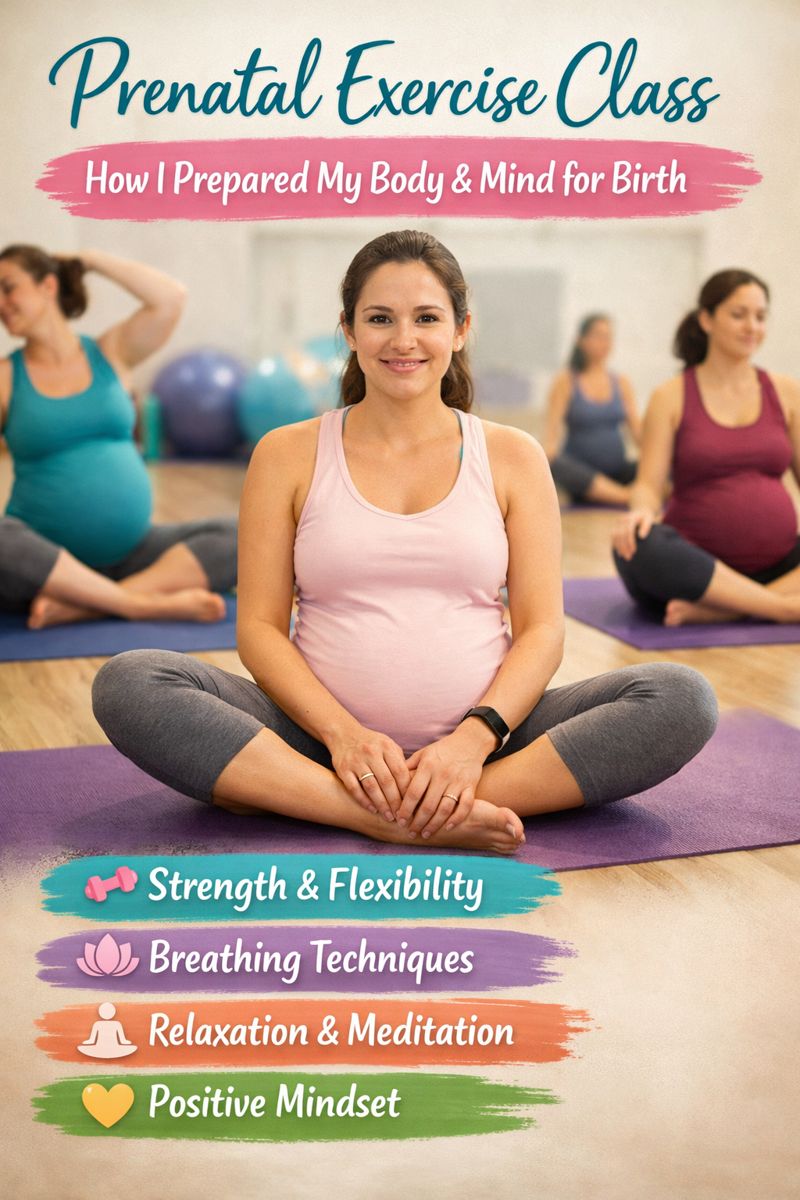
When I first heard the phrase “prenatal exercise class,” I imagined a room full of perfectly calm women, all moving in slow, elegant motions, breathing in perfect rhythm. I thought it would feel foreign to me, almost performative, like I had to become a different version of myself to belong there. The truth turned out to be very different. Joining prenatal exercise as a pregnant woman didn’t make me feel like I had to perform. It made me feel like I was finally allowed to be honest with my body. Pregnancy changes you not just physically, but emotionally and mentally too, and I didn’t fully understand that until I started moving in a space designed specifically for this season of life.
My body was changing every week. My posture felt different. My hips were softer. My back carried weight in a new way. Even my balance felt unfamiliar. On top of that, my emotions were closer to the surface than ever. I could feel calm one moment and overwhelmed the next. I didn’t realize how much these psychological and physical changes were connected until I started prenatal movement. The gentle exercises were not about performance or results. They were about helping my body adapt to pregnancy and giving my nervous system a sense of safety in a time of constant change. Moving in a supportive environment helped me accept that my body was not “failing” at anything. It was simply reorganizing itself to make space for my baby.
What surprised me the most was how much awareness I gained about my muscles and joints. Before pregnancy, I never paid attention to how my hips moved or how my pelvic floor worked. These parts of my body existed in the background of my awareness. Pregnancy brought them to the front. In prenatal exercise, I started noticing where I felt tension, where I felt weakness, and where I felt stability. Some days my lower back felt tired from carrying my growing belly. Other days my hips felt loose and unstable. Learning to move in ways that supported these areas gave me a sense of control in a body that often felt unpredictable. I realized that fitness during pregnancy isn’t about looking strong. It’s about feeling supported from the inside.
One of the most valuable things I learned through prenatal movement was how to breathe in a way that actually helps my body. Breathing sounds simple, but pregnancy changes the way it feels. As my belly grew, my diaphragm had less space, and my breath naturally became shorter. I used to breathe shallowly without noticing. In prenatal exercise, I learned to slow my breath down, to feel it expand into my ribs and back, not just my chest. This kind of breathing didn’t just calm me during movement. It helped me in moments of anxiety, when my thoughts were racing, and even when my body felt uncomfortable for no clear reason. Breathing became a tool I could use anytime, anywhere, to remind my body that it was safe.
Relaxation techniques were another unexpected gift. I had always thought relaxation meant lying still and trying to empty my mind, something I was never very good at. During pregnancy, relaxation became something more practical. I learned to consciously release tension from my shoulders, jaw, and hips. These are places where stress and fear tend to collect, especially when you are pregnant and thinking about birth, responsibility, and the unknown. Practicing relaxation while moving taught me that I don’t have to carry all my tension with me all the time. I can notice it and gently let it go. This felt empowering, especially when I started thinking about labor and birth. Knowing that I could influence how my body responds to stress gave me a sense of trust in myself.
Another important part of prenatal exercise for me was becoming aware of my pelvic floor. Before pregnancy, I had barely thought about these muscles. Now, they are central to how I experience my body. I learned how to gently engage and relax them, not by forcing or squeezing, but by feeling the natural rhythm of contraction and release. This awareness made me feel more connected to the part of my body that plays such a crucial role in pregnancy, birth, and recovery. Understanding that the pelvic floor needs both strength and relaxation changed the way I think about “intimate exercise.” It’s not about constant tightening. It’s about balance and responsiveness. This knowledge gave me confidence that I am preparing my body in a meaningful way for birth, even if the movements themselves are small and gentle.
What I also appreciated was how prenatal movement adapted to my changing body. Some days, certain movements felt great. Other days, the same movements felt uncomfortable. Instead of pushing through, I learned to adjust. Pregnancy taught me that flexibility is not just physical; it’s mental. Being able to say, “This doesn’t feel right today, and that’s okay,” was surprisingly hard at first. I was used to following plans and routines. Prenatal exercise encouraged me to follow my body instead. This shift in mindset slowly started to spill into other areas of my life. I became more patient with myself. I stopped expecting consistency from a body that is constantly changing. This acceptance brought a kind of peace I didn’t know I needed.
Learning different positions that could be helpful during labor and birth was both practical and emotional for me. Before, birth felt abstract and slightly frightening. Practicing positions that support comfort, openness, and gravity made it feel more real and more approachable. These positions weren’t about “doing it right.” They were about finding what feels supportive for my body. I learned that movement during labor can be intuitive, that there is no single correct way to give birth, and that my body will likely guide me toward positions that feel helpful in the moment. Practicing these positions during pregnancy gave me a sense of familiarity with my own body in different shapes and orientations. It made the idea of labor feel less unknown and more like something my body is capable of navigating.
What I didn’t expect was how emotionally grounding prenatal exercise would feel. Being in a space where pregnancy is normal, where tiredness is understood, and where nobody expects performance created a sense of belonging. I didn’t have to explain why I needed to sit down or why I needed to take breaks. This acceptance allowed me to be more honest with myself too. I stopped pretending I was fine when I wasn’t. I allowed myself to feel tired without labeling it as weakness. This emotional permission was just as valuable as the physical benefits.
Prenatal exercise also changed how I see my body image. Watching my body change has been emotional. Some days I feel connected to my growing belly, proud of what my body is doing. Other days I feel unfamiliar in my own skin. Moving in a gentle, supportive way helped me see my body as functional rather than just visual. Instead of focusing on how I look, I started focusing on how my body carries me through the day, how it supports my baby, how it adapts. This shift from appearance to function softened a lot of the self-criticism I didn’t even realize I was carrying. I began to see my changing body as something dynamic and intelligent, not something that needed to be fixed or controlled.
Over time, I noticed that prenatal movement didn’t just affect how my body felt during the sessions. It changed how I moved through my daily life. I became more aware of my posture when standing or sitting. I noticed when I was holding tension in my neck or jaw. I started taking small breaks to stretch or breathe when I felt overwhelmed. These small habits made my days feel more manageable. They didn’t make pregnancy easy, but they made it feel more supported. There is a difference between enduring something and being supported through it, and prenatal movement helped me experience the second.
One of the biggest lessons for me was realizing that there is no single “right” pregnancy experience. Some women love structured prenatal classes. Some prefer to move alone at home. Some days movement feels nourishing, and other days rest feels like the only honest choice. All of these experiences are valid. Prenatal exercise is not about achieving a certain image of pregnancy fitness. It’s about creating a relationship with your body that is based on listening, adjusting, and trusting. This relationship is not built in a day. It grows slowly, with every moment you choose to respond to your body with care instead of pressure.
As I move through pregnancy, I feel that prenatal exercise is not just preparing my body for birth. It is preparing my mindset for motherhood. It is teaching me patience, flexibility, and compassion toward myself. It is teaching me that caring for another being begins with caring for my own body in a way that is gentle and honest. I don’t know exactly how my birth will unfold. I don’t know what challenges motherhood will bring. But I know that through this practice of listening to my body, breathing through discomfort, and allowing myself to move and rest as needed, I am building a kind of inner trust. And that trust feels like one of the most valuable things I can carry with me into the next chapter of my life.