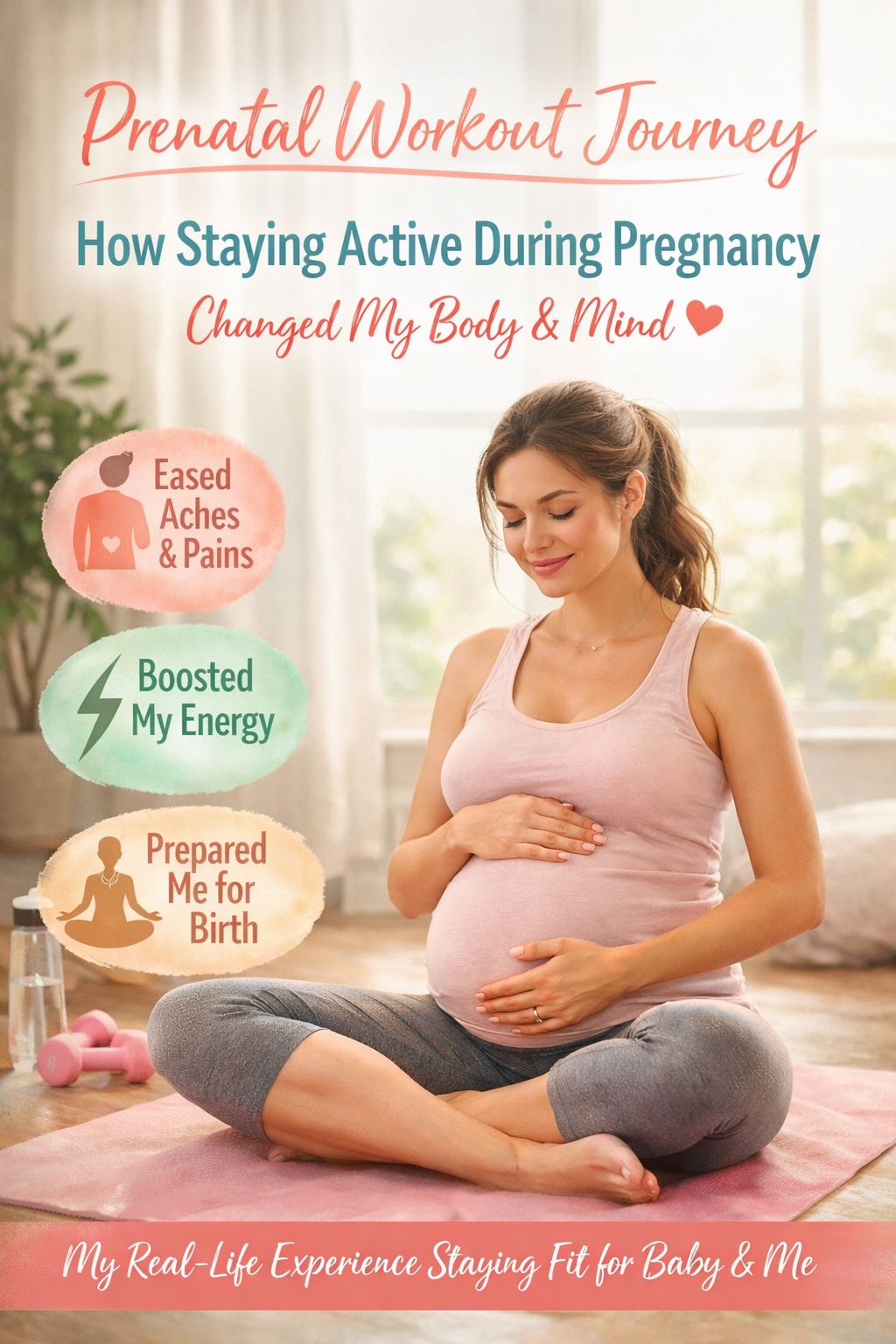
When I first saw the two lines on the pregnancy test, my entire world tilted in the most beautiful and terrifying way at the same time. Suddenly, every little choice I made felt heavier. What I ate. How I slept. How much I moved. I caught myself wondering constantly: Am I doing this right? Is my lifestyle really the best thing for my baby?
Like many women, pregnancy made me re-evaluate everything. I had always been “somewhat active,” but not consistent. There were weeks when I moved my body with joy, and months when life simply got in the way. Now, with a tiny life growing inside me, I felt a deep desire to do better—not out of pressure, but out of love. That’s when I found prenatal exercise and, more specifically, pregnancy-safe workouts designed for mothers-to-be.
At first, I was scared to move at all. I had heard so many warnings: “Don’t lift,” “Don’t strain,” “Be careful,” “Better to rest.” Rest is important, of course, but I quickly learned that staying gently active during pregnancy is one of the best gifts you can give both yourself and your baby—when done safely and intentionally. Moving my body didn’t drain me. It supported me. It didn’t put my baby at risk. It helped my body prepare for birth and recovery in a way I never expected.
As the weeks went by, I began to notice subtle but powerful changes. My back hurt less. My mood stabilized. I felt more connected to my body instead of fighting against it. Pregnancy comes with massive physical and emotional shifts—hormones fluctuate, organs move, posture changes, and your sense of identity quietly evolves too. Gentle, pregnancy-adapted exercise gave me a way to ground myself in all that change.
Staying active during pregnancy isn’t about “staying fit” in the aesthetic sense. It’s about supporting your body while it performs one of the most complex and demanding processes imaginable: creating a human being. Research consistently shows that regular, appropriate physical activity during pregnancy can support circulation, reduce lower back pain, ease common discomforts like swelling, improve posture, and even contribute to smoother postpartum recovery. Some studies also suggest that healthy maternal movement patterns may positively influence the baby’s development and later cognitive functioning. For me, though, the biggest benefit was emotional: I felt more capable. More trusting of my body. More calm.
Of course, pregnancy isn’t the time for reckless workouts or pushing personal records. Learning what not to do was just as important as learning what to do. Certain movements simply don’t serve a pregnant body well. Exercises done lying flat on the stomach, intense abdominal crunches or sit-ups, “dead bug” core movements, heavy weight lifting that spikes intra-abdominal pressure, unstable balance tools, jumping exercises, and anything that risks falling are better left aside. I also learned to pay attention to my heart rate and breathing. The goal isn’t exhaustion—it’s gentle stimulation. If I couldn’t comfortably hold a conversation while moving, I was doing too much.
Pregnancy taught me to listen to my body in a completely new way. Some days, a slow walk and a few deep breaths felt like enough. Other days, I had more energy and enjoyed longer sessions of prenatal movement. There was no “perfect” routine—only a daily check-in with myself.
Each trimester brought its own rhythm and challenges. The first trimester was the most emotionally overwhelming for me. Hormones surged, nausea came in waves, and exhaustion hit harder than any workout ever could. Mentally, I was adjusting to a brand-new reality. During this time, I learned that movement didn’t have to look impressive to be meaningful. Gentle walks, simple breathing exercises, light mobility work, and moments of conscious relaxation were more than enough. The purpose of movement in early pregnancy, for me, was not performance—it was comfort and emotional grounding. Even five minutes of mindful breathing felt like a small act of self-care in the midst of so much internal change.
By the second trimester, something shifted. My energy slowly returned, my body felt more stable, and I began to actually enjoy moving again. This is often when structured prenatal workouts become more comfortable and beneficial. I noticed how targeted exercises helped improve my posture as my center of gravity changed. Gentle hip mobility work eased tension in my lower back. Breathing exercises taught me how to release unnecessary tension in my jaw, shoulders, and pelvic floor. I started to understand that preparing for birth isn’t only about “being strong”—it’s also about learning how to relax, how to let go, and how to move with softness instead of force.
Prenatal training also gave me something I didn’t expect: confidence about birth itself. I wasn’t training for a perfect labor story—I was preparing my body to work with the process instead of resisting it. Strengthening supportive muscles, improving posture, learning breathing patterns, and practicing pelvic floor awareness helped me feel more prepared, both physically and mentally, for the unknown that lies ahead.
The third trimester brought new challenges. My belly grew heavier. My movements slowed. Simple tasks took more effort. Instead of pushing myself, I learned to adjust. Exercises became gentler. Movements were slower and more deliberate. Stretching, relaxation, breathing techniques, and pelvic floor awareness became my daily anchors. These sessions felt less like workouts and more like conversations with my body: I hear you. I know this is hard. Let’s move in a way that supports you.
Even in the final weeks, movement helped me feel less trapped inside discomfort. Gentle mobility eased stiffness. Conscious breathing helped me sleep better. The small rituals of daily movement reminded me that my body wasn’t fragile—it was powerful and adaptable, even in its vulnerability.
One thing I deeply appreciated was learning that staying active during pregnancy doesn’t mean giving up activities you love, especially if you were already exercising regularly before becoming pregnant. Women who ran, swam, or did strength training before pregnancy often don’t need to stop completely—they just need to adjust intensity, modify movements, stay hydrated, and respect new physical boundaries. The key is awareness, not perfection. Pregnancy is not the time to “prove” anything. It’s the time to cooperate with your body.
For those who are new to exercise, pregnancy can actually be a beautiful entry point into movement. Prenatal yoga, gentle Pilates, guided pregnancy workouts, and supervised personal training designed specifically for pregnant women offer safe and supportive ways to build strength, mobility, and confidence. There’s something deeply empowering about discovering that your body is capable of movement even while growing another human being.
Looking back, staying active during pregnancy changed how I experienced motherhood before my baby was even born. It taught me patience. It taught me body awareness. It taught me that strength doesn’t always look like intensity—sometimes it looks like softness, slowing down, and choosing presence over performance.
Pregnancy is not about controlling the body. It’s about partnering with it. Movement, when chosen with care, becomes a form of communication between you and the life growing inside you. Every gentle step, every slow breath, every mindful stretch becomes a quiet message: I’m here. I’m supporting us both.
If there’s one thing I wish every pregnant woman could feel, it’s this sense of trust in her body. You don’t need to be perfect. You don’t need to follow a rigid routine. You only need to stay connected to yourself. Your body already knows how to grow a baby. Movement simply helps you feel that wisdom more clearly.
And on the days when you feel tired, emotional, heavy, or unsure—remember that even the smallest act of care counts. A few slow breaths. A short walk. A moment of gentle stretching. These small choices, repeated with kindness, build a foundation not just for birth, but for the way you will move through motherhood itself.