
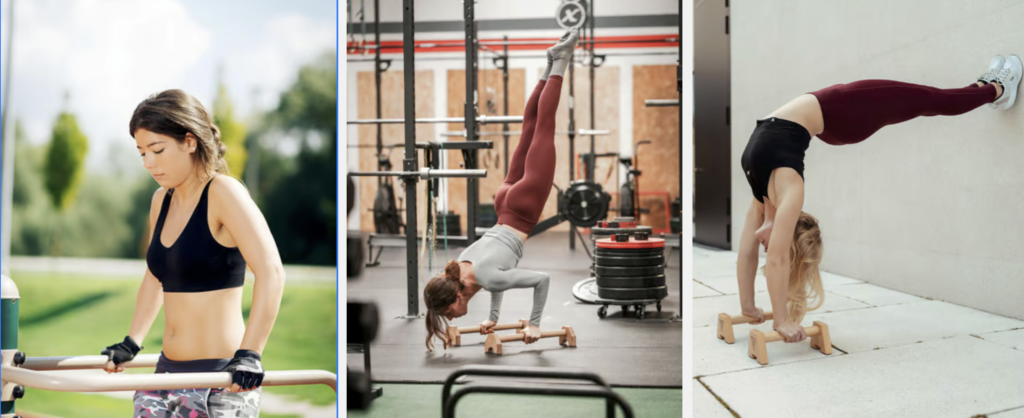
I avoided dips for a long time. Not because I didn’t want to try them, but because they felt like something meant for a stronger version of me — someone more confident, more prepared, more… ready. Every time I saw them, especially on those tall gym bars, I felt a quiet resistance. They looked demanding, almost unforgiving, like there was no room for learning, only performing.
So I waited.
And in that waiting, I built this idea that dips were out of reach. Something I would “eventually” get to, but not today.
Then parallettes came into my life, and something shifted.
They didn’t feel overwhelming. They were closer to the ground, more stable, almost inviting. There was no pressure attached to them, no expectation. Just a simple opportunity to try. And that’s what I did — not perfectly, not confidently, but honestly.
The first few attempts felt unfamiliar. My arms trembled slightly, my shoulders weren’t quite sure where to settle, and I couldn’t lower myself very far. But for the first time, I wasn’t focused on how it looked. I was paying attention to how it felt — the engagement, the effort, the quiet conversation between my body and mind.
And that changed everything.
I kept coming back to it, without forcing progress, without rushing. Just showing up, allowing my body to learn at its own pace. Some days felt easier, others didn’t, but there was a subtle improvement each time — a little more control, a little more depth, a little less hesitation.
Then one day, almost unexpectedly, it happened.
I lowered myself down slowly, steady and controlled, and pushed back up without that familiar feeling of collapse. It wasn’t dramatic, it wasn’t fast, but it was smooth. Complete.
And in that moment, I smiled.
Not because it looked impressive, but because it felt like something had aligned. Like my body finally trusted itself enough to move through the whole motion. It was a quiet kind of pride — the kind that doesn’t need to be shared to be meaningful.
That’s when I truly understood the value of small wins.
Dips, I realized, are not just about strength. Yes, they work your triceps, your shoulders, your chest — but more than that, they teach you patience. They ask you to slow down, to stay present, to accept where you are without rushing to where you think you should be.
There’s a certain honesty in the movement. You can’t really hide in it. If something feels unstable, you notice. If you lack control, it shows. But instead of seeing that as failure, I started to see it as guidance.
A way to grow, gently.
There were many days when I still needed support. Bending my knees, letting my legs assist just enough to complete the movement. And instead of feeling like I was falling short, I began to understand that this was the process. Not a shortcut, not a compromise — but a necessary step.
Strength, I’ve learned, isn’t built by forcing yourself into the hardest version of something. It’s built by choosing the version that allows you to stay consistent, to stay connected, to keep going.
Over time, those assisted movements became lighter. My shoulders felt more stable, my arms more capable, and the hesitation slowly faded. I didn’t notice a big, sudden change — it was more like a quiet unfolding. One day I needed more support, another day a little less.
And eventually, I didn’t need it at all.
Looking back now, I’m grateful I didn’t rush into dips trying to prove something. Starting slowly allowed me to experience them differently — not as a challenge to conquer, but as a practice to grow into.
It taught me to listen. To trust. To appreciate the subtle progress that often goes unnoticed.
So if dips feel difficult right now, that’s okay. Let them be. Approach them in a way that feels supportive, not overwhelming. Use assistance if you need it. Take your time.
You don’t have to be perfect. You don’t have to be ready.
You just have to begin.
And somewhere along the way — in a quiet, almost unnoticeable moment — you’ll realize that you’ve become stronger.
Not all at once, but little by little.
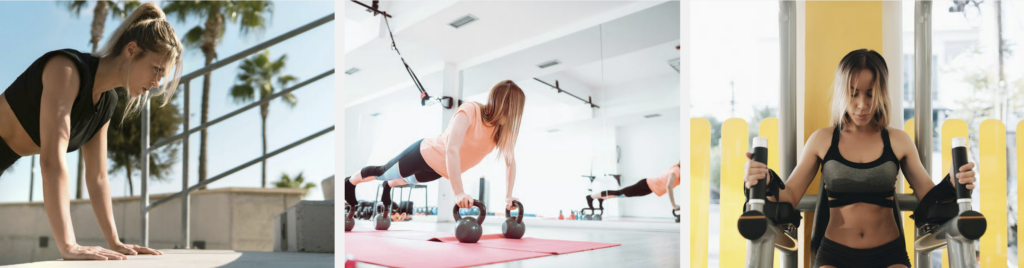
The first time I used parallettes, I noticed something immediately — not the difficulty, not the novelty, but the control.
It was subtle at first, almost hard to describe, but it felt completely different from anything I had done before. There was no assistance, no fixed path guiding my movement, no room to rely on momentum. It was just me, my body, and the way I chose to move through each repetition.
And suddenly, every movement felt… honest.
With machines, there’s often a sense of being supported, sometimes even carried through the motion. With weights, it’s easy to rush, to swing slightly, to let momentum take over without even realizing it. But parallettes don’t allow that. They ask you to slow down, to be present, to take full responsibility for every inch of the movement.
They elevate your hands, which sounds like a small detail, but in reality, it changes everything.
That extra height creates space — space to move deeper, to explore a fuller range of motion that you might not access otherwise. A push-up becomes something entirely different when you can lower yourself further, feeling your chest open, your muscles stretch and engage more completely.
At the same time, your wrists feel more supported. The neutral grip takes away that uncomfortable pressure that often comes with floor exercises, allowing you to focus not on discomfort, but on the quality of the movement itself.
But what I felt the most wasn’t in my arms — it was in my core.
Every movement required stability. Not forced, not exaggerated, but constant. A quiet engagement that held everything together. There was no collapsing into positions, no shortcuts. If I lost focus, even for a moment, I felt it immediately.
And that’s when it really clicked for me.
Exercises I thought I had already “mastered” suddenly felt new again. Slower. Deeper. More intentional. What used to feel routine became something I had to relearn with awareness and care.
But beyond all the physical changes, there was something else — something harder to put into words, but impossible to ignore.
Training with parallettes felt… elegant.
Not in a superficial way, but in the way the movements flowed when done with control. There was a sense of quiet strength in it. No rushing, no forcing, no need to prove anything. Just steady, mindful movement.
It didn’t feel like I was trying to overpower the exercise.
It felt like I was learning to understand it.
And that shift made everything more meaningful.
For a long time, I associated strength with intensity — pushing harder, doing more, going faster. But parallettes introduced me to a different kind of strength. One that is calm, precise, and deeply connected.
The kind of strength that doesn’t need to be loud to be powerful.
There’s something incredibly empowering in that, especially as a woman navigating fitness in a world that often emphasizes extremes. Parallettes offer a different perspective. They invite you to build strength with intention, to move with awareness, and to appreciate the process rather than chase the result.
You’re not just completing reps.
You’re refining them.
You’re learning how your body moves, where it feels strong, where it needs support, and how to bring everything into balance. It becomes less about how many repetitions you can do, and more about how each one feels.
And over time, that awareness builds something deeper than just physical strength.
It builds confidence.
Not the loud, external kind, but the quiet confidence that comes from knowing your body, trusting it, and feeling at home in it.
Looking back, I realize that parallettes didn’t just change the way I train.
They changed the way I experience movement.
They slowed me down in the best possible way. They taught me that there is beauty in control, in patience, in doing things with care rather than urgency.
So if you’re just starting with them, don’t rush.
Let the movements feel new. Let them challenge you in a softer, more intentional way. Focus on how your body feels, not how it looks.
Because somewhere in that slow, controlled process, you’ll discover something powerful.
A kind of strength that feels balanced, grounded, and entirely your own.
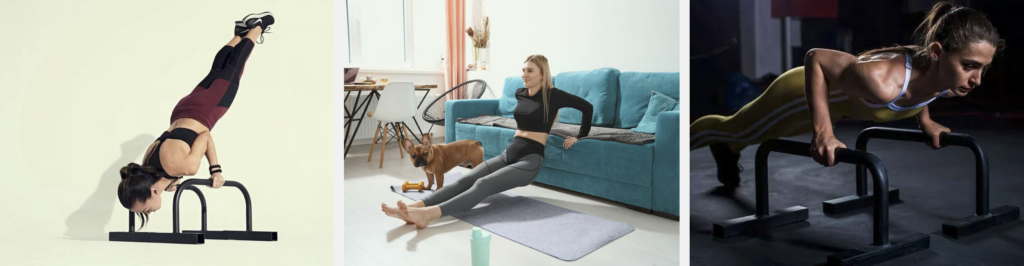
The first time I used parallettes, I noticed something immediately — not the difficulty, not the novelty, but the control.
It was subtle, almost something you feel before you can fully explain it. A quiet shift. A different kind of awareness. It didn’t feel like I was just doing an exercise anymore — it felt like I was experiencing it.
There was no assistance, no machine guiding the path, no external support to lean on. It was just me, my body, and the intention behind every movement. And in that space, something became very clear: every repetition had to be earned.
Every movement felt… honest.
Not rushed, not forced, not hidden behind momentum or habit. Just real.
With machines, there’s often a sense of safety, sometimes even passivity — as if the movement is happening for you. And with weights, it’s easy to lose yourself in speed, to let a slight swing or shift carry you through without even noticing. But parallettes remove that option completely. They invite you — or rather, require you — to slow down, to be present, and to take full responsibility for every inch of the motion.
At first, that can feel unfamiliar. Even uncomfortable.
But then, it becomes something else entirely.
They elevate your hands, which sounds simple, almost insignificant — but in reality, it transforms the entire experience. That small lift creates space, and within that space, there is freedom. Freedom to move deeper, to explore ranges your body might not have accessed before, to feel the stretch and engagement in a more complete way.
A push-up, for example, stops being just a push-up. It becomes a controlled descent, a moment of openness through the chest, a deeper connection to the muscles working beneath the surface. You begin to notice details you may have overlooked before — how your shoulders stabilize, how your elbows track, how your core quietly supports everything.
And then there’s the wrists.
For so many women, discomfort in the wrists can be a limiting factor in floor-based training. That subtle strain can take you out of the moment, making you focus on what doesn’t feel good instead of what’s actually working. But the neutral grip of parallettes changes that. It allows your hands to rest in a more natural position, removing that unnecessary tension and giving you space to focus on the quality of the movement instead.
But what surprised me the most wasn’t any of that.
It was my core.
Not in a dramatic, exhausting way — but in a constant, quiet engagement. A subtle activation that never really switched off. Every movement required stability, not as an afterthought, but as a foundation. There was no collapsing into positions, no hanging on structures, no shortcuts.
If I lost focus, even slightly, I felt it instantly.
And that awareness changed everything.
Exercises I once thought I had mastered suddenly felt new again. Not harder in a discouraging way, but deeper. Slower. More intentional. Movements I used to rush through became something I wanted to stay present in. Something I wanted to understand, not just complete.
And somewhere in that process, something softer emerged.
Training with parallettes began to feel… elegant.
Not in a performative or aesthetic sense, but in the way the movements flowed when I allowed them to. There was a rhythm to it. A quiet strength that didn’t rely on force, but on control. No urgency, no pressure to prove anything — just steady, mindful motion.
It didn’t feel like I was trying to overpower my body.
It felt like I was learning to work with it.
And that shift is powerful.
Because for so long, strength is often presented to women as something intense, something extreme — push harder, go further, do more. But parallettes offer a different perspective. They remind you that strength can also be calm. That it can be precise, intentional, and deeply connected.
The kind of strength that doesn’t need to be loud to be real.
There is something incredibly empowering in that realization. In moving in a way that feels supportive instead of punishing. In building strength without disconnecting from yourself.
You’re not just completing reps.
You’re refining them. Feeling them. Understanding them.
You begin to notice where your body feels strong, where it needs more support, where it compensates, where it flows. And instead of judging those moments, you start to work with them, gently improving over time.
And that’s where something deeper begins to grow.
Confidence.
Not the kind that comes from how something looks on the outside, but the kind that builds quietly from within. The kind that comes from knowing your body, trusting it, and feeling grounded in it.
It doesn’t shout.
It settles.
Looking back, I realize parallettes didn’t just change the way I train — they changed the way I relate to movement.
They slowed me down in a way I didn’t know I needed. They taught me to pay attention, to move with care, to appreciate the process instead of rushing toward the result.
They showed me that there is beauty in control.
In patience.
In choosing to move with intention, even when no one is watching.
So if you’re at the beginning of this journey, allow it to be slow. Let it feel new. Let it challenge you, not in a harsh or overwhelming way, but in a way that invites curiosity.
You don’t have to rush into strength.
You can grow into it.
And somewhere in that quiet, controlled process, you’ll discover something lasting — a kind of strength that feels balanced, grounded, and completely your own.
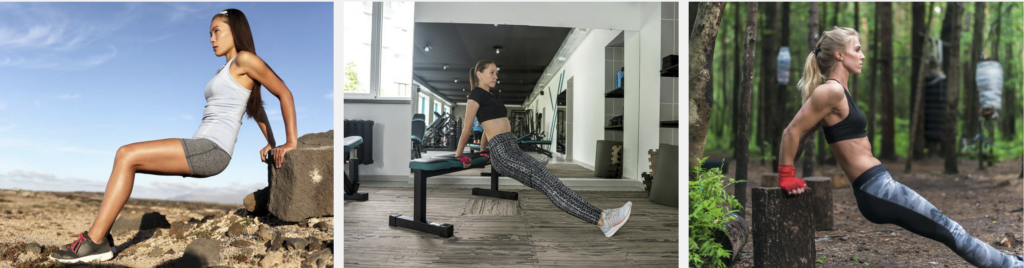
The first time I used parallettes, I noticed something immediately — not the difficulty, not the novelty, but the control.
It wasn’t loud or dramatic. It didn’t come with that familiar burn or exhaustion that usually signals a “good workout.” Instead, it was quiet. Almost unnoticeable at first. A shift in awareness, a sense that something about the way I was moving had changed.
For the first time, it didn’t feel like I was just doing an exercise.
It felt like I was fully inside it.
There was no assistance, no fixed path, no external structure holding me in place. No machine deciding the direction, no momentum carrying me through the harder parts. It was just me, my body, and the intention behind every movement.
And in that space, something became very clear — every repetition had to be earned.
Not forced, not rushed, not performed for the sake of finishing — but built, moment by moment, with attention and care.
Every movement felt… honest.
There was nowhere to hide. No way to compensate without noticing it. If I lost focus, I felt it. If I rushed, it showed. If I disconnected even slightly, the movement lost its integrity. And instead of that feeling frustrating, it became something grounding.
Because it brought me back to myself.
With machines, there’s often a sense of safety, but also a subtle distance — as if the movement is happening for you rather than through you. And with weights, it’s so easy to chase intensity, to move faster than your body can truly control, to let small compensations slip in unnoticed.
But parallettes gently take that away.
They don’t demand perfection — but they do ask for presence.
At first, that can feel unfamiliar. Even a little uncomfortable. Especially if you’re used to measuring your workouts by speed, by numbers, by how much you can push through.
But if you stay with it, that discomfort softens.
And in its place, something deeper begins to grow.
They elevate your hands, which sounds like such a small, almost insignificant detail — but it changes everything. That slight lift creates space, and within that space, movement becomes more expansive. You’re no longer limited by the floor. You can move deeper, more freely, with more awareness.
A push-up becomes something entirely different.
Instead of just lowering and pushing back up, it becomes a controlled descent, a moment where your chest opens, your shoulders stabilize, your core supports you quietly in the background. You begin to feel the movement, not just complete it. You notice the small details — the alignment, the balance, the way your body organizes itself to stay steady.
And then there’s the wrists.
For many women, wrist discomfort is something that often gets ignored or pushed through. It becomes part of the experience, something you tolerate rather than question. But parallettes shift that completely. The neutral grip allows your hands and wrists to settle into a more natural position, removing that underlying strain.
And when that discomfort disappears, something else becomes possible.
You can finally focus on the movement itself.
Not avoiding pain, not adjusting unconsciously, but fully present in what your body is doing.
But what stayed with me the most wasn’t in my arms or my wrists.
It was in my core.
Not in an intense, overwhelming way, but in a constant, quiet engagement. A subtle strength that held everything together. Every movement required stability — not as an extra effort, but as a foundation. There was no collapsing, no sinking into positions, no relying on structure.
Everything came from within.
And that changes how you experience your own strength.
Because instead of chasing it externally, you start to feel it internally.
Exercises I once thought I had mastered began to feel completely new. Not harder in a discouraging way, but deeper. Slower. More intentional. Movements that used to feel automatic became something I wanted to explore again, with curiosity instead of expectation.
And somewhere in that process, something softened.
Training stopped feeling like something I had to push through.
And started feeling like something I could move within.
There was a kind of elegance in it. Not in how it looked, but in how it felt. The way each movement connected to the next, the way control replaced urgency, the way strength expressed itself without force.
It wasn’t about proving anything anymore.
It was about understanding.
And that shift is powerful, especially as a woman navigating a fitness space that often celebrates extremes. Faster. Harder. More. Always more. But parallettes offer a different kind of experience — one that invites you to slow down, to listen, to build strength in a way that feels supportive instead of overwhelming.
They remind you that strength doesn’t have to be loud to be real.
It can be quiet. Steady. Grounded.
It can feel like control instead of exhaustion.
Like awareness instead of pressure.
Like confidence that grows slowly, but stays.
Because that’s what begins to build over time.
Not just stronger arms or a more stable core — but a deeper connection to your own body. A sense of trust. Of understanding. Of knowing where you are strong and where you are still growing, without judgment.
You’re not just completing reps.
You’re refining them.
You’re learning how to move in a way that feels aligned, supported, and intentional. And in that process, something shifts — not all at once, but gradually, quietly.
Confidence begins to settle in.
Not the kind that seeks validation or needs to be seen, but the kind that exists regardless. The kind that comes from within, from knowing your body and feeling at home in it.
It doesn’t shout.
It stays.
Looking back, I realize parallettes didn’t just change the way I train.
They changed the way I relate to myself.
They taught me to slow down without feeling like I was falling behind. To move with care without feeling like I wasn’t doing enough. To appreciate the process instead of constantly chasing the result.
They showed me that there is beauty in control.
In patience.
In choosing to move with intention, even when no one is watching.
So if you’re at the beginning of this journey, let it be gentle.
Let it feel new. Let it challenge you, not in a way that overwhelms you, but in a way that draws you in. Stay curious. Stay present. Let your body learn at its own pace.
You don’t have to rush into strength.
You can grow into it.
And somewhere along the way — in those slow, controlled, almost quiet moments — you’ll realize that something has changed.
Not just in how you move…
but in how you feel within yourself.
Balanced. Grounded. Strong.
In a way that is entirely your own.