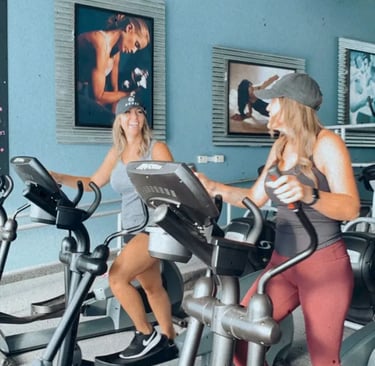
Every year, sometime around the first week of January, I feel the energy shift the moment I walk into the gym. It’s almost tangible. The air feels different — charged with hope, determination, and a kind of nervous excitement that you don’t really see at any other time of the year. The treadmills fill up earlier than usual, the weight room suddenly becomes crowded, and everywhere you look there are people who have decided that this year will be different.
I used to find this time overwhelming as a trainer. The gym was louder, busier, and less predictable. But over the years, I’ve grown to love this season, because behind all that chaos is something incredibly powerful: people are open to change. They’re willing to try. They believe in possibility again.
And that moment — that fragile window of motivation — can shape someone’s entire relationship with fitness if handled with care.
What I didn’t understand early in my career was how delicate this period actually is. I thought my job was to match my clients’ excitement with intensity. If they wanted transformation, we would push hard. If they arrived motivated, we would accelerate progress. But experience, especially working with women from all walks of life, taught me something very different.
Motivation is not something to push. It’s something to guide.
And January is where that lesson becomes most visible.
I see two types of people walk through the gym doors at the beginning of the year. There are the familiar faces — long-time members returning after the holidays, slightly out of routine, sometimes feeling guilty, sometimes determined to “make up for lost time.” And then there are the newcomers, stepping inside with equal parts excitement and uncertainty, often carrying big goals and even bigger expectations.
Both groups need something very different from what they think they need.
Many returning clients arrive apologetic. They tell me they ate too much, exercised too little, or lost progress over the holidays. I can see the disappointment in their posture before they even speak. And I always remind them of something I wish more people understood — rest, celebration, and time with family are not failures. They are part of life. They are part of health.
Our bodies are not machines that require constant productivity. They are living systems that move through cycles — effort, rest, growth, and recovery. Taking time off does not erase progress. It simply changes the starting point of the next phase.
Helping clients release that guilt is often the first real coaching moment of the year. Because shame never creates sustainable change. Compassion does.
With new clients, the emotional landscape looks different. They arrive energized, full of determination, convinced that they are ready to transform everything overnight. They want daily workouts, strict routines, perfect nutrition, complete discipline. Their ambition is beautiful — but also fragile.
I remember being exactly like that when I first started my own fitness journey. I believed success meant doing everything perfectly from day one. When reality inevitably interfered — a missed workout, a busy week, a moment of fatigue — I felt like I had failed.
Now, when I see that same mindset in others, I gently slow things down. I explain that long-term transformation rarely begins with dramatic change. It begins with small, consistent actions that fit naturally into real life.
Consistency is not built through intensity. It is built through sustainability.
That means helping clients set goals that support their lives rather than overwhelm them. Someone might say they want to train every morning before work or cook perfectly healthy meals every day. Instead of encouraging extremes, I help them find realistic rhythms — three workouts per week, a few intentional meals, manageable habits that feel achievable even on difficult days.
I’ve seen how empowering small wins can be. When someone realizes they can maintain a routine without constant struggle, their confidence grows. They begin to trust themselves. And that trust becomes the foundation for lasting change.
One of the most important parts of my work, especially with women, is understanding where someone truly stands before planning where they should go. Fitness levels, movement history, stress levels, and emotional readiness all matter. Two people with identical goals may require completely different approaches based on their starting point.
Some clients return after a break and expect their bodies to perform exactly as they did months earlier. I understand that desire — we all want to pick up where we left off. But the body adapts to what we consistently do, and it also adapts to what we stop doing. A gentle rebuilding phase is not a step backward. It is a strategic investment in safety and long-term progress.
I’ve learned that gradual progression protects not only the body but also motivation. When training meets the body’s current capacity, clients feel successful. When expectations exceed reality, frustration appears quickly.
For newcomers, the early sessions are even more significant. The first experiences someone has with exercise can shape their confidence for years. If the environment feels intimidating or overwhelming, they may never return. If they feel supported, capable, and safe, they begin to see movement as something positive rather than punishing.
I often start by teaching basic movement patterns, introducing equipment slowly, and focusing on body awareness. Some people initially resist this slower approach. They want to jump straight into intense workouts. But I’ve seen how building a foundation of skill and confidence creates far stronger results over time.
Confidence is not built through exhaustion. It is built through mastery.
Another lesson January continues to teach me is the importance of support and accountability. Human beings are social by nature, and change rarely happens in isolation. Some clients thrive in group environments where shared energy keeps them motivated. Others prefer quiet, individual sessions but benefit from regular check-ins and encouragement.
I’ve watched friendships form during small training groups, seen clients encourage each other through challenges, and witnessed how powerful a supportive environment can be. When people feel they are not alone in their journey, consistency becomes easier.
What fascinates me most after years in this profession is how much success depends on psychological and emotional factors rather than purely physical ones. Exercise is never just about muscles and movement. It is about identity, habits, and belief systems. When someone begins to see themselves as capable, strong, and resilient, their behavior naturally changes.
That internal shift is far more powerful than any workout plan.
As a woman in the fitness industry, I’ve also seen how deeply many women struggle with self-perception. They often arrive at the gym carrying years of self-criticism, comparing themselves to unrealistic standards, believing their worth is tied to appearance. Part of my role is helping them reconnect with their bodies as sources of strength rather than problems to fix.
When training becomes an act of self-care instead of self-punishment, everything changes. Movement becomes enjoyable. Progress becomes meaningful. Health becomes sustainable.
Over time, my approach to coaching has become less about pushing and more about guiding. Less about control and more about collaboration. I no longer see my role as someone who dictates a plan, but as someone who helps clients discover what works for their lives.
And every January reinforces that philosophy.
The crowded gym, the renewed motivation, the fresh beginnings — they all remind me that transformation does not happen through dramatic resolutions. It happens through patient guidance, realistic expectations, and supportive relationships.
Helping clients succeed is not about quick fixes or extreme programs. It is about building habits that survive beyond the excitement of the new year. It is about creating an environment where people feel safe to grow. It is about meeting individuals where they are and walking beside them as they move forward.
If there is one thing I have learned from years of coaching women through the waves of New Year motivation, it is this: real change is quiet. It is gradual. It is deeply personal. And when it is nurtured with care, it lasts far longer than the first rush of January enthusiasm.
Every year, when I see new faces walk into the gym filled with hope, I feel honored to be part of that moment. Because behind every resolution is a story — a desire for strength, confidence, health, or simply a better life.
And helping someone build that life, step by step, is the most meaningful work I know.