
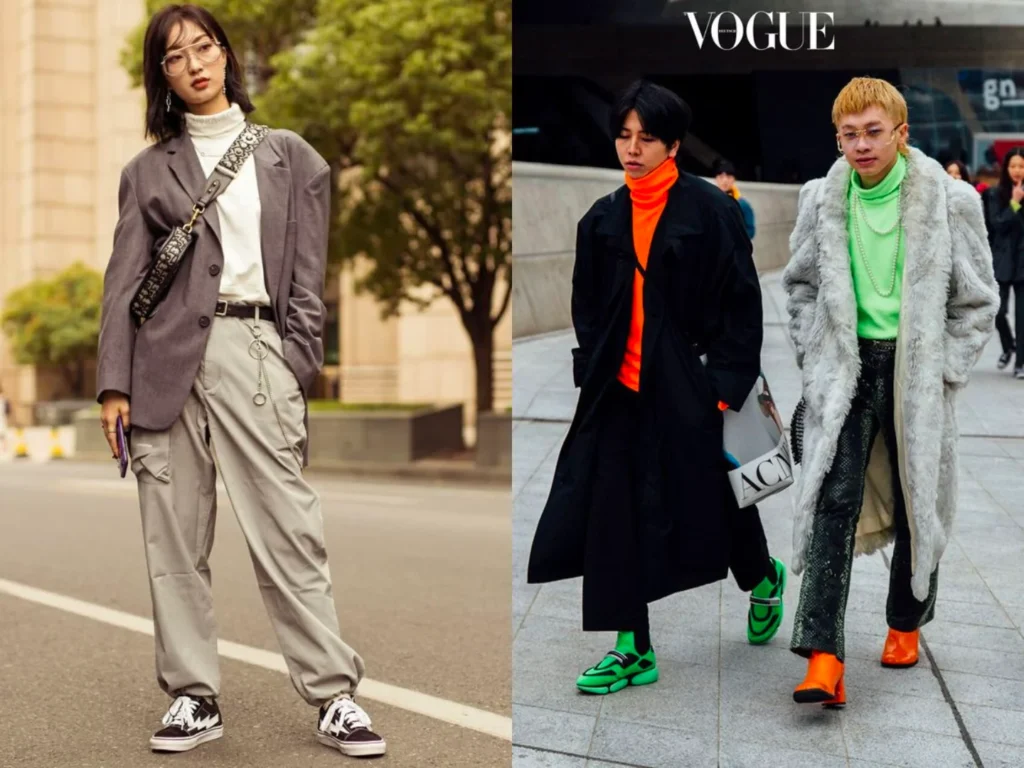
A love letter to the woman who moves through the world with intention, ease, and unmistakable style.
There’s a particular kind of magic that happens when you step outside in an outfit that feels completely, unapologetically you. Not just put-together — actually you. The kind of dressing that makes strangers on the street pause, not because your look is loud, but because it’s effortless in a way that’s almost impossible to explain. That’s what elegant streetwear does. It exists somewhere between couture aspiration and real-life wearability, and right now, in 2026, it is arguably the most exciting space in all of fashion.
I’ve been obsessed with this intersection for years. Long before quiet luxury became a Pinterest mood board and before clean girl aesthetic had its viral moment on TikTok, I was quietly piecing together a wardrobe that felt premium without announcing itself. A cashmere ribbed tank tucked into wide-leg trousers. Minimal gold jewelry stacked just so. White sneakers so clean they almost glow. A structured tote that looked expensive enough to make people wonder — and that’s exactly the point, isn’t it? To be wondered about.
This article is a deep dive into the world of elegant women’s streetwear in 2026. We’re talking aesthetics, trends, styling philosophy, the psychology of dressing well, the pieces worth investing in, and the small rituals that turn getting dressed into something that feels meaningful rather than mundane. If you’ve ever stood in front of your closet feeling like nothing fits even though it’s full — this one is for you.
What ‘Elegant Streetwear’ Actually Means in 2026
Let’s get one thing straight: elegant streetwear is not an oxymoron. It never was. It’s the fashion industry that spent decades insisting that street style and refinement lived on opposite ends of a very long spectrum. One end: high fashion, couture, gowns, pearls, the kind of clothing that exists in a glass case. The other end: hoodies, sneakers, oversized everything, the language of youth and rebellion. And most of us? We live beautifully in the middle.
In 2026, that middle ground has become the most coveted address in fashion. The women setting the visual conversation online — whether through editorial Instagram grids, slow-scroll Pinterest boards, or the handful of style influencers worth actually following — have refined this balance to a near-art form. They’re wearing tailored blazers with bike shorts. Silk slip skirts with vintage band tees. Heritage sneakers with floor-length trench coats. It’s the kind of dressing that says: I know exactly who I am, and I dressed accordingly this morning before my espresso got cold.
Elegant streetwear, at its core, is about intentionality. It’s about choosing pieces that work hard — that look polished without trying too hard, that photograph beautifully but also hold up during a full day of walking, meetings, errands, and aperitivo hour. It’s clothing built for a real life, worn by a woman with somewhere to be and something to say.
The defining shift this year is the complete death of ‘throwaway’ fashion in the stylish woman’s vocabulary. The trend cycle has collapsed into something slower and more considered. Women are no longer chasing micro-trends with a six-week shelf life. Instead, the focus has moved to building a wardrobe with genuine staying power — pieces rooted in quality, fit, and a quietly confident aesthetic that transcends whatever is supposedly ‘in’ right now.
The Aesthetic Landscape: Understanding What’s Actually Happening in Style Right Now
If you spend any time on social media — and if you’re reading a fashion blog, you probably do — you’ll know that the aesthetic naming convention has reached a certain level of absurdity. Quiet luxury. Soft life. Dark academia. Clean girl. Coastal grandmother. Mob wife. The list scrolls forever, and yet underneath all the labels, something genuinely interesting is happening in the way women are approaching personal style.
What ties these aesthetics together, even when they seem wildly different, is a shared philosophy: clothing as self-expression rather than trend compliance. The woman who dresses in quiet luxury isn’t necessarily wearing the same things as the woman who leans into soft glam — but both of them are dressing with intention. Both are asking: What does this say about me? Does it feel true?
Quiet luxury is still very much present in 2026, but it has evolved. The original wave — all cashmere neutrals, The Row, and understated logoless everything — was a necessary antidote to the maximalism that preceded it. But now, women are adding texture back in. Not logos, not excess, but dimension. A sculptural pleat on a trouser. The subtle sheen of satin at the collarbone. A monochromatic look that plays with different weights of the same colour. It’s quiet luxury with a pulse.
Clean girl aesthetic has done something remarkable: it has made minimalism aspirational again in a way that feels deeply personal rather than coldly editorial. The dewy skin, the slicked bun, the gold hoops, the linen blazer — it’s a look that communicates both effortlessness and care at the same time. And that tension is exactly what makes it so compelling to so many women.
Soft glam, the aesthetic that lives somewhere between old Hollywood and modern femininity, has found its streetwear expression in silk blouses worn with straight-leg denim, in pearl details on otherwise casual pieces, in the way a woman might pair a gossamer dress with a pair of pristine white trainers and make the whole thing look completely coherent. It’s romantic without being costume-y. It’s pretty without being precious.
And then there’s the Pinterest-core movement — less of a single aesthetic and more of a collective yearning for beauty, intention, and a life that looks as considered as it feels. In 2026, Pinterest is no longer just a mood board platform. It has become a genuine style authority, with visual essays and curated collections shaping what women want to wear in ways that feel more intimate than the front row of Fashion Week ever did.
The Foundational Pieces: Building an Elegant Streetwear Wardrobe That Actually Works
Here’s what I know to be true after years of getting dressed wrong, then slowly learning to get it right: a wardrobe built on strong foundations is the only wardrobe worth having. Not foundations in the boring, minimalist-uniform sense — but foundations in the sense of pieces that earn their keep. Pieces you reach for first. Pieces that make everything else around them look better.
The Perfect Trouser
If there is one piece that defines the elegant streetwear movement more than any other, it is the trouser. Not the legging, not the jogger, not the jeans — though all of these have their place — but the trouser. A well-cut trouser in a beautiful fabric is a magic trick. It can be thrown on with a white tank and sneakers for a look that is immediately, unmistakably chic. Pair it with a silk blouse and pumps and it becomes something else entirely.
This year, the trouser silhouettes worth noting are the ultra-wide palazzo (back with a vengeance, but this time in heavier, more sculptural fabrics), the straight-leg tailored trouser in a slightly cropped length that hits just above the ankle, and the barrel-leg in soft wools and tweeds. What they all share is a certain ease — a sense of movement and breath in the fabric that makes them deeply comfortable while looking anything but casual.
If you invest in one piece from this list, make it a trouser. In a neutral — stone, camel, chocolate, off-white, deep navy — that works with at least five other things in your wardrobe. Fit it precisely at the waist. Hem it properly. Wear it endlessly.
The Elevated Sneaker
The sneaker has completed its transformation from athletic necessity to style statement, and in 2026 it holds a position of genuine authority in the elegant wardrobe. But not every sneaker qualifies. The sneakers that read as elegant streetwear are specific: clean, minimal, usually low-profile, and impeccably maintained. You know the ones. The kind that look like they were purchased ten minutes ago no matter when you actually bought them.
This year, the most compelling sneaker conversations are happening around heritage styles — classic tennis shoes and court sneakers that feel both vintage and current — and around the emergence of what I can only describe as ‘luxury athletic’ styles: running-adjacent silhouettes made from premium materials, often in unusual colourways that feel more like art than sportswear. The key is always the same: wear them clean, wear them intentionally, and let them add a note of ease to even your most elevated looks.
The Structured Bag
A bag in the elegant streetwear wardrobe is doing several things at once. It is, obviously, functional. But it is also the visual anchor of the whole outfit — the piece that either elevates everything else or quietly lets the look down. The bags that earn their place in 2026 are structured, relatively understated, and made from materials that age beautifully: supple leathers, sueded finishes, occasional woven textures that suggest craftsmanship without screaming it.
Size-wise, the conversation has shifted toward medium and large formats — bags that are actually useful for a real day, that can hold a book and a water bottle and your entire life without looking overstuffed. The tiny bag had its moment. The tote has returned, but elevated: less canvas grocery bag, more considered companion. A tote that looks intentional. A tote with beautiful hardware. A tote you’d be proud to set on the table at a nice restaurant.
The Cashmere Layer
Cashmere — or its high-quality alternatives — is the texture of elegant streetwear. A ribbed cashmere cardigan over a silk cami. A cashmere turtleneck under a blazer. A loose, draped cashmere sweater with wide-leg trousers and sneakers. The fabric does something to an outfit that nothing else quite replicates: it adds a tactile quality, a softness that reads as luxurious even from a distance. People notice when a fabric looks good. Cashmere always looks good.
The silhouettes this season lean toward the generous and the slightly slouchy — oversized but not shapeless, relaxed but not sloppy. There’s an art to finding that sweet spot, and it often comes down to proportion. A very oversized cashmere sweater needs slim or straight trousers. A more fitted knit can work with wider bottoms. The balance is everything.
The Colour Philosophy: Dressing in a Palette That Feels Like You
Colour is the most personal element of dressing, and yet it’s the thing most women are most uncertain about. The fashion industry has spent years telling us what colours are ‘in’ each season, which has created this strange anxiety around colour — a sense that wearing the wrong shade is somehow a fashion mistake. It isn’t. The only mistake with colour is wearing shades that don’t resonate with you personally, regardless of what the Pantone colour of the year tells you to do.
In 2026, the colour conversation in elegant streetwear is happening in a few distinct registers. The first is the warm neutrals palette — a universe of creams, caramels, taupes, stone, and warm white that has become something of a visual lingua franca for the elegantly dressed woman. These colours work together effortlessly, photograph beautifully, and have a timeless quality that transcends season. If you’re building a wardrobe from scratch and feel uncertain about colour, start here and add from this foundation.
The second register is deep, considered colour — not the bright, trending colours that flash in and out of the fashion cycle, but the kind of rich, saturated hues that feel almost architectural: deep chocolate brown, burgundy so dark it’s almost black, forest green, midnight navy. These colours have the depth of neutrals with the personality of something more intentional. They work as singular statements and equally well as part of a monochromatic look.
And then there is the question of colour contrast — the deliberate pairing of tones that creates visual tension without disruption. Cream with black. Stone with soft white. Camel with tan. The tonal look, which layers different shades of the same colour family, has become one of the most sophisticated moves in the elegant wardrobe. Done well, it looks effortlessly considered — like you got dressed in the dark and everything still matched perfectly.
My personal approach to colour is simple: I build from what I know works for my skin tone, then I add pieces that bring me genuine joy. There’s a particular shade of dusty sage green that makes my entire complexion look more alive, and I have three pieces in that colour. I don’t care that sage isn’t currently having a moment. When I wear it, I feel better. That’s the entire point.
The Jewellery Question: How Minimal Gold and Layered Silver Changed Everything
Jewellery in the elegant streetwear wardrobe occupies a peculiar and wonderful position. It is simultaneously the smallest and the most important element of an outfit — the thing that, when done right, makes the entire look feel complete and, when done wrong, makes even the most beautiful clothing look somehow unfinished.
The jewellery that feels most aligned with the elegant streetwear aesthetic right now is personal, layered, and quietly significant. Not ostentatious. Not statement-for-the-sake-of-statement. But jewellery that looks like it means something — pieces that have been accumulated rather than matched, that tell a story about the woman wearing them.
Gold has been the dominant metal of recent years, and it remains so — but with a warmth and an imperfection that moves it away from the cold shine of the early Instagram jewellery era. Yellow gold in thinner gauges, layered in three or four chains of different lengths, has become almost a signature of the elegantly dressed woman in 2026. The mix of fine chains, a pendant here, a small hoop there — it looks considered without looking assembled.
Silver has also made a quiet, confident return. Not as a trend, but as an acknowledgment that there are women for whom silver simply works better — with their skin tone, with their other metals, with their aesthetic. The silver conversation in 2026 is about sculptural forms and organic shapes: rings that look like they were found rather than bought, earrings with texture and dimension, chains with presence. Silver jewellery that feels ancient and modern at the same time.
The thing I’ve noticed about women who dress with genuine style is that they tend to have a jewellery ‘signature’ — a particular piece or combination that they wear so consistently it becomes almost inseparable from their identity. A single strand of pearls always at the throat. Three gold rings, never changing. The same small hoop earrings every single day. This consistency is not a lack of creativity — it’s a declaration of self. I am this. This is me.
The Ritual of Getting Dressed: Why How You Dress Matters As Much As What You Wear
I want to talk about something that doesn’t often come up in fashion content, which tends to focus almost exclusively on the physical objects — the clothes, the shoes, the bags — rather than the practice of dressing itself. Because here’s something I genuinely believe: the ritual of getting dressed is as important as the clothes you end up wearing.
Think about your own morning routine for a moment. Is getting dressed the last thing you do, rushed and slightly stressed, choosing from whatever is clean? Or is it something you give actual time and attention to? Something that feels like, in even a small way, an act of self-care rather than a logistical necessity? I’m not suggesting that everyone needs a two-hour morning routine involving candles and a styling session. But I am saying that even five extra minutes of intention changes things.
The women I most admire from a style perspective — and I’ve followed enough of them over the years to notice patterns — almost all share this quality: they take their dressing seriously. Not anxiously, not obsessively, but seriously. They know what they have. They know how things work together. They’ve edited their wardrobe down to what genuinely serves them, and as a result, getting dressed in the morning is less of a chore and more of a conversation with themselves.
That editing process — the ongoing curation of your own wardrobe — is perhaps the most underrated skill in fashion. It’s not about having less, necessarily, though many women find that a smaller, more considered wardrobe makes them happier. It’s about knowing what you have. About touching each piece and asking: Does this earn its place? Does it work with three other things I own? Does it make me feel like myself?
There’s also something to be said about the physical environment in which you get dressed. A closet that is organized and beautiful — even if it’s small, even if the space is challenging — makes the morning ritual more pleasurable. Clean hangers. Clothes facing the same direction. Shoes in order. It sounds almost comically obvious, but the difference between opening a well-organized wardrobe and one that looks like a fabric explosion is the difference between a morning that feels intentional and one that feels reactive.
Skin as the Foundation: The Beauty Philosophy Behind Elegant Dressing
You cannot talk about elegant women’s style in 2026 without talking about skin. Not because beautiful skin is a prerequisite for dressing well — it absolutely isn’t — but because the relationship between how a woman feels in her own skin and how she carries herself in clothing is deeply, inextricably intertwined. The clean girl aesthetic made this explicit: the look is built around the concept that your face is as much a part of your outfit as your clothing. That radiant, healthy skin is its own form of adornment.
The skincare conversation has matured significantly in the past few years. We’ve moved away from the ten-step Korean beauty routine era and the harsh acid-peeling-everything phase, and arrived somewhere more considered and more personal. Women in 2026 are generally looking for fewer, better products — things that actually work, that they understand, that don’t take forty minutes and a chemistry degree to apply.
The basics that consistently deliver: a gentle but effective cleanser, a hydrating serum with something active (hyaluronic acid, niacinamide, vitamin C — pick your fighter), a moisturiser appropriate for your skin type, and SPF every single day without exception. That’s it. Everything else — the masks, the treatments, the tools — is either personal preference or targeted intervention for specific concerns. The foundation is boring in the best way: consistent, simple, and deeply effective over time.
What I’ve noticed personally is that the seasons when I’m most consistent with my skincare are the seasons when I feel most confident in my clothing. There’s a feedback loop here. When your skin feels good, you’re less inclined to pile on coverage and more willing to let your actual face participate in your look. You can wear less foundation. You can do less. And doing less, when you’ve done the work, looks like doing more.
The makeup that accompanies elegant streetwear in 2026 is similarly pared back and purposeful. The heavy contouring and full-coverage base that dominated early social media beauty has largely given way to something more skin-focused: a tinted moisturiser or a sheer foundation that lets the texture of your skin show through, some well-placed concealer, a cream blush in a warm rose or terracotta, and either a defining eye or a defined lip — rarely both at once. It’s not about looking ‘done.’ It’s about looking alive.
The Confidence Question: Why Style Is Always About More Than Clothes
Every woman I’ve ever spoken to about fashion — every single one — has said some version of the same thing at some point: I want to feel more confident. Not ‘I want to own better clothes’ or ‘I want to look more fashionable.’ I want to feel more confident. The clothes are almost incidental. What they’re really looking for is the feeling.
And the fascinating thing is that clothes can actually deliver that feeling — but not in the way that most fashion content implies. It’s not about wearing the right brand or the trending piece or the exact combination the algorithm tells you is ‘in’ right now. Confidence through clothing comes from specificity. From knowing yourself well enough to know what works for you, what makes you feel like the best version of yourself, and dressing toward that knowledge with intention.
This is why elegant streetwear, as a philosophy, resonates so deeply with so many women. It’s not a prescriptive aesthetic. It doesn’t tell you exactly what to wear. Instead, it offers a framework: quality over quantity, intention over trend-chasing, personal authenticity over approval-seeking. Within that framework, every woman gets to find her own expression.
I remember the exact moment my own relationship with clothing shifted. I was twenty-seven, standing in a fitting room in a city I didn’t live in, trying on a pair of beautifully cut trousers in a caramel colour that I would never have reached for before. They fit perfectly. I remember looking at myself and thinking: this is the version of me I want to present to the world. Not a louder version, not a more decorated version — just a more considered one.
That moment didn’t immediately transform my wardrobe. These things take time, and money, and patience, and a lot of mistakes along the way. But it shifted something in how I thought about dressing. From a daily chore into a daily practice. From something I had to do into something I got to do.
That reframe — from obligation to expression — is available to every woman, regardless of her budget, her body, her location, or her current wardrobe situation. It starts with the same question: What do I actually want to say?
The Social Media Effect: How Online Aesthetics Are Shaping Real-Life Style in 2026
It would be dishonest to write about contemporary fashion without acknowledging the enormous, complex, sometimes wonderful and sometimes exhausting influence of social media on the way women dress. The online aesthetic landscape has reshaped personal style in ways that are still being worked out — both for better and for worse.
The better: social media has democratized fashion in genuinely meaningful ways. Women in cities and towns with no access to fashion infrastructure can participate in global style conversations. Women can find their tribe — whether that’s cottagecore or quiet luxury or Y2K revival or dark academia — and connect with others who share their aesthetic sensibilities. The algorithm, for all its criticisms, is very good at showing you more of what you love, which means that discovering new-to-you designers, vintage styles, or overlooked aesthetics has never been easier.
The worse: the trend cycle has accelerated to a pace that is genuinely unsustainable, both for consumers and for the environment. Micro-trends flash in and out in weeks. A colour or a silhouette becomes ‘over’ before most women have even bought it. The psychological effect of this — particularly for younger women — can be a kind of style anxiety, a sense that you’re always slightly behind, always missing the moment.
The antidote, for me and for many women I see navigating this thoughtfully, is to use social media as inspiration rather than instruction. To save things you love without immediately going to buy them. To let trends filter through a slower process of consideration — asking not ‘is this in?’ but ‘is this me?’ To follow accounts that make you feel excited and inspired rather than inadequate and behind.
Pinterest, in particular, has become a valuable tool for this slower, more intentional engagement with fashion. Unlike the real-time frenzy of Instagram or TikTok, Pinterest rewards curation and patience. A mood board built over months tells you more about your actual aesthetic preferences than any trend report. I have a board called ‘how I want to dress in five years’ that I’ve been building for three years, and it’s one of the most useful style references I have.
Dressing for the Life You’re Living: Elegant Streetwear Across Different Contexts
One of the things I love most about elegant streetwear as a philosophy is its flexibility — its ability to adapt to different contexts and occasions without losing its essential character. The same woman wearing the same aesthetic can be appropriately dressed for an important work meeting, a Saturday market, a dinner at a restaurant she’s been trying to get into for months, and a plane journey. The specific pieces change; the intention and the sensibility remain constant.
For Work
The modern professional wardrobe has undergone a significant evolution in the past few years. The pandemic-era casualness that bled into office culture — the Zoom-appropriate top with comfort-first bottoms — has given way to something more interesting: a kind of elevated pragmatism. Women are dressing better for the office than before, but on different terms. Power dressing in 2026 looks less like a rigid suit and more like a beautifully cut blazer worn with wide-leg trousers, a quality silk blouse, and a low heel or elevated flat. It’s authoritative without being armoured.
The key pieces for the elegantly dressed professional: a blazer that fits perfectly at the shoulder, one or two quality silk or silk-adjacent blouses, tailored trousers in neutral colours, a pair of pointed-toe flats or low-heeled mules, and a structured bag that communicates organisation and taste. None of this needs to be expensive. It needs to be well-fitted, well-maintained, and worn with the quiet confidence of a woman who knows she belongs in the room.
For Weekends
The weekend is where elegant streetwear truly comes alive — where the most interesting combinations are born and the aesthetic gets to breathe. Without the constraints of professional context, the mix becomes more personal, more experimental, more joyful. A vintage graphic tee tucked into beautifully tailored trousers with white sneakers and a leather jacket. A long linen dress layered over a fitted turtleneck. A slip skirt with a chunky knit and ankle boots.
Weekends are also where the styling details matter most, because the overall look is less structured. The finishing touches — the bag, the jewellery, the shoe choice — carry more weight when the silhouette is more relaxed. A perfectly styled weekend outfit is a complete thought: it has a point of view and all its visual notes are working together.
For Travel
Travel style is its own particular challenge — the need for comfort and practicality running headlong into the desire to look put-together both in the airport and upon arriving at the destination. Elegant women have always navigated this by choosing pieces that are genuinely comfortable (in terms of fabric, fit, and ease of movement) but that look intentional and styled.
The travel uniform for the elegantly dressed woman in 2026: wide-leg or straight-leg trousers in a quality knit fabric that doesn’t wrinkle, a quality layering piece (the cashmere cardigan does excellent work here), a pair of clean sneakers, minimal gold jewellery, and a bag large enough for essentials but structured enough to look chic in photographs. A long coat or trench coat over everything. The look should say: I travel often, I travel well, and I never look like I’ve been sitting in a tin tube for six hours even when I have been.
Investment vs. Budget: How to Build This Wardrobe Without Spending a Fortune
Let me be honest about something that fashion content often skirts around: building a genuinely elegant wardrobe costs money. Not an extravagant amount, necessarily, but more than fast fashion prices. Quality fabric, skilled construction, and thoughtful design have a cost, and pretending otherwise does a disservice to women who are trying to build a considered wardrobe on a real budget.
That said, the path to an elegant wardrobe is not as financially formidable as it can appear. The strategy is simple even when the execution requires patience: invest in foundations, find value in the middle market, and shop vintage and pre-loved for everything else.
Invest in foundations means spending more on the pieces you wear most often and that form the backbone of your wardrobe: the perfect trouser, a quality coat, one or two bags that truly work, shoes you’ll wear for years. These are the pieces where cost-per-wear math works dramatically in the favour of the more expensive option. A trouser you wear twice a week for three years has a very different cost-per-wear than a trouser you wear three times and discard.
The middle market — which I loosely define as designer-adjacent brands that offer genuine quality at sub-designer prices — has expanded significantly in recent years. There are now more options than ever for well-made, thoughtfully designed clothing at prices that don’t require a second mortgage. The key is learning to identify quality: touching fabrics, examining seams and construction, reading material compositions, and trusting the fit above the label.
Pre-loved and vintage shopping has completely transformed for the better in the past decade. Online resale platforms have made it possible to find specific pieces — that perfect camel coat, those vintage Italian loafers, the sold-out bag from three seasons ago — without the time investment of trawling physical vintage stores (though those still have their pleasures). For the elegantly dressed woman on a budget, the pre-loved market is not a compromise. It is a genuine strategy.
Hair as a Style Statement: The Quiet Return of Considered Hair in 2026
Hair, like skin, is one of those elements of personal style that fashion content often treats as secondary to clothing — a footnote rather than a full sentence. But the most stylish women I know treat their hair with the same considered attention they give to their wardrobe. Not because they spend enormous amounts of time on it, but because they’ve found what works for them and they execute it consistently.
The hair that accompanies elegant streetwear in 2026 tends to fall into one of a few categories, all of which share a quality of intentionality rather than elaborateness. The slicked-back bun or low knot — that clean girl signature — remains one of the most powerful style statements in the contemporary wardrobe, particularly when worn with clean, minimal outfits where the face and neck become part of the composition. Done well, it communicates focus, elegance, and a certain unhurried assurance.
The effortless wave — hair that looks textured and alive without looking styled, achieved through a combination of quality products and technique that looks simpler than it is — has become the defining hair aesthetic of the soft glam movement. It’s hair that suggests you have better things to do than spend three hours on it, even if you did in fact spend an hour. The look of ease is itself a kind of mastery.
Texture and natural movement are having a significant moment, which feels genuinely important. The dominance of very straight, very smooth, very uniform hair is loosening, and there is increasing celebration of hair that does its own thing — whether that means curls, coils, waves, or volume. The styling conversation has moved toward working with your hair’s natural tendencies rather than constantly fighting them, and the results are, almost universally, more interesting and more personal.
The Art of the Outfit: How to Actually Put It All Together
There’s a gap between understanding the components of an elegant wardrobe and actually putting them together into outfits that work. This gap — between having the right pieces and knowing how to combine them — is where most women get stuck, and it’s not talked about nearly enough. Having great individual pieces doesn’t automatically produce great outfits. The styling — the combination, the proportion, the finishing — is its own skill, and it takes time to develop.
A few principles that have guided my own approach: First, get the proportion right before you do anything else. The relationship between the volume on top and the volume on bottom is the most fundamental decision in outfit construction. An oversized piece on top generally wants something more fitted or streamlined below. A wider, more voluminous bottom benefits from a more fitted top. When in doubt, one fitted piece and one with more ease will almost always work.
Second, let one element be the point of the outfit. Not everything needs to compete for attention. If you’re wearing beautiful, wide-leg trousers, let the trousers be the statement and keep everything else quieter. If you’re in a striking coat, let the coat do its work. If your jewellery is doing something interesting, the outfit underneath can afford to be simpler. This editing — the willingness to let one thing shine while the rest supports — is one of the most underrated skills in styling.
Third, pay attention to how pieces are worn, not just what pieces are worn. The way a collar is positioned, whether a shirt is tucked or partially tucked, whether sleeves are rolled, whether a coat is belted or left open — these small decisions change the energy of an outfit significantly. The same pieces worn with slightly different details can read as entirely different looks. This is where the real creativity in dressing happens, and it’s essentially free.
Fourth, take note of what you reach for first. These are almost always your most successful pieces — the things that fit well, that you feel good in, that work with everything else. When you buy something new and it doesn’t immediately become something you reach for first, that’s useful information. Either it needs to grow on you (some pieces do), or it wasn’t quite right, and the sooner you can identify that, the better.
The Sustainability Question: Dressing Elegantly Without Compromising Your Values
It would be impossible to write about women’s fashion in 2026 without acknowledging the conversation around sustainability and ethical production that has become increasingly central to how many women make purchasing decisions. The fast fashion model — cheap clothing produced at enormous environmental and human cost, designed to be worn briefly and discarded — is one that more and more consumers are actively refusing to participate in, and for good reason.
The elegant streetwear philosophy, with its emphasis on quality, longevity, and intentional purchasing, is naturally aligned with more sustainable consumption patterns. When you buy less and buy better, when you invest in pieces that will last years rather than weeks, when you prioritise fit and quality over novelty, you are automatically making more sustainable choices — not as a moral exercise, but as a natural consequence of dressing intentionally.
The pre-loved market, which I mentioned earlier as a budget strategy, is also one of the most impactful sustainability choices available to consumers. Buying a piece that already exists extends its useful life, keeps it out of landfill, and creates no new production impact. Some of the most beautiful and interesting pieces in any considered wardrobe are pre-loved — things with a history, with a certain quality that’s harder to find in contemporary production, with the added pleasure of knowing they’ve lived a life before finding their way to you.
I want to be careful not to moralize here, because fashion — despite all the discourse around it — is ultimately a source of joy, self-expression, and pleasure, and those things matter too. The goal is not perfection. It’s movement toward more considered, more intentional consumption, one decision at a time.
Looking Forward: What Elegant Streetwear Will Look Like in the Coming Seasons
Fashion, even in its most intentional and considered form, is always moving. The elegant streetwear aesthetic of 2026 will not look identical to the elegant streetwear aesthetic of 2027, and part of the pleasure of engaging with fashion seriously is following these evolutions — noticing the shifts, anticipating the changes, deciding which ones to adopt and which ones to let pass.
The directions I’m watching with genuine interest: the continued elevation of knitwear from casual comfort piece to genuine style statement, with knits appearing in more unexpected silhouettes and in fabrics that feel almost architectural. The ongoing conversation around colour — a slow warming of the palette away from the cool, blueish neutrals that dominated for several years toward richer, more complex tones. The growing influence of vintage tailoring on contemporary design, as women increasingly look to the structured, deliberately cut garments of earlier decades for inspiration.
I’m also watching the continued evolution of the sneaker conversation, which shows no signs of slowing. The merger of athletic and luxury that defined the early 2020s has deepened into something more complex — collaborations between heritage athletic brands and high fashion houses, the emergence of luxury sneaker brands that exist outside either world, and a growing connoisseurship among women around sneaker culture that feels exciting and very much their own.
And I’m watching, with great interest, the continued development of a more body-inclusive vision of elegant femininity. The aesthetics we’ve discussed — quiet luxury, clean girl, soft glam — have at times been criticized for their implicit narrowness in terms of body type and, frankly, in terms of who gets to participate in the visual conversation. The most interesting and forward-looking voices in the elegant streetwear space are actively and visibly expanding that conversation, and the result is a more honest and more generous vision of what elegant dressing can look like.
A Final Word: Dressing as an Act of Self-Respect
I want to leave you with something that I come back to whenever I feel lost in the noise of trends and aesthetics and the constant, relentless churn of fashion content: getting dressed well is an act of self-respect.
Not self-obsession. Not vanity. Not performance for an external audience. Self-respect, in the original sense: the acknowledgment that you are worth the time and thought it takes to present yourself to the world in a way that reflects who you are and how you want to be seen. That you deserve to feel good in your clothes. That the way you dress can, in fact, influence the way you move through the world and the way the world responds to you.
The women I know who dress with the most consistent elegance — who always seem to get it right without seeming to try too hard — are not women who spend more money than others on their wardrobes, or who have access to better resources, or who have an innate gift for fashion that the rest of us lack. They are women who have taken themselves seriously enough to figure out what works for them, and who do it every single day without waiting for a special occasion.
Elegance, in the end, is not a destination. It’s a practice. It’s a thousand small decisions made over time, each one a little more intentional than the last. It’s learning your own aesthetic language fluently enough to speak it with confidence. It’s caring about how you look — genuinely, joyfully caring — without caring what anyone else thinks about it.
Start with one piece. One trouser that makes you feel like yourself. One bag that earns its place. One morning where you give yourself five extra minutes and use them well. Build from there. The wardrobe you want is not out of reach. It’s built one good decision at a time.
And above all, enjoy it. Fashion, at its best, is pure pleasure. Let it be.
~ The Art of Simple Beauty ~