I used to believe, without ever saying it out loud, that my body was something I could fix later. Not because I didn’t care, but because that’s how life taught me to think. If something wears out, you replace it. If something breaks, you repair it. If something doesn’t work well anymore, you upgrade it. We live in a world where almost everything is temporary, disposable, replaceable. Phones, laptops, clothes, furniture, even relationships sometimes. There is always a newer version, a better model, a faster solution. So without noticing when it started, I treated my body the same way. I used it, I pushed it, I ignored the small warning signs, and I told myself I would take care of it properly later, when life would be calmer, when I would have more time, when I would be less tired, when things would somehow fall into place. And because nothing dramatic happened right away, I thought I was fine.
I thought the constant tiredness was normal. I thought the tightness in my shoulders was just part of being an adult. I thought the shallow breathing, the headaches, the stiff back in the morning were just the price of being productive and responsible. I didn’t see these things as messages. I saw them as inconveniences to push through. I didn’t hate my body, but I didn’t really listen to it either. I treated it more like a tool than a home, something that existed to carry me through my days, my tasks, my responsibilities, my expectations, without asking too many questions. I expected it to perform, to look a certain way, to keep up, and when it didn’t, I felt annoyed with it instead of curious about what it was trying to tell me.
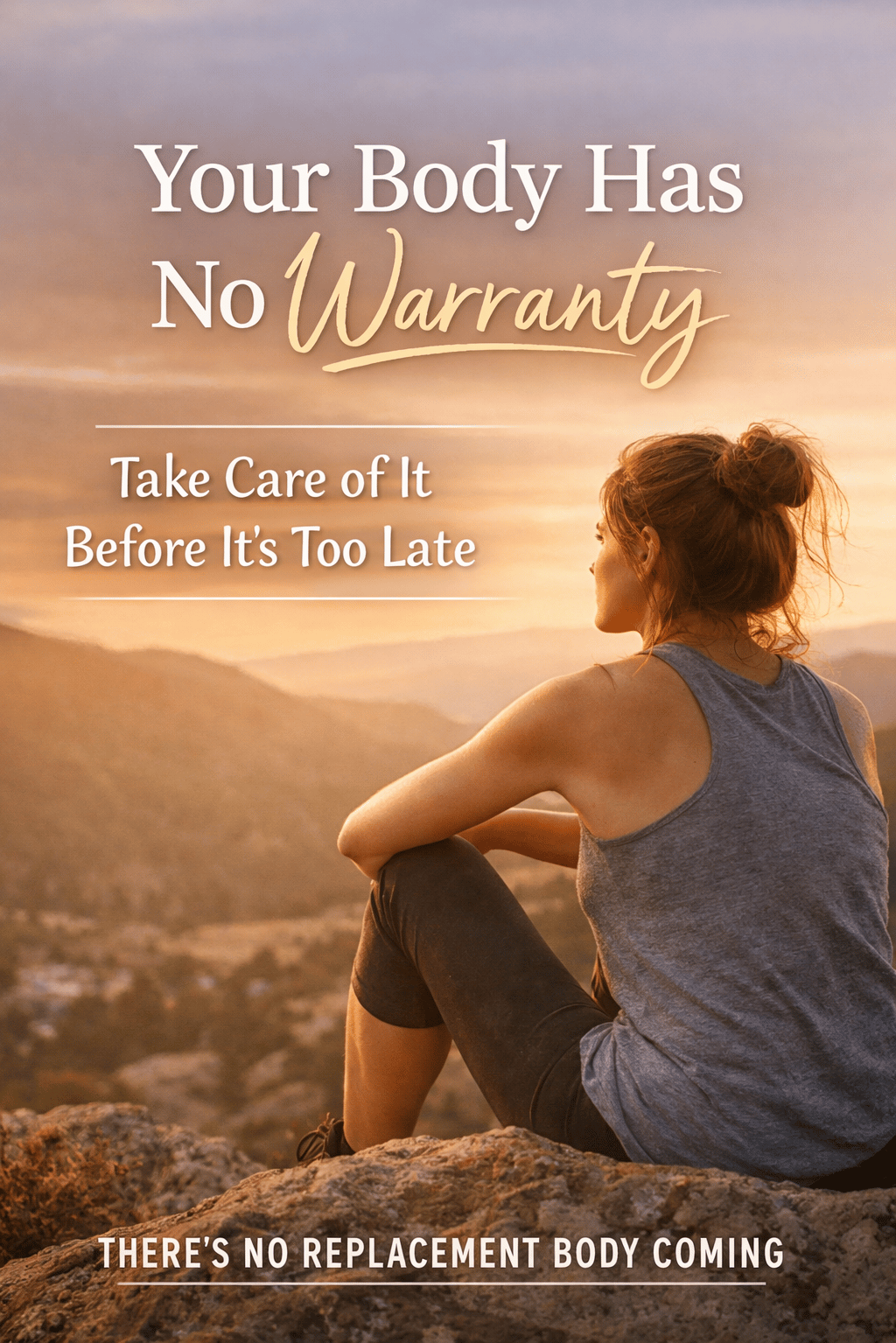
There came a point when a simple thought landed in me in a way that I couldn’t ignore anymore: there is no replacement body. No trade-in, no upgrade, no warranty program. This body, the one I am in today, is the only place I will ever live. Suddenly, all those small signals I had been brushing off felt different. They weren’t random. They weren’t my body failing me. They were my body communicating with me. Fatigue was not laziness; it was information. Tension was not weakness; it was a response to stress. Pain was not an enemy; it was feedback. The body adapts to what we repeatedly do to it. If we repeatedly rush, it learns to stay tense. If we repeatedly sit still, it loses strength and mobility. If we repeatedly ignore rest, it stays in survival mode. This isn’t some dramatic punishment; it’s how the nervous system, muscles, joints, hormones, and energy systems are designed to work. Our muscles weaken when they aren’t used, our joints stiffen when they aren’t moved, our cardiovascular system becomes less efficient when we don’t challenge it gently, our stress hormones stay elevated when we never allow real recovery, and poor sleep slowly affects our mood, focus, immune system, and even how our body stores energy. These changes happen quietly, in the background of everyday life, and that’s why they are so easy to ignore until they start limiting us.
What truly woke me up wasn’t a medical diagnosis or a dramatic breakdown. It was the realization that I was starting to live smaller. I hesitated before long walks. I calculated how tired I would be the next day before agreeing to plans. I said no to things I wanted to do because I wasn’t sure my body could handle it. Not because I was sick, but because I was disconnected from my own physical capacity. My world was slowly shrinking, not because life was offering me less, but because I was offering myself less space to live fully in my body. I had been postponing my health for so long that it had become normal to feel limited. And that felt heavier than any number on a scale or any mirror reflection ever could.
For a long time, I believed that taking care of my health meant doing big, impressive things. Hard workouts, perfect routines, strict plans that looked good on paper but didn’t fit into real life. I would start, push myself, burn out, stop, feel guilty, and repeat the cycle. What I didn’t understand then was that my body doesn’t respond to perfection. It responds to consistency. Small, boring, unglamorous acts of care repeated over time do more than any short burst of motivation. Drinking water when I’d rather stay in my stress bubble. Moving my body gently on days when I didn’t feel strong. Going to sleep before I was completely exhausted. Pausing when I noticed tension instead of proving that I could push through it. These things don’t look heroic, but they build something that feels safe and sustainable inside the body.
As a woman, I also had to unlearn the idea that my body’s main purpose was to look a certain way. So much of how we are taught to relate to our bodies is visual and external. Be smaller, be tighter, be smoother, be more controlled. But looking healthy and feeling healthy are not the same thing. I have met women who looked “perfect” and felt disconnected, exhausted, anxious inside their own skin, and I have met women who didn’t fit any ideal and felt grounded, capable, alive. My relationship with my body changed when I stopped asking how to make it look better and started asking how to make living inside it feel better. Sometimes that meant movement, sometimes it meant rest, sometimes it meant eating in a way that supported my energy instead of punishing myself, sometimes it meant saying no to things that drained me even if I felt guilty for it.
There is no warranty program for this body. If I ignore it for years, there is no free replacement waiting. But there is something else that feels almost as powerful: the body’s ability to adapt when we finally start caring. The body does not hold grudges. It responds to what we do now, not to what we should have done years ago. When we move regularly, even gently, strength returns. When we rest properly, the nervous system calms. When we nourish ourselves, energy improves. When we listen instead of fight, the relationship with our own body softens. Health is not about control; it’s about cooperation. It’s about learning to live with your body as a partner rather than an object to be fixed or forced.
I no longer think of taking care of my health as a dramatic project I will one day complete. I see it as daily maintenance of the only home I will ever have. Some days I do this well, some days I don’t. But the intention has shifted. I am not waiting for life to become easier before I start caring for myself. I am not treating my body like something disposable that I can replace later. I am learning, slowly, imperfectly, to live inside it with more respect. Because this body is not temporary housing. It is my lifelong home. And the way I live in it today is shaping how I will be able to live in it tomorrow.