
How I Transformed My Body and Mind Without Stepping Into a Gym
2/13/20267 min read


There was a time when the idea of working out at home felt like a “plan B” to me. Something you did when you couldn’t make it to the gym. Something temporary. Something less serious. And yet, over the past few years, my living room floor, a simple yoga mat, and a pair of slightly mismatched dumbbells have completely transformed not only my body, but my relationship with movement.
Home workouts have quietly become one of the most powerful shifts in modern fitness culture. Not because they are trendy. Not because they are easier. But because they are real. They fit into real lives, real schedules, real moods, and real women with responsibilities, hormones, careers, families, and ever-changing energy levels.
I didn’t fall in love with home training overnight. In fact, I used to believe that “real results” only happened under fluorescent gym lights, surrounded by machines and mirrors. I thought progress required a monthly membership, a crowded locker room, and the subtle pressure of other people watching. But life has a way of rearranging your priorities. Between work deadlines, family obligations, and the simple exhaustion that sometimes follows being everything to everyone, driving 30 minutes to a gym started to feel less empowering and more overwhelming.
And that’s when I gave home workouts a real chance.
The first thing I noticed was the gift of time. Not the dramatic kind, but those small, golden pockets of time that usually disappear in traffic or waiting for equipment. When you train at home, you eliminate the commute. You eliminate the transition time. You eliminate the mental negotiation of “Do I really want to go?” You are already there. You can roll out your mat and begin. For women juggling multiple roles—whether you’re a mother, working in shifts, studying for exams, building a business, or managing a household—that flexibility is not a luxury. It’s survival.
There is something incredibly freeing about not being bound by gym opening hours. I’ve done strength sessions at 6 a.m. before the house woke up. I’ve stretched at 10 p.m. after a long day, when silence felt like therapy. I’ve squeezed in a 25-minute workout between meetings. The ability to adapt training to your life instead of forcing your life around training changes everything. It removes excuses, yes—but more importantly, it removes guilt.
And then there’s the financial side, which we don’t talk about enough. Gym memberships, transportation, special workout clothes, smoothies on the way home—it adds up. When I stopped paying for a monthly membership, I realized how much money I was redirecting elsewhere. Slowly, intentionally, I invested in a few essentials: a good-quality mat, adjustable dumbbells, resistance bands, and later a kettlebell. Nothing extravagant. Just tools that gave me options. Over time, that small corner of my home became my personal studio. No lines. No waiting. No feeling rushed because someone else wanted the equipment.
But let me be honest: the biggest transformation wasn’t practical. It was emotional.
In a gym, I was often aware of how I looked. Was my form perfect? Was someone watching? Was I taking too long? At home, that noise disappeared. I could focus on how I felt. On the contraction of a muscle. On my breath. On the subtle progress of lifting slightly heavier than last week. That shift—from external validation to internal awareness—was powerful.
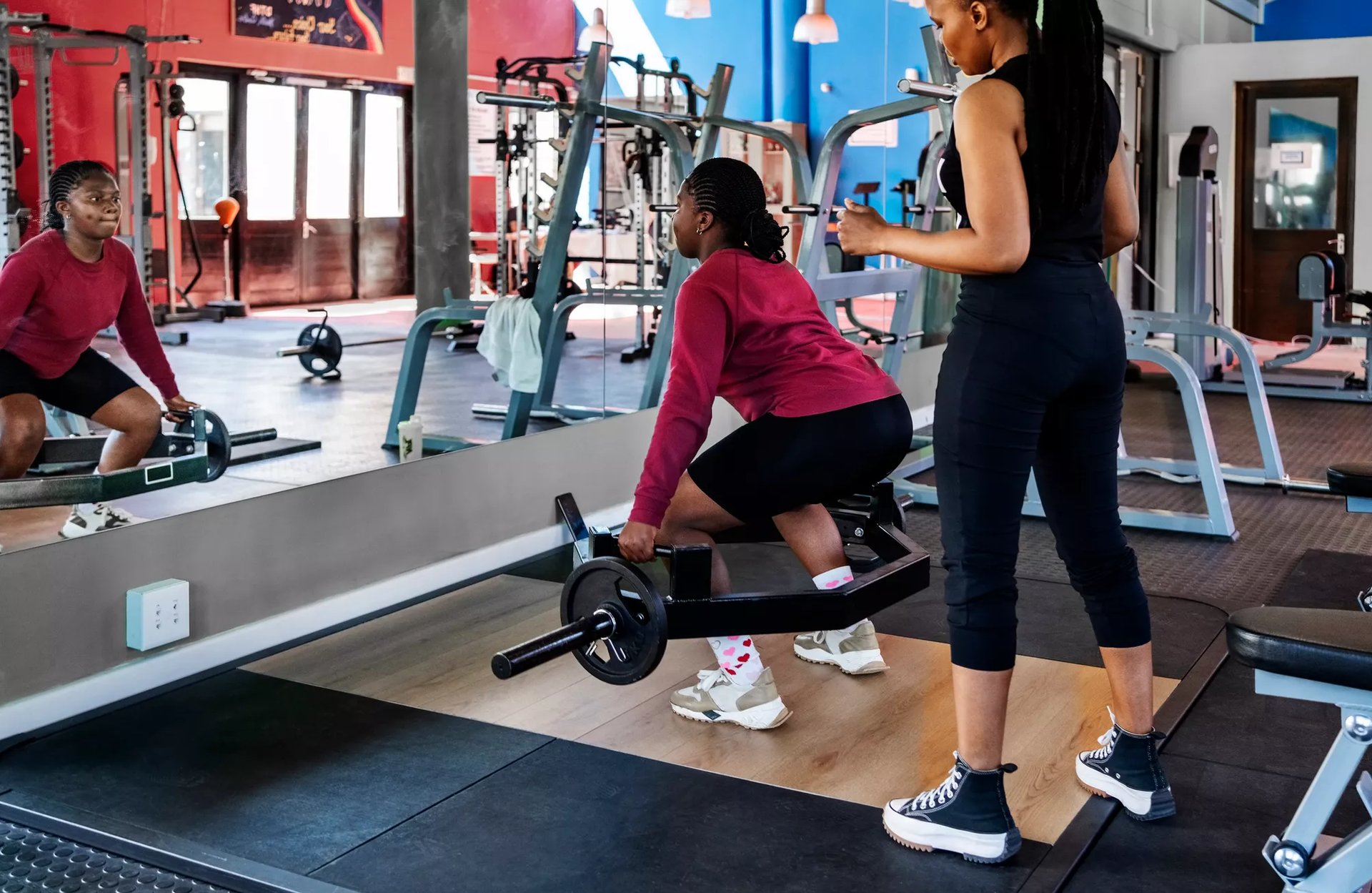


Home training also allowed me to tailor my workouts to my body, especially as a woman. Our energy fluctuates. Our hormones influence strength, endurance, mood, and recovery. Some weeks I feel unstoppable and strong, ready for intense strength sessions and explosive circuits. Other weeks I crave slower movement—Pilates, mobility work, yoga flows that ground me. At home, I can honor that. I don’t have to force myself into a rigid class schedule or pretend I feel energized when I don’t.
Of course, this is where structure becomes essential.
Because freedom without direction can quickly turn into inconsistency.
In the beginning, I made the classic mistake: I would open a random workout video or improvise exercises based on what I felt like doing that day. While that was better than nothing, it lacked progression. And without progression, results plateau. That’s when I understood that an effective home workout routine needs intention. It needs a plan—not a complicated, “textbook” plan, but a clear structure that supports your goals.
For me, the turning point was defining my primary focus. Did I want to lose fat? Build muscle? Improve endurance? Increase flexibility? You can do all of these over time, but trying to chase everything at once creates confusion. I chose strength as my foundation. Strength training at home is incredibly effective when done correctly. You don’t need a room full of machines. Progressive overload—the gradual increase of resistance or intensity—can be achieved with dumbbells, bands, tempo control, and bodyweight variations.


Once I committed to that focus, I built a simple weekly structure. Three to four strength sessions targeting different muscle groups. One day dedicated to mobility or yoga. One optional conditioning session. Rest days were non-negotiable. And that, surprisingly, was one of the most important lessons: you cannot outwork poor recovery.
A well-designed plan prevents chaos. It removes the daily question of “What should I do today?” It keeps you consistent. And consistency is the quiet hero of transformation. Motivation is unreliable. Discipline built on routine is not.
Another thing I learned is that home workouts demand honesty. There is no trainer correcting your form. No class atmosphere pushing you through the last repetition. You are both the coach and the athlete. That can be challenging—but also empowering. I started filming some of my sets to check technique. I educated myself about proper alignment. I paid attention to how different exercises felt in my joints. That awareness deepened my understanding of my body in a way that passively following instructions never did.
And yes, results came.
Not overnight. Not dramatically. But steadily.
My posture improved. My core became stronger. My arms defined. But more than aesthetics, I felt capable. Carrying groceries felt easier. My back pain from sitting at a desk decreased. My energy stabilized. I slept better. These are the kinds of victories that don’t always show in photos, but they change your daily life.


There’s also something beautifully intimate about creating your own training space. It doesn’t need to be a full home gym. A corner with natural light. A playlist you love. Maybe a candle. Maybe complete silence. You control the environment. You control the temperature, the music, the pace. No one takes your equipment. No one interrupts your flow—except perhaps a curious family member, which, let’s be honest, sometimes happens. But even that becomes part of the rhythm of real life.
For women especially, I believe home workouts can remove psychological barriers. Many of us have experienced feeling intimidated in weight rooms dominated by men. Or uncomfortable during certain exercises in public. At home, you build confidence privately first. You learn the movements. You strengthen your foundation. And if you choose to return to a gym one day, you walk in differently—grounded, informed, self-assured.
That said, home training is not automatically easier. It requires boundaries. When your workout space is also your relaxation space, distractions are everywhere. Laundry. Emails. Notifications. The couch. I had to create a ritual: change into workout clothes, set a start time, silence my phone, and treat that hour as seriously as any appointment. Respecting your own commitment is crucial.
One common fear is overtraining or, on the opposite end, not doing enough. A structured plan solves both. Rotating muscle groups, scheduling rest days, and gradually increasing intensity protect you from burnout. Recovery—sleep, nutrition, hydration—is just as important at home as in a gym. Perhaps even more so, because without external supervision, it’s easy to push too hard or skip rest.