
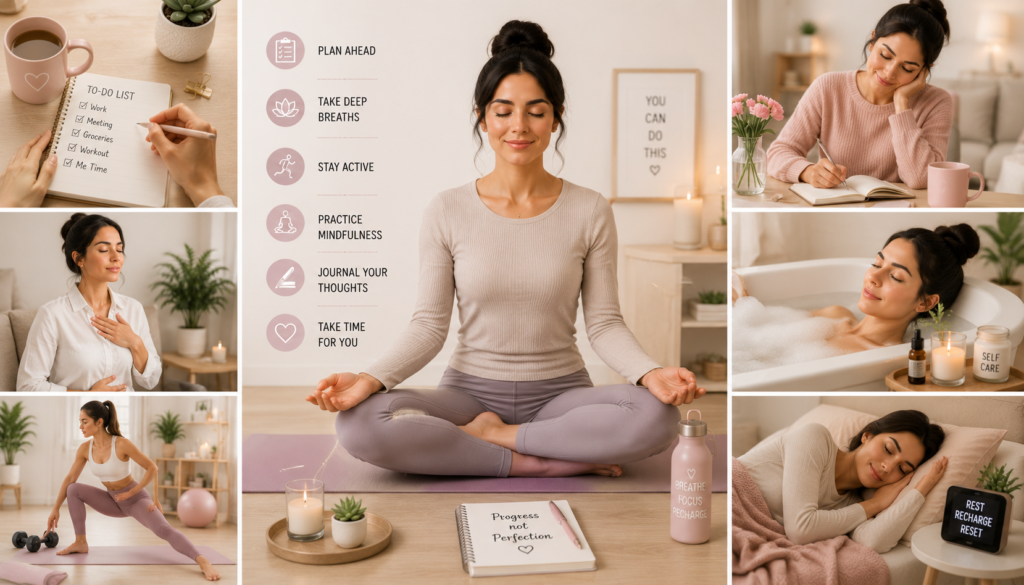
There’s a particular kind of tired that doesn’t show up on your face until you catch your reflection in an elevator mirror at 6:42 PM, still holding your laptop bag, still wearing the blazer you put on with intention twelve hours earlier, except now it’s wrinkled in that specific way that says I survived today, but barely. I know that tired. I’ve lived in that tired for entire seasons of my life. And somewhere between the third back-to-back Zoom call and the fourth espresso I told myself I’d stop drinking after noon, I started noticing something strange: the days I felt even slightly less frantic were almost always the days I’d gotten dressed with care that morning.
Not “dressed up.” Not performative, Pinterest-board-perfect, ring-light-ready dressed up. Just… dressed with intention. A good pair of trousers that didn’t pinch at the waist. A jacket with actual structure, the kind that makes your shoulders sit differently. Sneakers that were clean — not flashy, just clean, the way they look in those quiet-luxury street style photos where nobody’s trying too hard and everybody looks like they have their life together even if, statistically, half of them definitely do not.
I started paying attention to this pattern the way you start paying attention to anything once you suspect it’s trying to tell you something. And what I eventually realized — after a lot of trial, a lot of error, and an embarrassing number of impulse purchases that did not, in fact, fix my nervous system — is that the relationship between how we dress and how we cope isn’t superficial at all. It’s actually one of the most underrated stress management tools available to busy women, and almost nobody talks about it seriously because it gets dismissed as vanity. It is not vanity. It’s architecture. It’s the scaffolding you build around a day that might otherwise collapse on you by 2 PM.
So this is going to be a long one. Get a coffee, get cozy, maybe put on the playlist you save for days when you need something steady in the background. Because I want to walk you through everything I’ve learned about using elegant streetwear — yes, streetwear, that’s not a typo, and I promise it makes sense by the end — as a genuine, practical, deeply personal tool for managing stress when your schedule feels like it’s been assembled by someone who has never met you and does not care about your sleep.
Why Your Closet Is Quietly Running Your Nervous System
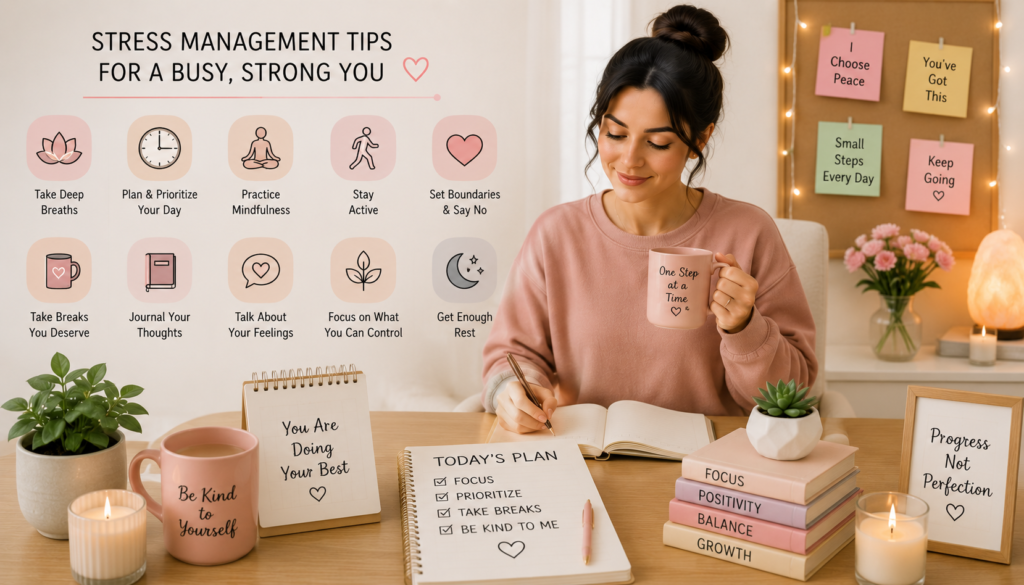
Here’s something nobody told me in my twenties: decision fatigue is real, and it is sneaky, and it starts the second your alarm goes off. Every single choice you make before 9 AM — what to wear, what to eat, whether to answer that email now or pretend you haven’t seen it yet — is withdrawing from the same finite tank of mental energy you’re going to need for literally everything else that day. Researchers who study decision fatigue have shown again and again that the quality of our decisions degrades the more decisions we’ve already made, which is exactly why judges hand down harsher sentences late in the day and why your willpower to skip the office vending machine evaporates by 3 PM no matter how virtuous you felt at breakfast.
Clothing decisions are some of the very first decisions we make every morning, often while we’re still half-asleep, often while we’re already running ten minutes behind, often while we’re mentally rehearsing the three things we forgot to do yesterday. If your closet is chaos — if it’s a tangle of “maybe someday” pieces and impulse buys and that one dress that fit differently two years ago — you’re spending precious cognitive energy on a decision that should take ninety seconds, max.
This is where the idea of a personal uniform comes in, and I genuinely think it’s one of the most quietly radical stress-reduction strategies a busy woman can adopt. I’m not talking about wearing the literal same outfit every day like a tech founder in a turtleneck. I’m talking about building a tight, elegant, mix-and-match wardrobe — heavy on quality streetwear staples, soft tailoring, and that effortless “I didn’t try but somehow I look incredible” energy — so that getting dressed becomes a calming ritual instead of a stressful negotiation with yourself.
When everything in your closet works together, when your beige trench coat goes with literally every single bottom you own, when your white sneakers are clean and your cashmere-blend hoodie is the kind of elevated basic that looks just as right at a client meeting as it does at brunch, you remove an entire category of morning anxiety. You’re not standing in front of your closet at 7:15 AM having a quiet existential crisis about whether the cropped cargo pants make you look unprofessional. You already know they don’t, because you built your wardrobe around pieces that flatter you and reflect the version of yourself you actually want to walk into the world as.
That’s not shallow. That’s self-respect with really, really good tailoring.
What “Elegant Streetwear” Actually Means (Because It’s Not What You Think)
I want to pause here because the phrase “elegant streetwear” tends to confuse people, and I get it — streetwear historically conjures images of oversized graphic tees and chunky sneakers, while “elegant” conjures pearls and twin sets. But 2026 has quietly merged these two worlds into something genuinely gorgeous, and it’s become the unofficial uniform of every effortlessly put-together woman I admire, from the ones I follow obsessively on Pinterest to the ones I see gliding through airport terminals looking like they’re not jet-lagged at all (a lie, but a beautifully dressed one).
Elegant streetwear, as I define it — and as I’ve watched it evolve across street style coverage from fashion weeks in Paris, Copenhagen, and Seoul — is the marriage of structured, tailored pieces with relaxed, utilitarian ones. Think: a perfectly cut blazer thrown over a soft graphic tee. Wide-leg trousers in a buttery wool blend paired with crisp, minimalist sneakers instead of heels. A trench coat — the quiet-luxury holy grail — worn open over a hoodie, somehow making the hoodie look like it costs four times what it actually does. It’s tension. It’s the unexpected pairing of “I take myself seriously” with “I also know how to relax,” and that tension is exactly why it reads as so chic, so current, and — this is the part that matters for us — so genuinely calming to wear.
There’s something almost therapeutic about getting to embody both energies in a single outfit. Most of us are doing exactly that internally all day long anyway: trying to be sharp and composed in a meeting, then trying to be soft and present with our kids twenty minutes later, then trying to summon some shred of creative energy for ourselves before bed. Elegant streetwear lets your clothes hold that duality instead of forcing you to mentally switch costumes between every context. You can walk out of a strategy meeting and straight into a coffee with a friend without feeling like you need to go home and change first. That’s not a small thing. That’s a genuine reduction in the number of micro-transitions your brain has to manage in a day.
The Quiet Luxury Effect: Why Minimalism Feels Like Exhaling
If you’ve spent any time on Pinterest or TikTok over the last couple of years, you’ve watched quiet luxury go from a niche aesthetic whispered about by fashion insiders to an absolutely dominant cultural moment. No logos. No flash. Just exceptional fabric, perfect fit, and the kind of confidence that doesn’t need to announce itself. And I think the reason quiet luxury has resonated so deeply with so many women — myself very much included — isn’t really about the clothes at all. It’s about what the aesthetic represents psychologically.
We are exhausted by noise. Our phones are loud. Our group chats are loud. Our inboxes are, unfortunately, extremely loud. The cultural conversation around hustle and grind and “rise and grind” energy that dominated the last decade left a lot of us feeling like we were never allowed to just be still, to just be enough, without constantly performing productivity or constantly broadcasting our wins. Quiet luxury, as a visual language, is the opposite of all of that. It says: I don’t need to prove anything to you. I’m secure. I’m settled. My clothes don’t need to shout because I don’t need them to shout for me.
Wearing that aesthetic — even on a budget, even with a small handful of well-chosen pieces — does something to your posture, your breathing, your whole internal weather system. There’s a reason cashmere feels different against your skin than a scratchy synthetic blend. There’s a reason a well-structured coat that actually fits your shoulders makes you stand up straighter without even trying. Clothes are not just visual; they’re tactile, and tactile experiences feed directly into our nervous system’s sense of safety or unsafety. A soft, well-made fabric against your skin is, in a very literal sensory sense, more soothing than a stiff, ill-fitting one. This is partly why so many of us instinctively reach for our coziest sweater on our hardest days — we are already doing intuitive stress management through textile choice, we just haven’t named it as such.
So when I talk about building an elegant streetwear wardrobe as a stress management tool, I’m not just talking about how the outfit looks in a mirror. I’m talking about how it feels against your actual body during an actual stressful Tuesday, and how that feeling either adds to your cortisol or quietly, gently lowers it.
My Own Slow, Slightly Embarrassing Journey to Figuring This Out
I should be honest with you about how unglamorous my own path to this realization was, because I think the polished version of this story — “and then one day I discovered the power of dressing well!” — does a disservice to how messy and incremental real change actually is.
For years, my approach to getting dressed under stress was essentially triage. I’d grab whatever was clean, whatever didn’t require ironing, whatever I could put on without thinking too hard because thinking too hard was the one resource I genuinely could not spare. The result was a wardrobe that technically covered my body but did absolutely nothing for my mind. I’d arrive at work feeling like I was wearing a costume of a person who had her life together, rather than feeling like that person.
The shift started, somewhat unromantically, during a period when I was juggling a demanding job, a long-distance situation with someone I loved, and the slow-burning grief of watching a parent’s health decline. I was, in every meaningful sense, running on fumes. And one morning, completely out of decision-making capacity, I put on the only thing in my closet that didn’t require any thought: a soft oversized blazer I’d bought on a whim, a plain white tee, straight-leg trousers, and clean white sneakers. Nothing fancy. Nothing curated. Just the path of least resistance.
And I remember walking into that day feeling — not fixed, not magically calm, grief doesn’t work that way — but held, somehow. Like my outfit was quietly doing some of the emotional labor that day so I didn’t have to do all of it myself. I felt like I looked like someone who was managing, even on a day when I genuinely wasn’t sure I was. And something about that gap between how I felt internally and how I looked externally gave me just enough of a foothold to get through the day.
That blazer became my emotional support blazer, if I’m being completely unserious about it for a second. But underneath the joke is something real: I started noticing that certain pieces in my closet functioned almost like talismans. Wearing them made me feel steadier. And once I noticed that, I started being much more intentional about which pieces I let into my closet at all, because I realized I wasn’t just shopping for clothes anymore — I was curating tools for emotional regulation, and that completely changed how I thought about getting dressed.
Building Your Stress-Resistant Capsule Wardrobe
Let’s get practical, because I know some of you are reading this thinking “okay, this all sounds lovely, but I have forty minutes between school drop-off and my first meeting and I need actual pieces, not just vibes.” Fair. Here’s how I think about building what I call a stress-resistant capsule wardrobe — a small, considered collection of elegant streetwear pieces that all work together so that getting dressed stops being a source of friction and starts being a source of calm.
The foundation is the oversized but tailored blazer. I cannot overstate how much this single piece will change your mornings. You want something with real structure in the shoulder but room everywhere else — the kind of blazer that looks intentional whether you’re wearing it buttoned over a slip dress or thrown open over a hoodie and joggers. Camel, black, and a soft grey are the three colors I’d start with, because they touch literally everything else you’ll own.
Next is the elevated hoodie or sweatshirt — and I mean elevated specifically, not the baggy cotton one from a decade-old marathon you didn’t actually run. Look for a heavier French terry or a cashmere-cotton blend, a slightly cropped or boxy cut, and a neutral color. This is your soft-girl, soft-glam, “I am taking care of myself today” piece, and pairing it with tailored trousers or a midi skirt is exactly the elegant streetwear tension I mentioned earlier.
Then there’s the wide-leg trouser, which I genuinely believe is one of the most underrated stress-reduction garments in existence, mostly because it is comfortable in a way that doesn’t sacrifice an ounce of polish. You can sit in meetings all day, you can run after a toddler, you can eat a large lunch without feeling like your waistband is plotting against you, and you still look like you stepped out of an editorial. Look for a high waist, a fluid drape, and a length that just grazes the top of your sneaker or sits perfectly with a heeled boot.
Clean sneakers are non-negotiable in this world, and I do mean clean — not necessarily brand new, just well-maintained, minimal, low-profile. White, off-white, or a soft neutral leather. This is the unifying thread of elegant streetwear; it’s the piece that takes your blazer-and-trouser combination from “corporate” to “effortlessly cool” in a single swap from heels.
A great trench coat rounds things out, because honestly, nothing makes you feel more like the protagonist of your own life than a well-fitted trench on a day when the weather can’t decide what it’s doing, which — let’s be honest — is most days now. It’s structured enough to read as serious, soft enough to throw over absolutely anything, and somehow makes even your worst day look cinematic when you catch your reflection in a shop window.
I want to be clear that none of this requires a closet stuffed with designer labels or a budget most of us simply don’t have. The point isn’t the price tag. The point is intentionality — choosing fewer pieces, choosing them well, and letting them do quiet, repetitive work for you every single morning so your mind doesn’t have to clock in before you’ve even had your coffee.
The Five-Minute Morning Ritual That Changed How I Start My Day
I used to think rituals were for people with more time than me. Candlelit journaling, slow stretching, the kind of soft-focus morning routine you see in those aesthetic “5 AM club” videos — none of it felt remotely realistic for a woman who is, on a good day, conscious for maybe twenty minutes before she’s already responding to a text from her manager. But somewhere in my late twenties I stumbled onto a version of ritual that actually fit my real life, and it had almost nothing to do with waking up earlier and almost everything to do with what I did the night before.
Here’s the thing about decision fatigue I mentioned earlier — you can outsource it to a different version of yourself. Specifically, your slightly less exhausted nighttime self can make decisions for your groggy, time-pressed morning self, and that handoff is one of the kindest things you can do for your own nervous system.
So most nights, before I get into bed, I spend about five unhurried minutes choosing the next day’s outfit. Not frantically. Not while simultaneously answering emails. Just five minutes, often with a candle lit or the last few minutes of whatever show I’m half-watching, laying out a blazer, a top, trousers, the right shoes. I check the weather. I think briefly about what my day actually requires — am I presenting to a client, am I doing school pickup, am I squeezing in a coffee with a friend I haven’t seen in months — and I let that shape the choice.
What this does, practically, is remove an entire decision point from the most cognitively fragile part of my day. When my alarm goes off and my brain is still somewhere between asleep and a vague sense of dread about my inbox, I don’t have to think. I just get dressed in something I already know looks good, already know feels good, and already know is appropriate for whatever the day holds. It sounds almost too small to matter. But stress management isn’t usually about one grand gesture — it’s about removing dozens of tiny frictions so that your actual energy can go toward the things that genuinely need it.
I’ll also say this: the five minutes themselves became a kind of meditation I didn’t expect. There’s something soothing about touching soft fabric, about choosing color combinations, about anticipating tomorrow with something other than dread for once. It became the one moment in my day that was entirely, unapologetically about me — not my job, not my family, not my inbox. Just me, deciding how I wanted to feel tomorrow, and dressing accordingly.
If you try nothing else from this entire article, try this. It costs nothing. It takes less time than scrolling through one Instagram reel. And it quietly, consistently lowers the emotional cost of every single morning that follows.
Dressing for the Meeting vs. Dressing for the Mood
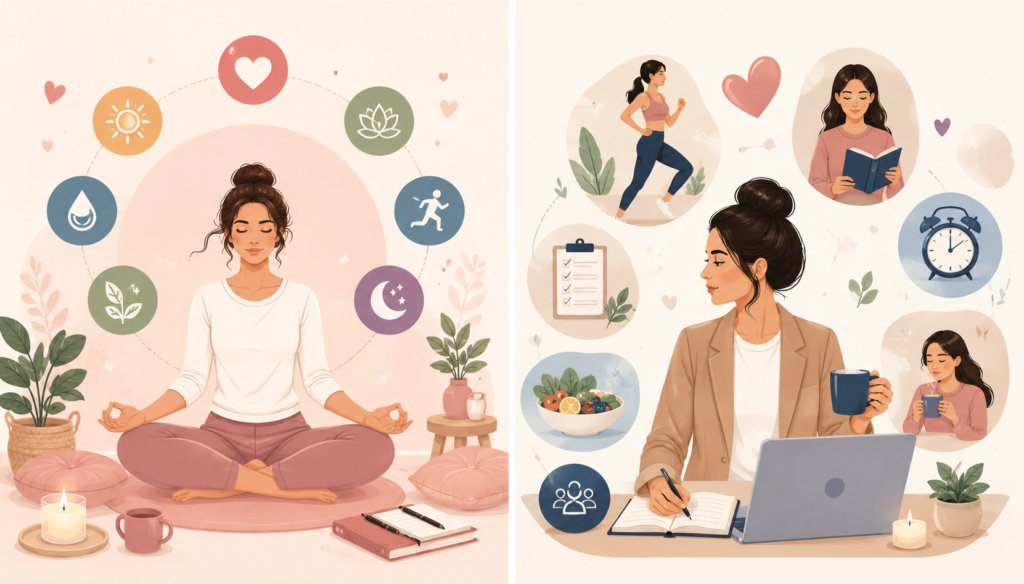
Something I had to unlearn was the instinct to dress purely for other people’s perception of me. For years, “getting dressed for work” meant asking myself what would read as competent, polished, taken-seriously — which, to be fair, matters, especially in industries where women’s competence gets questioned more readily than it should. But somewhere along the way I stopped asking the second, equally important question: what do I need to feel today?
Elegant streetwear is uniquely suited to answering both questions simultaneously, and once I understood that, getting dressed stopped being a performance and started being a genuine act of self-care.
On the days I know are going to be brutal — back-to-back calls, a difficult conversation I’ve been avoiding, a deadline that arrived with no warning — I now consciously choose pieces that make me feel grounded rather than just impressive. A heavier fabric. A more structured shoulder. Boots instead of strappy heels, because there’s something to be said for feeling literally rooted to the floor when your day feels like it’s spinning. I’ll add a piece of jewelry that has sentimental weight to it, not because anyone else will notice, but because I will, and on hard days I need small, private reminders that I’m not facing things entirely alone.
On the days that call for softness — a sensitive conversation, a creative project, a day I know is emotionally tender for reasons that have nothing to do with my to-do list — I dress in a way that mirrors that. A knit instead of a blazer. A flowing skirt instead of trousers. Looser, gentler silhouettes that don’t ask my body to hold any tension it doesn’t already have to hold.
This might sound like overthinking what’s ultimately just an outfit, but I’d push back on that gently. We already intuitively understand that environment shapes mood — that’s why we light candles, why we curate playlists, why we care what our bedrooms look like. Clothing is simply the environment that’s closest to your skin, the one you carry with you into every room you enter that day. Dressing with the same intentionality you’d bring to choosing a song or lighting a room isn’t excessive. It’s just extending self-awareness into a part of life most of us have been taught to treat as either frivolous or purely functional.
The Capsule Wardrobe, Season by Season
Because so much of managing stress is about reducing the sheer number of decisions in front of you, I want to walk through how I think about building this elegant streetwear capsule across the actual seasons, rather than leaving it abstract. A wardrobe that quietly adjusts itself to the time of year — without requiring you to rebuild it from scratch every few months — is one of the most underrated forms of self-kindness available to a busy woman.
Spring calls for lightness without sacrificing structure. This is when I lean into soft pastel knits paired with tailored cream trousers, a trench coat that finally gets to be worn open rather than bundled shut, and the first appearance of the season’s clean white sneaker. There’s something emotionally significant about spring dressing — after months of heavier, darker fabric, lighter colors against your skin genuinely do something to your mood. I’m not being unscientific here; there’s a real, documented relationship between color exposure and emotional state, and the soft lift you feel pulling out a pale lilac sweater after a long grey winter is not imagined.
Summer is where elegant streetwear gets to flex its most relaxed, most clean-girl-aesthetic energy. Think linen trousers, a simple white tank under an unbuttoned linen shirt, slip dresses worn with sneakers instead of sandals for that unexpected tension I keep coming back to. This is also the season I lean hardest into the soft glam side of beauty — dewy skin, a barely-there flush, a slick low bun — because heat and humidity have a way of forcing simplicity on us whether we like it or not, and honestly, simplicity in summer beauty is doing a lot of the emotional regulation work that heavier routines do in winter.
Autumn, for me, is the most emotionally resonant season, the one that asks the most from elegant streetwear’s signature blend of structure and softness. This is blazer season. This is rich, oversized knit season. This is the season I reach for deeper, more grounding colors — burnt sienna, chocolate brown, deep forest green — because something about the visual language of autumn naturally mirrors the slowing-down, turning-inward energy so many of us crave once summer’s relentless extroversion finally lets up.
Winter is where the trench coat gets layered over the elevated hoodie, where cashmere becomes less of a luxury and more of an emotional necessity, where boots replace sneakers as the unifying base. Winter dressing, for busy women juggling holiday obligations on top of everything else already demanding their time, is really about warmth as comfort in the most literal sense. There’s a reason we associate winter with being “held” — heavy coats, scarves, the physical sensation of being wrapped — and leaning into that sensory experience rather than fighting it with thin, fashionable-but-impractical layers is, again, a genuine stress management decision disguised as a style one.
Soft Glam, Clean Girl Beauty, and the Five-Minute Face That Saves Your Morning
I’d be doing this whole conversation a disservice if I didn’t talk about beauty alongside clothing, because the two are so deeply intertwined in how we experience our own mornings. The clean girl aesthetic that’s dominated beauty trends going into 2026 — dewy skin, soft brows, a barely-tinted lip, that glassy, just-moisturized glow — isn’t just aesthetically pleasing. It’s also, I’d argue, one of the most stress-friendly beauty movements we’ve had in years, precisely because it doesn’t demand much from your time or your nervous system.
I spent years feeling like I owed the world a full face before I was allowed to leave my house looking “put together,” and that belief alone added an entire layer of unnecessary stress to mornings that were already stretched thin. The shift toward soft glam — skin-first routines, a cream blush instead of heavy contour, lash serum instead of false lashes, brow gel instead of a fully filled-in brow — gave so many of us permission to look genuinely radiant in five minutes instead of twenty-five.
My actual morning beauty ritual, the one I can do with my eyes still half-closed, looks something like this: a hydrating serum while my coffee brews, a tinted moisturizer with SPF because protecting your skin is the single most underrated form of long-term self-care, a cream blush swept high on the cheekbones for that flushed, just-came-from-a-walk look, a clear or lightly tinted brow gel, and a balm-like tinted lip. That’s it. That’s the whole face. And somehow it reads as more put-together, more “I have my life handled,” than the heavier, more time-consuming routines I used to feel obligated to do.
There’s a quiet psychological win in this too. When your beauty routine doesn’t require excellence, doesn’t require a steady hand or perfect lighting or twenty minutes you don’t have, you remove yet another opportunity for your morning to go sideways. I cannot tell you how many mornings I used to lose to a frustrating eyeliner attempt, how that one small failure would sour my mood before I’d even left the house. Simplifying beauty wasn’t a downgrade. It was, very literally, stress prevention.
Pinterest, Soft Power, and Why Aesthetic Inspiration Actually Helps (When You Use It Right)
I know there’s a whole cultural conversation about whether spending time on Pinterest curating aesthetic boards is a productive use of a busy woman’s limited time, or whether it’s just another form of comparison that quietly chips away at our self-esteem. I think the honest answer is: it can be either, depending entirely on how you engage with it.
For me, building Pinterest boards of elegant streetwear outfits, soft glam beauty looks, and quiet luxury interiors became something closer to a visualization practice than a shopping habit. I’m not pinning things because I expect to buy them all. I’m pinning things because the act of curating a visual world that feels calm, intentional, and beautiful gives my brain a kind of rest that’s hard to access elsewhere. There’s research on visualization’s power in athletic performance and goal-setting more broadly, and while building a mood board isn’t quite the same as an athlete mentally rehearsing a routine, the underlying mechanism — giving your mind a clear, specific image of the calm, capable version of yourself you’re working toward — isn’t so different.
The trap, and I’ve fallen into it plenty of times, is when aesthetic inspiration tips over into aesthetic anxiety — when instead of feeling inspired by a beautifully curated outfit, you feel inadequate next to it. The difference, in my experience, almost always comes down to whether you’re using the image as a mirror or as a measuring stick. A mirror reflects back a version of yourself you’re excited to grow into. A measuring stick just tells you how far you supposedly fall short. Same image. Completely different emotional outcome, depending entirely on the story you tell yourself while looking at it.
So if you do find yourself scrolling Pinterest or TikTok for elegant streetwear inspiration — and I’d genuinely encourage it, in moderation — try to notice which feeling an image produces. Calm and curious? Great, save it, let it inform your next purchase or your next morning’s outfit choice. Anxious and lacking? Maybe that’s a sign to close the app and go put on the blazer that already makes you feel like yourself, rather than chasing the feeling a stranger’s outfit is giving you secondhand.
The Five Outfits That Carried Me Through My Hardest Work Weeks
I think it helps to get specific, because vague style philosophy only goes so far when you’re standing in your closet at seven in the morning with eleven minutes to spare. So let me walk you through the actual outfit formulas I return to again and again, the ones I’ve come to think of as armor — gentle armor, the kind that doesn’t harden you, just steadies you.
The first is what I privately call my “difficult conversation” outfit: a sharply tailored black blazer, a simple silk camisole underneath, wide-leg trousers in the same deep tone, and a pointed flat instead of a heel because I need to be able to walk fast if I need to walk away and regroup for a second. There’s a uniformity to this combination, a monochrome calm, that genuinely settles something in me before I even open my mouth. Dressing head-to-toe in one tone has a documented psychological effect — it reads as decisive, composed, and oddly, it makes me feel that way too, almost like the clothes are convincing my own brain of something before the meeting has even started.
The second is my “creative deep work” outfit, which is really just an excuse to wear my favorite oversized cashmere-blend sweater with soft joggers that have just enough structure not to look like pajamas, paired with thick socks and slides I can kick off the second I sit down at my desk. This outfit isn’t trying to impress anyone. It exists purely to let my body relax into whatever idea I’m chasing that day, and I’ve noticed I write better, think more clearly, and generally produce work I’m prouder of when I’m not also managing the low-grade discomfort of a waistband digging into my stomach.
The third is the “I have four meetings and a school pickup” outfit, the one that has to do the most emotional and logistical labor of any combination I own: a structured but stretchy blazer-dress hybrid, layered with the elevated hoodie I mentioned earlier tied loosely around my shoulders for when the office is cold and the pickup line is colder, finished with sneakers I can genuinely run in if the situation calls for it. This is the outfit that taught me elegant streetwear isn’t an aesthetic indulgence — it’s load-bearing. It needs to physically perform across wildly different contexts without me having to think about it, and when it does, that’s one less thing my brain has to manage on an already overloaded day.
The fourth is what I think of as my “soft landing” outfit, reserved for the evenings I know are going to require some kind of emotional repair — a difficult phone call with family, a quiet dinner where I need to process something, a night I just need to feel like myself again after a day that asked too much of me. A long, soft cardigan in the most luxurious fabric I own, leggings that have never once made me feel anything but comfortable, and thick socks. There’s no audience for this outfit. It exists purely for my own nervous system, and I think every woman should have at least one outfit in her closet that exists for absolutely no one but herself.
The fifth is the weekend wander outfit — the one built for farmers markets, long coffee orders, the kind of unstructured Saturday that’s become almost rare enough to feel luxurious in itself. A relaxed denim or cargo silhouette, a simple white tee, an oversized button-down worn open over the top, and the cleanest sneakers I own, because there’s something about looking effortlessly put-together while doing absolutely nothing productive that feels like its own small act of rebellion against a culture that constantly wants us optimizing every spare hour.
Why Weekend Dressing Deserves Just as Much Intention as Workweek Dressing
I want to linger on this for a moment, because I think a lot of us — myself included, for a long time — quietly believe that weekend dressing doesn’t matter the way workweek dressing does. We save the effort, the intention, the “good” pieces for the days other people are watching, and we let the days that belong entirely to us default to whatever’s easiest, whatever’s been worn three days in a row already.
But the more I’ve thought about this, the more backwards it seems. The weekend is precisely when we have the most bandwidth to actually receive the benefits of dressing well, because we’re not also managing the cognitive load of a packed schedule. If dressing with intention genuinely calms the nervous system — and I believe, from years of personal observation, that it does — then the weekend is when that calm has the most room to actually land and do its work.
So I’ve started treating my weekend wardrobe with the same care I treat my workweek one, just shifted toward comfort and softness rather than structure and polish. Elevated loungewear that still feels like me, not like I gave up. A good robe — and I mean a genuinely good one, the kind with weight and drape, not the thin waffle-knit version — for slow mornings. Soft, oversized knits for the unglamorous Saturday errands that somehow feel less unglamorous when I’m wearing something that makes me feel held.
This isn’t about performing for anyone, including myself in some self-surveillance kind of way. It’s simply about recognizing that the days we’re “off the clock” are exactly the days we deserve to feel good in our own skin, in our own clothes, without that pleasure being conditional on whether anyone else is watching.
Building This Without Breaking the Bank: Quiet Luxury on a Real-Life Budget
I want to address something directly, because I think it’s the elephant in every fashion-and-wellness conversation: most of us are not working with a luxury fashion budget, and a huge percentage of stress management content aimed at women quietly assumes we are. I’m not going to pretend that designer cashmere and four-figure trench coats are accessible to most readers, because they’re not, and pretending otherwise would be both dishonest and, frankly, a little insulting to the very real financial pressure so many of us are managing on top of everything else.
What I will say is that elegant streetwear, as an aesthetic, is unusually well-suited to a smart, patient, budget-conscious approach, because the entire philosophy is built around fewer, better pieces rather than constant novelty. The fast-fashion cycle — the one that demands you buy something new every few weeks just to keep up — is exhausting in exactly the way that adds to stress rather than relieving it. Elegant streetwear, done right, asks you to do the opposite: invest slowly, buy less, choose pieces that will still feel relevant and well-made two, three, five years from now.
A few practical strategies that have genuinely worked for me. I prioritize spending on outerwear and shoes — the trench coat, the blazer, the sneakers — because these are the pieces that touch every other outfit and get the most wear, which makes the cost-per-wear genuinely reasonable even on a real, modest budget. I let basics like plain tees and simple trousers come from mid-range retailers, because the difference between a forty-dollar white tee and a two-hundred-dollar one is, in most lighting and most contexts, genuinely not visible to anyone but you. I’ve also become a patient, fairly devoted secondhand and consignment shopper — some of the best-structured blazers I own came from resale platforms, worn once by someone else’s life before becoming part of mine, and there’s something almost soothing about that continuity, about clothes carrying stories forward instead of being discarded after one season.
I also think it’s worth saying plainly: the calming effect I’m describing doesn’t actually come from the price tag. It comes from intention, from fit, from choosing pieces that genuinely suit your body and your life rather than chasing what’s trending purely because it’s trending. A perfectly fitted ten-dollar thrifted blazer will do more for your nervous system on a stressful morning than an ill-fitting, overpriced one that technically has the right label but makes you tug at your sleeves all day. Fit and intention are free. They just require patience, and a willingness to wait for the right piece instead of grabbing the nearest available one out of panic or scarcity thinking.
Beyond the Closet: Pairing Your Style Ritual With Real Stress Management Tools
I’d be doing you a disservice if I let this whole article suggest that dressing well is, on its own, a complete solution to the very real stress so many of us are navigating. It isn’t, and I want to be honest about that rather than oversell something I genuinely believe in but don’t think is a substitute for the deeper work many of us also need to do.
What I’ve found is that the calm, grounded feeling a well-considered outfit produces becomes a kind of anchor that makes other stress management practices easier to access, rather than replacing them. On the mornings I feel steadier because I’m dressed in something that genuinely feels like me, I notice I’m also more likely to actually take the five minutes for a proper breath before my first call instead of diving in frantic and unsettled. I’m more likely to eat an actual lunch instead of grazing at my desk between emails. I’m more likely to text a friend back with warmth instead of the clipped, distracted replies that stress tends to produce.
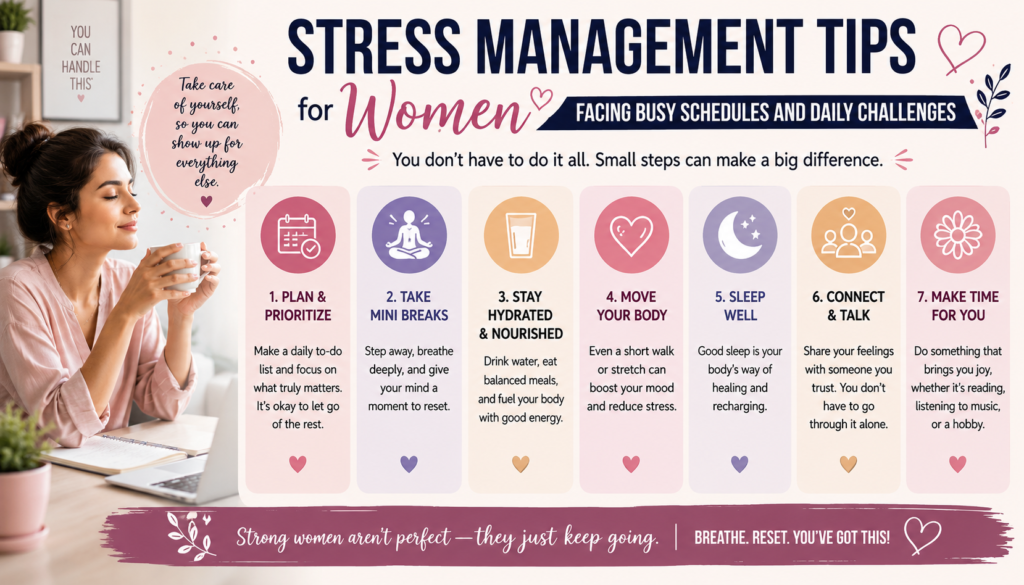
So if you’re someone managing real anxiety, real overwhelm, real exhaustion — and I suspect a lot of you reading this are, because that’s exactly who this corner of the internet exists for — please don’t let this article suggest that the right blazer fixes what therapy, rest, boundaries, or medical support might actually be addressing. Dressing with intention is a genuinely powerful tool. It is not the whole toolbox. Breathwork still matters. Sleep still matters more than almost anything else we talk about in wellness spaces and yet somehow still underprioritize. Saying no to things, setting boundaries with people who drain you, asking for help when you need it — none of that gets replaced by a well-curated capsule wardrobe, however much that wardrobe might make the asking feel a little less daunting.
What I’m offering here isn’t a replacement for any of that. It’s a companion practice — a small, repeatable, genuinely pleasant ritual that lowers the baseline friction of your days enough that you have more capacity left over for the deeper work your stress might actually be asking of you.
A Few Small Rituals I’ve Folded Into My Days, Style-Adjacent and Otherwise
Since we’re being honest with each other at this point, let me share a handful of the smaller practices that live alongside my approach to dressing, because I think they round out the picture in a way that pure style talk can’t.
I’ve started keeping a single, beautiful scarf by my front door — not for warmth necessarily, just as a transitional object I touch on my way out, a small tactile pause between my home self and my outside-world self. It sounds almost silly written down, but the two seconds it takes to wrap it on creates a tiny ritual threshold between the two halves of my day, and that threshold matters more than I expected it to.
I light a candle while I do my five-minute outfit-planning ritual at night, always the same scent, because scent memory is powerful and I wanted my brain to associate that particular smell with the calm, unhurried feeling of preparing for tomorrow rather than dreading it.
I’ve also gotten much more deliberate about the music I play while getting dressed in the morning — something with a slower tempo than whatever urgency my schedule is demanding, specifically because I noticed that rushing music made me move faster and feel more frantic, while something calmer let the whole getting-ready process feel less like a countdown and more like a small daily ceremony.
None of these are revolutionary. None of them require money or time most of us don’t have. But strung together, they create a kind of soft scaffolding around the most stress-prone hours of the day — the transition into the world in the morning, the transition back out of it at night — and I’ve found that shoring up those two transition points does more for my overall stress levels than almost anything else I’ve tried.
What I Wish Someone Had Told Me Years Earlier
If I could go back and have a conversation with the version of myself who was drowning in decision fatigue, grabbing whatever was clean off the floor, treating getting dressed as one more obligation rather than one more opportunity for care, I think I’d tell her this: the way you dress is not separate from how you feel. It never was. You’ve been treating it as frivolous because somewhere along the way you absorbed the idea that caring about how you look means you don’t care about anything that actually matters, and that idea was always wrong.
Caring about your clothes, your beauty routine, the small aesthetic details of your days — none of that is in competition with caring about your career, your relationships, your mental health, your actual life. It’s not either-or. The women I admire most, the ones who seem to genuinely have it together rather than just perform having it together, aren’t the ones who’ve decided style is beneath their attention. They’re the ones who’ve figured out that style, used with intention, is one more tool in a much larger toolbox of self-respect.
You don’t need a closet full of designer pieces. You don’t need to follow every micro-trend that crosses your feed. You need a handful of pieces that fit your actual body, suit your actual life, and make you feel like the most settled, capable version of yourself when you put them on. That’s it. That’s the whole secret, if you can even call it a secret, because it’s really just attention dressed up as fashion advice.
Quick Answers to the Questions I Get Asked Most
Is it really worth spending money on a “uniform” wardrobe instead of variety? I’d argue yes, gently. Variety feels exciting in the moment but adds decision fatigue over time. A tighter, well-considered wardrobe trades a little novelty for a meaningful reduction in daily stress, and in my experience, that trade is almost always worth it.
What if I genuinely love fashion variety and don’t want to “simplify”? Then simplify the decision-making process, not the wardrobe itself. You can own forty pieces and still benefit from a five-minute nightly outfit-planning ritual; the goal isn’t minimalism for its own sake, it’s removing decision-making from your most depleted hours.
Can this really help with serious stress, or is it just surface-level? It’s genuinely both surface and substance. It won’t replace deeper support if you need it, but the cumulative effect of lowering dozens of small daily frictions is real, measurable in how you feel, and absolutely worth taking seriously rather than dismissing as shallow.
Where do I even start if my closet is total chaos right now? Start with one piece — the blazer, ideally — and build outward from there. Resist the urge to overhaul everything at once; that’s its own form of decision fatigue. Slow, intentional additions beat a frantic closet purge every time.
Does this only work for office jobs? Not at all. The underlying principle — reduce morning decisions, choose pieces that make you feel grounded and like yourself, let clothing support your nervous system rather than tax it — applies whether your day involves a boardroom, a classroom, a hospital floor, or a kitchen table covered in school projects.
The Days That Don’t Fit a Category: Travel, Transitions, and the Outfit That Holds You Together Anyway
There’s one more category of day I haven’t touched on yet, and it might be the most stressful of all: the in-between days. The travel days. The days you’re moving between cities, between commitments, between versions of your life that don’t quite overlap — the flight you’re catching right after a client call, the cross-country drive sandwiched between visiting one parent and another, the conference where you’re somehow expected to network, present, and still feel like a person by the final dinner. These days don’t fit neatly into “workwear” or “weekend wear” categories, and for years they were the days my entire system fell apart, because I hadn’t built anything specifically designed to handle them.
What I’ve landed on is a travel-specific version of the elegant streetwear formula, built almost entirely around fabrics that forgive you — that don’t wrinkle into oblivion after six hours in an airplane seat, that don’t cling or constrict after a long stretch sitting in a car, that look exactly as composed getting off a flight as they did getting on it. A matching knit set, the kind that reads as a coordinated outfit rather than pajamas, paired with a structured tote and clean sneakers, has become my non-negotiable travel uniform. I add a soft, oversized scarf that can double as a blanket, an eye mask, or, in a pinch, something to dab away the inevitable airport-terminal tears if the trip is an emotionally loaded one, which travel days so often quietly are.
The psychology here matters just as much as the practicality. Travel itself is a recognized stressor — your body doesn’t always know the difference between “exciting new adventure” and “general threat to routine and safety,” and it tends to respond to both with some version of heightened alert. Wearing something that feels like an extension of your at-home calm, rather than switching into some separate “travel persona” with uncomfortable jeans and a blazer that wrinkles the second you sit down, gives your nervous system one less adjustment to make while it’s already managing time zones, unfamiliar spaces, and the general disorientation of being somewhere other than where your body expects to be.
I’ve also started thinking about transition days — the days that pivot hard between two completely different emotional registers, like a difficult family visit followed immediately by a work trip, or a doctor’s appointment squeezed between school drop-off and a presentation — as needing their own version of this same forgiving, composed-but-comfortable formula. On those days, I dress almost entirely in pieces I’ve already tested and trust completely. No new shoes that might rub. No untried combination I’m hoping works. Just the most reliable, most “me” version of elegant streetwear I own, because transition days are exactly the wrong time to introduce a single additional variable into an already overloaded system.
If there’s a broader lesson buried in all of this, I think it’s that the calendar doesn’t actually care how neatly our lives sort into categories, and neither should our wardrobes. Building a closet that can flex across boardrooms and airports and hospital waiting rooms and birthday dinners without ever asking you to think too hard about it is, in the end, the entire point. Not perfection. Not a closet that photographs beautifully for an aesthetic feed, although it’s lovely when it does. Just reliability — clothes that show up for you the way you wish the rest of your overcommitted schedule would.
I’ll leave you with this: the next time you’re standing in front of your closet feeling that familiar flicker of overwhelm, try treating the moment as an opportunity rather than a chore. Ask yourself not just what looks good, but what would help you feel steady today. Let your clothes do some of the emotional labor your schedule keeps demanding of you. You deserve a closet that holds you up on the hard days, not one more thing on your list of decisions to survive before 9 AM.
That’s the whole philosophy, really. Dress like someone is taking care of you — because she is. She’s you, five minutes earlier, choosing kindness for the version of yourself who has to walk out the door and face whatever today decides to bring.