
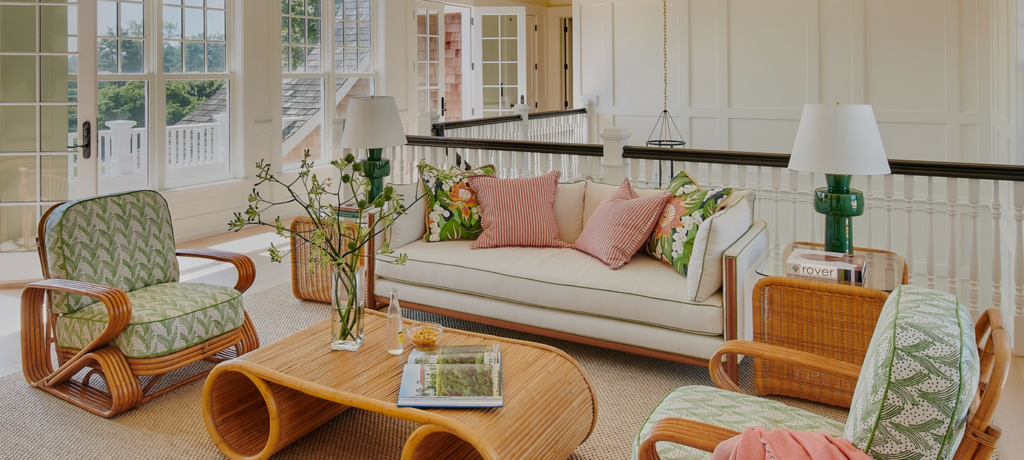
The most beautiful summer is the one lived slowly, inside a home that tells your story — and this year, the interiors worth obsessing over are softer, earthier, and more intentional than ever before.
There’s a particular feeling I chase every June. It arrives without warning — usually on a warm morning when I’ve left a window open overnight and the house smells like something between fresh linen and green things and the faint sweetness of a garden waking up. I stand there in the kitchen with a coffee I haven’t drunk yet and think: this is enough. This, right here, is the whole thing.
That feeling — that rare, domestic peace — is what good summer home decor is actually trying to give you. Not the Instagram grid version of it, though that’s a nice side effect. The real version: a home that meets the season with open arms, that shifts and softens with the longer days, that feels different in July than it does in January in ways that make you notice and appreciate where you are.
I’ve been thinking about interiors for a long time now, and I’m more convinced than ever that the homes I love most are not the most expensive or the most perfectly styled. They’re the most felt — the ones where someone has paid attention to the light at 4pm, to the texture of the thing you touch first thing in the morning, to the smell of the room when you walk in from outside. Attention is the real luxury, and summer is the season most generously designed for it.
This year, the conversation around summer interiors has shifted somewhere genuinely interesting. We’re deep in the era of what I’d call warm minimalism — a rejection of the cold, grey-white interiors that dominated the 2010s in favour of something earthier, more textured, more alive. The 2026 aesthetic in home decor is essentially a love letter to the natural world: terracotta and warm stone, linen and rattan and raw timber, the kind of palette that makes a room feel like it belongs to the landscape outside the window. It’s aspirational without being untouchable. And it is, I think, the most beautiful direction home design has taken in years.
I’m going to take you through every room, every decision, every small and not-so-small idea that I think will genuinely transform how you experience your home this summer. Some of it costs money. Much of it doesn’t. All of it is worth it.
✦ The Season’s Palette ✦
The Summer 2026 Colour Story: Earth, Warmth, and the Occasional Softness
Before we talk about any specific room or piece of furniture, we need to talk about colour — because in 2026, the colour palette is the whole conversation. It’s the language your home speaks before you’ve even looked at the furniture, and getting it even roughly right changes everything.
The dominant mood this summer is what I think of as warm ochre earth: tones that feel like terracotta pots and sun-bleached stone walls and the inside of an old farmhouse in Tuscany. Not orange, not brown — something more nuanced and alive than either of those. Think raw sienna, dried clay, the particular warm beige of undyed linen, and beneath it all, that smoky, complex dark that you find in aged timber and dark coffee.
Running alongside this earthy warmth is a softly optimistic secondary palette: pale sage, dusty mint, the barely-there green of new olive leaves. These cooler, botanical tones exist in a beautiful tension with the warm earth palette — together they feel like the inside of a very good greenhouse, or a Provençal kitchen in July. They don’t compete; they breathe.
This palette works because every tone in it occurs in nature. There’s nothing synthetic or invented about it — these are the colours of clay and stone and living plants and dried things and good light. Put them together and the room feels, immediately, like somewhere that makes sense. Like it was grown, not assembled.
The one thing I’d caution against this summer: the grey undertone. Grey as a neutral has had a long, successful run, and I understand why — it’s safe, it works with almost everything, it photographs well. But it reads cold in a way that’s particularly unkind in summer rooms. If you’re going to use a neutral this season, choose one with warmth in it. A barely-there warm white rather than a bright cool white. A linen rather than a greige. A taupe with amber in it rather than one with blue. The difference is subtle in paint chips and enormous in real rooms under real light.
✦ ✦ ✦
The Living Room, Reconsidered
I want to start here because the living room is where most of us spend our time, and it’s also the room most likely to feel stuck — to feel like it’s been the same for two years and you’re not sure what’s missing but something definitely is. Summer is the perfect time to address this, and what I find is that most living rooms don’t need a redesign. They need an edit.
The principle of the summer living room refresh is subtraction first, addition second. Before you buy anything — and yes, we will talk about buying things, because some of this genuinely requires investment — spend an hour removing. Take out anything that feels heavy, dark, or winter-specific: thick throws in dark colours, overstuffed cushions in materials that absorb light rather than reflecting it, decorative objects that have been there so long you’ve stopped seeing them. Put them in a cupboard or a spare room or a box in the garage. Then stand in the room and look at what’s left.
The Sofa Situation
If you have a dark sofa and you’ve been eyeing a linen slipcover, this is the year to do it. The market for well-made linen and cotton slipcovers has improved enormously — there are beautiful options at multiple price points now that don’t look like you’ve thrown a sheet over your furniture, but instead like you’ve made a considered, very European decision to cover your sofa in something soft and washable and beautiful. In ivory, warm white, or natural greige linen, a slipcover can transform a room’s entire temperature.
If a new sofa or slipcover isn’t in the picture, work with what you have through the textile layer instead. Replace your winter cushions with something in summer-weight linen, textured cotton, or even a very light bouclé in a warm neutral. Add one or two cushions in a botanical print — not a busy, overstuffed print, but something quiet and considered, like a single fern frond or an abstract interpretation of a leaf. A throw in lightweight woven cotton or fine-knit cotton, folded at one end of the sofa in a warm sand or terracotta, does the rest of the work.
The Coffee Table Edit
The coffee table is a microcosm of the whole room’s aesthetic, and summer styling for it follows one simple rule: organic over synthetic. A small stack of beautiful books with interesting spines. A low, wide vessel — ceramic, stone, or hand-blown glass — with a few stems of dried grasses or eucalyptus or a handful of garden flowers if you have them. One candle in a wide, simple holder. Perhaps a small tray in rattan or stone to hold it all together.
Nothing more. The temptation to fill every surface is real — I feel it too — but restraint here pays off visually in a way that generosity rarely does. The eye needs somewhere to rest. White space on a coffee table is not emptiness; it’s breathing room.
Summer rooms should feel like the season itself: warm, a little unhurried, and full of the beautiful evidence of a life being lived well.On the art of the summer living room
The Rug Reset
One of the highest-impact, often overlooked changes you can make to a living room is swapping the rug for summer. Heavy, pile rugs that felt cosy in February now make a room feel dense and warm in the wrong way. A flat-weave rug — in jute, sisal, cotton, or a low-pile wool blend in a warm tone — immediately lightens the room. It also, usefully, tends to be easier to clean, which matters in a season when windows are open and the garden is being tracked in.
The texture of a flat-weave jute or seagrass rug has something the plush rugs don’t: a connection to the natural world. It looks like something that belonged outside, brought thoughtfully in. This is the whole energy of summer 2026 interiors: the boundary between interior and exterior blurred, the natural world invited in on its own terms.
✦ ✦ ✦
The Summer Bedroom: Sleeping in a Garden
My benchmark for a good summer bedroom is simple: it should look like the kind of place you’d want to spend a slow Saturday morning in, doing nothing in particular. It should feel generous with light and air, and soft in a way that makes you want to get into the bed at 9pm without apology.
The bedroom is also the room where small changes have the biggest effect on daily experience, because you encounter it at the most vulnerable, unguarded moments of the day — first thing in the morning, last thing at night. These moments deserve beauty. They deserve intention.
The Linen Bedding Argument
I know linen bedding has been talked about to the point of near-cliché, but I want to make the case for it one more time because it genuinely is different from what it replaced. Washed linen — not rough, not scratchy, but properly washed and softened linen — has a quality of texture that no cotton weave matches. It gets better with every wash. It wrinkles in the most beautiful, lived-in, Italian-farmhouse way. And in summer, it regulates temperature better than almost any other natural fibre, which means you actually sleep better in it.
If you’re choosing a colour for summer bedding, I’d suggest moving away from bright white toward something with a little more depth: warm ivory, undyed natural, very soft oat, pale terracotta, or the faintest sage. These tones hold morning light differently than stark white — they absorb it rather than reflecting it back, and the effect is deeply, genuinely restful. Your bedroom should feel like the light filtered through a linen curtain. These colours will get you there.
i.
The Bedside Table
One bud vase with a single stem. A beautiful book you’re actually reading. A small ceramic dish for jewellery. Bedside lamp with a warm-toned bulb. Nothing else. Nothing. The edit is the entire point.
ii.
The Textile Layer
Washed linen duvet cover in warm ivory. One extra pillow in a contrasting texture — bouclé or waffle cotton. A light throw in woven cotton at the foot. Seasonal, layered, endlessly adjustable.
iii.
The Morning Light
Sheer linen or cotton voile at the windows lets summer light in while giving privacy. The effect of morning sun through pale fabric is one of the most beautiful things a bedroom can offer. No blackout in summer unless you truly need it.
iv.
The Dark Wall Moment
Counterintuitively, a single wall in a deep, warm tone — dark earth, deep terracotta, midnight sage — grounds the bedroom and makes the light pop. It sounds bold. It looks extraordinary. The 2026 bedroom is not afraid of depth.
The Scent of the Bedroom
Summer bedroom fragrance should be lighter and more botanical than winter: look for candles and linen sprays in bergamot, white florals, neroli, clean musk, and green, watery notes. Nothing sweet, nothing heavy. The smell of a summer bedroom at its best is like something the breeze brought in from the garden — barely there, but unmistakably good. I’ve been using a neroli and white tea linen spray on my pillows and it’s become the most reliable cue for sleep I’ve ever found. Scent memory is extraordinarily powerful, and tying a beautiful smell to the act of going to bed is one of the most accessible forms of luxury available to anyone.
✦ ✦ ✦
Wabi-Sabi Warmth Organic Texture Quiet Maximalism Handmade Ceramics Botanical Styling Linen Everything Rattan Revival Warm Minimalism Raw Clay Vessels Earthy Palette Dark Accent Walls Wabi-Sabi Warmth Organic Texture Quiet Maximalism Handmade Ceramics Botanical Styling Linen Everything Rattan Revival Warm Minimalism Raw Clay Vessels Earthy Palette Dark Accent Walls
The Kitchen and Dining Table: Where Summer Actually Happens
If I’m being honest, the kitchen and dining table are where summer lives in my home. Not the perfectly styled living room, not the carefully considered bedroom — the kitchen, with its open windows and the smell of something cooking and the light that comes through in the late afternoon and turns everything gold. This is where the season actually shows up. And it deserves a great deal more aesthetic attention than most of us give it.
The kitchen in summer is not just a functional space. It’s the heart of a certain kind of gracious, everyday life — the one where you have flowers on the table not because company is coming but because it’s Tuesday and flowers are beautiful. Where the things on the counter are pleasing to look at as well as useful. Where the table is set properly for a meal you made yourself, because the act of setting it is part of the ritual.
The Counter Edit
Summer kitchen styling begins, like everything else, with subtraction. The blender that’s been sitting out since January but that you use maybe twice a month — it goes in the cupboard. The pile of takeaway menus. The slightly tired fruit bowl with the two old apples at the bottom. The collection of miscellaneous things that have accumulated because countertops are horizontal surfaces and horizontal surfaces attract things.
What stays — or better, what gets introduced if you don’t have it already — is beautiful, useful, and alive. A proper ceramic or stone fruit bowl filled with something visually excellent: ripe figs, a bunch of small tomatoes on the vine, some apricots, a lemon or two. A small terracotta pot of herbs near the window that you actually use — basil, thyme, rosemary. One or two really beautiful vessels that earn their counter space: a good olive oil in a decanter if you cook with it daily, a hand-thrown ceramic jug for water, a small wooden board for bread and cheese.
The principle here is what I think of as functional beauty — the things on display should earn their display through use as well as aesthetics. A good olive oil you cook with every day is more beautiful on a counter than a decorative bottle you never open. There’s an honesty to that choice that feels very right for this moment in design.
The Dining Table as a Daily Ritual
This might be the most radical thing I suggest in this entire article: set your dining table. Not just for guests — for yourself, or for your household, on ordinary evenings. Not formally, not with the full silver service, but simply and intentionally. A linen tablecloth or placemat, a cloth napkin, a proper glass, a candle if it’s evening, something in the centre that’s beautiful even if it’s just a single branch from the garden or a small bowl of fruit.
The effect of eating at a table that’s been given a moment’s thought — even ten minutes — is disproportionate to the effort. It changes the meal. It changes the conversation. It changes how you feel about the evening. I started doing this consistently about three years ago and I have never once regretted the time it took. A beautifully set table is one of the simplest, most repeatable acts of domestic self-care that exists.
The Summer Table Edit
For the dining table specifically, the summer palette translates directly: look for table linens in warm white, oat, or terracotta. Ceramic tableware in earthy, hand-finished tones — the kind where you can see the maker’s fingerprints in the clay — rather than perfectly smooth, uniform porcelain. Glassware in amber, smoky quartz, or very pale green (the kind that looks Mediterranean and old and found). Fresh herbs as table decoration in small terracotta pots. Beeswax or cream pillar candles in simple holders.
The whole effect should say: someone lived here, and they found joy in the small details of it. Because they do. Because you do.
✦ ✦ ✦
Botanicals, Living Things, and the Art of the Imperfect Arrangement
We need to talk about plants. Not in a broad, general “plants are great, get some plants” way — but specifically about how botanical styling in 2026 has evolved into something much more considered and much more interesting than the millennial-pink-and-monstera era that preceded it.
The plant and botanical aesthetic this summer is moving away from the highly curated, specific-species, “here are my exact fifteen plants in exactly the right pots” approach and toward something more abundant and less controlled. More like a garden that grew of its own accord and less like a designed installation. Trailing plants allowed to actually trail. Herbs that have bolted slightly and are going to seed in a way that’s actually beautiful. A bunch of flowers from the farmers market or the garden that hasn’t been arranged so much as placed — given water, given light, and left to do what flowers do.
The Imperfect Arrangement
This is something that the truly great flower stylists and botanical decorators understand and that the rest of us often try too hard to replicate: the best arrangements look like they happened naturally, which means that the hand behind them was confident enough not to try to control everything. You need one or two interesting shapes — a branch with some unusual quality, a flower that faces the wrong way, something that’s technically past its best but beautiful for it — and then the confidence to leave them where they fall.
The flowers and botanicals that suit this approach this summer: dried pampas grass in muted, natural tones (not bleached white — too stark, too 2021); cotton stems; long grasses; bunches of lavender in late bloom; eucalyptus, always; dusty miller for its extraordinary silver tone; and, for the fresh and slightly dramatic, tall single stems of sunflowers or a bundle of marigolds in amber and burnt orange. These are confident flowers. They don’t apologise for taking up space.
The Pot and Vessel Story
What your plants and botanicals live in matters enormously. This is where the 2026 aesthetic gets most specific and most opinionated: hand-thrown ceramics and unglazed terracotta, full stop. Not the perfectly smooth, white-walled planters of the minimalist era, not the ubiquitous grey concrete look — actual terracotta, worn and stained and full of character, or handmade ceramic vessels that show the unevenness of human making.
There’s a Japanese concept at work here, even if we don’t name it: wabi-sabi, the beauty found in imperfection and impermanence. The pot that was slightly off-centre on the wheel. The glaze that ran a little differently on one side. These imperfections are what make them feel alive, and things that feel alive make rooms feel alive in turn. This is the summer of the handmade object, the beautiful imperfect thing, the found and the kept and the slowly accumulated.
i
The Terracotta CollectionGroup terracotta pots in varying sizes — from a tiny 6cm to a generous 30cm — and plant them in the same plant family or with complementary textures. The grouping reads as intentional without being symmetrical.
ii
The Trailing ElementOne trailing plant — a pothos, a string of pearls, a tradescantia — allowed to actually cascade from a high shelf or the edge of a cabinet. Let it grow without constant pruning. The length is the point.
iii
The Botanical CornerOne corner of a room — floor to ceiling — given entirely over to plants. A fiddle-leaf fig or large olive tree as the anchor. Smaller plants layered around its base. It should feel like a section of jungle has taken up residence.
iv
The Fresh Weekly StemsA budget of even £8–10 a week at a farmers market or florist, committed to consistently, will transform your home more than almost any decorating decision you make. Fresh stems, changed weekly, keep the space feeling alive and attended to.
v
The Herb WindowA deep windowsill with five or six terracotta pots of different herbs — basil, thyme, rosemary, sage, mint — creates the most beautiful, functional, sensory still life. It smells extraordinary in summer heat and you use it for cooking every day.
✦ ✦ ✦
Scent, Light, and the Atmosphere of a Room That Remembers Summer
I want to spend real time on this section because it’s the one most people skip in interior design conversations — we talk about furniture and colour and plants, but we talk far less often about the invisible qualities of a room that make it feel the way it does. Scent and light are the atmosphere. They’re the air between the objects. And in summer, they are also the most generous and the most free tools you have.
Light: The Summer Edit
Natural light changes completely between winter and summer, and the most beautiful summer rooms are the ones styled to work with summer light rather than the kind of diffuse, softer winter light they might have been designed around. Summer light is more directional, higher in the sky, and more golden at the edges of the day — the early mornings and the long evenings that we love so much about this season.
Work with this by leaning into sheer window treatments that let the summer light move through the room rather than filtering it down to something flat and even. Natural linen voile, unbleached cotton muslin, raw silk gauze — any of these, in a warm white or natural undyed tone, will catch summer light in a way that makes a room feel like it’s been painted by it. The quality of light through a pale linen curtain at 7pm in July is something I actively think about and chase, and if you haven’t experienced it in your own home, rearranging your window situation to allow for it is one of the best decisions you’ll make.
For artificial lighting in summer, shift toward warmth and away from brightness. Replace any cool-white bulbs with something in the 2700K range — the amber end of the warm white spectrum. In the evening, rely on lamps rather than overhead lights, and put overhead lights on the lowest possible dimmer setting or not at all. Summer evenings deserve candlelight and lamp glow and long, slow light rather than the flat, functional brightness of overhead ceiling lights.
Scent: Building Your Summer Olfactory World
The fragrance conversation in home decor is having a real cultural moment in 2026, and I think it’s because we’ve collectively become more attentive — post-pandemic, post a lot of things — to sensory experience. We’ve remembered that smell is perhaps the most emotionally evocative of the senses, the one most directly wired to memory and feeling. And we’ve started to give it the same thoughtful attention we give to what we see.
Summer home fragrance, at its best, should smell like the season itself: botanical, a little green, warm without being heavy, clean without being synthetic. The notes I come back to every summer: bergamot, the Italian citrus that smells like sunshine filtered through something green and floral. Neroli, which is orange blossom, light and slightly narcotic in the best possible way. White musk, the clean background note that makes everything else work. Vetiver, which smells like earth and warm grass. Fresh figs, if you can find a candle that does them right — slightly milky, sweet, and green all at once.
Out for Summer 2026
Heavy, Sweet, or Synthetic
Overpowering vanilla. Synthetic florals that smell like cleaning products. Dark, resinous woods that belong in a November living room. Anything that makes the air feel thicker rather than lighter. The room should smell like it was aired, not perfumed.
In for Summer 2026
Botanical, Light, Warm
Bergamot and neroli. Fresh fig and warm linen. Green, watery, slightly herbaceous notes. Clean musk. The smell of beeswax candles burning quietly. Things that make you think of gardens and warm stone and the sea, even if you’re nowhere near any of these things.
One practical suggestion: rather than buying many different candles and scents and creating an olfactory chaos, choose two. One for day — something fresh and green and botanical, perhaps a reed diffuser that ticks away quietly in the background. One for evening — a candle in something slightly warmer and more complex, the kind of scent that gets better as it melts. Two scents, used consistently, will begin to define the sensory character of your home in the most beautiful way.
✦ ✦ ✦
Outdoor and Balcony Styling: The Room That Gets the Best Light
If you have any outdoor space at all — a garden, a balcony, a small terrace, a single deep windowsill that catches the afternoon sun — summer is the time to treat it with the same seriousness you’d give any room in your home. This is a relatively new idea for many of us, particularly those who grew up in climates where outdoor furniture was purely functional and the garden was not especially romanticised. But the cultural shift toward outdoor living has been real and significant, and the aesthetic possibilities have never been better.
The current direction for outdoor spaces is deeply aligned with the whole summer 2026 palette: natural materials, warm tones, things that belong to the landscape. Powder-coated steel furniture in warm black or dark olive. Teak and acacia wood left to weather naturally toward silver. Rattan and wicker in generous, low shapes that say: this is a place to stay a while. Terracotta and hand-painted ceramic pots that survive outdoors and improve with weathering.
The Small Space Solution
A balcony can be the most charming outdoor space in the world if you approach it with the right perspective — which is to say, not as a small version of something bigger, but as a perfectly complete thing in its own terms. I have a friend who has a Parisian-style balcony barely wide enough for a table and two chairs, and it is genuinely one of my favourite places to have a coffee in the entire city. She’s made it completely her own: a small bistro table in dark iron, two chairs with linen cushions in a warm stripe, a row of terracotta pots with herbs and one slightly wild geranium, a string of warm-toned outdoor lights along the railing. That’s the whole thing. It’s perfect.
The principle: one small table, seating for two, one or two pots of something living, one lighting element for evenings. Everything in the same warm-natural palette. That’s a complete outdoor room, regardless of its size.
The Outdoor Lighting Rule
The single thing that transforms outdoor spaces more than any furniture or styling decision is warm evening lighting. Edison bulb string lights — the warm, amber-glowing ones, not the cool LED ones — strung above a seating area or along a fence or railing, turn an ordinary balcony or garden corner into somewhere genuinely magical at dusk. Outdoor candles in hurricane lanterns. A few solar-powered stone lanterns along a path or the edge of a terrace. Any of this, once the sun goes down, will make you want to stay outside far longer than you planned to. That is the measure of a well-styled outdoor space: the reluctance to go back in.
✦ ✦ ✦
The Edit: What’s Actually Worth Buying This Summer
I want to spend a few moments being genuinely useful about actual purchases, because I think the conversation around home styling often gets a bit vague about where to actually spend money. The truth is, some things are worth investing in and some things you can achieve for almost nothing, and knowing the difference saves a great deal of disappointment and expense.
Invest Here
Linen bedding. Quality ceramic vessels. A really good candle or two from a maker whose scent you’ve tested in person. A well-made rattan or natural fibre rug. Outdoor seating that will last seasons.
Save Here
Textiles like throws and cushion covers — there are beautiful options at every price point. Terracotta pots for plants — garden centres and markets are better value than design shops. Fresh flowers — the market is always better than the florist for everyday bunches.
Think Twice
Trendy pieces that feel very of-the-moment but may not translate beyond a season. Anything that requires a specific aesthetic commitment to work. Furniture that’s beautiful in photographs but that you can’t feel in person before buying.
The Ten Things That Change a Room Without Changing Much
1
A linen tablecloth in warm white or oatTransforms the entire mood of dining. You can find beautiful options for very little. Iron it once and let it wrinkle naturally after that — the wrinkles are part of the aesthetic.
2
A cluster of three terracotta pots in varying sizesGrouped together on a windowsill, a shelf, or a step, they immediately read as a considered decision. Fill with succulents, herbs, or a small trailing plant depending on the light available.
3
A warm-toned 2700K bulb in every lampTakes about ten minutes to change and immediately makes every room feel warmer, softer, and more evening-appropriate. One of the cheapest and highest-impact changes you can make.
4
A jute or natural fibre doormatThe entrance to your home matters more than almost anything else in setting the tone. A beautiful natural fibre mat with a simple design signals, before you’ve even opened the door, that this is a considered space.
5
One genuinely beautiful ceramic mug or cupThis sounds trivial. It is not. The thing you drink from first thing every morning shapes the first conscious aesthetic experience of your day. It deserves to be beautiful. Find one you love and use it exclusively for a season.
6
A length of linen or muslin for a windowThe DIY version of proper curtains: a length of natural linen or cotton muslin hung on a simple brass or black rod, left loose and long. Under £20 of fabric from a fabric shop, and genuinely beautiful in the right light.
7
A proper diffuser in a botanical summer scentChoose one room to fragrance consistently. The living room or bedroom is best. A good reed diffuser in something botanical and warm will begin to define the sensory character of that room within a week.
8
Cloth napkins in a warm neutral linenMore than almost anything else, cloth napkins at the table signal intention and care. They’re also extremely easy to find at a very low cost and they wash beautifully. Start with four. They’ll change your relationship with meals.
9
A single large mirror in a warm-toned frameMoves light around a room more effectively than almost anything. In a summer room, a mirror that catches late-afternoon sun becomes its own piece of art — liquid gold moving across the wall as the day shifts.
10
A weekly commitment to flowersThis is the one that changes the whole experience of a home more than any object or piece of furniture. Ten pounds a week at the farmers market, faithfully, will make your home feel like it’s cared for by someone who finds joy in small beautiful things. Because it will be.
✦ ✦ ✦
The Philosophy Underneath It All
I want to close with something that isn’t really about decor at all — or rather, it’s about what decor is actually for, once you strip away the shopping and the Pinterest boards and the before-and-afters.
A home is a container for a life. And how we decorate it — what we choose to surround ourselves with, what we decide is worth the attention and the money and the time — is, in the most literal sense, a reflection of what we think that life is worth. I believe in making that reflection generous. Beautiful. Considered. Not because you’re performing anything for anyone, but because the quality of the space you inhabit shapes the quality of the hours you live in it.
The most beautiful thing I’ve seen in interiors in a long time — and it connects directly to the whole quiet luxury conversation happening in fashion right now, to the clean girl aesthetic’s rejection of excess for excess’s sake, to the soft, warm aesthetics dominating Pinterest in 2026 — is the shift toward intention. Not more, not less, but better. Not the most expensive thing, but the right thing, chosen slowly and kept with care. Not the perfectly styled room, but the genuinely lived-in one, where every object has either a use or a story or both.
That’s the summer home I’m trying to describe and help you build. One that feels like the season it belongs to: warm and generous and alive. One that makes you stop in the kitchen doorway some morning with a coffee you haven’t drunk yet and think: this is enough. This, right here, is the whole thing.
What Will You Change First?
Every home transformation begins with a single decision. Not a renovation, not a budget — a decision about what to notice, what to tend, what to make a little more beautiful. Start there. The rest follows naturally.
Share your summer home transformations with us — we read everything, and we’d love to see where this takes you.