
Tao of Jeet Kune Do
2/21/20268 min read
I still remember the first time I truly stopped and listened to the words of Bruce Lee. It wasn’t during a fight scene, and it wasn’t even about martial arts. It was a simple idea: “Be water.” At first, it sounded poetic, almost mysterious, something nice to quote but difficult to understand. But the more I explored the philosophy behind Jeet Kune Do, the more I realized that this wasn’t just a metaphor about fighting — it was a way of understanding life itself.
What I discovered through Jeet Kune Do was not a system of techniques or a rigid discipline. It was something far more personal. It was a philosophy about freedom, adaptability, and self-expression. It was about learning how to respond to reality rather than forcing reality to match our expectations. Over time, I began to see that Bruce Lee was not simply creating a martial art. He was offering a framework for personal growth, a philosophy rooted deeply in Taoist thinking, and a vision that feels incredibly relevant in today’s constantly changing world.
Jeet Kune Do, which translates roughly as “the way of the intercepting fist,” is often misunderstood. Many people assume it is just another martial arts style — a collection of strikes, movements, and defensive techniques like karate or traditional kung fu. But this interpretation misses the essence of what Lee intended. In truth, Jeet Kune Do was never meant to be a fixed system. In fact, it was designed to challenge the very idea of fixed systems.
Bruce Lee developed Jeet Kune Do during a period when he became increasingly dissatisfied with traditional martial arts training. He observed that many systems relied heavily on rigid forms, predetermined patterns, and strict adherence to tradition. While these structures preserved cultural heritage and discipline, he believed they also limited growth. Real combat, he argued, was unpredictable and fluid. A fighter who relied solely on memorized techniques might struggle when confronted with an unexpected situation.
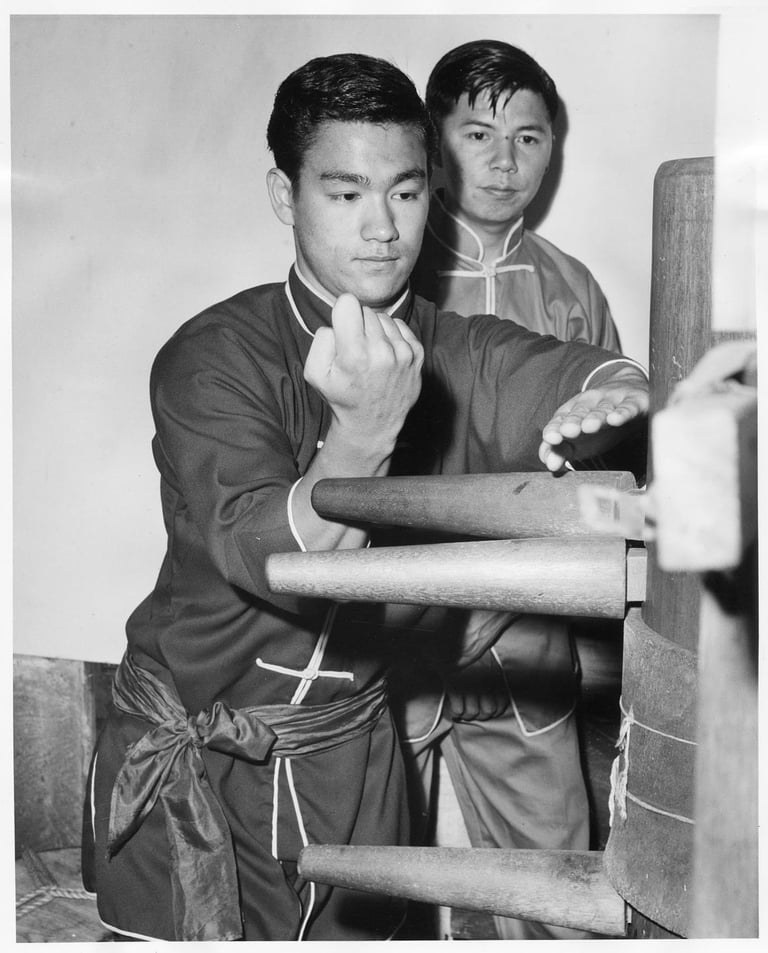
But Lee’s critique extended beyond fighting. He believed rigidity was a problem in human thinking itself. People often cling to systems, beliefs, and identities because they provide comfort and certainty. Yet this attachment can prevent genuine growth. In his view, truth could not be confined within any fixed structure.
Jeet Kune Do emerged as his response — not a new style, but an “anti-style.” Instead of prescribing exact techniques, it encouraged practitioners to discover what worked for them individually. Rather than adding more rules, it emphasized removing what was unnecessary. Instead of imitation, it promoted personal expression.
This idea deeply changed how I think about learning. We often assume that progress comes from accumulation — more knowledge, more structure, more methods. But Jeet Kune Do suggests that growth sometimes requires subtraction. It asks us to question what is essential and to discard what is artificial.
At the heart of Bruce Lee’s philosophy was a powerful idea: freedom from limitation. He believed that many people live within invisible boundaries created by tradition, fear, or habit. These boundaries shape how we move, think, and express ourselves. Jeet Kune Do was his attempt to break those boundaries.
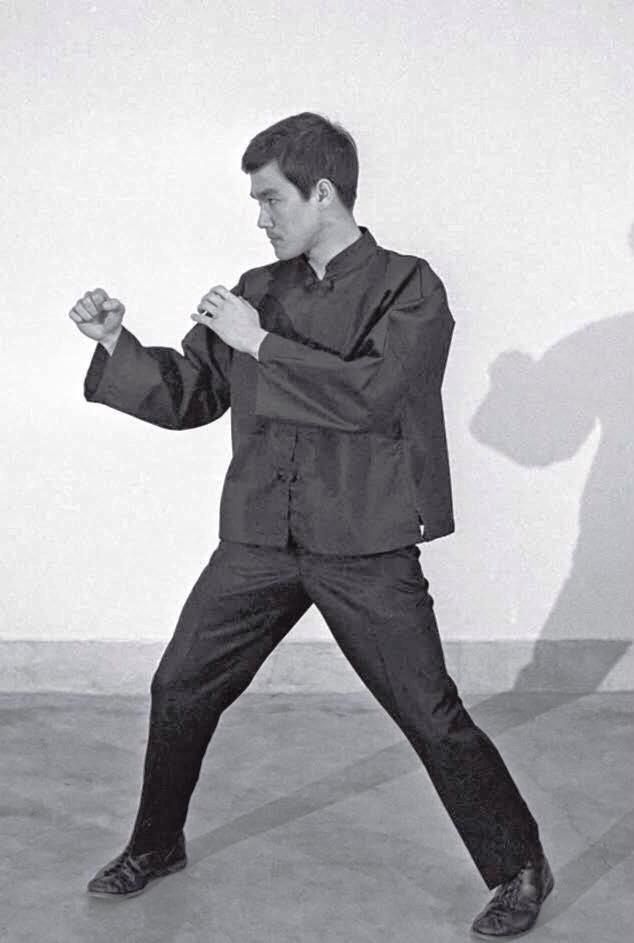
He often spoke about honest self-expression. Rather than copying a master or conforming to a system, the practitioner must discover their own truth. Each individual has unique strengths, weaknesses, and experiences. Therefore, no single method can suit everyone. The purpose of training is not to replicate someone else’s movements but to understand oneself.
This emphasis on individuality transforms martial practice into a process of self-discovery. Training becomes a mirror reflecting inner habits — hesitation, fear, ego, impatience. By confronting these internal obstacles, the practitioner grows not only physically but psychologically. The true opponent is often not another person but one’s own limitations.
What makes Jeet Kune Do particularly fascinating is how deeply it draws from Taoist philosophy. Taoism emphasizes harmony with the natural flow of life, often described as the Tao — the underlying way of the universe. Rather than forcing outcomes or resisting change, Taoist thought encourages alignment with reality. It values flexibility, simplicity, and balance.
This influence appears clearly in Lee’s famous idea of being like water. Water has no fixed shape, yet it can take any form. It is soft, yet it can erode stone. It yields, yet it cannot be easily broken. This paradox captures the essence of adaptability. Strength does not always come from force; sometimes it comes from flexibility.
The Taoist principle of wu wei, often translated as effortless action, also shaped Lee’s thinking. This concept does not mean passivity. Instead, it refers to acting naturally and spontaneously, without unnecessary struggle. It means responding to situations in harmony with their nature rather than imposing rigid control.
In the context of combat, this results in fluid movement and spontaneous response. In the context of life, it becomes a philosophy of calm awareness and natural action. It suggests that effectiveness arises from clarity rather than force.
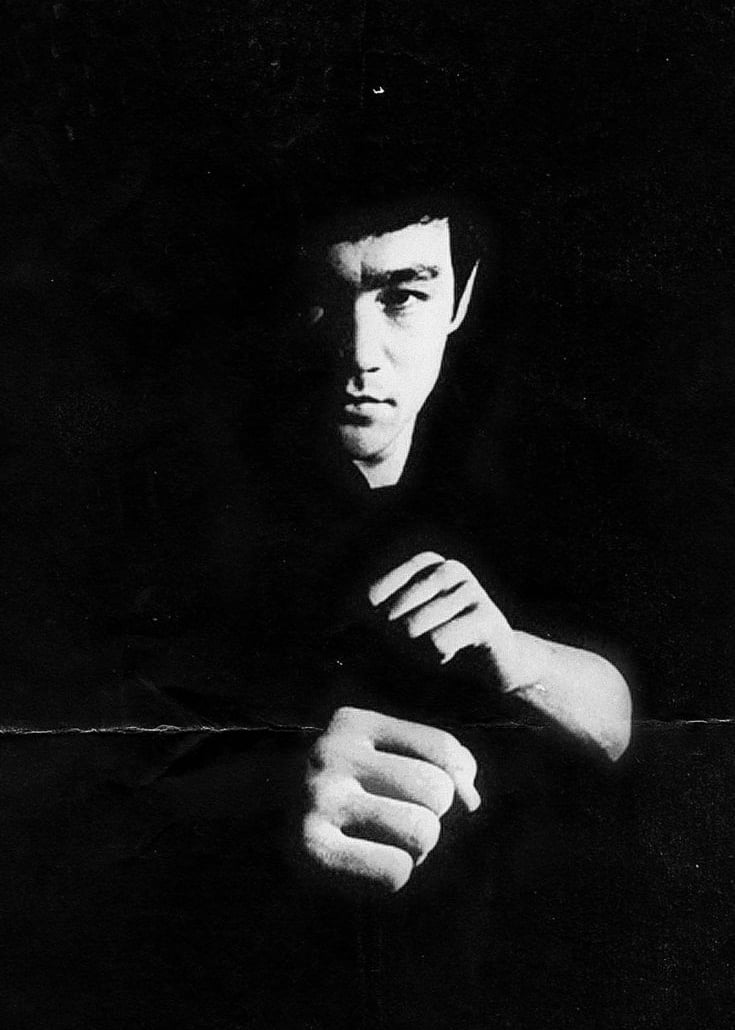
Another Taoist idea reflected in Jeet Kune Do is the balance of opposites, often symbolized by yin and yang. Strength and softness, action and stillness, attack and defense — these forces exist in dynamic balance rather than conflict. True effectiveness comes from understanding when to apply each quality.
As I explored these ideas, I began to notice how different they are from the mindset encouraged by modern society. We are often taught to control, dominate, and force outcomes. We resist change and cling to certainty. Jeet Kune Do offers a different perspective — one that embraces uncertainty and adapts to reality.
One of the most practical aspects of Lee’s philosophy is the principle of simplicity. He believed that the most efficient solution is often the simplest one. Many traditional martial arts included elaborate techniques and decorative movements, but Lee sought directness. Every action should serve a clear purpose. Anything unnecessary should be eliminated.
This principle applies easily to daily life. We frequently complicate our schedules, goals, and decisions. We assume complexity equals sophistication. Yet simplicity often produces clarity and effectiveness. Removing distractions and focusing on what truly matters can transform both performance and well-being.
Closely connected to simplicity is the idea of economy of motion — achieving maximum effect with minimal effort. This concept reflects a broader philosophy of efficiency. Instead of wasting energy on unnecessary actions, one acts with precision and intention.
Perhaps the most relevant principle of Jeet Kune Do in the modern world is adaptability. Bruce Lee believed that rigidity leads to failure because reality constantly changes. A fixed system cannot respond effectively to unpredictable circumstances.
This idea resonates strongly today. We live in a world defined by rapid technological advancement, shifting social structures, and uncertain futures. Career paths evolve quickly. Industries transform. Unexpected challenges emerge. In such an environment, flexibility becomes essential.
Jeet Kune Do encourages openness to change. It teaches that survival and growth depend on the ability to adjust quickly and learn continuously. Rather than fearing uncertainty, one learns to navigate it with confidence.
Another central concept is interception — responding to an attack before it fully develops. In martial terms, this requires timing, awareness, and initiative. But metaphorically, it suggests proactive living. Many problems in life grow because they are ignored in their early stages. By cultivating awareness and responding early, we prevent small challenges from becoming major crises.
Jeet Kune Do also emphasizes formlessness — the idea of using no fixed way. This concept challenges our attachment to identity and structure. Many people define themselves through roles, beliefs, or systems. While these identities provide stability, they can also limit growth.
Formlessness encourages continuous evolution. It invites us to remain open to change, to adapt our understanding, and to redefine ourselves when necessary. This perspective can be both liberating and unsettling, as it removes the comfort of certainty. Yet it also creates space for authentic development.
The psychological dimension of Jeet Kune Do is equally significant. Training cultivates awareness, emotional control, and presence. Fear and anger can cloud perception, while calmness enhances clarity. By observing one’s reactions and emotions, the practitioner develops self-mastery.
This emphasis on awareness aligns closely with modern ideas about mindfulness and mental resilience. The ability to remain present and composed under pressure is valuable not only in combat but in everyday challenges.
Bruce Lee also promoted a mindset of continuous learning. He believed human potential has no limits and that growth requires constant questioning. Rather than accepting tradition blindly, one must examine experience directly. This attitude encourages curiosity, innovation, and personal evolution.
One of the most remarkable aspects of Jeet Kune Do is that it does not provide a universal formula. There is no single correct method or path. Each practitioner must discover their own way. This approach respects individuality and acknowledges the diversity of human experience.
In contrast to systems that promise guaranteed results through specific steps, Jeet Kune Do offers only a process of exploration. Its purpose is not to deliver certainty but to cultivate awareness.
Although Bruce Lee rejected rigid systems, his ideas profoundly influenced modern martial arts. His emphasis on cross-training, practical effectiveness, and integration of multiple disciplines helped shape contemporary approaches to combat training. Many modern fighters study various techniques rather than relying on a single tradition, reflecting Lee’s belief that effectiveness matters more than style.
Yet the significance of Jeet Kune Do extends far beyond martial arts. Its principles apply to leadership, creativity, and personal development. Effective leaders must adapt to changing conditions. Creative individuals must experiment and innovate. Personal growth requires self-awareness and flexibility.
In an era characterized by rapid change and constant uncertainty, the philosophy of Jeet Kune Do feels especially relevant. It teaches resilience, adaptability, and authenticity — qualities essential for navigating modern life.
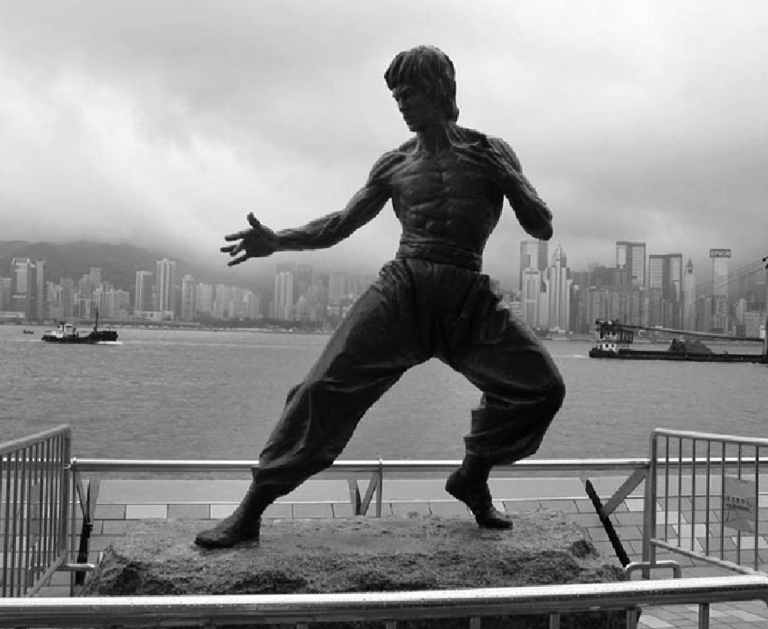
When I reflect on what Jeet Kune Do represents, I see it less as a martial art and more as a philosophy of becoming. It reminds us to remain flexible, to question assumptions, and to seek truth through experience rather than imitation.
Bruce Lee once suggested that the highest form of knowledge is self-knowledge. This idea captures the essence of his vision. Jeet Kune Do is not about defeating others but about understanding oneself. It is not about mastering techniques but about mastering awareness.
Ultimately, the philosophy encourages us to live authentically — to respond to reality with clarity, to adapt to change with confidence, and to express ourselves honestly. It invites us to move through life with the fluidity of water, strong yet flexible, shaped by circumstances yet true to our nature.
Perhaps this is why Jeet Kune Do continues to inspire people decades after Bruce Lee introduced it. It speaks to a universal human desire for freedom — freedom from limitation, from fear, and from rigid identity. It offers a vision of life as a process of continuous growth.
And the more I reflect on it, the more I realize that its lessons are simple yet profound: remove what is unnecessary, remain open to change, know yourself deeply, and flow with life rather than resist it.
In a world that constantly demands certainty, control, and fixed answers, Jeet Kune Do offers something different — a reminder that true strength lies in adaptability, and true wisdom begins with self-discovery.
Reat Book
Sign Up