Every year, right around early November, something subtle starts happening. Grocery stores begin stacking towers of canned pumpkin and cranberry sauce near the entrance. Pinterest fills with tablescapes that look like they were styled by professional photographers who have never actually hosted a dinner for twelve people. And somewhere in the background, almost like muscle memory, women everywhere start quietly calculating how much work the holidays are going to be.
I notice it in myself every year.
At first it’s just a passing thought while standing in the grocery store aisle. Do I still have that big roasting pan? Then another thought arrives while scrolling through recipes online. Maybe I should try making the stuffing from scratch this time. A few days later I’m mentally inventorying my kitchen cabinets and wondering if I should start planning the menu already.
None of this is particularly dramatic. It’s just the slow, familiar rhythm of the holiday season beginning again. But if you pause long enough to look at it honestly, there’s something quietly exhausting about the whole process.
Because for many women, the holidays don’t just mean celebration. They mean planning, shopping, prepping, cooking, hosting, cleaning, and making sure everyone else has a wonderful time.
And most of that labor is invisible.
The strange thing is that I actually like cooking. I always have. There’s something deeply satisfying about chopping vegetables while music plays in the background, or watching a sauce slowly thicken while the kitchen fills with the smell of garlic and butter. Cooking can feel creative, almost meditative sometimes.
But the kind of cooking that happens during the holidays often feels different.
It stops being about creativity or enjoyment and starts feeling like a performance.
Suddenly there are expectations attached to everything. The turkey has to be perfectly roasted. The side dishes have to feel homemade. The table has to look festive. And somehow, the person cooking is also supposed to look relaxed and joyful while juggling six different dishes and a sink full of dirty pans.
If you’re a woman, there’s often an extra layer added to all of this: the quiet assumption that you’ll take care of it.
Not because anyone necessarily says it out loud. Sometimes it’s just tradition. Sometimes it’s habit. Sometimes it’s the unspoken belief that women are simply better at these things.
Whatever the reason, the result is the same.
Around the holidays, the kitchen becomes a place where gender roles quietly tighten their grip again.
I started noticing this more clearly a few years ago during Thanksgiving preparations at my family’s house. My mother and I were in the kitchen, juggling pots and trays and cutting boards, while the living room filled with the familiar sounds of football commentary and laughter.
Every so often someone would wander into the kitchen, lift a lid, say something like “Smells amazing,” and then disappear again.
At one point my mom leaned against the counter, wiped her hands on a dish towel, and said something that stuck with me.
“You know,” she sighed, “this is the part nobody talks about.”
She didn’t say it bitterly. More like someone stating a quiet fact that had existed for a long time.
And she was right.
We talk endlessly about holiday traditions, about family gatherings, about gratitude and togetherness. But we rarely talk about the hours of labor that make those traditions possible.
Someone buys the groceries.
Someone chops the onions.
Someone cleans the counters.
Someone wakes up early to start the turkey.
And very often, that someone is a woman.
This doesn’t mean men never cook or help in the kitchen. Many absolutely do. But if you zoom out and look at the broader picture, the numbers tell a clear story: women still perform the majority of meal preparation and household cooking in many families.
During the holidays, that imbalance often becomes even more noticeable.
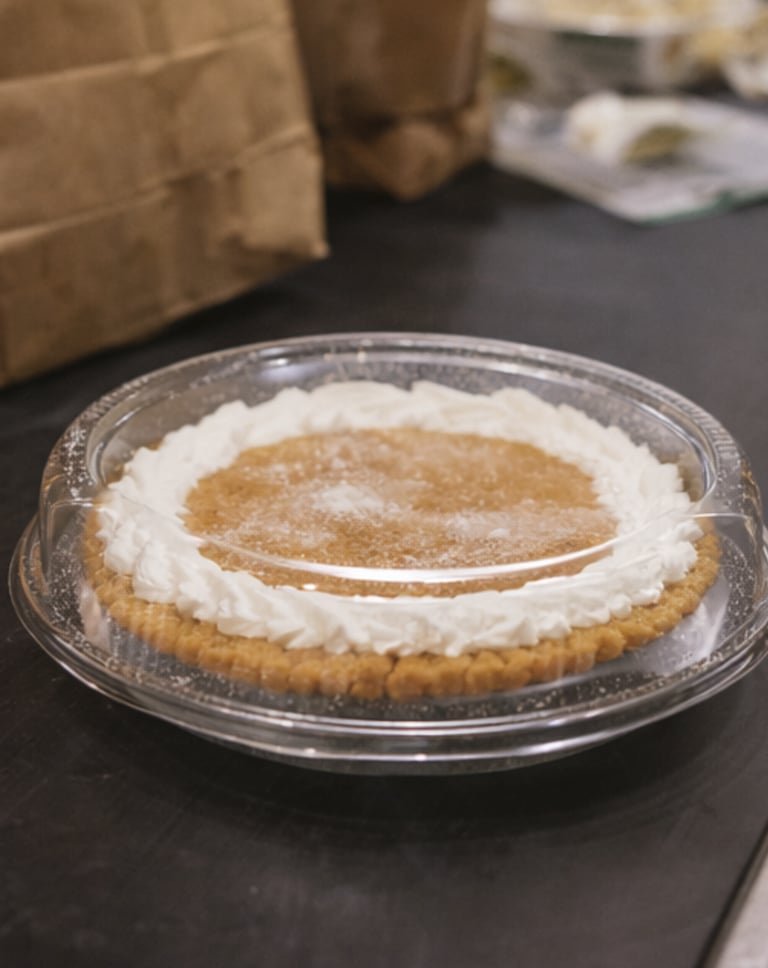
I remember once suggesting that maybe we should just buy a pie instead of making one from scratch. You would have thought I’d proposed canceling Thanksgiving entirely.
Someone immediately said, “But homemade pie is the whole point.”
And I remember thinking: Is it, though?
Because the pie wasn’t the point.
The gathering was the point. The conversation around the table was the point. The laughter and stories and the strange comfort of everyone being together again—that was the real reason for the holiday.
Yet somehow the focus kept drifting back to the food and whether it had been made the “right” way.
That moment stayed with me for a long time, mostly because it revealed something subtle but powerful about how we think about cooking.
There’s this cultural expectation that good hosts—especially women—should prove their care through effort. The more labor-intensive the meal, the more meaningful it is supposed to be.
Scratch-made desserts.
Hand-peeled vegetables.
Homemade everything.
On the surface, that idea sounds romantic. But in reality, it can become exhausting.
And sometimes what we actually need isn’t another task added to the list, but permission to take something off it.
Maybe that means buying a pie.
Maybe it means ordering part of the meal from a local bakery.
Maybe it means letting someone else host this year.
Or maybe it means cooking something simple that you genuinely enjoy instead of trying to impress everyone with a complicated menu.
I learned the value of that last idea from my aunt.
My aunt had a completely different philosophy about cooking than most people I knew. She was an incredible host—fiercely generous, almost aggressively so—but she had absolutely no interest in tailoring her cooking to other people’s preferences.
She cooked what she liked.
End of story.
If she loved spicy food, the dish was spicy. If she preferred pecorino cheese on pasta, that’s what you got. If you wanted something milder or sweeter or less intense, well… you were welcome to cook it yourself.
At the time, I didn’t fully understand how unusual that approach was.
So many women I knew treated cooking as a form of quiet self-sacrifice. They toned down flavors because someone in the family didn’t like garlic. They skipped ingredients they personally loved because the kids wouldn’t eat them. They made separate meals just to keep everyone happy.
My aunt never did that.
She cooked for herself first, and everyone else simply joined in.
Oddly enough, people loved eating at her house.
Her pasta sauces were bold and garlicky. Her garlic bread was so heavily seasoned that the edges sometimes turned nearly black in the oven. Her apple pie hid whole cloves among the slices like tiny surprises waiting to be discovered.
None of it was subtle.
But it was unmistakably hers.
Looking back now, I realize there was something quietly rebellious about the way she approached food.
She wasn’t denying herself the flavors she loved just to make everyone else comfortable. She wasn’t performing hospitality in the way society often expects women to.
She was simply cooking food she enjoyed—and making enough to share.
The result was a kitchen that felt alive with personality.
It also meant that cooking never seemed to exhaust her the way it exhausted so many other women I knew. Because she wasn’t cooking out of obligation or guilt. She was cooking out of pleasure.
That distinction matters more than we often realize.
When cooking becomes purely a duty, it drains energy. When it remains something personal—something connected to taste and curiosity and joy—it can stay meaningful.
My aunt passed away earlier this year, and the first holiday season without her has been strangely emotional.
I keep remembering small things about her kitchen. The way jars of chili peppers sat in oil on the refrigerator shelf. The smell of strong tea simmering on the stove. The cluttered drawers full of wooden spoons and mismatched measuring cups.
But more than anything, I remember her attitude.
She never apologized for cooking the way she wanted.
She never asked permission to flavor her food boldly.
And she never seemed burdened by the expectation that cooking should involve some form of quiet martyrdom.
That mindset feels especially important during the holidays, when so many people—especially women—are running themselves ragged trying to create the perfect gathering.
Perfection isn’t what people remember anyway.
What they remember is warmth.
They remember the sound of conversation echoing through the house. They remember laughter that starts in the kitchen and spills into the dining room. They remember the slightly chaotic moment when everyone tries to pass dishes across the table at once.
They remember the feeling of being together.
The meal itself is just the setting where those memories happen.
So maybe this year the goal doesn’t have to be perfection.
Maybe it’s enough to cook one dish you truly love.
Maybe it’s enough to ask for help.
Maybe it’s enough to sit down and enjoy the meal instead of spending the entire evening worrying about whether everything turned out exactly right.
And maybe, just maybe, it’s okay to buy the pie.
Not because homemade pie isn’t wonderful.
But because sometimes giving yourself a break is the most generous thing you can do—for yourself and for everyone else at the table.
The holidays should feel like a celebration, not a test you have to pass.
And if there’s one lesson I’m carrying with me into this season, it’s the one my aunt quietly practiced for years in her cluttered, wonderful kitchen:
Cook what you love.
Share what you make.
And don’t apologize for enjoying it.