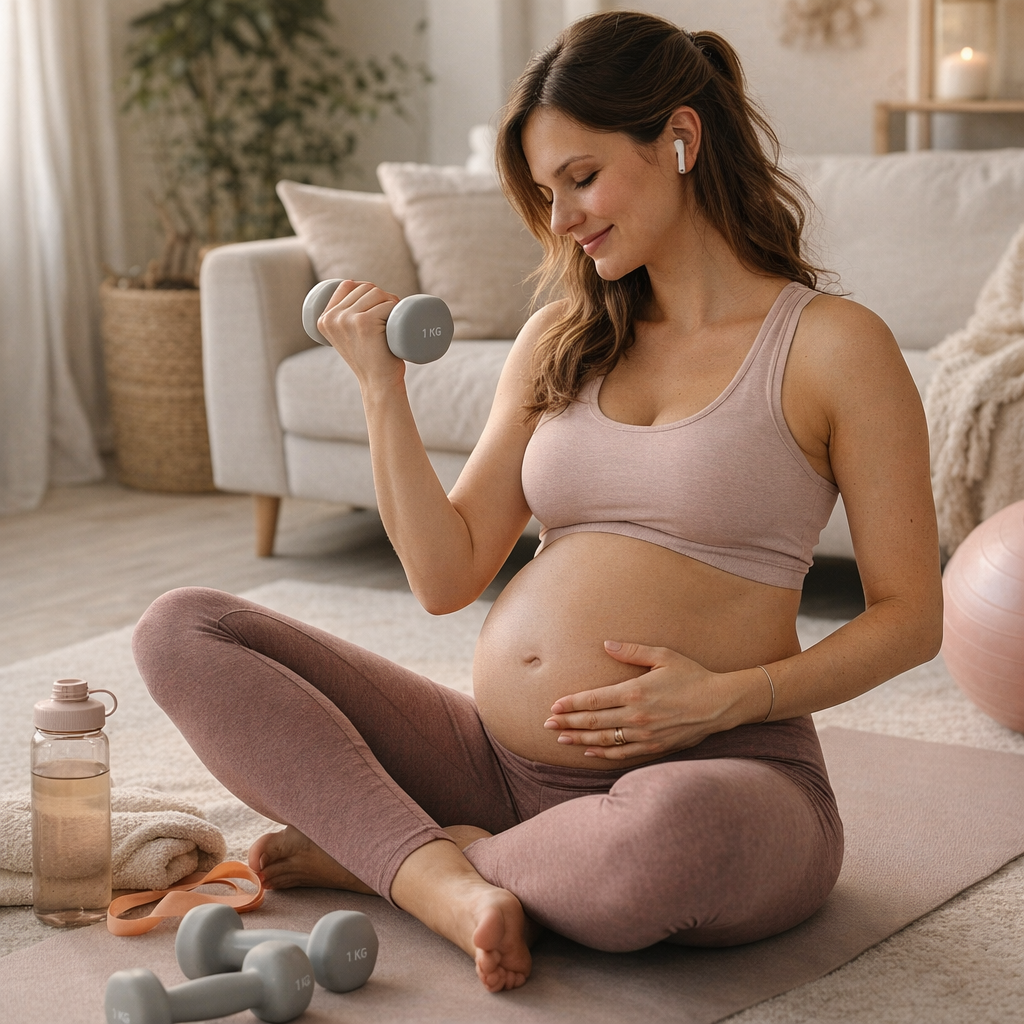
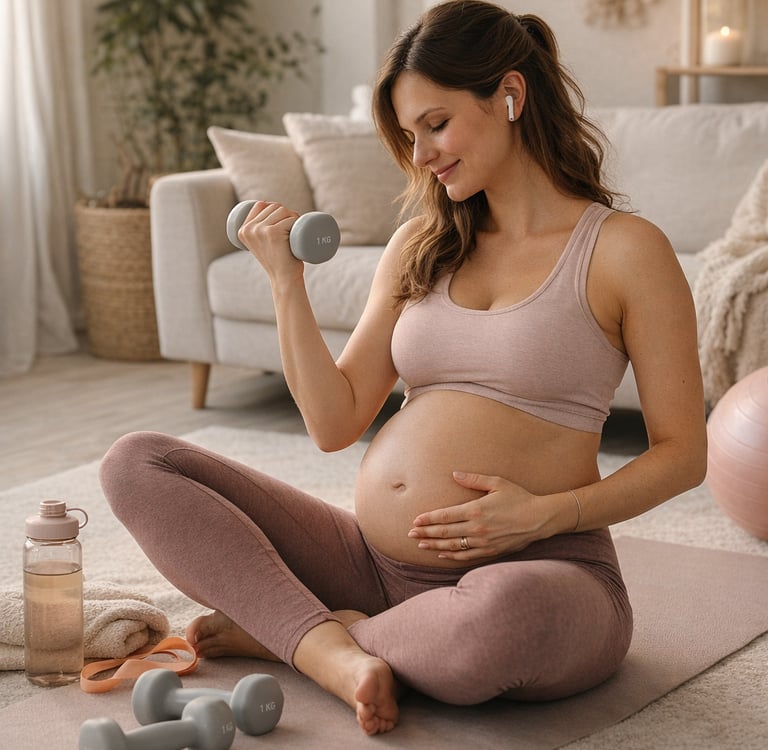
I am eight months pregnant, and movement no longer feels like something I do automatically. It feels like something I enter consciously, with awareness, curiosity, and respect. My body is no longer just mine, and that changes everything. This is not a season of chasing goals, breaking limits, or proving strength. It is a season of listening. Of slowing down. Of learning how to move while carrying another life inside me.
Each morning begins quietly. Before I sit up, before my feet touch the floor, I feel my belly. Its weight. Its warmth. The subtle, sometimes strong movements from within. Some mornings the baby stretches wide, pressing into my ribs. Other mornings there is a gentle roll, a soft reminder that I am not alone in this body. I place my hands on my stomach almost instinctively and breathe for a few moments. This small ritual grounds me. It tells me how I am today. It tells me how carefully I need to move.
There are days when my body feels surprisingly capable, almost light despite the size of my belly. And there are days when everything feels heavy, tight, and sensitive. My hips may ache from carrying extra weight. My lower back might feel stiff after a restless night. My ribs feel crowded, my breathing shallower. None of this feels wrong anymore. Pregnancy has taught me that discomfort is information, not failure. I don’t try to fix it immediately. I notice it. I respect it.
Deciding to move is no longer automatic. I don’t jump into workouts without preparation. I drink water first, slowly, intentionally. I eat something small and grounding — a piece of toast, yogurt, fruit — because my body needs stability now. Training on an empty stomach used to feel disciplined. Now it feels unkind. Energy management has become part of self-care.
By the eighth month, my body’s shape has changed dramatically. My center of gravity has shifted forward, and balance is something I consciously maintain. Simple actions like standing up from a chair or turning around require attention. Sudden movements feel jarring. Everything asks to be done with presence, with patience.
When I begin to move, I start with breathing. Not because someone told me to, but because breathing brings me back into my body. I inhale slowly, directing air into my ribs, my back, the sides of my waist. My shoulders soften. My jaw unclenches. On the exhale, I gently connect to my deep core — not pulling in, not tightening aggressively, just engaging enough to feel supported. At this stage of pregnancy, breathing feels like creating space where space is limited. It calms my nervous system and reminds me that I am safe.
Warm-up movements happen slowly. I roll my shoulders, one at a time, feeling where tension lives. I circle my neck carefully. I move my ankles and wrists, aware that pregnancy hormones have made my joints looser. This increased mobility means I need to move more mindfully, not less. I avoid sudden stretches and sharp changes in direction. Slow feels right.
My spine moves gently, in a way that feels intuitive rather than prescribed. I sway my hips, rock my pelvis, let my back move within a range that feels supportive to my belly. These are not exercises I check off a list. They are conversations with my body. And when I listen, my body answers.
Strength training at eight months pregnant is quiet. There is no urgency, no adrenaline. Strength now means stability, support, preparation. When I squat, my stance is wider to make room for my belly. My toes turn slightly outward. I lower myself slowly, using my breath to guide the movement. Sometimes I hold onto a chair or the wall, and I feel no shame in that. Support is not weakness. It is intelligence.
I feel my legs working, my glutes supporting me, my core stabilizing softly. Each repetition feels deeply functional, as if I am rehearsing for life with a baby — lifting, carrying, standing up while tired. This is strength that serves real life, not aesthetics.
I no longer lift heavy weights, and I don’t miss them. Light dumbbells, resistance bands, or just my body weight are enough. Upper-body movements like rows feel especially nourishing. They strengthen my back, open my chest, and counteract the constant forward pull of my belly and breasts. After a few slow sets, my posture feels lighter, my breathing easier.
Throughout every movement, I stay connected to my pelvic floor. This awareness is essential now. If I feel pressure, heaviness, or discomfort, I stop immediately. Training during pregnancy is not about pushing through sensations. It is about responding to them. My body communicates clearly when I am willing to listen.
Core training still exists, but it looks nothing like it used to. There are no crunches or sit-ups, no movements that strain my abdomen or create doming along my belly. Instead, my core works quietly in the background — through posture, breathing, controlled transitions. Standing exercises, slow sit-to-stand movements, gentle anti-rotation work all teach my core to function as part of a whole system. This kind of training feels respectful and safe.
Some days, walking is my entire workout. I step outside and move at a pace that feels natural. I notice how my hips sway, how my breath responds, how my body reacts to small hills or uneven ground. I can tell immediately if I am doing too much. If I can’t speak comfortably, I slow down. There is no pride in exhaustion anymore.
Emotionally, training in the eighth month is deeper than I expected. Every movement carries awareness of the life inside me. This awareness softens my approach. It replaces ambition with reverence. Some days, I finish feeling grounded and quietly proud. Other days, my body feels heavy and emotional, and movement becomes stretching on the floor, breathing deeply, or lying on my side and resting.
And that counts.
Recovery has become part of the practice, not an afterthought. I stretch gently, never aggressively. I hydrate. I eat. I rest without guilt. Sleep is no longer optional — it is essential. My body is working constantly, even when I appear still.
Training at eight months pregnant has taught me patience in a way nothing else ever has. It has taught me how to trust signals instead of overriding them. How to soften without feeling weak. How to let go of control while staying deeply connected.
These lessons reach far beyond fitness. They prepare me for birth. For surrender. For the unknown. This phase of training is not about maintaining a certain body or image. It is about supporting my body through one of the most demanding experiences of its life.
I am not trying to be the strongest version of myself right now. I am trying to be the most present one.
And if this eighth month has taught me anything, it is this: slowing down is not regression. It is refinement. It is wisdom. It is love, expressed through movement.
This is what training looks like for me now. Imperfect. Fluid. Honest. And deeply enough.