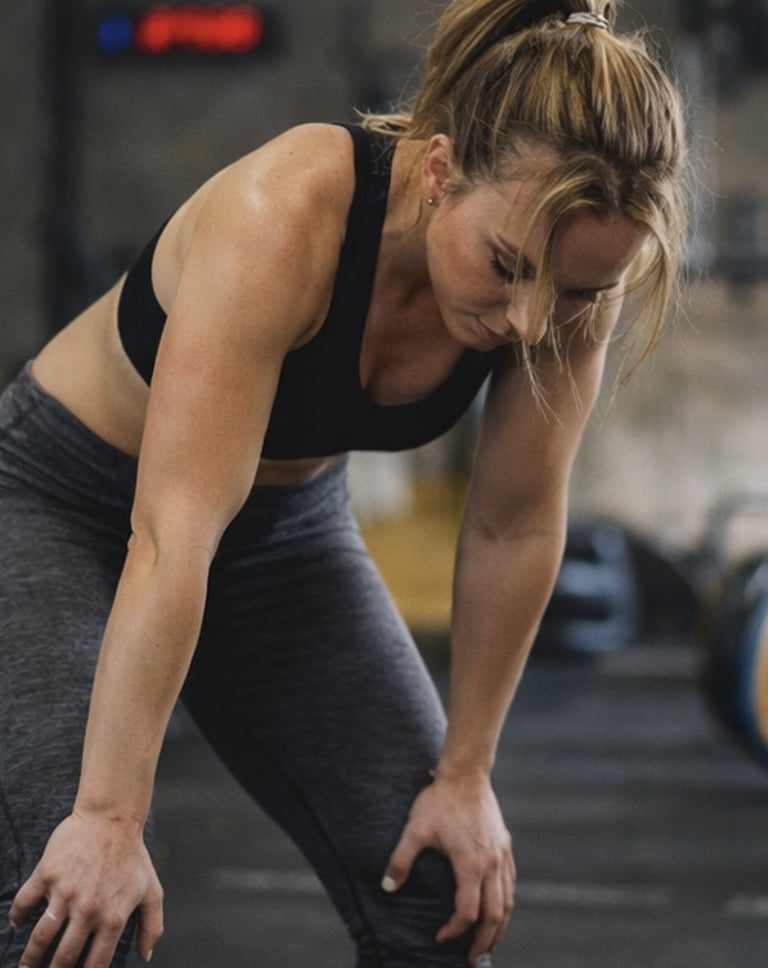
For a long time I believed that the more disciplined I became, the healthier I must be.
At least that’s what it looked like from the outside.
I trained regularly, sometimes twice a day. I watched what I ate carefully. I avoided “bad foods,” counted calories more often than I would like to admit, and tried to live what many people would call a healthy lifestyle. My friends often told me how dedicated I was. Some even said they wished they had my self-control.
And in many ways, I was proud of that.
I liked the feeling of being strong and capable. I liked seeing changes in my body after weeks of consistent training. I liked the mental clarity that sometimes comes after a hard workout. Exercise felt empowering, almost like a personal ritual that kept my life structured and balanced.
But somewhere along that journey something quietly changed, and I didn’t really notice it at first.
My period stopped.
At the beginning I didn’t think much about it. Maybe it was stress, I thought. Maybe my cycle was just shifting a little. It happens sometimes, right? Women’s bodies are complex and unpredictable.
A month passed.Then another.Then three.
By that time, part of me started to feel slightly uneasy, but another part of me almost felt relieved. Not having to deal with a monthly cycle felt strangely convenient. No cramps. No uncomfortable days where my body felt heavy or bloated. No planning workouts around how I felt during different phases of my cycle.
In the strange logic of the fitness world, losing your period can even feel like some sort of achievement.
It means you’re lean. It means you’re training hard. It means you’re committed.
Or at least that’s what many women quietly believe.
But over time I began to realize that something deeper was happening in my body, something that had nothing to do with discipline or success.
And the truth is that many active women go through this exact experience without really understanding what it means.
Our menstrual cycle is often treated like an inconvenience, something that interrupts daily life. From a young age we hear jokes about it, complaints about it, and advice about how to hide or manage it. Rarely do we hear someone say that it’s actually one of the most important health indicators a woman has.
Yet that’s exactly what it is.
Our menstrual cycle is not just about reproduction. It is a reflection of a complex hormonal system that influences nearly every aspect of our physical and emotional health. When that system is functioning well, the body moves through a natural rhythm every month. Hormones rise and fall, energy shifts, and the body prepares itself for the possibility of pregnancy even if that possibility never becomes reality.
When the cycle disappears, the body is essentially sending a message that something in that delicate system is out of balance.
The difficult part is that the imbalance often develops slowly, almost invisibly.
In my case, it wasn’t one dramatic change. It was a collection of small habits that gradually pushed my body into a state it interpreted as stress.
I was exercising frequently. Some days I would combine strength training with long cardio sessions because I believed that more movement meant better results. Rest days felt almost uncomfortable, as if I were wasting time or losing progress.
At the same time, I was eating what I considered a “clean” diet, but in reality it was also quite restrictive. I avoided many foods that I thought would interfere with staying lean. Carbohydrates were often limited, especially things like rice, potatoes, or bread. I convinced myself that I felt better this way.
Looking back, I realize that my body was constantly operating in a slight energy deficit.
Not starving, not exhausted in an obvious way, but quietly under-fueled.
The human body is incredibly intelligent when it comes to survival. It constantly monitors how much energy is coming in and how much energy is being used. When it senses that resources are limited, it begins prioritizing the most essential functions required for survival.
Breathing continues. The heart continues beating. The brain continues functioning.
But reproduction is not considered essential in that moment.
From a biological perspective, this makes perfect sense. If the body believes there isn’t enough energy available to support pregnancy, it temporarily shuts down the system responsible for ovulation and menstruation.
This condition is known as hypothalamic amenorrhea, and it is surprisingly common among women who train hard or diet aggressively.
The hypothalamus, a small but powerful area in the brain, normally releases signals that start the hormonal chain reaction leading to ovulation. When the body perceives too much stress or too little energy, those signals become weaker or stop entirely.
Without them, the ovaries reduce their production of estrogen and progesterone.
And without those hormones, the menstrual cycle disappears.
At first, the absence of a period may not feel like a problem.
But hormones like estrogen play roles far beyond reproduction. They influence bone health, brain function, metabolism, cardiovascular health, and even mood stability.
When estrogen levels remain low for long periods, the consequences begin to show up in subtle ways.
Many women notice fatigue that doesn’t seem to match their lifestyle. Others experience sleep disturbances, waking up in the middle of the night with racing thoughts. Some develop dry skin, thinning hair, or changes in digestion. Sometimes there is a constant feeling of being cold, even in warm environments.
One of the most concerning long-term effects involves bone density.
Estrogen helps protect bone structure. Without enough of it, bones gradually lose mineral density and become more fragile. Young women who lose their periods due to chronic energy deficits can develop bones that resemble those of much older individuals.
This is why stress fractures are surprisingly common among female athletes who experience menstrual disruptions.
The irony is that many of these women are extremely active and often consume diets rich in calcium and other nutrients believed to support bone health.
Yet without adequate hormonal support, even the best nutrition and training programs cannot fully protect the skeleton.
Another interesting aspect of this whole process involves body fat and a hormone called leptin.
Leptin is produced by fat cells and acts as a messenger that informs the brain about the body’s energy reserves. When leptin levels are sufficient, the brain understands that the body has enough stored energy to support normal functions, including reproduction.
When body fat drops too low or calorie intake becomes too restricted, leptin levels decrease.
The brain interprets this as a signal that energy is scarce, and once again reproductive processes slow down.
But it’s important to understand that every woman’s body has its own threshold.
Some women can maintain relatively low body fat and still have perfectly regular cycles. Others may lose their periods even when they appear physically healthy and strong.
This variability can make the situation confusing, because there is no universal number or body type that guarantees hormonal balance.
Stress adds another layer to the story.
When we talk about stress, most people imagine emotional pressure from work or relationships. But the body does not separate emotional stress from physical stress. Hard training, strict dieting, poor sleep, excessive caffeine intake, and constant mental pressure all activate similar biological pathways.
When the stress response remains active for too long, the nervous system spends more time in a “fight or flight” mode. In that state, the body focuses on immediate survival rather than long-term functions like reproduction.
For many women who love fitness, this creates the perfect storm.
They are often highly motivated, ambitious individuals who push themselves in many areas of life. They train intensely, work hard, and set high expectations for themselves. Rest feels unproductive. Eating more feels like losing control.
But the body doesn’t view discipline the same way we do.
To the body, constant pressure without adequate recovery simply looks like danger.
Over time I began to realize that my body wasn’t betraying me. It was protecting me in the only way it knew how.
That realization changed the way I started thinking about health.
Instead of asking how little I could eat while still performing well, I began asking how I could support my body better.
Instead of trying to maximize training volume, I started thinking about balance.
For some women, restoring hormonal health requires only small adjustments. Reducing cardio slightly while maintaining strength training can make a significant difference. Increasing calorie intake by a few hundred calories per day may be enough to signal safety to the body.
Carbohydrates often play an important role as well.
While low-carbohydrate diets have become popular in many fitness circles, extremely low carb intake can increase stress hormones and disrupt hormonal balance in some women. Adding back moderate amounts of whole carbohydrates such as rice, oats, potatoes, or fruit can help restore energy availability.
Micronutrients matter too.
When food intake is restricted for long periods, vitamin and mineral deficiencies can develop. Nutrients like iron, magnesium, zinc, and B vitamins support many hormonal pathways, and inadequate intake may contribute to menstrual disruptions.
Of course, it is always important to rule out other medical causes if periods disappear for several months. Conditions such as thyroid disorders or polycystic ovary syndrome can also affect menstrual cycles, so consulting a healthcare professional is an important step.
For me, the process of reconnecting with my body was not instant.
It required patience and a willingness to challenge beliefs I had held for years about what health and fitness should look like.
Slowly, I began prioritizing recovery as much as training. I allowed myself to eat more without labeling foods as good or bad. I tried to listen to the signals my body had been sending all along.
Eventually my cycle returned.
But more importantly, my perspective changed.
I no longer see my menstrual cycle as an inconvenience or an obstacle. Instead, I see it as an incredibly valuable piece of feedback from my body. It reflects whether my lifestyle is truly supporting my long-term health.
In a culture that often celebrates extremes, it can be easy to forget that the human body thrives on balance.
Strength is not defined by how hard we push ourselves every single day. It is defined by resilience, sustainability, and the ability to support our bodies for decades to come.
Fitness should enhance life, not quietly undermine it.
And sometimes the strongest thing a woman can do is simply listen when her body whispers that something needs to change.