
Traveling to Hong Kong with a Child: A Slower, Sweaty, Beautiful Love Story
2/7/20266 min read
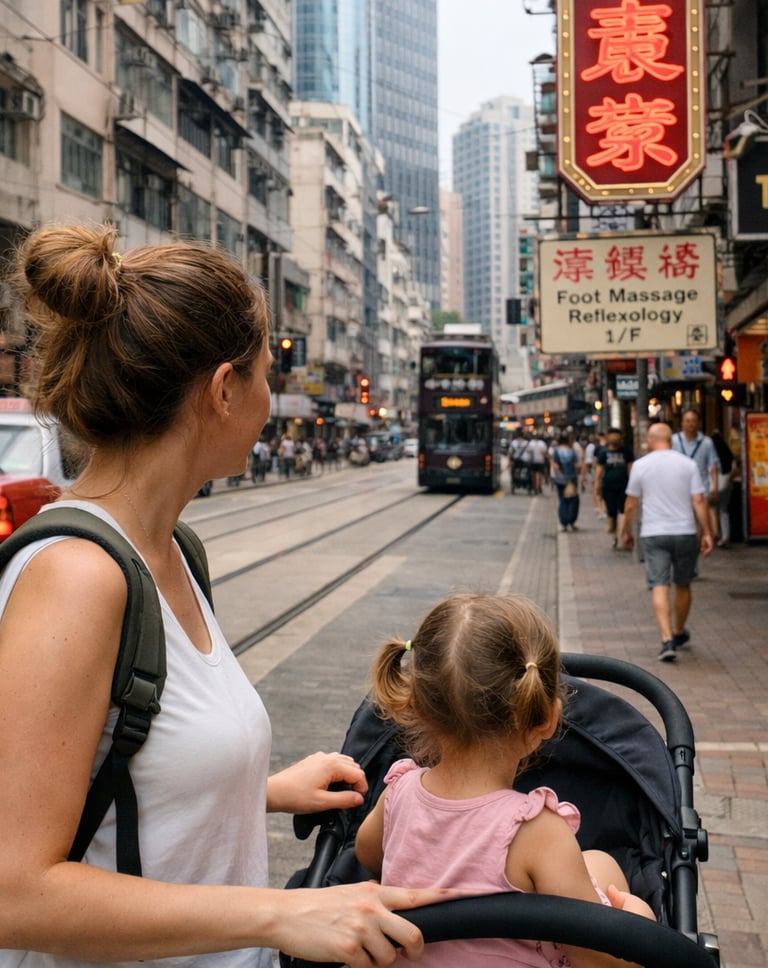
There’s a certain version of travel we carry in our heads before we actually arrive somewhere. Mine of Hong Kong was shaped by old memories, neon lights, fast-paced streets, endless food stalls, and late-night wandering. I had been there once before, years ago, when my biggest daily concern was finding the best bowl of noodles at 1 a.m. This time, everything felt familiar and completely new at the same time — because I wasn’t arriving as “me” anymore. I was arriving as a mother.
Traveling with a child changes the rhythm of a city. The same streets that once felt electric and energizing suddenly feel steeper, hotter, louder. We moved slower. We planned less and adapted more. Pushing a stroller uphill in Central in high humidity is a very humbling workout. You don’t just “wander” anymore — you calculate. Shade. Elevators. Metro entrances with escalators. Places where you can sit down for five minutes without buying something. Yet in a strange way, that slower pace allowed me to notice Hong Kong differently. The tiny details. The light reflecting off glass skyscrapers at sunset. The way old neon signs flicker next to ultra-modern buildings. The rhythm of the city breathing.
Nightlife wasn’t part of our trip, and honestly, we didn’t miss it at all. By the time evening came, we were usually exhausted. The heat and humidity take a real toll on your body, especially when you’re responsible for another tiny human who doesn’t care about your carefully planned itinerary. Our evenings became simple: an early dinner, a short walk, maybe a few photos if the light was kind to us, and then back to the hotel. There’s something oddly peaceful about seeing a city famous for its nightlife through tired eyes. You stop chasing experiences and start appreciating comfort.
Hong Kong is an incredibly photogenic city. Even when you’re sweaty, slightly overwhelmed, and carrying snacks in every pocket of your bag, the city constantly invites you to look up, look around, and capture moments. The mix of old and new architecture is what fascinated me the most. You can stand in front of a futuristic glass building and, right next to it, find a crumbling old facade with air conditioners hanging out of the windows like metal flowers. Vintage neon signs glow over narrow streets. Old taxi cars pass by ultra-modern electric vehicles. The diversity of people on the streets is endless: businesspeople rushing to meetings, elderly locals carrying groceries, tourists looking slightly lost, children laughing, street vendors shouting. For anyone who loves photography, Hong Kong feels like a playground. Every corner offers a story. Every street feels like a frame.
What truly impressed me this time was the public transportation system. The subway in Hong Kong is, without exaggeration, one of the best I’ve ever experienced in any city. It’s fast, clean, well-organized, and incredibly frequent. Waiting more than three minutes for a train felt almost unusual. With a child and a stroller, this reliability becomes more than convenience — it becomes freedom. You’re not constantly calculating delays or wondering if you’ll make it back before meltdown time. You just move. Smoothly. Efficiently. Predictably.
Our daughter, Valentina, loved the Octopus card more than any toy we brought with us. Swiping it to open the subway gates became her personal mission. Every ride turned into a tiny adventure. It’s funny how children find magic in the most practical things. For us, the Octopus card was a tool. For her, it was a key to secret doors. And honestly, having one card that works for transportation, boats, and even small purchases makes navigating the city incredibly easy. It removes so much friction from daily movement.
One of the most surprising parts of the subway experience is what’s underground beyond just trains. There are endless shopping opportunities beneath the city: pastry shops, bubble tea spots, small bakeries, and adorable Asian souvenir stores that make you want to buy things you absolutely do not need. What you won’t find, though, is coffee. Or at least, not easily. Consuming food and drinks on the subway is prohibited, so most purchases are clearly designed for take-away. This rule is taken seriously, and it contributes to how clean the system feels. It also forces you into a certain rhythm: buy, step outside, stop somewhere, consume, continue. With a child, this actually helps structure your day in natural breaks.


Before our trip, we spent a ridiculous amount of time debating where to stay. Kowloon or the Wan Chai / Causeway Bay side? Kowloon was noticeably cheaper, and on paper, that made sense. But I remembered Wan Chai from my 2014 visit as being more entertaining, more lively, more “central” in feeling. In the end, after seeing the city again with fresh eyes, I realized that this debate barely matters anymore. Hong Kong’s subway system has erased most location disadvantages. Every part of the city is easily and quickly reachable. Staying “central” doesn’t hold the same value here as it does in cities with weaker public transport. Mong Kok is lively, full of markets, shops, street food, and chaos in the best possible way. Causeway Bay offers the same energy, just in a different flavor. Crossing the river is simple by subway or by boat, both payable with the Octopus card. The city feels stitched together by invisible threads of trains and ferries.
Now that we’ve seen most parts of the city, my honest recommendation would be to choose the cheapest decent hotel option, even if it’s further north or not in what people traditionally call “the center.” Paying extra for a central location isn’t really worth it here. Almost every neighborhood offers plenty of dining options, convenience stores, small local eateries, and bakeries. You’re never truly far from life. And since getting around is so efficient, your hotel becomes less of a base and more of a resting place. When you’re traveling with a child, this matters even more. You’re not going to spontaneously go out at midnight anyway. Comfort, cleanliness, and easy subway access matter more than being five minutes closer to a famous street.
Traveling with a child also shifts your relationship with food. Hong Kong is a food paradise, but suddenly you’re not just chasing flavors — you’re chasing timing, temperature, and familiarity. You look for places where your child can sit comfortably. You become more aware of spice levels. You appreciate places that serve quickly. And yet, even with these limitations, Hong Kong still delivers. From simple noodle soups to steamed buns, from bakery treats to fruit drinks, there’s always something that feels safe and comforting. The city doesn’t demand culinary bravery every single meal. It allows you to rest in between adventures.
The heat and humidity deserve special mention. They shape your experience more than any guidebook ever will. High temperatures mixed with heavy air humidity can drain you faster than you expect. You plan less ambitious days. You accept that you won’t see everything. You drink more water than you think you need. You learn to find air-conditioned escapes: malls, metro stations, small cafes. Traveling with a child in this climate forces you to listen to your body more carefully. There’s no heroism in pushing through exhaustion. There’s only patience.
And yet, despite the sweat, the slower pace, the logistical thinking, Hong Kong still felt magical. There’s something deeply moving about experiencing such a dynamic city through a softer lens. You’re not there to conquer it. You’re there to move with it. To observe. To let it unfold around you. To let your child touch the edges of a world so different from home. Watching Valentina look at neon signs, double-decker trams, crowded streets, and giant skyscrapers reminded me that travel isn’t about ticking places off a list. It’s about expanding what “normal” looks like.
Hong Kong taught me that cities don’t lose their magic when you grow up — they just change the way they offer it to you. The energy is still there. The beauty is still there. The chaos is still there. You just meet it differently. With tired feet. With a stroller. With snacks in your bag. With less urgency and more attention. And somehow, that feels like a fair trade.