Before I became pregnant, I thought I understood what “a good workout” meant. It meant intensity. It meant sweat, pushing limits, feeling sore the next day. If I wasn’t out of breath, I felt like I hadn’t done enough. Then pregnancy happened, and suddenly, everything I knew about movement had to be rewritten.
At first, I tried to keep doing what I used to do, just a bit slower. But my body quickly told me that this was not the season for jumping, rushing, or forcing strength. Even small, sudden movements felt uncomfortable. My balance was different. My joints felt softer, less stable. I noticed that my heart rate went up faster, and I needed more time to catch my breath. It became very clear to me that pregnancy is not the time for high-impact workouts or extreme effort. My body was already working hard just to carry and grow another human being.
That realization changed the way I approached exercise completely. A good prenatal workout, I learned, doesn’t look dramatic. It looks calm. It feels supportive. It creates a sense of safety in the body, not tension. It’s about slow, full-body movements that gently wake up the muscles that are under the most strain during pregnancy, while allowing the rest of the body to relax and release unnecessary tension.
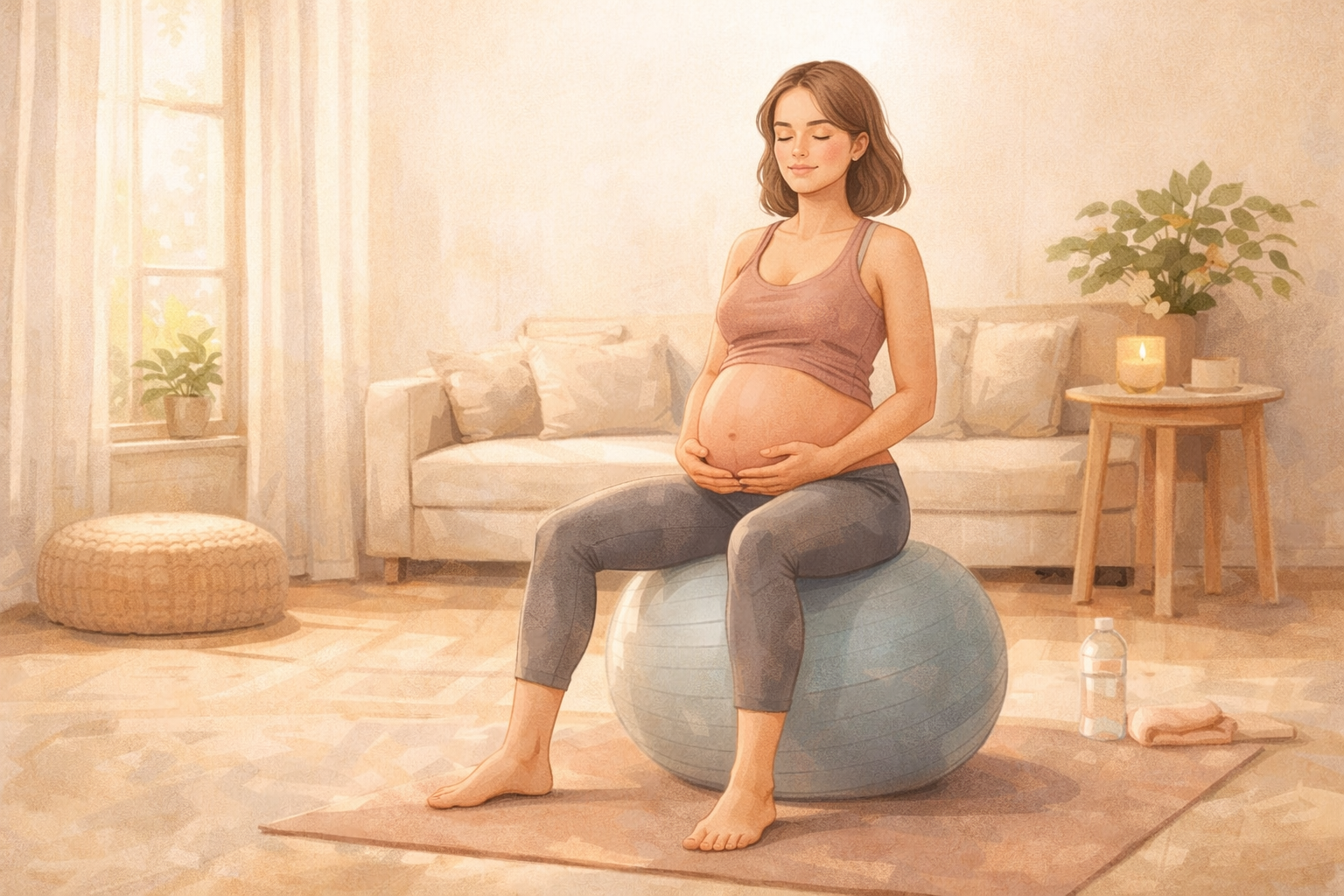
What I came to value most was the atmosphere around movement. I stopped exercising in a rushed, noisy state of mind. I created a small, quiet space at home. Sometimes it was just a corner of the living room. I put my phone away, softened the light, and allowed myself to be present. This shift alone made movement feel different. Instead of feeling like a task I had to complete, it felt like time I was giving to myself and my baby. A good prenatal workout begins with this inner permission to slow down.
The movements themselves became simpler, but more meaningful. Instead of explosive strength or fast repetitions, I focused on posture, gentle strengthening, and mobility. My back and posture changed as my belly grew, so I paid more attention to standing tall, lengthening my spine, and gently engaging my core without pulling my belly in. I learned to feel the deep support muscles of my trunk working in a soft, steady way. It wasn’t about creating tension; it was about creating support.
Circulation became another important focus. There were days when my legs felt heavy, my feet slightly swollen, and my arms tired even without much effort. Gentle movements for my upper and lower limbs helped my blood flow and reduced that heavy, sluggish feeling. Slow arm circles, soft leg movements, and simple walking breaks during the day helped me feel more alive in my body. I realized that circulation is not something we think about much when we are not pregnant, but during pregnancy, it becomes very noticeable when it’s not supported.
Mobility in my hips, spine, and pelvis also became central to how I moved. These areas carry so much change during pregnancy. My hips felt tighter some days, looser on others. My lower back sometimes felt stiff in the morning. Gentle mobility exercises helped me feel more comfortable in my body and less “stuck.” I learned to move my pelvis slowly in different directions, to soften my spine with small, controlled movements, and to let go of the idea that stretching should feel intense. During pregnancy, stretching that feels too deep or forced doesn’t feel safe. Gentle range of motion, done with awareness, felt far more supportive.
One of the biggest shifts for me was learning to connect with my pelvic floor. Before pregnancy, I had almost no conscious relationship with these muscles. Suddenly, they became very real. I could feel the growing pressure, the weight of my belly, and the subtle fatigue in that area. A good prenatal workout includes gentle pelvic floor awareness and strengthening, but not in a forced way. I learned that these muscles also need to relax, not just contract. Coordinating breathing with gentle pelvic floor engagement and relaxation helped me feel more balanced and supported from the inside. It also made me feel more prepared for the physical experience of labor and birth, even though that moment still felt far away and mysterious.
Balance and coordination also changed more than I expected. As my center of gravity shifted, movements that used to feel automatic suddenly required attention. Standing on one leg, turning quickly, or changing direction felt less stable. This taught me to move more consciously and to respect my limits. A good prenatal workout challenges balance gently and safely, without putting me in situations where I feel like I might fall. Even simple balance exercises helped me stay connected to my body and aware of how it was changing week by week.
Breathing became the quiet foundation of everything. I noticed that when I was stressed or rushing, my breath became shallow. During gentle prenatal movement, I practiced breathing in a way that felt natural and supportive, allowing my ribcage to expand and my breath to flow without force. Learning simple breathing techniques also made me feel calmer emotionally. It gave me a sense of inner space in a time when my body felt physically fuller than ever. Knowing that these breathing patterns could also support me during labor made every breath feel purposeful, even in the quiet moments of practice.
There were also very real challenges to staying consistent. Some days, I simply didn’t feel like moving. I was tired. My body felt heavy. The couch felt much more inviting than the mat. Being at home made it even harder sometimes, because there was no external structure pushing me to show up. I had to remind myself why I was moving in the first place. Not to look a certain way. Not to achieve fitness goals. But to build the physical endurance I would need for birth, and for the long, demanding days of caring for a newborn afterward.
I learned to be realistic with myself. I didn’t need perfect sessions. I needed regular, gentle contact with my body. Two or three short movement sessions a week felt manageable. Some days I repeated exercises I already knew. Other days I followed guided online prenatal workouts created by professionals who understand the pregnant body. Having guidance made a big difference. It helped me trust that what I was doing was safe and appropriate, and it removed some of the mental load of deciding what to do.
Safety became a non-negotiable part of my mindset. I learned to listen carefully to my body. If something didn’t feel good, I changed the movement. If I felt dizzy, overly short of breath, or uncomfortable, I stopped. I also understood that movement during pregnancy is only appropriate when the pregnancy is uncomplicated and when I feel generally well. There is no shame in resting when rest is what the body needs. A good prenatal workout always respects the reality of the individual body and pregnancy, not an abstract ideal of what “exercise” should look like.
One of my favorite starting positions for gentle movement became sitting on a large exercise ball. Sitting this way helped me find a comfortable, upright posture without tension. With my feet grounded and my spine lengthened, I felt supported and stable. From this position, I could gently move my pelvis, mobilize my spine, and bring awareness to my posture and breathing. It felt grounding and safe, especially on days when standing for long periods felt tiring. This simple setup reminded me that a prenatal workout doesn’t require complicated equipment or a perfect space. It requires presence and care.
Over time, my definition of a “good” prenatal workout became very simple: it leaves me feeling more at home in my body than before I started. It doesn’t exhaust me. It doesn’t leave me sore or strained. It leaves me feeling slightly more open, slightly more supported, slightly more calm. It reminds me that my body is not something to conquer, but something to cooperate with.
Pregnancy taught me that movement can be gentle and still powerful. That slowing down is not weakness, but wisdom. A good prenatal workout is not about doing more. It is about doing what truly supports the body you are in right now. And in learning to move this way, I didn’t just prepare my body for birth. I began to build a new relationship with movement itself – one based on trust, care, and deep respect for the quiet strength of the pregnant body.