
Home Fitness for Women: How I Built Strength Without a Gym
2/18/20267 min read
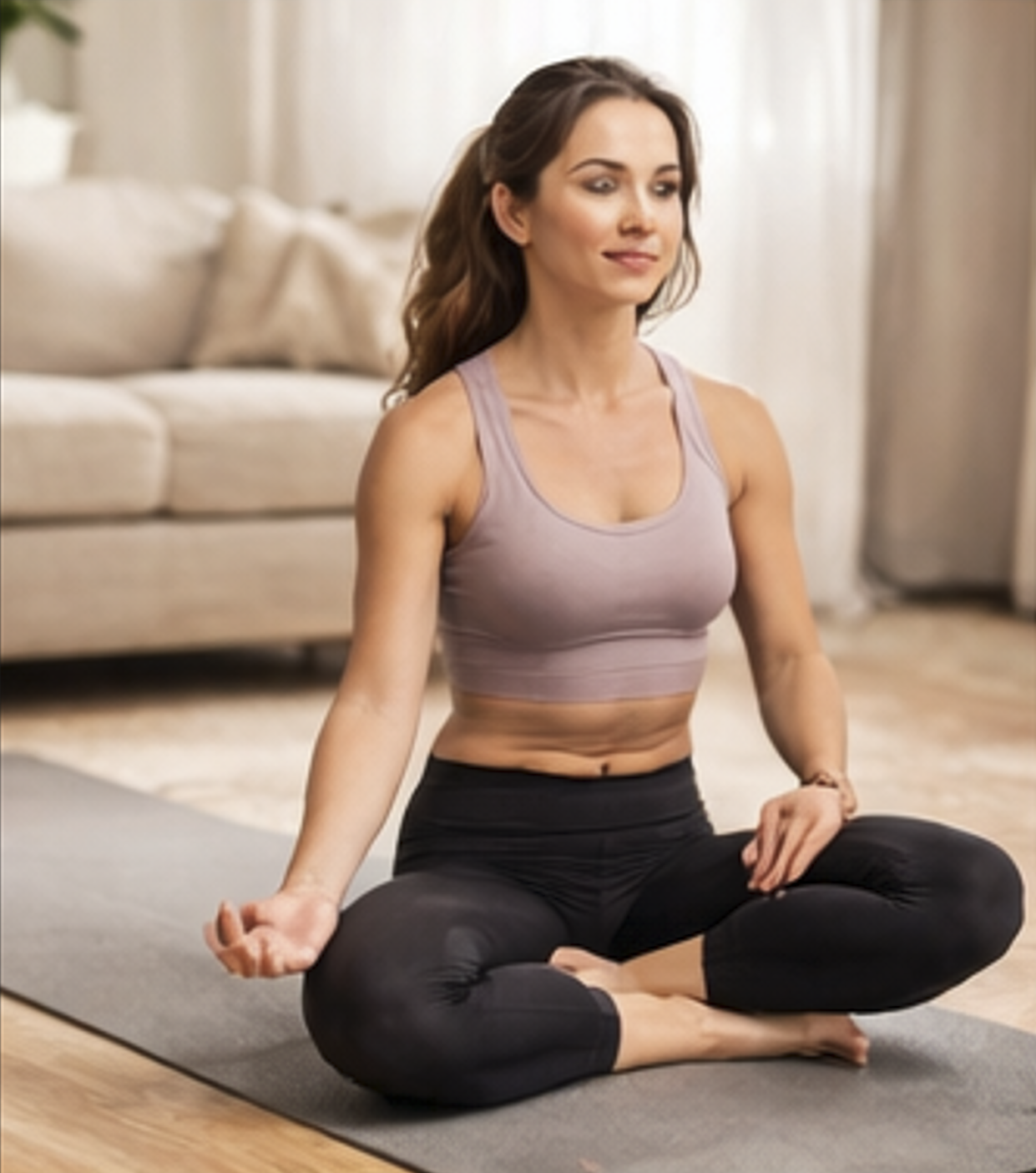
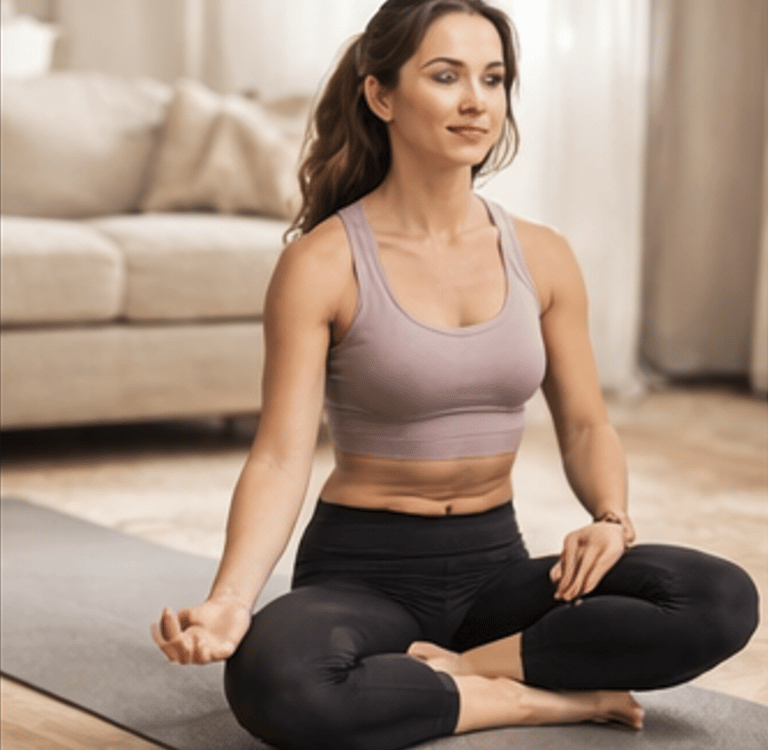
When people talk about fitness, the image that usually comes to mind is a crowded gym, heavy machines, and strict workout schedules. For a long time, I believed that too. I thought real results only happened inside a gym — under bright lights, surrounded by equipment, following structured programs. But life, as it often does, had other plans.
Between work deadlines, family responsibilities, travel, and those overwhelming days when even leaving the house feels like a challenge, the gym slowly became something I couldn’t consistently commit to. And with that came the familiar guilt — the feeling that I was somehow failing my health simply because I couldn’t make time for a fitness center.
What I discovered later changed everything: fitness is not a place. It’s not a membership. It’s a relationship with your body — and it can begin anywhere, even in your living room.
This realization didn’t come overnight. It grew from small moments, quiet experiments, and a gradual shift in mindset. What started as a “temporary solution” to stay active at home slowly became a sustainable lifestyle that feels more natural, more supportive, and far more realistic than anything I had tried before.
Today, I want to share this journey — not as a perfect guide, but as a personal story of discovering how movement at home can transform your energy, health, and relationship with yourself.
The beauty of working out at home is its simplicity. There is no pressure to perform, no comparison, no waiting for equipment, no commute. Just you, your breath, your body, and a small space where movement becomes part of everyday life.
I remember my first attempt. It wasn’t impressive. I rolled out a yoga mat in my bedroom, unsure of what to do, feeling slightly awkward moving in silence. But there was something calming about it. No mirrors, no noise, no expectations — just a quiet moment to reconnect with myself. That feeling alone made me want to continue.

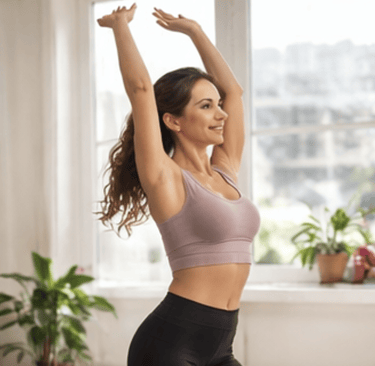
One of the biggest reasons home workouts changed my routine is flexibility. As women, our schedules often shift constantly. Some days are carefully planned, while others are unpredictable. The idea of committing to a fixed gym schedule can feel overwhelming. At home, however, movement adapts to your life.
Some mornings, I begin with gentle stretching before coffee, waking up my body slowly. Other days, I squeeze in ten minutes of movement between tasks or take a few minutes to stretch while dinner is cooking. These small moments add up in powerful ways. Instead of waiting for the perfect hour to exercise, fitness becomes woven into daily life.
And that shift — from obligation to integration — changes everything.
Another important aspect is accessibility. Many people believe effective workouts require expensive machines or professional equipment. In reality, the human body itself is one of the most powerful tools for building strength and endurance.
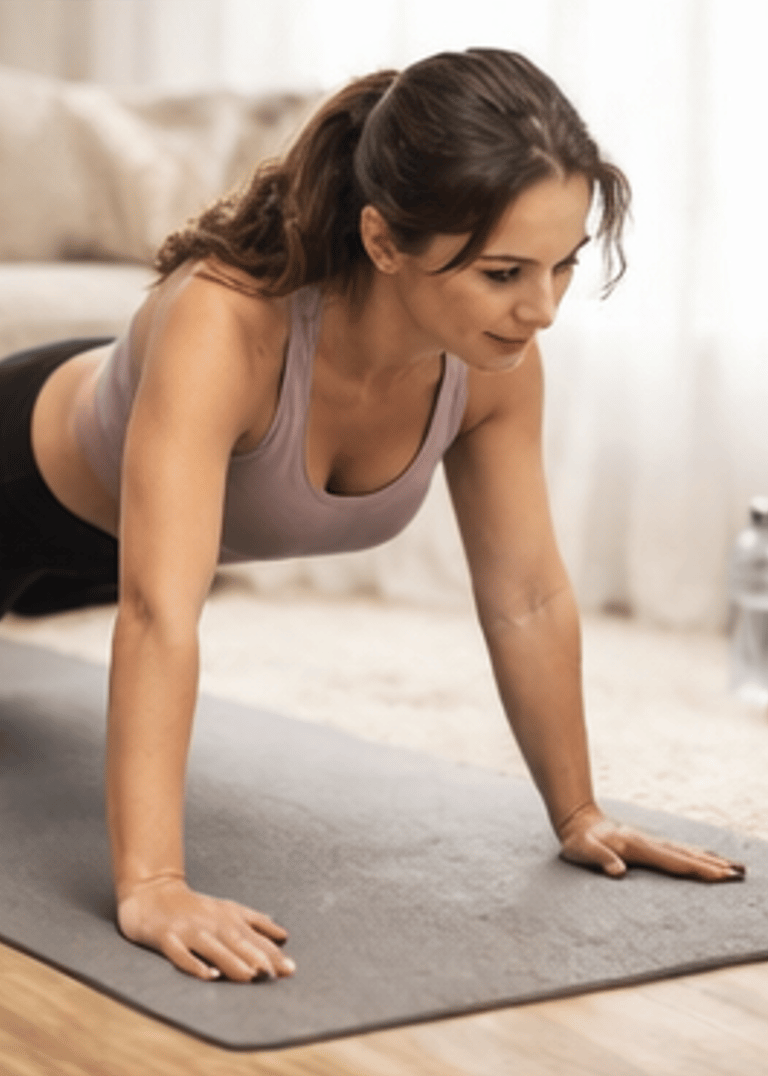
Simple movements like squats, lunges, push-ups, and planks activate multiple muscle groups at once. They improve balance, strengthen joints, and increase mobility without any equipment. Over time, I noticed that consistency with these basic exercises created visible changes — not just physically, but mentally. I felt stronger, more energized, and more confident in my body.
There’s also something deeply empowering about realizing you don’t need external tools to care for yourself.
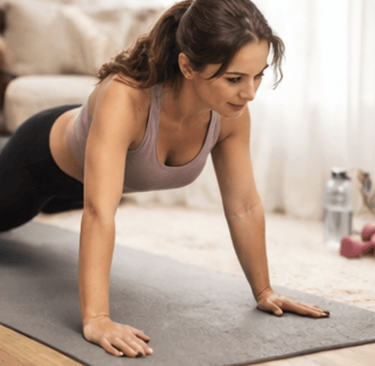
Privacy is another reason home fitness feels especially supportive, particularly from a woman’s perspective. Many women experience discomfort in gym environments — whether due to self-consciousness, comparison, or simply not feeling at ease in crowded spaces. At home, that pressure disappears.
You can move at your own pace. You can make mistakes, try new exercises, pause when needed, and focus on how your body feels rather than how it looks. That freedom encourages mindfulness, and mindfulness makes movement more meaningful.
Over time, I learned that consistency matters far more than intensity. In the beginning, I believed every workout needed to be exhausting to be effective. But the body responds best to regular, sustainable effort. Ten minutes of mindful movement each day often produces better results than one intense session followed by days of inactivity.
This realization removed the pressure to be perfect. It allowed fitness to become a gentle practice rather than a harsh demand.
A balanced home fitness routine includes several types of movement, each supporting the body in different ways. Cardio, strength training, and flexibility all play important roles, and the beauty of home workouts is that you can combine them easily.
For cardiovascular health, simple movements are surprisingly effective. Jumping jacks, high knees, dancing, or even brisk walking in place can elevate the heart rate and improve circulation. I often play music and move freely, turning exercise into something joyful rather than structured. These sessions boost energy and improve mood almost instantly.


Scientific research consistently shows that short bursts of high-intensity movement can significantly improve cardiovascular health and metabolic function. But beyond the science, the immediate emotional benefit — the clarity of mind and sense of vitality — is what keeps me returning to these practices.
Strength training at home is equally accessible. Bodyweight exercises challenge muscles in functional ways that support everyday activities. Squats strengthen the legs and improve stability. Push-ups build upper body strength. Planks engage the core and support posture.
What surprised me most was how quickly these exercises began to reshape my perception of strength. It wasn’t about lifting heavy weights; it was about developing control, stability, and awareness. Strength became less about appearance and more about capability.
Flexibility and mobility are often overlooked but incredibly important, especially for women balancing multiple responsibilities and experiencing daily stress. Gentle stretching, yoga, or practices like Surya Namaskar help release tension, improve posture, and calm the nervous system.
There is something deeply grounding about slow, intentional movement. On stressful days, a simple stretch session feels less like exercise and more like self-care. It reconnects the body and mind, creating a sense of balance that extends beyond the workout itself.
As my home fitness routine evolved, I began to notice changes beyond physical appearance. My sleep improved. My energy became more stable throughout the day. My mood felt lighter, and my resilience to stress increased.
Movement became a form of emotional support.
Many women experience constant pressure — to perform, to care for others, to manage responsibilities without pause. Home workouts offer a space to turn attention inward, even briefly. That space is powerful. It reminds us that caring for ourselves is not selfish; it is necessary.
Creating a routine at home doesn’t require perfection or strict structure. It begins with small, realistic steps. Start with five or ten minutes. Choose movements you enjoy. Listen to your body. Over time, these small actions build a rhythm that feels natural.
One approach that worked for me was designing a simple weekly flow. Some days focused on gentle stretching, others on strength, and some on light cardio. This variety prevented boredom and supported overall balance.
Equally important is allowing flexibility. There will be days when motivation is low or time is limited. On those days, even a few minutes of movement maintains the habit. The goal is not intensity but continuity.
I also learned to shift my motivation from appearance-based goals to wellbeing-focused intentions. Instead of asking, “How many calories did I burn?” I began asking, “How do I feel after moving?” This shift created a healthier, more sustainable relationship with fitness.
From a woman’s perspective, our bodies change through different life stages — hormonal fluctuations, stress, aging, and lifestyle transitions all influence energy and strength. A home-based fitness routine adapts easily to these changes. It allows us to respect our body’s needs rather than forcing rigid expectations.
Over time, fitness becomes less about transformation and more about connection.




One of the most unexpected benefits of home workouts is the sense of empowerment they create. When you realize you can maintain your health anywhere — in a small apartment, a hotel room, or a quiet corner of your home — you gain a feeling of independence.
You are no longer dependent on external conditions to care for yourself.
This freedom is especially valuable during busy periods of life. Travel, work demands, or family responsibilities no longer disrupt the routine completely. Movement remains accessible, simple, and consistent.
Looking back, I realize that what truly changed was not my environment but my mindset. I stopped seeing fitness as a separate task that required special conditions and started viewing it as part of daily living.
Stretching while watching the sunrise, taking a few minutes to breathe deeply after a long day, moving gently before bed — these moments transformed my understanding of health.
They reminded me that wellness is built through daily choices, not dramatic efforts.
For anyone feeling overwhelmed by the idea of fitness, especially women juggling multiple responsibilities, I want to offer reassurance: you don’t need to do everything perfectly. You don’t need the perfect space, the perfect body, or the perfect plan.
You simply need to begin.Start where you are. Use the space you have. Move in ways that feel supportive rather than punishing. Let fitness become an act of self-respect rather than self-pressure.
The journey toward health does not have to be loud or intense. Sometimes it is quiet — a stretch in the morning, a few deep breaths, a short session of mindful movement. These small acts, repeated consistently, create lasting change.
Home fitness taught me that strength is not defined by equipment or location. It is defined by presence, intention, and consistency. It is the ability to show up for yourself, day after day, even in small ways.
And perhaps the most beautiful lesson of all is this: your body does not demand perfection. It responds to care, patience, and gentle commitment.
So if you ever feel that you don’t have time for the gym, remember that your home can be your sanctuary of movement. Your living room, your balcony, even the small space beside your bed can become a place where health grows naturally.
Fitness is not about where you go — it’s about how you live.
And sometimes, the most powerful transformation begins right at home.