For so long, the fitness world treated women as if we were just smaller versions of men. Programs designed for male bodies were handed to us with minor tweaks — lighter weights, higher repetitions, pastel-colored dumbbells, and marketing that suggested, “This is for her.” And when the results didn’t come, we were told to work harder, eat less, or accept that our bodies were somehow inferior or fundamentally different. I know because I’ve been there. I’ve felt the frustration of working tirelessly at a program that wasn’t built for me, the quiet guilt when my body didn’t conform to someone else’s ideal, and the internalized shame that something must be wrong with me.
The truth is far more empowering: our bodies are different, yes, but not weaker. Not less capable. Not broken. They are simply designed with unique needs and rhythms, and understanding that allows us to approach fitness in a smarter, kinder, and far more effective way. Once you train with your female body instead of against it, the transformation isn’t just physical — it touches confidence, mental clarity, and emotional resilience. This is the reality of women’s fitness today, and it’s worth exploring with honesty and precision.
Our anatomy is the first place to start. Women’s bodies are structured differently, and these differences influence movement patterns, strength development, and injury risk. A wider pelvis, a larger Q-angle at the knees, more elastic connective tissue, and nuanced variations in muscle fiber distribution all change the way we load joints, squat, hinge, and move in everyday life. These aren’t weaknesses; they are parameters that guide intelligent training. Ignoring them doesn’t make us stronger or more capable — it makes workouts inefficient and sometimes unsafe. Once I learned to approach my body with this understanding, my training began to feel intuitive rather than frustrating. I could work with my anatomy rather than against it, and progress followed in ways I had never experienced before.
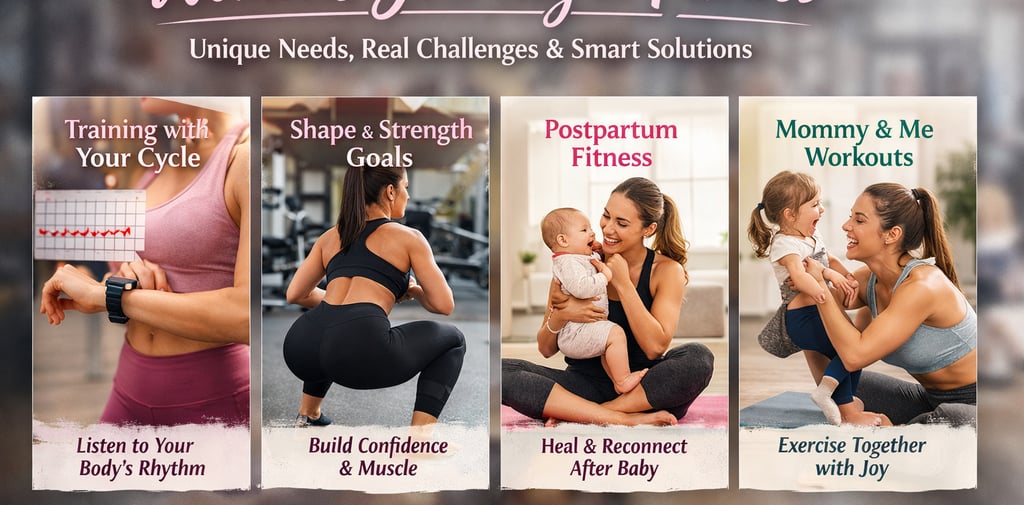
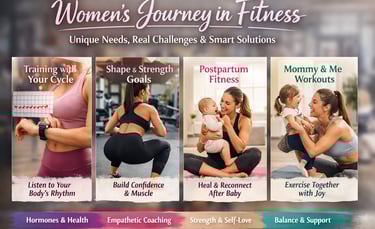
Then there are hormones. Unlike men, women operate on a cyclical hormonal system, and this rhythm affects energy, coordination, pain tolerance, recovery, and motivation. There is a phase of the cycle when strength feels effortless, endurance seems limitless, and focus is sharp. And there are days when fatigue and soreness feel amplified, and confidence wavers. This is not a limitation; it is information. Training that aligns with these fluctuations allows us to respect our bodies, prevent injury, and even enhance performance. Listening to our bodies in this way isn’t weakness — it is advanced fitness intelligence. It has taken me years to stop fighting my cycle and start working with it, and the difference is remarkable. I now feel more in tune, more capable, and less frustrated by days when my energy dips.
Fitness goals for women are just as valid as those for men, though society sometimes dismisses them as “superficial.” We might want firmer thighs, a lifted and rounded glute, a stronger core, better posture, or simply to feel confident in our bodies. These goals are not vanity; they are a reflection of wanting to feel capable, comfortable, and empowered. A well-designed program respects these aspirations while simultaneously building functional strength, mobility, and long-term health. Strength and aesthetics are not opposites — they can coexist beautifully when approached intelligently.
For mothers, the challenges multiply. Pregnancy and childbirth alter the body in profound ways, yet the cultural expectation is often a rapid “bounce back” to pre-pregnancy form. Postpartum, women face diastasis recti, weak pelvic floor muscles, lower back and hip discomfort, core instability, body image struggles, and chronic fatigue. Attempting to return to pre-pregnancy workouts too soon can worsen these issues. Postpartum fitness isn’t about recovering the old body — it’s about constructing a strong new foundation. Movement becomes a tool for healing rather than punishment, and progress is measured in strength, confidence, and functionality rather than pounds lost or inches reduced.
Baby-and-mom programs illustrate this perfectly. They are not just fitness classes; they are rehabilitation, emotional support, and self-care packaged into an hour or two. They strengthen the core and pelvic floor safely, rebuild posture and functional strength, and provide connection and validation for mothers navigating a huge life transition. These programs taught me that being a healthy, strong mother is not a luxury — it is a necessity, and exercise can be the bridge that restores a sense of self amid the chaos of motherhood.
But even the best program fails if it cannot fit into real life. For many women, the primary obstacle to consistent exercise isn’t motivation but logistics: work demands, childcare, mental load, and societal pressures all collide to make exercise feel impossible. Modern fitness solutions are finally evolving to meet this reality. Classes that welcome children, studios with play areas, short, effective workouts, and structured home programs with professional guidance are no longer rare. They make consistent exercise accessible, realistic, and compassionate. The message is clear: consistency matters far more than perfection.
Even with the right program, the presence of a supportive trainer makes all the difference. Empathy is essential. A good trainer listens, adapts, and honors the journey. They understand that progress isn’t linear, that confidence is as important as performance, and that emotional safety fosters physical growth. Some days, strength looks like lifting heavier; other days, it looks like showing up at all. That understanding transforms fitness from a source of pressure into a source of empowerment.
Redefining strength for women is essential. Strength is not just numbers on a barbell; it is the ability to carry children without pain, stand taller with confidence, move through daily life without fear, and trust your body again. Physical strength supports mental resilience. Movement rebuilds self-trust. I have seen women transform not just physically but emotionally, shedding years of self-doubt, reclaiming confidence, and discovering capabilities they didn’t know they possessed.
This approach also acknowledges the science of recovery and longevity. Women tend to have different recovery needs and patterns than men due to hormonal fluctuations, connective tissue differences, and often higher daily mental loads. Ignoring these differences can lead to burnout, overuse injuries, and stalled progress. Learning to listen, periodize training, and respect recovery is as important as the workouts themselves. When I stopped measuring progress by sweat, pain, or visible muscle fatigue, and started valuing alignment, stability, and sustainable energy, my workouts became more effective and my body more resilient.
The future of women’s fitness is personal, evidence-based, and supportive. It rejects trends and extremes, prioritizes longevity over quick fixes, and respects the lived realities of women. Fitness should not feel like a battle; it should feel like an ally. When we honor our anatomy, our cycles, our goals, our recovery needs, and our life responsibilities, movement becomes freedom, not obligation.
Ultimately, what I’ve learned is this: women do not need harsher programs, smaller weights, or louder motivation. We need understanding, intelligent structure, and space to grow. Fitness should enhance life, not compete with it. When approached correctly, it is not just exercise — it is confidence, capability, resilience, and empowerment. It teaches us to trust our bodies, appreciate our progress, and build a foundation that supports every aspect of our lives. In embracing smart, compassionate training, we redefine strength on our own terms and reclaim the joy of movement.